1984 Edition
CIA World Factbook 1984 (Internet Archive)
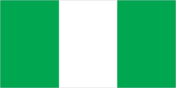
Geography
Airfields
66 total, 60 usable; 6 with permanent-surface runways; 1 with runways 2,440-3,659 m, 17 with runways 1,2202,439 m
Area
300 km from Niamey to Gaya on the Benin frontier from mid-December through March
Branches
- Army, Air Force, National Security Forces
- Supreme Military Council, National Council of State, and Federal Executive Council (cabinet)
Capital
Lagos
Civil air
3 major transport aircraft
Coastline
853 km People
Elections
last national elections under civilian rule held August-September 1983 Political parties and leaders: all Political parties banned after 31 December 1983; former parties — National Party of Nigeria (NPN), Shehu Shagari; Unity Party of Nigeria (UPN), Obafemi Awolowo; Nigerian People's Party (NPP), Nnamdi Azikiwe; Great Nigerian People's Party (GNPP), Waziri Ibrahim; People's Redemption Party (PRP), Hassan Yusuf ; Nigeria Advance Party (NAP), Tunji Braithwaite
Ethnic divisions
of the more than 250 tribal groups, the Hausa and Fulani of the north, the Yoruba of the south, and the Ibos of the east comprise 60% of the population; about 27,000 non-Africans
Government leader
Maj. Gen. Muhammadu BUHARI, Head of the Federal Military Government and Commander in Chief
Labor force
est. 30-38 million (1982); 56% agriculture; 17% industry, commerce, and services; 15% government
Land boundaries
4,034 km Water
Language
English (official); Hausa, Yoruba, and Ibo also widely used
Legal system
based on English common law, tribal law, and Islamic law
Limits of territorial waters (claimed)
30 nm (fishing 200 nm; exclusive economic zone 200 nm)
Literacy
25-30%
Military budget
for fiscal year ending 30 September 1982, $13.6 million; about 4.3% of central government budget Land 923,768 km2; 35% forest; 24% arable (13% of total land area under cultivation); 4 1 % desert, waste, urban, or other
Military manpower
males 15-49, 1,364,000; 735,000 fit for military service; about 62,000 reach military age (18) annually
National holiday
Independence Day, 1 October
Nationality
noun — Nigerian(s); adjective — Nigerian
Official name
Federal Republic of Nigeria
Organized labor
1-2 million wage earners belong to one of 42 recognized trade unions, which are under a single national labor federation, the Nigerian Labor Congress (NLC) Government
Political subdivisions
19 states, headed by appointed military governors
Population
88,148,000 (July 1984), average annual growth rate 3.4%
Religion
no exact figures on religious breakdown, but last census (1963) showed Nigeria to be 47% Muslim, 34% Christian, and 18% indigenous beliefs
Suffrage
none
Telecommunications
small system of wire and radio-relay links concentrated in southwestern area; 8,500 telephones (0.2 per 100 popl.); 9 AM, 2 FM, and 12 TV stations; 2 Atlantic Ocean satellite stations, 4 domestic antennas Defense Forces
Type
military government since 31 December 1983