1990 Edition
CIA World Factbook 1990 (Project Gutenberg)
Geography
Climate
Mediterranean with mild, rainy winters and hot, dry summers
Coastline
140 km
Comparative area
slightly less than twice the size of Washington, DC
Contiguous zone
24 nm;
Continental shelf
200 meters or to depth of exploitation;
Environment
numerous bays provide good harbors; fresh water very scarce--increasing reliance on desalination
Exclusive fishing zone
25 nm;
Land boundaries
none
Land use
38% arable land; 3% permanent crops; 0% meadows and pastures; 0% forest and woodland; 59% other; includes 3% irrigated
Natural resources
limestone, salt
Note
strategic location in central Mediterranean, 93 km south of Sicily, 290 km north of Libya
Terrain
mostly low, rocky, flat to dissected plains; many coastal cliffs
Territorial sea
12 nm
Total area
320 km2; land area: 320 km2
People and Society
Birth rate
15 births/1,000 population (1990)
Death rate
8 deaths/1,000 population (1990)
Ethnic divisions
mixture of Arab, Sicilian, Norman, Spanish, Italian, English
Infant mortality rate
8 deaths/1,000 live births (1990)
Labor force
125,674; 30% services, 24% manufacturing, 21% government (except job corps), 8% construction, 5% utilities and drydocks, 4% agriculture
Language
Maltese and English (official)
Life expectancy at birth
74 years male, 78 years female (1990)
Literacy
83%
Nationality
noun--Maltese (sing. and pl.); adjective--Maltese
Net migration rate
1 migrant/1,000 population (1990)
Organized labor
about 40% of labor force
Population
353,465 (July 1990), growth rate 0.9% (1990)
Religion
98% Roman Catholic
Total fertility rate
2.0 children born/woman (1990)
Government
Administrative divisions
none (administration directly from Valletta)
Capital
Valletta
Communists
fewer than 100 (est.)
Constitution
26 April 1974, effective 2 June 1974
Diplomatic representation
Ambassador Salvatore J. STELLINI; Chancery at 2017 Connecticut Avenue NW, Washington DC 20008; telephone (202) 462-3611 or 3612; there is a Maltese Consulate General in New York; US--Ambassador Sally J. NOVETZKE; Embassy at 2nd Floor, Development House, St. Anne Street, Floriana, Valletta (mailing address is P. O. Box 535, Valletta); telephone [356] 623653 or 620424, 623216
Elections
House of Representatives--last held on 9 May 1987 (next to be held by May 1992); results--NP 51.1%, MLP 48.9%; seats--(usually 65 total, but additional seats are given to the party with the largest popular vote to ensure a legislative majority; current total 69) MLP 34, NP 31 before popular vote adjustment; MLP 34, NP 35 after adjustment
Executive branch
president, prime minister, deputy prime minister, Cabinet
Flag
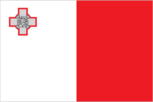
two equal vertical bands of white (hoist side) and red; in the upper hoist-side corner is a representation of the George Cross, edged in red
Independence
21 September 1964 (from UK)
Judicial branch
Constitutional Court and Court of Appeal
Leaders
Chief of State--President Vincent (Censu) TABONE (since 4 April 1989); Head of Government--Prime Minister Dr. Edward (Eddie) FENECH ADAMI (since 12 May 1987); Deputy Prime Minister Dr. Guido DE MARCO
Legal system
based on English common law and Roman civil law; has accepted compulsory ICJ jurisdiction, with reservations
Legislative branch
unicameral House of Representatives
Long-form name
Republic of Malta
Member of
CCC, Commonwealth, Council of Europe, FAO, G-77, GATT, IBRD, ICAO, IFAD, ILO, IMF, IMO, INTERPOL, ITU, IWC--International Wheat Council, NAM,UN, UNDP, UNESCO, UNICEF, UPU, WHO, WIPO, WMO
National holiday
Freedom Day, 31 March
Political parties and leaders
Nationalist Party, Edward Fenech Adami; Malta Labor Party, Karmenu Mifsud Bonnici
Suffrage
universal at age 18
Type
parliamentary democracy
Economy
Agriculture
overall, 20% self-sufficient; main products--potatoes, cauliflower, grapes, wheat, barley, tomatoes, citrus, cut flowers, green peppers, hogs, poultry, eggs; generally adequate supplies of vegetables, poultry, milk, pork products; seasonal or periodic shortages in grain, animal fodder, fruits, other basic foodstuffs
Aid
US commitments, including Ex-Im (FY70-81), $172 million; Western (non-US) countries, ODA and OOF bilateral commitments (1970-87), $332 million; OPEC bilateral aid (1979-89), $76 million; Communist countries (1970-88), $48 million
Budget
revenues $844 million; expenditures $938 million, including capital expenditures of $226 million (1989 est.)
Currency
Maltese lira (plural--liri); 1 Maltese lira (LM) = 100 cents
Electricity
328,000 kW capacity; 1,110 million kWh produced, 2,990 kWh per capita (1989)
Exchange rates
Maltese liri (LM) per US$1--0.3332 (January 1990), 0.3483 (1989), 0.3306 (1988), 0.3451 (1987), 0.3924 (1986), 0.4676 (1985)
Exports
$710 million (f.o.b., 1988); commodities--clothing, textiles, footwear, ships; partners--FRG 31%, UK 14%, Italy 14%
External debt
$90 million, medium and long-term (December 1987)
Fiscal year
1 April-31 March
GDP
$1.9 billion, per capita $5,100; real growth rate 7.1% (1988)
Imports
$1,360 million (c.i.f., 1988); commodities--food, petroleum, nonfood raw materials; partners--FRG 19%, UK 17%, Italy 17%, US 11%
Industrial production
growth rate 6.2% (1987)
Industries
tourism, ship repair yard, clothing, construction, food manufacturing, textiles, footwear, clothing, beverages, tobacco
Inflation rate (consumer prices)
0.9% (1988)
Overview
Significant resources are limestone, a favorable geographic location, and a productive labor force. Malta produces only about 20% of its food needs, has limited freshwater supplies, and has no domestic energy sources. Consequently, the economy is highly dependent on foreign trade and services. Manufacturing and tourism are the largest contributors to the economy. Manufacturing accounts for about 30% of GDP, with the textile and clothing industry a major contributor. In 1988 inflation was held to a low 0.9%. Per capita GDP at $5,100 places Malta in the middle-income range of the world's nations.
Unemployment rate
4.4% (1987)
Communications
Airports
1 with permanent-surface runways 2,440-3,659 m
Civil air
8 major transport aircraft
Highways
1,291 km total; 1,179 km paved (asphalt), 77 km crushed stone or gravel, 35 km improved and unimproved earth
Merchant marine
314 ships (1,000 GRT or over) totaling 3,677,797 GRT/6,357,733 DWT; includes 3 passenger, 4 short-sea passenger, 127 cargo, 2 container, 1 passenger-cargo, 13 roll-on/roll-off cargo, 2 vehicle carrier, 6 refrigerated cargo, 7 chemical tanker, 4 combination ore/oil, 1 specialized tanker, 61 petroleum, oils, and lubricants (POL) tanker, 72 bulk, 11 combination bulk; note--a flag of convenience registry; China owns 1 ship, Cuba owns 8, and Vietnam owns 1
Ports
Valletta, Marsaxlokk
Telecommunications
modern automatic system centered in Valletta; 153,000 telephones; stations--9 AM, 3 FM, 2 TV; 1 submarine cable; 1 Atlantic Ocean INTELSAT earth station
Military and Security
Branches
Armed Forces, Police, Paramilitary Dejima Force
Defense expenditures
1.3% of GDP, or $25 million (1989 est.)
Military manpower
males 15-49, 92,610; 74,256 fit for military service