2019 Edition
CIA World Factbook 2019 Archive (Wayback Machine)
Introduction
Background
The Dutch began to colonize Indonesia in the early 17th century; Japan occupied the islands from 1942 to 1945. Indonesia declared its independence shortly before Japan's surrender, but it required four years of sometimes brutal fighting, intermittent negotiations, and UN mediation before the Netherlands agreed to transfer sovereignty in 1949. A period of sometimes unruly parliamentary democracy ended in 1957 when President SOEKARNO declared martial law and instituted "Guided Democracy." After an abortive coup in 1965 by alleged communist sympathizers, SOEKARNO was gradually eased from power. From 1967 until 1998, President SUHARTO ruled Indonesia with his "New Order" government. After street protests toppled SUHARTO in 1998, free and fair legislative elections took place in 1999. Indonesia is now the world's third most populous democracy, the world's largest archipelagic state, and the world's largest Muslim-majority nation. Current issues include: alleviating poverty, improving education, preventing terrorism, consolidating democracy after four decades of authoritarianism, implementing economic and financial reforms, stemming corruption, reforming the criminal justice system, addressing climate change, and controlling infectious diseases, particularly those of global and regional importance. In 2005, Indonesia reached a historic peace agreement with armed separatists in Aceh, which led to democratic elections in Aceh in December 2006. Indonesia continues to face low intensity armed resistance in Papua by the separatist Free Papua Movement.
Geography
Area
- Land
- 1,811,569 sq km
- Total
- 1,904,569 sq km
- Water
- 93,000 sq km
Area Comparative
slightly less than three times the size of Texas
Climate
tropical; hot, humid; more moderate in highlands
Coastline
54,716 km
Elevation
- Highest Point
- Puncak Jaya 4,884 m
- Lowest Point
- Indian Ocean 0 m
- Mean Elevation
- 367 m
Environment Current Issues
large-scale deforestation (much of it illegal) and related wildfires cause heavy smog; over-exploitation of marine resources; environmental problems associated with rapid urbanization and economic development, including air pollution, traffic congestion, garbage management, and reliable water and waste water services; water pollution from industrial wastes, sewage
Environment International Agreements
- Party To
- Biodiversity, Climate Change, Climate Change-Kyoto Protocol, Desertification, Endangered Species, Hazardous Wastes, Law of the Sea, Ozone Layer Protection, Ship Pollution, Tropical Timber 83, Tropical Timber 94, Wetlands
- Signed But Not Ratified
- Marine Life Conservation
Geographic Coordinates
5 00 S, 120 00 E
Geography Note
note 1: according to Indonesia's National Coordinating Agency for Survey and Mapping, the total number of islands in the archipelago is 13,466, of which 922 are permanently inhabited (Indonesia is the world's largest country comprised solely of islands); the country straddles the equator and occupies a strategic location astride or along major sea lanes from the Indian Ocean to the Pacific Ocean note 2: Indonesia is one of the countries along the Ring of Fire, a belt of active volcanoes and earthquake epicenters bordering the Pacific Ocean; up to 90% of the world's earthquakes and some 75% of the world's volcanoes occur within the Ring of Fire note 3: despite having the fourth largest population in the world, Indonesia is the most heavily forested region on earth after the Amazon
Irrigated Land
67,220 sq km (2012)
Land Boundaries
- Border Countries
- Malaysia 1881 km, Papua New Guinea 824 km, Timor-Leste 253 km
- Total
- 2,958 km
Land Use
- Agricultural Land
- 31.2% (2011 est.)
- Agricultural Land Arable Land
- 13% (2011 est.)
- Agricultural Land Permanent Crops
- 12.1% (2011 est.)
- Agricultural Land Permanent Pasture
- 6.1% (2011 est.)
- Forest
- 51.7% (2011 est.)
- Other
- 17.1% (2011 est.)
Location
Southeastern Asia, archipelago between the Indian Ocean and the Pacific Ocean
Map References
Southeast Asia
Maritime Claims
- Exclusive Economic Zone
- 200 nm
- Territorial Sea
- 12 nm
Natural Hazards
occasional floods; severe droughts; tsunamis; earthquakes; volcanoes; forest firesvolcanism: Indonesia contains the most volcanoes of any country in the world - some 76 are historically active; significant volcanic activity occurs on Java, Sumatra, the Sunda Islands, Halmahera Island, Sulawesi Island, Sangihe Island, and in the Banda Sea; Merapi (2,968 m), Indonesia's most active volcano and in eruption since 2010, has been deemed a Decade Volcano by the International Association of Volcanology and Chemistry of the Earth's Interior, worthy of study due to its explosive history and close proximity to human populations; other notable historically active volcanoes include Agung, Awu, Karangetang, Krakatau (Krakatoa), Makian, Raung, and Tambora; see note 2 under "Geography - note"
Natural Resources
petroleum, tin, natural gas, nickel, timber, bauxite, copper, fertile soils, coal, gold, silver
Population Distribution
major concentration on the island of Java, which is considered one of the most densely populated places on earth; of the outer islands (those surrounding Java and Bali), Sumatra contains some of the most significant clusters, particularly in the south near the Selat Sunda, and along the northeastern coast near Medan; the cities of Makasar (Sulawesi), Banjarmasin (Kalimantan) are also heavily populated
Terrain
mostly coastal lowlands; larger islands have interior mountains
People and Society
Age Structure
- 0 14 Years
- 24.63% (male 32,967,727 /female 31,757,882)
- 15 24 Years
- 16.94% (male 22,661,264 /female 21,852,006)
- 25 54 Years
- 42.44% (male 57,097,131 /female 54,433,239)
- 55 64 Years
- 8.73% (male 10,447,365 /female 12,494,036)
- 65 Years And Over
- 7.26% (male 8,326,858 /female 10,749,895) (2018 est.)
Birth Rate
15.9 births/1,000 population (2018 est.)
Children Under The Age Of 5 Years Underweight
19.9% (2013)
Contraceptive Prevalence Rate
61% (2016/17)
Current Health Expenditure
3.1% (2016)
Death Rate
6.5 deaths/1,000 population (2018 est.)
Dependency Ratios
- Elderly Dependency Ratio
- 7.6 (2015 est.)
- Potential Support Ratio
- 13.2 (2015 est.)
- Total Dependency Ratio
- 49.2 (2015 est.)
- Youth Dependency Ratio
- 41.6 (2015 est.)
Drinking Water Source
- Improved Rural
- 79.5% of population
- Improved Total
- 87.4% of population
- Improved Urban
- 94.2% of population
- Unimproved Rural
- 20.5% of population
- Unimproved Total
- 12.6% of population (2015 est.)
- Unimproved Urban
- 5.8% of population
Education Expenditures
3.6% of GDP (2015)
Ethnic Groups
Javanese 40.1%, Sundanese 15.5%, Malay 3.7%, Batak 3.6%, Madurese 3%, Betawi 2.9%, Minangkabau 2.7%, Buginese 2.7%, Bantenese 2%, Banjarese 1.7%, Balinese 1.7%, Acehnese 1.4%, Dayak 1.4%, Sasak 1.3%, Chinese 1.2%, other 15% (2010 est.)
HIV/AIDS Adult Prevalence Rate
0.4% (2018 est.)
HIV/AIDS Deaths
38,000 (2018 est.)
HIV/AIDS People Living With HIV/AIDS
640,000 (2018 est.)
Hospital Bed Density
1.2 beds/1,000 population (2015)
Infant Mortality Rate
- Female
- 17.9 deaths/1,000 live births
- Male
- 25.7 deaths/1,000 live births
- Total
- 21.9 deaths/1,000 live births (2018 est.)
Languages
Bahasa Indonesia (official, modified form of Malay), English, Dutch, local dialects (of which the most widely spoken is Javanese)
Life Expectancy at Birth
- Female
- 76 years
- Male
- 70.6 years
- Total Population
- 73.2 years (2018 est.)
Literacy
- Definition
- age 15 and over can read and write
- Female
- 93.6% (2016)
- Male
- 97.2%
- Total Population
- 95.4%
Major Infectious Diseases
- Degree Of Risk
- very high (2016)
- Food Or Waterborne Diseases
- bacterial diarrhea, hepatitis A, and typhoid fever (2016)
- Vectorborne Diseases
- dengue fever and malaria (2016)
Major Urban Areas Population
10.639 million JAKARTA (capital), 3.277 million Bekasi, 2.922 million Surabaya, 2.558 million Bandung, 2.311 million Medan, 2.28 million Tangerang (2019)
Maternal Mortality Rate
177 deaths/100,000 live births (2017 est.)
Median Age
- Female
- 31.1 years
- Male
- 29.9 years
- Total
- 30.5 years (2018 est.)
Mother's Mean Age at First Birth
22.8 years (2012 est.)
Nationality
- Adjective
- Indonesian
- Noun
- Indonesian(s)
Net Migration Rate
-1.1 migrant(s)/1,000 population (2018 est.)
Obesity Adult Prevalence Rate
6.9% (2016)
Physicians Density
0.38 physicians/1,000 population (2017)
Population
262,787,403 (July 2018 est.)
Population Growth Rate
0.83% (2018 est.)
Religions
Muslim 87.2%, Protestant 7%, Roman Catholic 2.9%, Hindu 1.7%, other 0.9% (includes Buddhist and Confucian), unspecified 0.4% (2010 est.)
Sanitation Facility Access
- Improved Rural
- 47.5% of population (2015 est.)
- Improved Total
- 60.8% of population (2015 est.)
- Improved Urban
- 72.3% of population (2015 est.)
- Unimproved Rural
- 52.5% of population (2015 est.)
- Unimproved Total
- 39.2% of population (2015 est.)
- Unimproved Urban
- 27.7% of population (2015 est.)
School Life Expectancy Primary To Tertiary Education
- Female
- 13 years (2017)
- Male
- 13 years
- Total
- 13 years
Sex Ratio
- 0 14 Years
- 1.04 male(s)/female
- 15 24 Years
- 1.04 male(s)/female
- 25 54 Years
- 1.05 male(s)/female
- 55 64 Years
- 0.84 male(s)/female
- 65 Years And Over
- 0.77 male(s)/female
- At Birth
- 1.05 male(s)/female
- Total Population
- 1 male(s)/female (2018 est.)
Total Fertility Rate
2.08 children born/woman (2018 est.)
Unemployment Youth Ages 15 24
- Female
- 15.6% (2017 est.)
- Male
- 15.6%
- Total
- 15.6%
Urbanization
- Rate Of Urbanization
- 2.27% annual rate of change (2015-20 est.)
- Urban Population
- 56% of total population (2019)
Government
Administrative Divisions
31 provinces (provinsi-provinsi, singular - provinsi), 1 autonomous province*, 1 special region** (daerah-daerah istimewa, singular - daerah istimewa), and 1 national capital district*** (daerah khusus ibukota); Aceh*, Bali, Banten, Bengkulu, Gorontalo, Jakarta***, Jambi, Jawa Barat (West Java), Jawa Tengah (Central Java), Jawa Timur (East Java), Kalimantan Barat (West Kalimantan), Kalimantan Selatan (South Kalimantan), Kalimantan Tengah (Central Kalimantan), Kalimantan Timur (East Kalimantan), Kalimantan Utara (North Kalimantan), Kepulauan Bangka Belitung (Bangka Belitung Islands), Kepulauan Riau (Riau Islands), Lampung, Maluku, Maluku Utara (North Maluku), Nusa Tenggara Barat (West Nusa Tenggara), Nusa Tenggara Timur (East Nusa Tenggara), Papua, Papua Barat (West Papua), Riau, Sulawesi Barat (West Sulawesi), Sulawesi Selatan (South Sulawesi), Sulawesi Tengah (Central Sulawesi), Sulawesi Tenggara (Southeast Sulawesi), Sulawesi Utara (North Sulawesi), Sumatera Barat (West Sumatra), Sumatera Selatan (South Sumatra), Sumatera Utara (North Sumatra), Yogyakarta**
Capital
- Geographic Coordinates
- 6 10 S, 106 49 E
- Name
- Jakarta
- Time Difference
- UTC+7 (12 hours ahead of Washington, DC, during Standard Time)
Citizenship
- Citizenship By Birth
- no
- Citizenship By Descent Only
- at least one parent must be a citizen of Indonesia
- Dual Citizenship Recognized
- no
- Residency Requirement For Naturalization
- 5 continuous years
Constitution
- Amendments
- proposed by the People’s Consultative Assembly, with at least two thirds of its members present; passage requires simple majority vote by the Assembly membership; constitutional articles on the unitary form of the state cannot be amended; amended several times, last in 2002 (2017)
- History
- drafted July to August 1945, effective 18 August 1945, abrogated by 1949 and 1950 constitutions; 1945 constitution restored 5 July 1959
Country Name
- Conventional Long Form
- Republic of Indonesia
- Conventional Short Form
- Indonesia
- Etymology
- the name is an 18th-century construct of two Greek words, "Indos" (India) and "nesoi" (islands), meaning "Indian islands"
- Former
- Netherlands East Indies, Dutch East Indies
- Local Long Form
- Republik Indonesia
- Local Short Form
- Indonesia
Diplomatic Representation From The Us
- Chief Of Mission
- Ambassador Joseph R. DONOVAN, Jr. (since 12 January 2017)
- Consulate S
- Medan
- Consulate's General
- Surabaya
- Embassy
- Jalan Medan Merdeka Selatan 3-5, Jakarta 10110
- Fax
- [62] (21) 2395-1697 (2018)
- Mailing Address
- Unit 8129, Box 1, FPO AP 96520
- Telephone
- [62] (21) 5083-1000 (2018)
Diplomatic Representation In The Us
- Chancery
- 2020 Massachusetts Avenue NW, Washington, DC 20036
- Chief Of Mission
- Ambassador Mahendra SIREGAR (since 8 April 2019)
- Consulate's General
- Chicago, Houston, Los Angeles, New York, San Francisco
- Fax
- [1] (202) 775-5365
- Telephone
- [1] (202) 775-5200
Executive Branch
- Cabinet
- Cabinet appointed by the president
- Chief Of State
- President Joko WIDODO (since 20 October 2014, reelected 17 April 2019, inauguration 19 October 2019); Vice President Ma'ruf AMIN (since 20 October 2019); note - the president is both chief of state and head of government (2019)
- Election Results
- Joko WIDODO elected president; percent of vote - Joko WIDODO (PDI-P) 55.5%, PRABOWO Subianto Djojohadikusumo (GERINDRA) 44.5%
- Elections Appointments
- president and vice president directly elected by absolute majority popular vote for a 5-year term (eligible for a second term); election last held on 17 April 2019 (next election 2024)
- Head Of Government
- President Joko WIDODO (since 20 October 2014); Vice President Ma'ruf AMIN (since 20 October 2019) (2019)
Flag Description
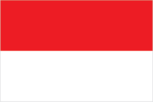
two equal horizontal bands of red (top) and white; the colors derive from the banner of the Majapahit Empire of the 13th-15th centuries; red symbolizes courage, white represents purity
Government Type
presidential republic
Independence
17 August 1945 (declared independence from the Netherlands)
International Law Organization Participation
has not submitted an ICJ jurisdiction declaration; non-party state to the ICCt
International Organization Participation
ADB, APEC, ARF, ASEAN, BIS, CD, CICA (observer), CP, D-8, EAS, EITI (compliant country), FAO, G-11, G-15, G-20, G-77, IAEA, IBRD, ICAO, ICC (national committees), ICRM, IDA, IDB, IFAD, IFC, IFRCS, IHO, ILO, IMF, IMO, IMSO, Interpol, IOC, IOM (observer), IORA, IPU, ISO, ITSO, ITU, ITUC (NGOs), MIGA, MINURSO, MINUSTAH, MONUSCO, MSG (associate member), NAM, OECD (enhanced engagement), OIC, OPCW, PIF (partner), UN, UNAMID, UNCTAD, UNESCO, UNIDO, UNIFIL, UNISFA, UNMIL, UNWTO, UPU, WCO, WFTU (NGOs), WHO, WIPO, WMO, WTO
Judicial Branch
- Highest Courts
- Supreme Court or Mahkamah Agung (51 judges divided into 8 chambers); Constitutional Court or Mahkamah Konstitusi (consists of 9 judges)
- Judge Selection And Term Of Office
- Supreme Court judges nominated by Judicial Commission, appointed by president with concurrence of parliament; judges serve until retirement at age 65; Constitutional Court judges - 3 nominated by president, 3 by Supreme Court, and 3 by parliament; judges appointed by the president; judges serve until mandatory retirement at age 70
- Subordinate Courts
- High Courts of Appeal, district courts, religious courts
Legal System
civil law system based on the Roman-Dutch model and influenced by customary law
Legislative Branch
- Description
- bicameral People's Consultative Assembly or Majelis Permusyawaratan Rakyat consists of: Regional Representative Council or Dewan Perwakilan Daerah (136 seats; non-partisan members directly elected in multi-seat constituencies - 4 each from the country's 34 electoral districts - by proportional representation vote to serve 5-year terms); note - the Regional Representative Council has no legislative authority House of Representatives or Dewan Perwakilan Rakyat (575 seats; members directly elected in multi-seat constituencies by single non-transferable vote to serve 5-year terms) (2019)
- Election Results
- Regional Representative Council - all seats elected on a non-partisan basis House of Representatives - percent of vote by party - PDI-P 19.3%, Gerindra 12.6%, Golkar 12.3%, PKB 9.7%, Nasdem 9.1%, PKS 8.2%, PD 7.8%, PAN 6.8%, PPP 4.5%, other 9.6%; seats by party - PDI-P 128, Golkar 85, Gerindra 78, Nasdem 59, PKB 58, PD 54, PKS 50, PAN 44, PPP 19; composition - men 475, women 100, percent of women 17.9%; total People's Consultative Assembly percent of women 28% (2019)
- Elections
- Regional Representative Council - last held 17 April 2019 (next to be held 2024) House of Representatives - last held on 17 April 2019 (next to be held 2024) (2019)
National Anthem
- Lyrics Music
- Wage Rudolf SOEPRATMAN
- Name
- "Indonesia Raya" (Great Indonesia)
National Holiday
Independence Day, 17 August (1945)
National Symbol S
garuda (mythical bird); national colors: red, white
Political Parties And Leaders
Democrat Party or PD [Susilo Bambang YUDHOYONO] Functional Groups Party or GOLKAR [Airlangga HARTARTO] Great Indonesia Movement Party or GERINDRA [PRABOWO Subianto Djojohadikusumo] Indonesia Democratic Party-Struggle or PDI-P [MEGAWATI Sukarnoputri] National Awakening Party or PKB [Muhaiman ISKANDAR] National Democratic Party or NasDem [Surya PALOH] National Mandate Party or PAN [Zulkifli HASAN] Party of the Functional Groups or Golkar [Airlangga HARTARTO] People's Conscience Party or HANURA [Oesman Sapta ODANG] Prosperous Justice Party or PKS [Muhammad Sohibul IMAN] United Development Party or PPP [Muhammad ROMAHURMUZIY] (2019)
Suffrage
17 years of age; universal and married persons regardless of age
Economy
Agriculture Products
rubber and similar products, palm oil, poultry, beef, forest products, shrimp, cocoa, coffee, medicinal herbs, essential oil, fish and its similar products, and spices
Budget
- Expenditures
- 159.6 billion (2017 est.)
- Revenues
- 131.7 billion (2017 est.)
Budget Surplus Or Deficit
-2.7% (of GDP) (2017 est.)
Central Bank Discount Rate
- 31 December 2009
- 6.46%
- 31 December 2010
- 6.37%
Commercial Bank Prime Lending Rate
- 31 December 2016
- 11.89%
- 31 December 2017
- 11.07%
Current Account Balance
- 2016
- -$16.95 billion
- 2017
- -$17.33 billion
Debt External
- 31 December 2017
- $344.4 billion
Distribution Of Family Income Gini Index
- 2005
- 39.4
- 2009
- 36.8
Economy Overview
Indonesia, the largest economy in Southeast Asia, has seen a slowdown in growth since 2012, mostly due to the end of the commodities export boom. During the global financial crisis, Indonesia outperformed its regional neighbors and joined China and India as the only G20 members posting growth. Indonesia’s annual budget deficit is capped at 3% of GDP, and the Government of Indonesia lowered its debt-to-GDP ratio from a peak of 100% shortly after the Asian financial crisis in 1999 to 34% today. In May 2017 Standard & Poor’s became the last major ratings agency to upgrade Indonesia’s sovereign credit rating to investment grade.Poverty and unemployment, inadequate infrastructure, corruption, a complex regulatory environment, and unequal resource distribution among its regions are still part of Indonesia’s economic landscape. President Joko WIDODO - elected in July 2014 – seeks to develop Indonesia’s maritime resources and pursue other infrastructure development, including significantly increasing its electrical power generation capacity. Fuel subsidies were significantly reduced in early 2015, a move which has helped the government redirect its spending to development priorities. Indonesia, with the nine other ASEAN members, will continue to move towards participation in the ASEAN Economic Community, though full implementation of economic integration has not yet materialized.
Exchange Rates
- 2013
- 11,865.2
- 2014
- 13,389.4
- 2015
- 13,308.3
- 2016
- 13,308.3
- 2017
- 13,385
- Currency
- Indonesian rupiah (IDR) per US dollar -
Exports
- 2016
- $144.4 billion
- 2017
- $168.9 billion
Exports Commodities
mineral fuels, animal or vegetable fats (includes palm oil), electrical machinery, rubber, machinery and mechanical appliance parts
Exports Partners
China 13.6%, US 10.6%, Japan 10.5%, India 8.4%, Singapore 7.6%, Malaysia 5.1%, South Korea 4.8% (2017)
Fiscal Year
calendar year
GDP Composition By End Use
- Exports Of Goods And Services
- 20.4% (2017 est.)
- Government Consumption
- 9.1% (2017 est.)
- Household Consumption
- 57.3% (2017 est.)
- Imports Of Goods And Services
- -19.2% (2017 est.)
- Investment In Fixed Capital
- 32.1% (2017 est.)
- Investment In Inventories
- 0.3% (2017 est.)
GDP Composition By Sector Of Origin
- Agriculture
- 13.7% (2017 est.)
- Industry
- 41% (2017 est.)
- Services
- 45.4% (2017 est.)
GDP Official Exchange Rate
$1.015 trillion (2017 est.)
GDP Per Capita Ppp
- 2015
- $11,500
- 2016
- $12,000
- 2017
- $12,400
GDP Purchasing Power Parity
- 2015
- $2.945 trillion
- 2016
- $3.093 trillion
- 2017
- $3.25 trillion
GDP Real Growth Rate
- 2015
- 4.9%
- 2016
- 5%
- 2017
- 5.1%
Gross National Saving
- 2015
- 32% of GDP
- 2016
- 32% of GDP
- 2017
- 31.7% of GDP
Household Income Or Consumption By Percentage Share
- Highest 10
- 28.2% (2010)
- Lowest 10
- 3.4%
Imports
- 2016
- $129.2 billion
- 2017
- $150.1 billion
Imports Commodities
mineral fuels, boilers, machinery, and mechanical parts, electric machinery, iron and steel, foodstuffs
Imports Partners
China 23.2%, Singapore 10.9%, Japan 10%, Thailand 6%, Malaysia 5.6%, South Korea 5.3%, US 5.2% (2017)
Industrial Production Growth Rate
4.1% (2017 est.)
Industries
petroleum and natural gas, textiles, automotive, electrical appliances, apparel, footwear, mining, cement, medical instruments and appliances, handicrafts, chemical fertilizers, plywood, rubber, processed food, jewelry, and tourism
Inflation Rate Consumer Prices
- 2016
- 3.5%
- 2017
- 3.8%
Labor Force
125 million (2016 est.)
Labor Force By Occupation
- Agriculture
- 32%
- Industry
- 21%
- Services
- 47% (2016 est.)
Market Value Of Publicly Traded Shares
- 31 December 2015
- $353.3 billion
- 31 December 2016
- $426 billion
- 31 December 2017
- $523.8 billion
Population Below Poverty Line
10.9% (2016 est.)
Public Debt
- 2016
- 28.3% of GDP
- 2017
- 28.8% of GDP
Reserves Of Foreign Exchange And Gold
- 31 December 2017
- $130.2 billion
Stock Of Broad Money
- 31 December 2016
- $92.11 billion
- 31 December 2017
- $102.7 billion
Stock Of Direct Foreign Investment Abroad
- 31 December 2016
- $18.42 billion
- 31 December 2017
- $20.5 billion
Stock Of Direct Foreign Investment at Home
- 31 December 2016
- $229.1 billion
- 31 December 2017
- $251.5 billion
Stock Of Domestic Credit
- 31 December 2016
- $397.7 billion
- 31 December 2017
- $422.4 billion
Stock Of Narrow Money
- 31 December 2016
- $92.11 billion
- 31 December 2017
- $102.7 billion
Taxes And Other Revenues
13% (of GDP) (2017 est.)
Unemployment Rate
- 2016
- 5.6%
- 2017
- 5.4%
Energy
Carbon Dioxide Emissions From Consumption Of Energy
540.7 million Mt (2017 est.)
Crude Oil Exports
302,300 bbl/day (2015 est.)
Crude Oil Imports
498,500 bbl/day (2015 est.)
Crude Oil Production
772,000 bbl/day (2018 est.)
Crude Oil Proved Reserves
3.31 billion bbl (1 January 2018 est.)
Electricity Access
- Electrification Rural Areas
- 94.8% (2016)
- Electrification Total Population
- 97.6% (2016)
- Electrification Urban Areas
- 100% (2016)
- Population Without Electricity
- 14 million (2017)
Electricity Consumption
213.4 billion kWh (2016 est.)
Electricity Exports
0 kWh (2017 est.)
Electricity From Fossil Fuels
85% of total installed capacity (2016 est.)
Electricity From Hydroelectric Plants
9% of total installed capacity (2017 est.)
Electricity From Nuclear Fuels
0% of total installed capacity (2017 est.)
Electricity From Other Renewable Sources
6% of total installed capacity (2017 est.)
Electricity Imports
693 million kWh (2016 est.)
Electricity Installed Generating Capacity
61.43 million kW (2016 est.)
Electricity Production
235.4 billion kWh (2016 est.)
Natural Gas Consumption
42.32 billion cu m (2017 est.)
Natural Gas Exports
29.78 billion cu m (2017 est.)
Natural Gas Imports
0 cu m (2017 est.)
Natural Gas Production
72.09 billion cu m (2017 est.)
Natural Gas Proved Reserves
2.866 trillion cu m (1 January 2018 est.)
Refined Petroleum Products Consumption
1.601 million bbl/day (2016 est.)
Refined Petroleum Products Exports
79,930 bbl/day (2015 est.)
Refined Petroleum Products Imports
591,500 bbl/day (2015 est.)
Refined Petroleum Products Production
950,000 bbl/day (2015 est.)
Communications
Broadband Fixed Subscriptions
- Subscriptions Per 100 Inhabitants
- 2 (2017 est.)
- Total
- 6,044,712
Broadcast Media
mixture of about a dozen national TV networks - 1 public broadcaster, the remainder private broadcasters - each with multiple transmitters; more than 100 local TV stations; widespread use of satellite and cable TV systems; public radio broadcaster operates 6 national networks, as well as regional and local stations; overall, more than 700 radio stations with more than 650 privately operated (2019)
Internet Country Code
.id
Internet Users
- Percent Of Population
- 25.4% (July 2016 est.)
- Total
- 65,525,226
Telephone System
- Domestic
- fixed-line 4 per 100 and mobile-cellular 175 per 100 persons; coverage provided by existing network has been expanded by use of over 200,000 telephone kiosks many located in remote areas; mobile-cellular subscribership growing rapidly (2018)
- General Assessment
- domestic service includes an interisland microwave system, an HF radio police net, and a domestic satellite communications system; international service good; Indonesia has very low fixed line and fixed broadband penetration, high mobile penetration and moderate mobile broadband penetration (2018)
- International
- country code - 62; landing points for the SEA-ME-WE-3 & 5, DAMAI, JASUKA, BDM, Dumai-Melaka Cable System, IGG, JIBA, Link 1, 3, 4, & 5, PGASCOM, B3J2, Tanjung Pandam-Sungai Kakap Cable System, JAKABARE, JAYABAYA, INDIGO-West, Matrix Cable System, ASC, SJJK, Jaka2LaDeMa, S-U-B Cable System, JBCS, MKCS, BALOK, Palapa Ring East, West and Middle, SMPCS Packet-1 and 2, LTCS, TSCS, SEA-US and Kamal Domestic Submarine Cable System, 35 submarine cable networks that provide links throughout Asia, the Middle East, Australia, Southeast Asia, Africa and Europe; satellite earth stations - 2 Intelsat (1 Indian Ocean and 1 Pacific Ocean) (2019)
Telephones Fixed Lines
- Subscriptions Per 100 Inhabitants
- 4 (2017 est.)
- Total Subscriptions
- 11,172,021
Telephones Mobile Cellular
- Subscriptions Per 100 Inhabitants
- 176 (2017 est.)
- Total Subscriptions
- 458,923,202
Transportation
Airports
673 (2013)
Airports With Paved Runways
- 1 524 To 2 437 M
- 51 (2017)
- 2 438 To 3 047 M
- 21 (2017)
- 914 To 1 523 M
- 72 (2017)
- Over 3 047 M
- 5 (2017)
- Total
- 186 (2017)
- Under 914 M
- 37 (2017)
Airports With Unpaved Runways
- 1 524 To 2 437 M
- 4 (2013)
- 914 To 1 523 M
- 23 (2013)
- Total
- 487 (2013)
- Under 914 M
- 460 (2013)
Civil Aircraft Registration Country Code Prefix
PK (2016)
Heliports
76 (2013)
Merchant Marine
- By Type
- bulk carrier 97, container ship 205, general cargo 2203, oil tanker 567, other 5981 (2018)
- Total
- 9,053
National Air Transport System
- Annual Freight Traffic On Registered Air Carriers
- 747,473,207 mt-km (2015)
- Annual Passenger Traffic On Registered Air Carriers
- 88,685,767 (2015)
- Inventory Of Registered Aircraft Operated By Air Carriers
- 550 (2015)
- Number Of Registered Air Carriers
- 29 (2015)
Pipelines
1064 km condensate, 150 km condensate/gas, 11702 km gas, 119 km liquid petroleum gas, 7767 km oil, 77 km oil/gas/water, 728 km refined products, 53 km unknown, 44 km water (2013)
Ports And Terminals
- Container Port's Teus
- Tanjung Perak (3,553,370), Tanjung Priok (6,090,000) (2017)
- Lng Terminal's Export
- Bontang, Tangguh
- Lng Terminal's Import
- Arun, Lampung, West Java
- Major Seaport S
- Banjarmasin, Belawan, Kotabaru, Krueg Geukueh, Palembang, Panjang, Sungai Pakning, Tanjung Perak, Tanjung Priok
Railways
- Narrow Gauge
- 8,159 km 1.067-m gauge (565 km electrified) (2014)
- Total
- 8,159 km (2014)
Roadways
- Paved
- 283,102 km (2011)
- Total
- 496,607 km (2011)
- Unpaved
- 213,505 km (2011)
Waterways
21,579 km (2011)
Military and Security
Maritime Threats
The International Maritime Bureau continues to report the territorial and offshore waters in the Strait of Malacca and South China Sea as high risk for piracy and armed robbery against ships; attacks declined for the third year in a row from 43 incidents in 2016 to 36 in 2018 due to aggressive maritime patrolling by regional authorities; in 2018, 29 commercial vessels were boarded and three crew members were taken hostage; hijacked vessels are often disguised and cargo diverted to ports in East Asia (2018)
Military And Security Forces
Indonesian National Armed Forces (Tentara Nasional Indonesia, TNI): Army (TNI-Angkatan Darat (TNI-AD)), Navy (TNI-Angkatan Laut (TNI-AL), includes marines (Korps Marinir, KorMar), naval air arm), Air Force (TNI-Angkatan Udara (TNI-AU)), National Air Defense Command (Komando Pertahanan Udara Nasional (Kohanudnas)), Armed Forces Special Operations Command (Koopssus), Strategic Reserve Command (Kostrad) (2019)
Military Expenditures
- 2014
- 0.78% of GDP
- 2015
- 0.89% of GDP
- 2016
- 0.88% of GDP
- 2017
- 0.84% of GDP
- 2018
- 0.72% of GDP
Military Service Age And Obligation
18-45 years of age for voluntary military service, with selective conscription authorized; 2-year service obligation, with reserve obligation to age 45 (officers); Indonesian citizens only (2013)
Transnational Issues
Disputes International
Indonesia has a stated foreign policy objective of establishing stable fixed land and maritime boundaries with all of its neighbors; three stretches of land borders with Timor-Leste have yet to be delimited, two of which are in the Oecussi exclave area, and no maritime or Exclusive Economic Zone (EEZ) boundaries have been established between the countries; all borders between Indonesia and Australia have been agreed upon bilaterally, but a 1997 treaty that would settle the last of their maritime and EEZ boundary has yet to be ratified by Indonesia's legislature; Indonesian groups challenge Australia's claim to Ashmore Reef; Australia has closed parts of the Ashmore and Cartier Reserve to Indonesian traditional fishing and placed restrictions on certain catches; land and maritime negotiations with Malaysia are ongoing, and disputed areas include the controversial Tanjung Datu and Camar Wulan border area in Borneo and the maritime boundary in the Ambalat oil block in the Celebes Sea; Indonesia and Singapore continue to work on finalizing their 1973 maritime boundary agreement by defining unresolved areas north of Indonesia's Batam Island; Indonesian secessionists, squatters, and illegal migrants create repatriation problems for Papua New Guinea; maritime delimitation talks continue with Palau; EEZ negotiations with Vietnam are ongoing, and the two countries in Fall 2011 agreed to work together to reduce illegal fishing along their maritime boundary
Illicit Drugs
illicit producer of cannabis largely for domestic use; producer of methamphetamine and ecstasy; President WIDODO's war on drugs has led to an increase in death sentences and executions, particularly of foreign drug traffickers
Refugees And Internally Displaced Persons
- Idps
- 16,000 (inter-communal, inter-faith, and separatist violence between 1998 and 2004 in Aceh and Papua; religious attacks and land conflicts in 2012 and 2013; most IDPs in Aceh, Maluku, East Nusa Tengarra) (2018)
- Refugees Country Of Origin
- 6,098 (Afghanistan) (2018)
Terrorism
Terrorist Groups Home Based
- Isis Associated Jemaah Anshorut Daulah Jad
- aim(s): establish an Islamic caliphate in Indonesia area(s) of operation: an ISIS-aligned coalition of cells located throughout the country (2018)
- Islamic State Of Iraq And Ash Sham Isis Network In Indonesia
- aim(s): replace the Indonesian Government with an Islamic state and implement ISIS's strict interpretation of sharia area(s) of operation: maintains a covert operational presence (2018)
- Jemaah Islamiyah Ji
- aim(s): overthrow the Indonesian Government and, ultimately, establish a pan-Islamic state across Southeast Asia area(s) of operation: Indonesia (2018)