2012 Edition
CIA World Factbook 2012 Archive (HTML)
Introduction
Background
Finland was a province and then a grand duchy under Sweden from the 12th to the 19th centuries, and an autonomous grand duchy of Russia after 1809. It won its complete independence in 1917. During World War II, it was able to successfully defend its freedom and resist invasions by the Soviet Union - albeit with some loss of territory. In the subsequent half century, the Finns made a remarkable transformation from a farm/forest economy to a diversified modern industrial economy; per capita income is now among the highest in Western Europe. A member of the European Union since 1995, Finland was the only Nordic state to join the euro system at its initiation in January 1999. In the 21st century, the key features of Finland's modern welfare state are a high standard of education, equality promotion, and national social security system - currently challenged by an aging population and the fluctuations of an export-driven economy.
Geography
Area
- 338,145 sq km 303,815 sq km 34,330 sq km
- total
- 338,145 sq km
- water
- 34,330 sq km
Area - comparative
slightly smaller than Montana
Climate
cold temperate; potentially subarctic but comparatively mild because of moderating influence of the North Atlantic Current, Baltic Sea, and more than 60,000 lakes
Coastline
1,250 km
Elevation extremes
- Baltic Sea 0 m Halti (alternatively Haltia, Haltitunturi, Haltiatunturi) 1,328 m
- highest point
- Halti (alternatively Haltia, Haltitunturi, Haltiatunturi) 1,328 m
- lowest point
- Baltic Sea 0 m
Environment - current issues
air pollution from manufacturing and power plants contributing to acid rain; water pollution from industrial wastes, agricultural chemicals; habitat loss threatens wildlife populations
Environment - international agreements
- Air Pollution, Air Pollution-Nitrogen Oxides, Air Pollution-Persistent Organic Pollutants, Air Pollution-Sulfur 85, Air Pollution-Sulfur 94, Air Pollution-Volatile Organic Compounds, Antarctic-Environmental Protocol, Antarctic-Marine Living Resources, Antarctic Treaty, Biodiversity, Climate Change, Climate Change-Kyoto Protocol, Desertification, Endangered Species, Environmental Modification, Hazardous Wastes, Law of the Sea, Marine Dumping, Marine Life Conservation, Ozone Layer Protection, Ship Pollution, Tropical Timber 83, Tropical Timber 94, Wetlands, Whaling none of the selected agreements
- party to
- Air Pollution, Air Pollution-Nitrogen Oxides, Air Pollution-Persistent Organic Pollutants, Air Pollution-Sulfur 85, Air Pollution-Sulfur 94, Air Pollution-Volatile Organic Compounds, Antarctic-Environmental Protocol, Antarctic-Marine Living Resources, Antarctic Treaty, Biodiversity, Climate Change, Climate Change-Kyoto Protocol, Desertification, Endangered Species, Environmental Modification, Hazardous Wastes, Law of the Sea, Marine Dumping, Marine Life Conservation, Ozone Layer Protection, Ship Pollution, Tropical Timber 83, Tropical Timber 94, Wetlands, Whaling
- signed, but not ratified
- none of the selected agreements
Freshwater withdrawal (domestic/industrial/agricultural)
- 2.33 cu km/yr (14%/84%/3%) 444 cu m/yr (1999)
- per capita
- 444 cu m/yr (1999)
- total
- 2.33 cu km/yr (14%/84%/3%)
Geographic coordinates
64 00 N, 26 00 E
Geography - note
long boundary with Russia; Helsinki is northernmost national capital on European continent; population concentrated on small southwestern coastal plain
Irrigated land
770 sq km (2003)
Land boundaries
- 2,654 km Norway 727 km, Sweden 614 km, Russia 1,313 km
- border countries
- Norway 727 km, Sweden 614 km, Russia 1,313 km
- total
- 2,654 km
Land use
- 6.54% 0.02% 93.44% (2005)
- arable land
- 6.54%
- other
- 93.44% (2005)
- permanent crops
- 0.02%
Location
Northern Europe, bordering the Baltic Sea, Gulf of Bothnia, and Gulf of Finland, between Sweden and Russia
Map references
Europe
Maritime claims
- 12 nm (in the Gulf of Finland - 3 nm) 24 nm 12 nm; extends to continental shelf boundary with Sweden 200 m depth or to the depth of exploitation
- contiguous zone
- 24 nm
- continental shelf
- 200 m depth or to the depth of exploitation
- exclusive fishing zone
- 12 nm; extends to continental shelf boundary with Sweden
- territorial sea
- 12 nm (in the Gulf of Finland - 3 nm)
Natural hazards
NA
Natural resources
timber, iron ore, copper, lead, zinc, chromite, nickel, gold, silver, limestone
Terrain
mostly low, flat to rolling plains interspersed with lakes and low hills
Total renewable water resources
110 cu km (2005)
People and Society
Age structure
- 15.9% (male 426,501/ female 411,897) 65.6% (male 1,745,531/ female 1,705,782) 18.5% (male 403,848/ female 569,371) (2012 est.)
- 0-14 years
- 15.9% (male 426,501/ female 411,897)
- 15-64 years
- 65.6% (male 1,745,531/ female 1,705,782)
- 65 years and over
- 18.5% (male 403,848/ female 569,371) (2012 est.)
Birth rate
10.36 births/1,000 population (2012 est.)
Death rate
10.33 deaths/1,000 population (July 2012 est.)
Education expenditures
5.9% of GDP (2007)
Ethnic groups
Finn 93.4%, Swede 5.6%, Russian 0.5%, Estonian 0.3%, Roma (Gypsy) 0.1%, Sami 0.1% (2006)
Health expenditures
11.7% of GDP (2009)
HIV/AIDS - adult prevalence rate
0.1% (2009 est.)
HIV/AIDS - deaths
fewer than 100 (2009 est.)
HIV/AIDS - people living with HIV/AIDS
2,600 (2009 est.)
Hospital bed density
6.52 beds/1,000 population (2008)
Infant mortality rate
- 3.4 deaths/1,000 live births 3.7 deaths/1,000 live births 3.09 deaths/1,000 live births (2012 est.)
- female
- 3.09 deaths/1,000 live births (2012 est.)
- total
- 3.4 deaths/1,000 live births
Languages
Finnish (official) 91.2%, Swedish (official) 5.5%, other (small Sami- and Russian-speaking minorities) 3.3% (2007)
Life expectancy at birth
- 79.41 years 75.94 years 83.02 years (2012 est.)
- female
- 83.02 years (2012 est.)
- total population
- 79.41 years
Literacy
- age 15 and over can read and write 100% 100% 100% (2000 est.)
- definition
- age 15 and over can read and write
- female
- 100% (2000 est.)
- male
- 100%
- total population
- 100%
Major cities - population
HELSINKI (capital) 1.107 million (2009)
Maternal mortality rate
5 deaths/100,000 live births (2010)
Median age
- 42.7 years 41 years 44.5 years (2012 est.)
- female
- 44.5 years (2012 est.)
- male
- 41 years
- total
- 42.7 years
Nationality
- Finn(s) Finnish
- adjective
- Finnish
- noun
- Finn(s)
Net migration rate
0.62 migrant(s)/1,000 population (2012 est.)
Obesity - adult prevalence rate
15.7% (2008)
Physicians density
2.735 physicians/1,000 population (2008)
Population
5,262,930 (July 2012 est.)
Population growth rate
0.065% (2012 est.)
Religions
Lutheran Church of Finland 82.5%, Orthodox Church 1.1%, other Christian 1.1%, other 0.1%, none 15.1% (2006)
Sanitation facility access
- urban: 100% of population rural: 100% of population total: 100% of population
- rural
- 100% of population
- total
- 100% of population
- urban
- 100% of population
School life expectancy (primary to tertiary education)
- 17 years 16 years 18 years (2008)
- female
- 18 years (2008)
- male
- 16 years
- total
- 17 years
Sex ratio
- 1.04 male(s)/female 1.03 male(s)/female 1.02 male(s)/female 0.71 male(s)/female 0.96 male(s)/female (2011 est.)
- 15-64 years
- 1.02 male(s)/female
- 65 years and over
- 0.71 male(s)/female
- at birth
- 1.04 male(s)/female
- total population
- 0.96 male(s)/female (2011 est.)
- under 15 years
- 1.03 male(s)/female
Total fertility rate
1.73 children born/woman (2012 est.)
Unemployment, youth ages 15-24
- 20.5% 22% 18.8% (2009)
- female
- 18.8% (2009)
- total
- 20.5%
Urbanization
- 85% of total population (2010) 0.6% annual rate of change (2010-15 est.)
- rate of urbanization
- 0.6% annual rate of change (2010-15 est.)
- urban population
- 85% of total population (2010)
Government
Administrative divisions
19 regions (maakunnat, singular - maakunta (Finnish); landskapen, singular - landskapet (Swedish)); Aland (Swedish), Ahvenanmaa (Finnish); Etela-Karjala (Finnish), Sodra Karelen (Swedish) [South Karelia]; Etela-Pohjanmaa (Finnish), Sodra Osterbotten (Swedish) [South Ostrobothnia]; Etela-Savo (Finnish), Sodra Savolax (Swedish) [South Savo]; Kanta-Hame (Finnish), Egentliga Tavastland (Swedish); Kainuu (Finnish), Kajanaland (Swedish); Keski-Pohjanmaa (Finnish), Mellersta Osterbotten (Swedish) [Central Ostrobothnia]; Keski-Suomi (Finnish), Mellersta Finland (Swedish) [Central Finland]; Kymenlaakso (Finnish), Kymmenedalen (Swedish); Lappi (Finnish), Lappland (Swedish); Paijat-Hame (Finnish), Paijanne-Tavastland (Swedish); Pirkanmaa (Finnish), Birkaland (Swedish) [Tampere]; Pohjanmaa (Finnish), Osterbotten (Swedish) [Ostrobothnia]; Pohjois-Karjala (Finnish), Norra Karelen (Swedish) [North Karelia]; Pohjois-Pohjanmaa (Finnish), Norra Osterbotten (Swedish) [North Ostrobothnia]; Pohjois-Savo (Finnish), Norra Savolax (Swedish) [North Savo]; Satakunta (Finnish and Swedish); Uusimaa (Finnish), Nyland (Swedish) [Newland]; Varsinais-Suomi (Finnish), Egentliga Finland (Swedish) [Southwest Finland]
Capital
- Helsinki 60 10 N, 24 56 E UTC+2 (7 hours ahead of Washington, DC during Standard Time) +1hr, begins last Sunday in March; ends last Sunday in October
- daylight saving time
- +1hr, begins last Sunday in March; ends last Sunday in October
- geographic coordinates
- 60 10 N, 24 56 E
- name
- Helsinki
- time difference
- UTC+2 (7 hours ahead of Washington, DC during Standard Time)
Constitution
1 March 2000
Country name
- Republic of Finland Finland Suomen tasavalta/Republiken Finland Suomi/Finland
- conventional long form
- Republic of Finland
- conventional short form
- Finland
- local long form
- Suomen tasavalta/Republiken Finland
- local short form
- Suomi/Finland
Diplomatic representation from the US
- Ambassador Bruce J. ORECK Itainen Puistotie 14B, 00140 Helsinki APO AE 09723 [358] (9) 616250 [358] (9) 6162 5800
- chief of mission
- Ambassador Bruce J. ORECK
- embassy
- Itainen Puistotie 14B, 00140 Helsinki
- FAX
- [358] (9) 6162 5800
- mailing address
- APO AE 09723
- telephone
- [358] (9) 616250
Diplomatic representation in the US
- Ambassador Ritva KOUKKU-RONDE 3301 Massachusetts Avenue NW, Washington, DC 20008 [1] (202) 298-5800 [1] (202) 298-6030 Los Angeles, New York
- chancery
- 3301 Massachusetts Avenue NW, Washington, DC 20008
- chief of mission
- Ambassador Ritva KOUKKU-RONDE
- consulate(s) general
- Los Angeles, New York
- FAX
- [1] (202) 298-6030
- telephone
- [1] (202) 298-5800
Executive branch
- President Sauli NIINISTO (since 1 March 2012) Prime Minister Jyrki KATAINEN (since 22 June 2011) Council of State or Valtioneuvosto appointed by the president, responsible to parliament president elected by popular vote for a six-year term (eligible for a second term); election last held on 5 February 2012 (next to be held in February 2018); the parliament elects a prime minister who is then appointed to office by the president percent of vote - Sauli NIINISTO (Kok) 36.96%, Pekka HAAVISTO (Vihr) 18.76%, Paavo VAYRYNEN (Kesk) 17.53%, Timo SOINI (TF) 9.4%, Paavo LIPPONEN (SDP) 6.7%, Paavo ARHINMÄKI (Vas) 5.48%, Eva BIAUDET (SFP) 2.7%, Sari ESSAYAH (KD) 2.47%; a runoff election between NIINISTO and HAAVISTO was held 5 February 2012 - NIINISTO 62.59%, HAAVISTO 37.41%; Jyrki KATAINEN elected prime minister; election results 118-72 government coalition - Kok, SDP, Vihr, SFP, Vas, and KD (2013)
- cabinet
- Council of State or Valtioneuvosto appointed by the president, responsible to parliament
- chief of state
- President Sauli NIINISTO (since 1 March 2012)
- election results
- percent of vote - Sauli NIINISTO (Kok) 36.96%, Pekka HAAVISTO (Vihr) 18.76%, Paavo VAYRYNEN (Kesk) 17.53%, Timo SOINI (TF) 9.4%, Paavo LIPPONEN (SDP) 6.7%, Paavo ARHINMÄKI (Vas) 5.48%, Eva BIAUDET (SFP) 2.7%, Sari ESSAYAH (KD) 2.47%; a runoff election between NIINISTO and HAAVISTO was held 5 February 2012 - NIINISTO 62.59%, HAAVISTO 37.41%; Jyrki KATAINEN elected prime minister; election results 118-72
- elections
- president elected by popular vote for a six-year term (eligible for a second term); election last held on 5 February 2012 (next to be held in February 2018); the parliament elects a prime minister who is then appointed to office by the president
- head of government
- Prime Minister Jyrki KATAINEN (since 22 June 2011)
Flag description
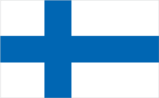
white with a blue cross extending to the edges of the flag; the vertical part of the cross is shifted to the hoist side in the style of the Dannebrog (Danish flag); the blue represents the thousands of lakes scattered across the country, while the white is for the snow that covers the land in winter
Government type
republic
Independence
6 December 1917 (from Russia)
International law organization participation
accepts compulsory ICJ jurisdiction with reservations; accepts ICCt jurisdiction
International organization participation
ADB (nonregional member), AfDB (nonregional member), Arctic Council, Australia Group, BIS, CBSS, CD, CE, CERN, EAPC, EBRD, ECB, EIB, EITI (implementing country), EMU, ESA, EU, FAO, FATF, G-9, IADB, IAEA, IBRD, ICAO, ICC (national committees), ICRM, IDA, IEA, IFAD, IFC, IFRCS, IHO, ILO, IMF, IMO, IMSO, Interpol, IOC, IOM, IPU, ISO, ITSO, ITU, ITUC (NGOs), MIGA, NC, NEA, NIB, NSG, OAS (observer), OECD, OPCW, OSCE, Paris Club, PCA, PFP, Schengen Convention, UN, UNCTAD, UNESCO, UNHCR, UNIDO, UNIFIL, UNMIL, UNMOGIP, UNRWA, UNTSO, UPU, WCO, WFTU (NGOs), WHO, WIPO, WMO, WTO, ZC
Judicial branch
general courts - deal with criminal and civil cases (include district courts, Courts of Appeal, and the Supreme Court or Korkein Oikeus, whose judges are appointed by the president); administrative courts
Legal system
civil law system based on the Swedish model; note - the president may request the Supreme Court to review laws
Legislative branch
- unicameral Parliament or Eduskunta (200 seats; members elected by popular vote on a proportional basis to serve four-year terms) last held on 17 April 2011 (next to be held in April 2015) percent of vote by party - Kok 20.4%, SDP 19.1%, TF 19%, Kesk 15.8%, Vas 8.1%, Vihr 7.2%, SFP 4.3%, KD 4%, other 2%; seats by party - Kok 44, SDP 42, TF 39, Kesk 35, Vas 14, Vihr 10, SFP 9, KD 6, other 1 (the constituency of Aland) (2012)
- election results
- percent of vote by party - Kok 20.4%, SDP 19.1%, TF 19%, Kesk 15.8%, Vas 8.1%, Vihr 7.2%, SFP 4.3%, KD 4%, other 2%; seats by party - Kok 44, SDP 42, TF 39, Kesk 35, Vas 14, Vihr 10, SFP 9, KD 6, other 1 (the constituency of Aland) (2012)
- elections
- last held on 17 April 2011 (next to be held in April 2015)
National anthem
- "Maamme" (Our Land) Johan Ludvig RUNEBERG/Fredrik PACIUS in use since 1848; although never officially adopted by law, the anthem has been popular since it was first sung by a student group in 1848; Estonia's anthem uses the same melody as that of Finland
- lyrics/music
- Johan Ludvig RUNEBERG/Fredrik PACIUS
- name
- "Maamme" (Our Land)
National holiday
Independence Day, 6 December (1917)
National symbol(s)
lion
Political parties and leaders
Center Party (Suomen Keskusta) or Kesk [Juha SIPILA]; Christian Democrats (Kristillisdemokraatit) or KD [Paivi RASANEN]; Green League (Vihrea litto) or Vihr [Ville NIINISTO]; Left Alliance (Vasemmistolitto) or Vas [Paavo ARHINMAKI]; National Coalition Party (Kansallinen Kokoomus) or Kok [Jyrki KATAINEN]; Social Democratic Party (Suomen Sosialidemokraattinen) or SDP [Jutta URPILAINEN]; Swedish People's Party (Svenska Folkpartiet) or SFP [Carl HAGLUND]; The Finns Party (Perussuomalaiset) or TF [Timo SOINI]
Suffrage
18 years of age; universal
Economy
Agriculture - products
barley, wheat, sugar beets, potatoes; dairy cattle; fish
Budget
- $129.4 billion $134 billion Central Government Budget (2012 est.)
- expenditures
- $134 billion
- revenues
- $129.4 billion
Budget surplus (+) or deficit (-)
-1.9% of GDP (2012 est.)
Central bank discount rate
1.5% (31 December 2012) 1.75% (31 December 2010) this is the European Central Bank's rate on the marginal lending facility, which offers overnight credit to banks in the euro area
Commercial bank prime lending rate
1.9% (31 December 2012 est.) 2.68% (31 December 2011 est.)
Current account balance
-$3.6 billion (2012 est.) -$1.86 billion (2011 est.)
Debt - external
$577 billion (31 December 2011) $370.8 billion (30 June 2010)
Distribution of family income - Gini index
26.8 (2008) 25.6 (1991)
Economy - overview
Finland has a highly industrialized, largely free-market economy with per capita output roughly that of Austria, Belgium, the Netherlands, and Sweden. Trade is important with exports accounting for over one third of GDP in recent years. Finland is strongly competitive in manufacturing - principally the wood, metals, engineering, telecommunications, and electronics industries. Finland excels in high-tech exports such as mobile phones. Except for timber and several minerals, Finland depends on imports of raw materials, energy, and some components for manufactured goods. Because of the climate, agricultural development is limited to maintaining self-sufficiency in basic products. Forestry, an important export earner, provides a secondary occupation for the rural population. Finland had been one of the best performing economies within the EU in recent years and its banks and financial markets avoided the worst of global financial crisis. However, the world slowdown hit exports and domestic demand hard in 2009, with Finland experiencing one of the deepest contractions in the euro zone. A recovery of exports, domestic trade, and household consumption stimulated economic growth in 2010-11. The recession affected general government finances and the debt ratio, turning previously strong budget surpluses into deficits, but Finland has taken action to ensure it will meet EU deficit targets by 2013 and retains its triple-A credit rating. Finland's main challenge in 2013 will be to stimulate growth in the face of weak demand in EU export markets and government austerity measures meant to reduce its budget deficit. Longer-term, Finland must address a rapidly aging population and decreasing productivity that threaten competitiveness, fiscal sustainability, and economic growth.
Exchange rates
euros (EUR) per US dollar - 0.7838 (2012 est.) 0.7185 (2011 est.) 755 (2010 est.) 0.7198 (2009 est.) 0.6827 (2008 est.)
Exports
$72.7 billion (2012 est.) $78.83 billion (2011 est.)
Exports - commodities
electrical and optical equipment, machinery, transport equipment, paper and pulp, chemicals, basic metals; timber
Exports - partners
Sweden 11.8%, Germany 10%, Russia 9.2%, Netherlands 6.8%, UK 5.2%, US 4.9%, China 4.7% (2011)
Fiscal year
calendar year
GDP - composition by sector
- 3.3% 27.1% 69.6% (2012 est.)
- agriculture
- 3.3%
- industry
- 27.1%
- services
- 69.6% (2012 est.)
GDP - per capita (PPP)
$36,500 (2012 est.) $36,600 (2011 est.) $35,800 (2010 est.) data are in 2012 US dollars
GDP - real growth rate
0.3% (2012 est.) 2.7% (2011 est.) 3.3% (2010 est.)
GDP (official exchange rate)
$247.2 billion (2012 est.)
GDP (purchasing power parity)
$198.1 billion (2012 est.) $197.5 billion (2011 est.) $192.2 billion (2010 est.) data are in 2012 US dollars
Household income or consumption by percentage share
- 3.6% 24.7% (2007)
- highest 10%
- 24.7% (2007)
- lowest 10%
- 3.6%
Imports
$72.23 billion (2012 est.) $80.34 billion (2011 est.)
Imports - commodities
foodstuffs, petroleum and petroleum products, chemicals, transport equipment, iron and steel, machinery, computers, electronic industry products, textile yarn and fabrics, grains
Imports - partners
Russia 17.6%, Sweden 13.6%, Germany 13.6%, Netherlands 7.6%, China 4.2% (2011)
Industrial production growth rate
1.5% (2011 est.)
Inflation rate (consumer prices)
3% (2012 est.) 3.3% (2011 est.)
Investment (gross fixed)
20% of GDP (2012 est.)
Labor force
2.679 million (2012 est.)
Labor force - by occupation
- 4.4% 15.5% 7.1% 21.3% 13.3% 9.9% 28.5% (2011)
- agriculture and forestry
- 4.4%
- commerce
- 21.3%
- construction
- 7.1%
- finance, insurance, and business services
- 13.3%
- industry
- 15.5%
- public services
- 28.5% (2011)
- transport and communications
- 9.9%
Market value of publicly traded shares
$143.1 billion (31 December 2011) $118.2 billion (31 December 2010) $91.02 billion (31 December 2009)
Population below poverty line
NA%
Public debt
53.5% of GDP (2012 est.) 49.2% of GDP (2011 est.) data cover general government debt, and includes debt instruments issued (or owned) by government entities other than the treasury; the data include treasury debt held by foreign entities; the data include debt issued by subnational entities, as well as intra-governmental debt; intra-governmental debt consists of treasury borrowings from surpluses in the social funds, such as for retirement, medical care, and unemployment; debt instruments for the social funds are not sold at public auctions
Reserves of foreign exchange and gold
$9.9 billion (31 December 2012 est.) $10.35 billion (31 December 2011 est.)
Stock of broad money
$183.4 billion (31 December 2012 est.) $176.6 billion (31 December 2011 est.)
Stock of direct foreign investment - abroad
$148.8 billion (31 December 2012 est.) $138.8 billion (31 December 2011 est.)
Stock of direct foreign investment - at home
$84.32 billion (31 December 2012 est.) $82.96 billion (31 December 2011 est.)
Stock of domestic credit
$257.8 billion (31 December 2012 est.) $248.9 billion (31 December 2011 est.)
Stock of narrow money
$117 billion (31 December 2012 est.) $115.5 billion (31 December 2011 est.) see entry for the European Union for money supply in the euro area; the European Central Bank (ECB) controls monetary policy for the 17 members of the Economic and Monetary Union (EMU); individual members of the EMU do not control the quantity of money circulating within their own borders
Taxes and other revenues
52.3% of GDP (2012 est.)
Unemployment rate
7.3% (2012 est.) 7.8% (2011 est.)
Energy
Carbon dioxide emissions from consumption of energy
54.4 million Mt (2010 est.)
Crude oil - exports
0 bbl/day (2009 est.)
Crude oil - imports
215,700 bbl/day (2009 est.)
Crude oil - production
0 bbl/day (2011 est.)
Crude oil - proved reserves
0 bbl (1 January 2012 est.)
Electricity - consumption
77.66 billion kWh (2009 est.)
Electricity - exports
5.218 billion kWh (2010 est.)
Electricity - from fossil fuels
52.5% of total installed capacity (2009 est.)
Electricity - from hydroelectric plants
19.1% of total installed capacity (2009 est.)
Electricity - from nuclear fuels
16.4% of total installed capacity (2009 est.)
Electricity - from other renewable sources
12% of total installed capacity (2009 est.)
Electricity - imports
15.72 billion kWh (2010 est.)
Electricity - installed generating capacity
16.32 million kW (2009 est.)
Electricity - production
76.16 billion kWh (2010 est.)
Natural gas - consumption
4.101 billion cu m (2011 est.)
Natural gas - exports
0 cu m (2011 est.)
Natural gas - imports
4.101 billion cu m (2011 est.)
Natural gas - production
0 cu m (2010 est.)
Natural gas - proved reserves
0 cu m (1 January 2012 est.)
Refined petroleum products - consumption
204,800 bbl/day (2011 est.)
Refined petroleum products - exports
133,600 bbl/day (2009 est.)
Refined petroleum products - imports
103,100 bbl/day (2009 est.)
Refined petroleum products - production
301,500 bbl/day (2009 est.)
Communications
Broadcast media
a mix of publicly-operated TV stations and privately-owned TV stations; the 2 publicly-owned TV stations recently expanded services and the largest private TV station has introduced several special-interest pay-TV channels; cable and satellite multi-channel subscription services are available; all TV signals have been broadcast digitally since September 2007; analog broadcasts via cable networks were terminated in February 2008; public broadcasting maintains a network of 13 national and 25 regional radio stations; a large number of private radio broadcasters (2008)
Internet country code
.fi; note - Aland Islands assigned .ax
Internet hosts
4.763 million (2012)
Internet users
4.393 million (2009)
Telephone system
- modern system with excellent service digital fiber-optic fixed-line network and an extensive mobile-cellular network provide domestic needs country code - 358; submarine cables provide links to Estonia and Sweden; satellite earth stations - access to Intelsat transmission service via a Swedish satellite earth station, 1 Inmarsat (Atlantic and Indian Ocean regions); note - Finland shares the Inmarsat earth station with the other Nordic countries (Denmark, Iceland, Norway, and Sweden)
- domestic
- digital fiber-optic fixed-line network and an extensive mobile-cellular network provide domestic needs
- general assessment
- modern system with excellent service
- international
- country code - 358; submarine cables provide links to Estonia and Sweden; satellite earth stations - access to Intelsat transmission service via a Swedish satellite earth station, 1 Inmarsat (Atlantic and Indian Ocean regions); note - Finland shares the Inmarsat earth station with the other Nordic countries (Denmark, Iceland, Norway, and Sweden)
Telephones - main lines in use
1.08 million (2011)
Telephones - mobile cellular
8.94 million (2009)
Transportation
Airports
148 (2012)
Airports - with paved runways
- 15 (2012)
- 1,524 to 2,437 m
- 10
- 2,438 to 3,047 m
- 26
- 914 to 1,523 m
- 21
- over 3,047 m
- 3
- total
- 75
- under 914 m
- 15 (2012)
Airports - with unpaved runways
- 70 (2012)
- 914 to 1,523 m
- 3
- total
- 73
- under 914 m
- 70 (2012)
Merchant marine
- bulk carrier 2, cargo 25, carrier 1, chemical tanker 6, container 3, passenger 5, passenger/cargo 16, petroleum tanker 5, roll on/roll off 31, vehicle carrier 3 5 (Cyprus 1, Estonia 2, Iceland 1, Sweden 1) 47 (Bahamas 8, Germany 3, Gibraltar 2, Malta 3, Netherlands 13, Panama 2, Sweden 16) (2010)
- foreign-owned
- 5 (Cyprus 1, Estonia 2, Iceland 1, Sweden 1)
- registered in other countries
- 47 (Bahamas 8, Germany 3, Gibraltar 2, Malta 3, Netherlands 13, Panama 2, Sweden 16) (2010)
- total
- 97
Pipelines
gas 694 km (2010)
Ports and terminals
Helsinki, Kotka, Naantali, Porvoo, Raahe, Rauma
Railways
- 5,919 km 5,919 km 1.524-m gauge (3,067 km electrified) (2008)
- total
- 5,919 km
Roadways
- 78,141 km 50,914 km (includes 739 km of expressways) 27,227 km (2009)
- total
- 78,141 km
- unpaved
- 27,227 km (2009)
Waterways
7,842 km (includes Saimaa Canal system of 3,577 km; southern part leased from Russia; water transport is used frequently in the summer and is widely replaced with sledges on the ice in winter; there are 187,888 lakes in Finland that cover 31,500 km) (2011)
Military and Security
Manpower available for military service
- 1,155,368 1,106,193 (2010 est.)
- females age 16-49
- 1,106,193 (2010 est.)
- males age 16-49
- 1,155,368
Manpower fit for military service
- 955,151 912,983 (2010 est.)
- females age 16-49
- 912,983 (2010 est.)
- males age 16-49
- 955,151
Manpower reaching militarily significant age annually
- 32,599 31,416 (2010 est.)
- female
- 31,416 (2010 est.)
- male
- 32,599
Military branches
- Finnish Defense Forces (FDF): Army, Navy (includes Coastal Defense Forces), Air Force (Suomen Ilmavoimat) (2007)
- Finnish Defense Forces (FDF)
- Army, Navy (includes Coastal Defense Forces), Air Force (Suomen Ilmavoimat) (2007)
Military expenditures
2% of GDP (2005 est.)
Military service age and obligation
18 years of age for male voluntary and compulsory - and female voluntary - national military and nonmilitary service; service obligation 6-12 months; military obligation to age 60 (2012)
Transnational Issues
Disputes - international
various groups in Finland advocate restoration of Karelia and other areas ceded to the Soviet Union, but the Finnish Government asserts no territorial demands