Introduction
Finland was a province and then a grand duchy under Sweden from the 12th to the 19th centuries and an autonomous grand duchy of Russia after 1809. It gained complete independence in 1917. During World War II, Finland successfully defended its independence through cooperation with Germany and resisted subsequent invasions by the Soviet Union, albeit with some loss of territory. During the next half-century, Finland transformed from a farm/forest economy to a diversified modern industrial economy; per-capita income is among the highest in Western Europe. A member of the EU since 1995, Finland was the only Nordic state to join the euro single currency at its initiation in January 1999. In the 21st century, the key features of Finland's modern welfare state are high-quality education, promotion of equality, and a national social welfare system, although the system is currently facing the challenges of an aging population and the fluctuations of an export-driven economy. Following Russia's invasion of Ukraine in 2022, Finland opted to join NATO; it became the organization's 31st member in April 2023.
Geography
- Land
- 303,815 sq km
- Total
- 338,145 sq km
- Water
- 34,330 sq km
slightly more than two times the size of Georgia; slightly smaller than Montana
cold temperate; potentially subarctic but comparatively mild because of moderating influence of the North Atlantic Current, Baltic Sea, and more than 60,000 lakes
1,250 km
Europe
- Highest point
- Halti (alternatively Haltia, Haltitunturi, Haltiatunturi) 1,328 m
- Lowest point
- Baltic Sea 0 m
- Mean elevation
- 164 m
64 00 N, 26 00 E
long boundary with Russia; Helsinki is northernmost national capital on European continent; population concentrated on small southwestern coastal plain
80 sq km (2016)
- Border countries
- Norway 709 km; Sweden 545 km; Russia 1,309 km
- number of neighbors
- 3
- Total
- 2,563 km
- Agricultural land
- 7.4% (2023 est.)
- Agricultural land: arable land
- arable land: 7.4% (2023 est.)
- Agricultural land: permanent crops
- permanent crops: 0% (2023 est.)
- Agricultural land: permanent pasture
- permanent pasture: 0% (2023 est.)
- arable land
- 7.38%
- Forest
- 74.2% (2023 est.)
- Other
- 18.4% (2023 est.)
- permanent crops
- 0.02%
No
Northern Europe, bordering the Baltic Sea, Gulf of Bothnia, and Gulf of Finland, between Sweden and Russia
- Fresh water lake(s)
- Saimaa - 1,760 sq km; Paijanne - 1,090 sq km; Inarijarvi - 1,000 sq km; Oulujarvi - 900 sq km; Pielinen - 850 sq km
- Google Maps
- https://goo.gl/maps/HjgWDCNKRAYHrkMn8
- OpenStreetMap
- openstreetmap.org/relation/54224
Europe
- Contiguous zone
- 24 nm
- Continental shelf
- 200 m depth or to the depth of exploitation
- Exclusive fishing zone
- 12 nm; extends to continental shelf boundary with Sweden, Estonia, and Russia
- Territorial sea
- 12 nm (in the Gulf of Finland - 3 nm)
severe winters in the north
timber, iron ore, copper, lead, zinc, chromite, nickel, gold, silver, limestone
the vast majority of people are found in the south; the northern interior areas remain sparsely populated
Northern Europe
mostly low, flat to rolling plains interspersed with lakes and low hills
- UTC+02:00
- number of time zones
- 1
People and Society
- 0-14 years
- 16.2% (male 464,939/female 444,585)
- 15-64 years
- 60.3% (male 1,725,072/female 1,668,604)
- 65 years and over
- 23.5% (2024 est.) (male 583,645/female 739,569)
- Beer
- 3.76 liters of pure alcohol (2019 est.)
- Other alcohols
- 0.91 liters of pure alcohol (2019 est.)
- Spirits
- 1.96 liters of pure alcohol (2019 est.)
- Total
- 8.23 liters of pure alcohol (2019 est.)
- Wine
- 1.59 liters of pure alcohol (2019 est.)
7.75 births/1,000 population (2025 est.)
- Women married by age 18
- 0.1% (2017)
2.8%
57.1% (2023 est.)
- 11.01 deaths/1,000 population (2025 est.)
- adult female
- 43 per 1,000
- adult male
- 87 per 1,000
- Elderly dependency ratio
- 39 (2025 est.)
- Potential support ratio
- 2.6 (2025 est.)
- Total dependency ratio
- 62.3 (2025 est.)
- Youth dependency ratio
- 23.3 (2025 est.)
- improved total
- 99.65%
- Improved: rural
- rural: 100% of population (2022 est.)
- Improved: total
- total: 100% of population (2022 est.)
- Improved: urban
- urban: 100% of population (2022 est.)
- Unimproved: rural
- rural: 0% of population (2022 est.)
- Unimproved: total
- total: 0% of population (2022 est.)
- Unimproved: urban
- urban: 0% of population (2022 est.)
- Education expenditure (% GDP)
- 6.4% of GDP (2022 est.)
- Education expenditure (% national budget)
- 12.1% national budget (2022 est.)
6 % of GDP
- Finnish, Swedish, Russian, Estonian, Romani, Sami
- note
- <strong>note:</strong> 90.9% of the population has a Finnish background (2022 est.)
0.63 (2025 est.)
- 10 % of GDP
- Health expenditure (as % of GDP)
- 10.2% of GDP (2021)
- Health expenditure (as % of national budget)
- 14.8% of national budget (2022 est.)
2.8 beds/1,000 population (2020 est.)
- Female
- 1.9 deaths/1,000 live births
- Male
- 2.3 deaths/1,000 live births
- neonatal
- 1 deaths/1,000 live births
- Total
- 1.9 deaths/1,000 live births (2025 est.)
- Languages
- Finnish (official) 85.9%, Swedish (official) 5.2%, Russian 1.7%, other 7.2% (2022 est.)
- Major-language sample(s)
- <br>World Factbook, korvaamaton perustietolähde. (Finnish)<br><br>The World Factbook, the indispensable source for basic information.
- number of languages
- 2
- Female
- 85.2 years
- Male
- 79.3 years
- Total population
- 82.2 years (2024 est.)
1.338 million HELSINKI (capital) (2023)
8 deaths/100,000 live births (2023 est.)
- Female
- 44.9 years
- Male
- 41.8 years
- Total
- 44 years (2025 est.)
29.5 years (2020 est.)
- Adjective
- Finnish
- Noun
- Finn(s)
3.44 migrant(s)/1,000 population (2025 est.)
22.2% (2016)
3.61 physicians/1,000 population (2021)
- Female
- 2,800,392
- Male
- 2,750,057
- Total
- 5,550,449 (2025 est.)
0.02% (2025 est.)
Lutheran 66.6%, Greek Orthodox 1.1%, other 1.7%, none 30.6% (2022 est.)
- improved total
- 90.12%
- Improved: rural
- rural: 100% of population (2022 est.)
- Improved: total
- total: 100% of population (2022 est.)
- Improved: urban
- urban: 100% of population (2022 est.)
- Unimproved: rural
- rural: 0% of population (2022 est.)
- Unimproved: total
- total: 0% of population (2022 est.)
- Unimproved: urban
- urban: 0% of population (2022 est.)
- Female
- 21 years (2023 est.)
- Male
- 18 years (2023 est.)
- Total
- 20 years (2023 est.)
- 0-14 years
- 1.05 male(s)/female
- 15-64 years
- 1.03 male(s)/female
- 65 years and over
- 0.79 male(s)/female
- At birth
- 1.05 male(s)/female
- Total population
- 0.97 male(s)/female (2024 est.)
- Female
- 14.3% (2025 est.)
- Male
- 21.7% (2025 est.)
- Total
- 18% (2025 est.)
1.28 children born/woman (2025 est.)
- Rate of urbanization
- 0.42% annual rate of change (2020-25 est.)
- Urban population
- 85.8% of total population (2023)
- measles
- 94%
Government
19 regions (<em>maakunnat</em>, singular - <em>maakunta </em>(Finnish); <em>landskapen</em>, singular - <em>landskapet </em>(Swedish)); Aland (Swedish), Ahvenanmaa (Finnish); Etela-Karjala (Finnish), Sodra Karelen (Swedish) [South Karelia]; Etela-Pohjanmaa (Finnish), Sodra Osterbotten (Swedish) [South Ostrobothnia]; Etela-Savo (Finnish), Sodra Savolax (Swedish) [South Savo]; Kanta-Hame (Finnish), Egentliga Tavastland (Swedish); Kainuu (Finnish), Kajanaland (Swedish); Keski-Pohjanmaa (Finnish), Mellersta Osterbotten (Swedish) [Central Ostrobothnia]; Keski-Suomi (Finnish), Mellersta Finland (Swedish) [Central Finland]; Kymenlaakso (Finnish), Kymmenedalen (Swedish); Lappi (Finnish), Lappland (Swedish); Paijat-Hame (Finnish), Paijanne-Tavastland (Swedish); Pirkanmaa (Finnish), Birkaland (Swedish) [Tampere]; Pohjanmaa (Finnish), Osterbotten (Swedish) [Ostrobothnia]; Pohjois-Karjala (Finnish), Norra Karelen (Swedish) [North Karelia]; Pohjois-Pohjanmaa (Finnish), Norra Osterbotten (Swedish) [North Ostrobothnia]; Pohjois-Savo (Finnish), Norra Savolax (Swedish) [North Savo]; Satakunta (Finnish and Swedish); Uusimaa (Finnish), Nyland (Swedish) [Newland]; Varsinais-Suomi (Finnish), Egentliga Finland (Swedish) [Southwest Finland]
- Daylight saving time
- +1hr, begins last Sunday in March; ends last Sunday in October
- Etymology
- the modern name is a Finnish derivation; King Gustav VASA of Sweden founded the city in 1550 as Helsingfors; the name came from <em>Helsing</em>, the Old Norwegian name for a local people, and the word <em>fors</em>, or "waterfall," referring to a waterfall at the city's original location on the Vantaa River
- Geographic coordinates
- 60 10 N, 24 56 E
- Name
- Helsinki
- Time difference
- UTC+2 (7 hours ahead of Washington, DC, during Standard Time)
- Citizenship by birth
- no
- Citizenship by descent only
- at least one parent must be a citizen of Finland
- Dual citizenship recognized
- yes
- Residency requirement for naturalization
- 6 years
- svg
- https://mainfacts.com/media/images/coats_of_arms/fi.svg
- Amendment process
- proposed by Parliament; passage normally requires simple majority vote in two readings in the first parliamentary session and at least two-thirds majority vote in a single reading by the newly elected Parliament; proposals declared "urgent" by five-sixths of Parliament members can be passed by at least two-thirds majority vote in the first parliamentary session only
- History
- previous 1906, 1919; latest drafted 17 June 1997, approved by Parliament 11 June 1999, entered into force 1 March 2000
- alternative spellings
- FI, Suomi, Republic of Finland, Suomen tasavalta, Republiken Finland
- Conventional long form
- Republic of Finland
- Conventional short form
- Finland
- Etymology
- name derives from the Finns, an ethnic group in northeastern Europe; their name comes from the Germanic word <em>finna</em>, meaning "fish scale;" the local name, Suomi, may come from two local words: <em>suo</em>, meaning "marsh," and <em>maa</em>, meaning "land"
- FIFA code
- FIN
- Local long form
- Suomen tasavalta (Finnish)/ Republiken Finland (Swedish)
- local long form (fin)
- Suomen tasavalta
- Local short form
- Suomi (Finnish)/ Finland (Swedish)
- Chief of mission
- Ambassador Howard W. BRODIE (since 13 November 2025)
- Email address and website
- <br>HelsinkiACS@state.gov<br><br>https://fi.usembassy.gov/
- Embassy
- Itainen Puistotie 14 B, 00140 Helsinki
- FAX
- [358] (9) 174-681
- Mailing address
- 5310 Helsinki Place, Washington DC 20521-5310
- Telephone
- [358] (9) 616-250
- Chancery
- 3301 Massachusetts Avenue NW, Washington, DC 20008
- Chief of mission
- Ambassador Leena-Kaisa MIKKOLA (since 18 September 2024)
- Consulate(s) general
- Los Angeles, New York
- Email address and website
- <br>sanomat.WAS@gov.fi<br><br>https://finlandabroad.fi/web/usa/mission
- FAX
- [1] (202) 298-6030
- Telephone
- [1] (202) 298-5800
- Cabinet
- Council of State or Valtioneuvosto appointed by the president, responsible to Parliament
- Chief of state
- President Alexander STUBB (since 1 March 2024)
- Election results
- <em><br>2024: </em>Alexander STUBB elected in the second round; percent of vote in the first round - Alexander STUBB (KoK) 27.2%, Pekka HAAVISTO (Vihr) 25.8%, Jussi HALLA-AHO (PS) 19.0%, Olli REHN (Kesk) 15.3%; percent of vote in second round - STUBB 51.6%, HAAVISTO 48.4%<br><em><br>2018: </em> Sauli NIINISTO reelected president; percent of vote - Sauli NIINISTO (independent) 62.7%, Pekka HAAVISTO (Vihr) 12.4%, Laura HUHTASAARI (PS) 6.9%, Paavo VAYRYNEN (independent) 6.2%, Matti VANHANEN (Kesk) 4.1%, other 7.7%
- Election/appointment process
- president directly elected by absolute-majority popular vote in 2 rounds, if needed, for a 6-year term (eligible for a second term); prime minister appointed by Parliament
- Expected date of next election
- by 28 January 2030
- Head of government
- Prime Minister Petteri ORPO (since 20 June 2023)
- Most recent election date
- 28 January 2024, with a runoff on 11 February 2024
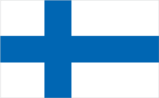
<strong>description:</strong> white with a blue cross extending to the edges of the flag; the cross is shifted to the left in the style of the Dannebrog (Danish flag)<br><br><strong>meaning:</strong> the blue stands for the country's thousands of lakes, and the white for snow
The flag of Finland has a white field with a large blue cross that extend to the edges of the field. The vertical part of this cross is offset towards the hoist side.
- svg
- https://flagcdn.com/fi.svg
parliamentary republic
6 December 1917 (from Russia)
accepts compulsory ICJ jurisdiction with reservations; accepts ICCt jurisdiction
ADB (nonregional member), AfDB (nonregional member), Arctic Council, Australia Group, BIS, CBSS, CD, CE, CERN, EAPC, EBRD, ECB, EIB, EITI (implementing country), EMU, ESA, EU, FAO, FATF, G-9, IADB, IAEA, IBRD, ICAO, ICC (national committees), ICCt, ICRM, IDA, IEA, IFAD, IFC, IFRCS, IHO, ILO, IMF, IMO, IMSO, Interpol, IOC, IOM, IPU, ISO, ITSO, ITU, ITUC (NGOs), MIGA, NATO, NC, NEA, NIB, NSG, OAS (observer), OECD, OPCW, OSCE, Pacific Alliance (observer), Paris Club, PCA, PFP, Schengen Convention, UN, UNCTAD, UNESCO, UNHCR, UNHRC, UNIDO, UNIFIL, UNMIL, UNMOGIP, UNOOSA, UNRWA, UNSOM, UNTSO, UPU, Wassenaar Arrangement, WCO, WFTU (NGOs), WHO, WIPO, WMO, WTO, ZC
- Highest court(s)
- Supreme Court or Korkein Oikeus (consists of the court president and 18 judges); Supreme Administrative Court (consists of 21 judges, including the court president; organized into 3 chambers)
- Judge selection and term of office
- Supreme Court and Supreme Administrative Court judges appointed by the president of the republic; judges serve until mandatory retirement at age 68
- Note
- <strong>note:</strong> Finland has a dual judicial system; courts with civil and criminal jurisdiction, and administrative courts with jurisdiction for litigation between individuals and administrative organs of the state and communities
- Subordinate courts
- 6 Courts of Appeal; 8 regional administrative courts; 27 district courts; special courts for issues relating to markets, labor, insurance, impeachment, land, tenancy, and water rights
civil law system based on the Swedish model
- Electoral system
- proportional representation
- Expected date of next election
- April 2027
- Legislative structure
- unicameral
- Legislature name
- Parliament (Eduskunta - Riksdagen)
- Most recent election date
- 4/2/2023
- Number of seats
- 200 (all directly elected)
- Parties elected and seats per party
- National Coalition Party (KOK) (48); The Finns Party (PS) (46); Social Democratic Party (SDP) (43); Center Party (KESK) (23); The Greens (13); Left Alliance (Vas) (11); Other (16)
- Percentage of women in chamber
- 45.5%
- Scope of elections
- full renewal
- Term in office
- 4 years
blue, white
- Selected World Heritage Site locales
- Fortress of Suomenlinna (c); Old Rauma (c); Petäjävesi Old Church (c); Verla Groundwood and Board Mill (c); Bronze Age Burial Site of Sammallahdenmäki (c); High Coast / Kvarken Archipelago (n); Struve Geodetic Arc (c)
- Total World Heritage Sites
- 7 (6 cultural, 1 natural)
Independence Day, 6 December (1917)
lion
Aland Coalition (a coalition of several political parties on the Aland Islands)<br>Center Party or Kesk <br>Christian Democrats or KD <br>Finns Party or PS <br>Green League or Vihr <br>Left Alliance or Vas <br>Movement Now or Liike Nyt <br>National Coalition Party or Kok <br>Social Democratic Party or SDP <br>Swedish People's Party or RKP or SFP
Monday
18 years of age; universal
Yes
Economy
- milk, barley, oats, wheat, potatoes, sugar beets, pork, chicken, peas, rye (2023)
- note
- <b>note:</b> top ten agricultural products based on tonnage
- On alcohol and tobacco
- 4.4% of household expenditures (2023 est.)
- On food
- 12.3% of household expenditures (2023 est.)
- Expenditures
- $131.978 billion (2023 est.)
- Note
- <b>note:</b> central government revenues (excluding grants) and expenditures converted to US dollars at average official exchange rate for year indicated
- Revenues
- $126.337 billion (2023 est.)
- code
- EUR
- name
- euro (EUR) [€]
- $-1,987,419,388
- Current account balance 2022
- -$7.026 billion (2022 est.)
- Current account balance 2023
- -$1.58 billion (2023 est.)
- Current account balance 2024
- $930.393 million (2024 est.)
- Note
- <b>note:</b> balance of payments - net trade and primary/secondary income in current dollars
<p>high-income, export-based EU and eurozone economy; major timber, metals, engineering, telecom, and electronics industries; emerging from recession triggered by inflation, weak consumer and export demand, and lower private investment; labor market reform plan to address structural rigidities</p>
- Currency
- euros (EUR) per US dollar -
- Exchange rates 2020
- 0.876 (2020 est.)
- Exchange rates 2021
- 0.845 (2021 est.)
- Exchange rates 2022
- 0.95 (2022 est.)
- Exchange rates 2023
- 0.925 (2023 est.)
- Exchange rates 2024
- 0.924 (2024 est.)
- $125.18 billion
- Exports 2022
- $129.389 billion (2022 est.)
- Exports 2023
- $127.098 billion (2023 est.)
- Exports 2024
- $124.531 billion (2024 est.)
- Note
- <b>note:</b> balance of payments - exports of goods and services in current dollars
- paper, refined petroleum, steel, wood pulp, ships (2023)
- note
- <b>note:</b> top five export commodities based on value in dollars
- USA 11%, Germany 11%, Sweden 10%, Netherlands 7%, China 5% (2023)
- note
- <b>note:</b> top five export partners based on percentage share of exports
- net inflows
- $8.74 billion
- Exports of goods and services
- 43.1% (2023 est.)
- Government consumption
- 25.6% (2023 est.)
- Household consumption
- 53.4% (2023 est.)
- Imports of goods and services
- -42.8% (2023 est.)
- Investment in fixed capital
- 23.4% (2023 est.)
- Investment in inventories
- -0.4% (2023 est.)
- Note
- <b>note:</b> figures may not total 100% due to rounding or gaps in data collection
- Agriculture
- 2.5% (2024 est.)
- Industry
- 22.1% (2024 est.)
- Note
- <b>note:</b> figures may not total 100% due to non-allocated consumption not captured in sector-reported data
- Services
- 62.9% (2024 est.)
- $299.836 billion (2024 est.)
- note
- <b>note:</b> data in current dollars at official exchange rate
$53,150
- 27.3 (2018)
- Gini Index coefficient - distribution of family income 2022
- 27.9 (2022 est.)
- Note
- <b>note:</b> index (0-100) of income distribution; higher values represent greater inequality
$297.78 billion
$51,650
22 % of GDP
- Highest 10%
- 23.1% (2022 est.)
- Lowest 10%
- 3.8% (2022 est.)
- Note
- <b>note:</b> % share of income accruing to lowest and highest 10% of population
- $124.12 billion
- Imports 2022
- $135.119 billion (2022 est.)
- Imports 2023
- $126.175 billion (2023 est.)
- Imports 2024
- $122.644 billion (2024 est.)
- Note
- <b>note:</b> balance of payments - imports of goods and services in current dollars
- crude petroleum, cars, refined petroleum, packaged medicine, broadcasting equipment (2023)
- note
- <b>note:</b> top five import commodities based on value in dollars
- Germany 14%, Sweden 12%, China 9%, Norway 8%, Netherlands 5% (2023)
- note
- <b>note:</b> top five import partners based on percentage share of imports
- -2.2% (2024 est.)
- note
- <b>note:</b> annual % change in industrial value added based on constant local currency
metals and metal products, electronics, machinery and scientific instruments, shipbuilding, pulp and paper, foodstuffs, chemicals, textiles, clothing
- 1.57%
- Inflation rate (consumer prices) 2022
- 7.1% (2022 est.)
- Inflation rate (consumer prices) 2023
- 6.3% (2023 est.)
- Inflation rate (consumer prices) 2024
- 1.6% (2024 est.)
- Note
- <b>note:</b> annual % change based on consumer prices
- 2.898 million (2024 est.)
- note
- <b>note:</b> number of people ages 15 or older who are employed or seeking work
- total
- 2.87 million persons
- agriculture
- 3.49%
- industry
- 20.84%
- services
- 75.67%
- 12.2% (2022 est.)
- note
- <b>note:</b> % of population with income below national poverty line
- Note
- <strong>note:</strong> data cover general government debt and include debt instruments issued (or owned) by government entities other than the treasury; the data include treasury debt held by foreign entities; the data include debt issued by subnational entities, as well as intragovernmental debt; intragovernmental debt consists of treasury borrowings from surpluses in the social funds, such as for retirement, medical care, and unemployment; debt instruments for the social funds are not sold at public auctions
- Public debt 2017
- 61.3% of GDP (2017 est.)
- $367.42 billion
- Note
- <b>note:</b> data in 2021 dollars
- Real GDP (purchasing power parity) 2022
- $317.078 billion (2022 est.)
- Real GDP (purchasing power parity) 2023
- $314.075 billion (2023 est.)
- Real GDP (purchasing power parity) 2024
- $313.591 billion (2024 est.)
- 0.42%
- Note
- <b>note:</b> annual GDP % growth based on constant local currency
- Real GDP growth rate 2022
- 0.8% (2022 est.)
- Real GDP growth rate 2023
- -0.9% (2023 est.)
- Real GDP growth rate 2024
- -0.2% (2024 est.)
- $65,378
- Note
- <b>note:</b> data in 2021 dollars
- Real GDP per capita 2022
- $57,100 (2022 est.)
- Real GDP per capita 2023
- $56,200 (2023 est.)
- Real GDP per capita 2024
- $55,600 (2024 est.)
- $748.91 million
- Note
- <b>note:</b> personal transfers and compensation between resident and non-resident individuals/households/entities
- Remittances 2022
- 0.2% of GDP (2022 est.)
- Remittances 2023
- 0.3% of GDP (2023 est.)
- Remittances 2024
- 0.2% of GDP (2024 est.)
- $17.99 billion
- Note
- <b>note:</b> holdings of gold (year-end prices)/foreign exchange/special drawing rights in current dollars
- Reserves of foreign exchange and gold 2022
- $16.036 billion (2022 est.)
- Reserves of foreign exchange and gold 2023
- $16.929 billion (2023 est.)
- Reserves of foreign exchange and gold 2024
- $17.993 billion (2024 est.)
42 % of GDP
25 % of GDP
- 25.4% (of GDP) (2023 est.)
- note
- <b>note:</b> central government tax revenue as a % of GDP
- 9.46%
- Note
- <b>note:</b> % of labor force seeking employment
- Unemployment rate 2022
- 6.8% (2022 est.)
- Unemployment rate 2023
- 7.2% (2023 est.)
- Unemployment rate 2024
- 8.3% (2024 est.)
- Female
- 18.3% (2024 est.)
- Male
- 20% (2024 est.)
- Note
- <b>note:</b> % of labor force ages 15-24 seeking employment
- Total
- 19.2% (2024 est.)
Energy
- Consumption
- 3.933 million metric tons (2023 est.)
- Exports
- 113,000 metric tons (2023 est.)
- Imports
- 2.624 million metric tons (2023 est.)
- Production
- 811,000 metric tons (2023 est.)
- Consumption
- 77.419 billion kWh (2023 est.)
- consumption per capita
- 14,391 kWh
- Exports
- 7.883 billion kWh (2023 est.)
- Imports
- 9.644 billion kWh (2023 est.)
- Installed generating capacity
- 26.782 million kW (2023 est.)
- Transmission/distribution losses
- 2.721 billion kWh (2023 est.)
- Electrification - total population
- 100% (2022 est.)
- Biomass and waste
- 13.7% of total installed capacity (2023 est.)
- Fossil fuels
- 5.6% of total installed capacity (2023 est.)
- hydroelectric
- 18.64%
- Hydroelectricity
- 19.4% of total installed capacity (2023 est.)
- Nuclear
- 41.8% of total installed capacity (2023 est.)
- renewable
- 52.93%
- Solar
- 0.8% of total installed capacity (2023 est.)
- Wind
- 18.7% of total installed capacity (2023 est.)
- 5,867 kg of oil equivalent
- Total energy consumption per capita 2023
- 183.54 million Btu/person (2023 est.)
- Consumption
- 1.55 billion cubic meters (2023 est.)
- Exports
- 479.457 million cubic meters (2023 est.)
- Imports
- 2.112 billion cubic meters (2023 est.)
- Net capacity of operational nuclear reactors
- 4.37GW (2025 est.)
- Number of operational nuclear reactors
- 5 (2025)
- Percent of total electricity production
- 42% (2025 est.)
- Refined petroleum consumption
- 172,000 bbl/day (2024 est.)
- Total petroleum production
- 8,000 bbl/day (2023 est.)
50.2%
Communications
- per 100 inhabitants
- 35 per 100
- Subscriptions per 100 inhabitants
- 35 (2023 est.)
- Total
- 1.98 million (2023 est.)
3 publicly operated TV stations and numerous privately owned TV stations; several free and special-interest pay-TV channels; cable and satellite multi-channel subscription services are available; all TV signals are digital; 13 national and 25 regional public radio stations; a large number of private radio broadcasters
- .fi
- note
- <strong>note:</strong> Aland Islands assigned .ax
- Percent of population
- 94% (2023 est.)
#####
+358
- Subscriptions per 100 inhabitants
- 3 (2024 est.)
- Total subscriptions
- 158,000 (2024 est.)
- subscriptions per 100
- 127 per 100
- Subscriptions per 100 inhabitants
- 126 (2024 est.)
- Total subscriptions
- 7.07 million (2024 est.)
Transportation
- passengers carried
- 10.79 million passengers
- registered carrier departures
- 103,928 departures
98 (2025)
OH
Right
17 (2025)
- By type
- bulk carrier 9, general cargo 75, oil tanker 4, other 194
- Total
- 282 (2023)
- Key ports
- Helsinki, Kaskinen, Kokkola, Kotka, Kristinestad, Mantyluoto, Oulu, Pietarsaari, Pori, Rauma, Turku, Vaasa
- Large
- 5
- Medium
- 7
- Ports with oil terminals
- 21
- Small
- 11
- Total ports
- 37 (2024)
- Very small
- 14
- Total
- 5,918 km (2020) 3,349 km electrified
FIN
Military and Security
- armored vehicles
- tanks
the Finnish Defense Forces (FDF) are focused primarily on territorial defense, which is based on having a large, trained reserve force created by general conscription; other FDF responsibilities include support to international peacekeeping operations and some domestic security duties, such as assisting the National Police in maintaining law and order in crises<br><br>the FDF is also focused on fulfilling its commitment to NATO; following Russia’s full-scale invasion of Ukraine in 2022, Finland applied for NATO membership, gaining entry in April 2023; Finland had been part of NATO’s Partnership for Peace program since 1994 and participated in NATO-led military missions in the Balkans, Afghanistan, and Iraq; in 2024, it joined NATO's Air Policing mission in Eastern Europe<br><br>Finland is a signatory of the EU’s Common Security and Defense Policy and actively participates in EU crisis management missions and operations; the FDF also cooperates closely with the militaries of other Nordic countries through the Nordic Defense Cooperation structure (NORDEFCO; established 2009), which consists of Denmark, Finland, Iceland, Norway, and Sweden and involves cooperation in such areas as armaments, education, human resources, training and exercises, and operations; Sweden, the UK, and the US are close bi-lateral defense partners; in 2022, Finland signed a mutual security agreement with the UK, and since 2014 has been part of the UK-led Joint Expeditionary Force, a pool of high-readiness military forces from 10 Baltic and Scandinavian countries designed to respond to a wide range of contingencies in the North Atlantic, Baltic Sea, and High North regions (2025)
- Finnish Defense Forces (FDF; Puolustusvoimat): Army (Maavoimat), Navy (Merivoimat), Air Force (Ilmavoimat) (2025)
- active duty personnel
- 22,000
- note
- <strong>note:</strong> the Border Guard (Rajavartiolaitos) and National Police are under the Ministry of the Interior; the Border Guard becomes part of the FDF in wartime
- percent of total labor force
- 0.80 %
- approximately 31,000 active-duty military personnel (2025)
- note
- <strong>note:</strong> active-duty figures include about 21,000 conscripts carrying out their obligated military service
165 Lebanon (UNIFIL); Finland also contributes to several ongoing EU and NATO missions (2025)
the military's inventory consists of a mix of modern European, Israeli, South Korean, US, and domestically produced weapons systems; the Finnish defense industry produces a variety of military equipment, including wheeled armored vehicles and naval vessels; Finland also cooperates with other European countries and the US in the joint production of armaments (2025)
- 2 % of GDP
- current USD
- $6,987,848,067
- Military Expenditures 2021
- 1.4% of GDP (2021 est.)
- Military Expenditures 2022
- 1.7% of GDP (2022 est.)
- Military Expenditures 2023
- 2.1% of GDP (2023 est.)
- Military Expenditures 2024
- 2.4% of GDP (2024 est.)
- Military Expenditures 2025
- 2.8% of GDP (2025 est.)
- percent of central government expenditure
- 4.05 %
- percent of GDP
- 2.30 % of GDP
- all Finnish men are obligated to serve 5.5-12 months of service within a branch of the military or the Border Guard upon reaching the age of 18 (length of service depends on the type of duty); women 18-29 may volunteer for service; there is also an option to perform non-military service which lasts for 8.5 or 11.5 months; after completing their initial conscript obligation, individuals enter the reserves and remain eligible for mobilization until the age of 50 for rank-and-file and 60 for non-commissioned and commissioned officers (2025)
- note
- <strong>note:</strong> Finland has had conscription since 1951; each year, the military inducts and active-duty units train approximately 21,000 conscripts; the resulting pool of trained reservists gives the FDF a wartime strength of approximately 280,000 and a total reserve of some 900,000 citizens with military service
- PowerIndex score
- 0.8673
Transnational Issues
- Refugees
- 97,568 (2024 est.)
- Stateless persons
- 1,326 (2024 est.)
Terrorism
Islamic State of Iraq and ash-Sham (ISIS)
Environment
- From coal and metallurgical coke
- 7.536 million metric tonnes of CO2 (2023 est.)
- From consumed natural gas
- 2.989 million metric tonnes of CO2 (2023 est.)
- From petroleum and other liquids
- 23.069 million metric tonnes of CO2 (2023 est.)
- Total emissions
- 33.594 million metric tonnes of CO2 (2023 est.)
limited air pollution in urban centers; some water pollution from industrial wastes, agricultural chemicals; habitat loss threatens wildlife populations
- Global geoparks and regional networks
- Impact Crater Lake - Lappajarvi; Rokua; Lauhanvuori-Haemeenkangas; Saimaa; Salpausselka (2024)
- Total global geoparks and regional networks
- 4 (2024)
- Party to
- Air Pollution, Air Pollution-Heavy Metals, Air Pollution-Multi-effect Protocol, Air Pollution-Nitrogen Oxides, Air Pollution-Persistent Organic Pollutants, Air Pollution-Sulphur 85, Air Pollution-Sulphur 94, Air Pollution-Volatile Organic Compounds, Antarctic-Environmental Protection, Antarctic-Marine Living Resources, Antarctic Treaty, Biodiversity, Climate Change, Climate Change-Kyoto Protocol, Climate Change-Paris Agreement, Comprehensive Nuclear Test Ban, Desertification, Endangered Species, Environmental Modification, Hazardous Wastes, Law of the Sea, Marine Dumping-London Convention, Marine Dumping-London Protocol, Marine Life Conservation, Nuclear Test Ban, Ozone Layer Protection, Ship Pollution, Tropical Timber 2006, Wetlands, Whaling
- Signed, but not ratified
- none of the selected agreements
6 micrograms per cubic meter (2019 est.)
13 % of total land area
31 % of total
110 billion cubic meters (2022 est.)
- 3 % of internal resources
- Agricultural
- 1 billion cubic meters (2022 est.)
- Industrial
- 1.299 billion cubic meters (2022 est.)
- Municipal
- 500 million cubic meters (2022 est.)
- Municipal solid waste generated annually
- 3.124 million tons (2024 est.)
- Percent of municipal solid waste recycled
- 35.4% (2022 est.)