1984 Edition
CIA World Factbook 1984 (Internet Archive)
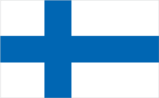
Geography
Agriculture
- animal husbandry, especially dairying, predominates; forestry important secondary occupation for rural population; main crops — cereals, sugar beets, potatoes; 85% self-sufficient; shortages — food and fodder grains
- Western Europe's foremost producer; main products — beef, dairy products, cereals, sugar beets, potatoes, wine grapes; self-sufficient for most temperate zone foodstuffs; food shortages — fats and oils, tropical produce
Aid
- donor — bilateral economic aid commitments (ODA), $436 million (1970-81)
- donor — bilateral economic aid commitments (ODA and OOF), $36 billion ( 1 970-8 1 )
Airfields
162 total, 159 usable; 44 with permanent-surface runways; 20 with runways 2,440-3,659 m, 22 with runways 1, 220-2,439 m
Area
337,113 km2; 58% forest; 34% other; 8% arable
Branches
- legislative authority rests jointly with President and unicameral legislature (Eduskunta); executive power vested in President and exercised through coalition Cabinet responsible to parliament; Supreme court, four superior courts, 193 lower courts
- Army, Navy, Air Force
- presidentially appointed Prime Minister heads Council of Ministers, which is formally responsible to National Assembly; bicameral legislature — National Assembly (491 members), Senate (304 members) — restricted to a delaying action; judiciary independent in principle
Budget
- (1982) expenditures $14.2 billion, revenues $12.5 billion
- (proposed for 1984) expenditures 937.8 billion francs, revenues 815.5 billion francs, deficit 122.3 billion francs
Capital
- Helsinki
- Paris
Civil air
39 major transport
Coastline
- 1,126 km (approx.) excludes islands and coastal indentations People
- 3,427 km (includes Corsica, 644 km) People
Communists
- 28,000 registered members; an additional 45,000 persons belong to Peoples' Democratic League
- 600,000 claimed; Communist voters, 4 million in 1981 elections
Crude steel
- 2.4 million metric tons produced (1982), 500 kg per capita Finland (continued) France
- 21.3 million metric tons produced (1981), 432 kg per capita
Elections
- parliamentary, every four years (last in 1983); presidential, every six years (President Koivisto elected in January 1982) Political parties and leaders: Social Democratic Party, Kalevi Sorsa; Center Party, Paavo Vayrynen; People's Democratic League (Communist front), Kalevi Kivisto; Conservative Party, Illka Suominen; Liberal Party, Arne Berner; Swedish Peoples Party, Par Stenback; Rural Party, Pekka Vennamo; Finnish Communist Party, Jouko Kajanoja; Finnish Christian League, Esko Almgren; Constitutional Right Party, Georg Ehrnrooth; League for Citizen Power, Kaarlo Pitsinki
- National Assembly — every five years, last election June 1981, direct universal suffrage, two ballots; Senate — indirect collegiate system for nine years, renewable by one-third every three years, last election September 1983; President, direct, universal suffrage every seven years, two ballots, last election May 1981 Political parties and leaders: majority coalition— Socialist Party (PS), Lionel Jospin; Communist Party (PCF), Georges Marchais; Left Radical Movement (MRG), Jean-Michel Baylet; right opposition — Rally for the Republic (RPR, formerly UDR), Jacques Chirac; Union for French Democracy (federation of PR, CDS, and RAD), Jean Lecanuet; Republicans (PR), Francois Leotard; Center for Social Democrats (CDS), Pieire Mehaignerie; Radical (RAD), Andre Rossinot
Electric power
- 1 1,800,000 kW capacity (1983); 42.439 billion kWh produced (1983), 8,750 kWh per capita
- 82,926,000 kW capacity (1983); 285.759 billion kWh produced (1983), 5,235 kWh per capita
Ethnic divisions
- Finn, Swede, Lapp, Gypsy, Tatar
- Celtic and Latin with Teutonic, Slavic, North African, Indochinese, and Basque minorities
Exports
- $13.1 billion (f.o.b., 1982); timber, paper and pulp, ships, machinery, iron and steel, clothing and footwear
- $91.2 billion (f.o.b., 1982); principal items — machinery and transportation equipment, foodstuffs, agricultural products, iron and steel products, textiles and clothing, chemicals
Fiscal year
calendar year Communications
Fishing
- catch 130,700 metric tons (1979)
- catch 713,530 metric tons (1982); exports (includes shellfish, etc.) $221 million, imports $632 million (1982)
GDP
$542 billion (1982), $9,996 per capita; 64.6% private consumption, 20.9% investment (including government), 16.4% government consumption; 1981 real growth rate, 1.6%; average annual growth rate (1972-81), 2.7%
GNP
$49.1 billion (1982), $10,124 per capita; 55.5% consumption, 20.7% investment, 23.4% government; 0.5% net exports of goods and services; 1982 growth rate 2.5% (1975 prices)
Government leader
Francois MITTERRAND, President
Government leaders
Dr. Mauno KOIVISTO, President; Kalevi SORSA, Prime Minister
Highways
about 74,960 km total in national classified network, including 31,000 km paved (bituminous, concrete, bituminoustreated surface) and 42,552 km unpaved (stabilized gravel, gravel, earth); additional 29,440 km of private (state subsidized) roads
Imports
- $13.4 billion (c.i.f., 1982); foodstuffs, petroleum and petroleum products, chemicals, transport equipment, iron and steel, machinery, textile yarn and fabrics
- $107.2 billion (f.o.b., 1982); principal items — crude petroleum, machinery and equipment, chemicals, iron and steel products, foodstuffs, agricultural products
Inland waterways
6,675 km total (including Saimaa Canal); 3,700 km suitable for steamers
Labor force
- 2.530 million; 24.6% mining and manufacturing; 24.3% services; 18.3% commerce; 12.3% agriculture, forestry, and fishing; 7.2% construction; 7.1% transportation and communications; 6.2% unemployed (1982 average)
- 23.4 million (1981); 54% services, 30% industry, 8% agriculture; 8.5% unemployed
Land boundaries
- 2,534 km Water
- 2,888 km Water
Language
- 93.5% Finnish, 6.3% Swedish (both official); small Lappand Russianspeaking minorities
- French (100% of population); rapidly declining regional patois — Provencal, Breton, Germanic, Corsican, Catalan, Basque, Flemish
Legal system
- civil law system based on Swedish law; constitution adopted 1919; Supreme Court may request legislation interpreting or modifying laws; legal education at Universities of Helsinki and Turku; accepts compulsory ICJ jurisdiction, with reservations
- civil law system with indigenous concepts; new constitution adopted 1958, amended concerning election of President in 1962; judicial review of administrative but not legislative acts; legal education at over 25 schools of law
Limits of territorial waters (claimed)
- 4 nm; fishing 12 nm; Aland Islands, 3 nm
- 12 nm (fishing 200 nm; exclusive economic zone 200 nm)
Literacy
- almost 100%
- 99%
Major industries
- include metal manufacturing and shipbuilding, forestry and wood processing (pulp, paper), copper refining foodstuffs, textiles and clothing
- steel, machinery and equipment, textiles and clothing, chemicals, food processing, metallurgy, aircraft, electronics
Major trade partners
- (1982) exports 34.9% EC (9.1% FRG; 10.8% UK), 26.7% USSR, 12.0% Sweden, 3.2% US
- (1982) imports — 47% EC, 16% petroleum exporting countries, 8% US, 3% Japan, 2% USSR, 2% other Communist countries; exports — 47% EC, 11% petroleum exporting countries, 5% US, 2% USSR, 1.5% other Communist countries, 1% Japan
Member of
- ADB, CEMA (special cooperation agreement), DAC, EC (free trade agreement), EFTA (associate), FAO, GATT, IAEA, IBRD, ICAC, ICAO, ICES, ICO, IDA, IDB — Inter-American Development Bank, IFAD, IFC, IHO, ILO, International Lead and Zinc Study Group, IMF, IMO, INTERPOL, IPU, ITU, IWC— International Wheat Council, Nordic Council, OECD, UN, UNESCO, UPU, WHO, WIPO, WMO, WSG Economy
- ADB, Council of Europe, DAC, EC, EIB, ELDO, EMA, EMS, ESRO, FAO, GATT, IAEA, IATP, IBRD, ICAC, ICAO, ICES, ICO, IDA, IDE— Inter-American Development Bank, IFAD, IFC, IHO, ILO, International Lead and Zinc Study Group, IMF, IMO, INTELSAT, INTERPOL, IOOC, IPU, IRC, ISO, ITC, ITU, IWC— International Whaling Commission, NATO (signatory), OAS (observer), OECD, South Pacific Commission, UN, UNESCO, UPU, WEU, WFTU, WHO, WIPO, WMO, WSG, WTO Economy
Military budget
proposed for fiscal year ending 31 December 1983, $851 million; about 6.3% of proposed central government budget At/antic Ocetn Land 551,695 kmz; 35% cultivated; 26% meadow and pasture; 25% forest; 14% waste, urban, or other
Military manpower
males 15-49, 1,313,000; 1,109,000 fit for military service; 35,000 reach military age (17) annually
Monetary conversion rate
- 5.868 Finnmark (Fim)=US$l (February 1984)
- 8.40 French francs=US$l (4 January 1984)
National holiday
- Independence Day, 6 December
- National Day, 14 July
Nationality
- noun — Finn(s); adjective — Finnish
- noun — Frenchman (men); adjective — French
Official name
- Republic of Finland
- French Republic
Organized labor
- 80% of labor force Government
- approximately 20% of labor force Government
Other political or pressure groups
Communist-controlled labor union (Confederation Generale du Travail) nearly 2.4 million members (claimed); Socialist-leaning labor union (Confederation Francaise Democratique du Travail— CFDT) about 800,000 members est; independent labor union (Force Ouvriere) about 1,000,000 members est.; independent white collar union (Confederation Generale des Cadres) 340,000 members (claimed); National Council of French Employers (Conseil National du Patronat Francais — CNPF or Patronat)
Pipelines
natural gas, 161 km
Political subdivisions
- 12 provinces, 443 communes, 78 towns
- 96 metropolitan departments, 21 regional economic districts
Population
- 4,873,000 (July 1984), average annual growth rate 0.5%
- 54,872,000 (July 1984), average annual growth rate 0.4%
Ports
1 1 major, 34 minor
Railroads
6,071 km total; Finnish State Railways (VR) operate a total 6,043 km 1.524meter gauge, 477 km multiple track, and 608 km electrified; 22 km 0.750-meter gauge and 6 km 1.524-meter gauge are privately owned
Religion
- 97% Evangelical Lutheran, 1.2% Greek Orthodox, 1.8% other
- 90% Roman Catholic, 2% Protestant, 1% Jewish, 1% Muslim (North African workers), 6% unaffiliated
Shortages
- fossil fuels; industrial raw materials, except wood, and iron ore
- crude oil, natural gas, textile fibers, most nonferrous ores, coking coal, fats and oils
Suffrage
- universal, 18 years and over; not compulsory
- universal over age 18; not compulsory
Telecommunications
good telecom service from cable and radio-relay network; 2.37 million telephones (49.6 per 100 popl.); 6 AM, 90 FM, and 181 TV stations; 3 submarine cables Defense Forces
Type
- republic
- republic, with President having wide powers
Voting strength
- (1983 parliamentary election) 26% Social Democratic, 22.1% Conservative, 17.6% Center-Liberal, 14.0% People's Democratic League, 9.7% Finnish Rural, 4.9% Swedish Peoples, 3.0% Christian League, 1.5% Greens, 0.4% Constitutional Peoples, 0.1% League for Citizen Power
- (first ballot, 1981 election) diverse left, Socialist 36.12%; RPR, 20.8%; UDF, 19.2%; Communist, 16.17%; Left Radical 1.39%; diverse right, 2.8%; diverse left, 2.05%; other 1.47%