2019 Edition
CIA World Factbook 2019 Archive (Wayback Machine)
Introduction
Background
The Futuna island group was discovered by the Dutch in 1616 and Wallis by the British in 1767, but it was the French who declared a protectorate over the islands in 1842, and took official control of them between 1886 and 1888. Notably, Wallis and Futuna was the only French colony to side with the Vichy regime during World War II, a phase that ended in May of 1942 with the arrival of 2,000 American troops. In 1959, the inhabitants of the islands voted to become a French overseas territory and officially assumed that status in 1961. In 2003, Wallis and Futuna's designation changed to that of an overseas collectivity.
Geography
Area
- Land
- 142 sq km
- Total
- 142 sq km
- Water
- 0 sq km
Area Comparative
1.5 times the size of Washington, DC
Climate
tropical; hot, rainy season (November to April); cool, dry season (May to October); rains 250-300 cm per year (80% humidity); average temperature 26.6 degrees Celsius
Coastline
129 km
Elevation
- Highest Point
- Mont Singavi (on Futuna) 522 m
- Lowest Point
- Pacific Ocean 0 m
Environment Current Issues
deforestation (only small portions of the original forests remain) largely as a result of the continued use of wood as the main fuel source; as a consequence of cutting down the forests, the mountainous terrain of Futuna is particularly prone to erosion; there are no permanent settlements on Alofi because of the lack of natural freshwater resources; lack of soil fertility on the islands of Uvea and Futuna negatively impacts agricultural producitivity
Geographic Coordinates
13 18 S, 176 12 W
Geography Note
both island groups have fringing reefs; Wallis contains several prominent crater lakes
Irrigated Land
0 sq km (2012)
Land Boundaries
0 km
Land Use
- Agricultural Land
- 42.8% (2011 est.)
- Agricultural Land Arable Land
- 7.1% (2011 est.)
- Agricultural Land Permanent Crops
- 35.7% (2011 est.)
- Agricultural Land Permanent Pasture
- 0% (2011 est.)
- Forest
- 41.9% (2011 est.)
- Other
- 15.3% (2011 est.)
Location
Oceania, islands in the South Pacific Ocean, about two-thirds of the way from Hawaii to New Zealand
Map References
Oceania
Maritime Claims
- Exclusive Economic Zone
- 200 nm
- Territorial Sea
- 12 nm
Natural Hazards
cyclones; tsunamis
Natural Resources
NEGL
Terrain
volcanic origin; low hills
People and Society
Age Structure
- 0 14 Years
- 21.28% (male 1,749 /female 1,606)
- 15 24 Years
- 15.87% (male 1,336 /female 1,165)
- 25 54 Years
- 42.65% (male 3,391 /female 3,332)
- 55 64 Years
- 9.76% (male 752 /female 787)
- 65 Years And Over
- 10.44% (male 782 /female 863) (2018 est.)
Birth Rate
13 births/1,000 population (2018 est.)
Death Rate
5.5 deaths/1,000 population (2018 est.)
Ethnic Groups
Polynesian
Infant Mortality Rate
- Female
- 4 deaths/1,000 live births
- Male
- 4.5 deaths/1,000 live births
- Total
- 4.3 deaths/1,000 live births (2018 est.)
Languages
Wallisian (indigenous Polynesian language) 58.9%, Futunian 30.1%, French (official) 10.8%, other 0.2% (2003 census)
Life Expectancy at Birth
- Female
- 83.1 years
- Male
- 77 years
- Total Population
- 80 years (2018 est.)
Major Urban Areas Population
1,000 MATA-UTU (capital) (2018)
Median Age
- Female
- 34 years
- Male
- 31.9 years
- Total
- 32.8 years (2018 est.)
Nationality
- Adjective
- Wallisian, Futunan, or Wallis and Futuna Islander
- Noun
- Wallisian(s), Futunan(s), or Wallis and Futuna Islanders
Net Migration Rate
-4.6 migrant(s)/1,000 population (2018 est.)
Population
15,763 (July 2018 est.)
Population Growth Rate
0.3% (2018 est.)
Religions
Roman Catholic 99%, other 1%
Sanitation Facility Access
- Improved Rural
- 96% of population (2008 est.)
- Improved Total
- 96% of population (2008 est.)
- Unimproved Rural
- 4% of population (2008 est.)
- Unimproved Total
- 4% of population (2008 est.)
Sex Ratio
- 0 14 Years
- 1.09 male(s)/female
- 15 24 Years
- 1.15 male(s)/female
- 25 54 Years
- 1.02 male(s)/female
- 55 64 Years
- 0.96 male(s)/female
- 65 Years And Over
- 0.91 male(s)/female
- At Birth
- 1.05 male(s)/female
- Total Population
- 1.03 male(s)/female (2018 est.)
Total Fertility Rate
1.72 children born/woman (2018 est.)
Urbanization
- Rate Of Urbanization
- 0% annual rate of change (2015-20 est.)
- Urban Population
- 0% of total population (2019)
Government
Administrative Divisions
3 administrative precincts (circonscriptions, singular - circonscription) Alo, Sigave, Uvea
Capital
- Geographic Coordinates
- 13 57 S, 171 56 W
- Name
- Mata-Utu (on Ile Uvea)
- Time Difference
- UTC+12 (17 hours ahead of Washington, DC, during Standard Time)
Citizenship
see France
Constitution
- Amendments
- French constitution amendment procedures apply
- History
- 4 October 1958 (French Constitution)
Country Name
- Conventional Long Form
- Territory of the Wallis and Futuna Islands
- Conventional Short Form
- Wallis and Futuna
- Etymology
- Wallis Island is named after British Captain Samuel WALLIS, who discovered it in 1767; Futuna is derived from the native word "futu," which is the name of the fish-poison tree found on the island
- Former
- Hoorn Islands is the former name of the Futuna Islands
- Local Long Form
- Territoire des Iles Wallis et Futuna
- Local Short Form
- Wallis et Futuna
Dependency Status
overseas collectivity of France
Diplomatic Representation From The Us
none (overseas collectivity of France)
Diplomatic Representation In The Us
none (overseas collectivity of France)
Executive Branch
- Cabinet
- Council of the Territory appointed by the high administrator on the advice of the Territorial Assembly
- Chief Of State
- President Emmanuel MACRON (since 14 May 2017); represented by High Administrator Jean-Francis TREFFEL (since 6 February 2017)
- Elections Appointments
- French president elected by absolute majority popular vote in 2 rounds if needed for a 5-year term (eligible for a second term); high administrator appointed by the French president on the advice of the French Ministry of the Interior; the presidents of the Territorial Government and the Territorial Assembly elected by assembly members; 20 December Thierry Queffelec is appointed high administrator and will take office 7 January 2019
- Head Of Government
- President of the Territorial Assembly David VERGE (since 4 April 2017)
Flag Description
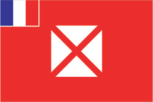
unofficial, local flag has a red field with four white isosceles triangles in the middle, representing the three native kings of the islands and the French administrator; the apexes of the triangles are oriented inward and at right angles to each other; the flag of France, outlined in white on two sides, is in the upper hoist quadrant
Government Type
parliamentary democracy (Territorial Assembly); overseas collectivity of France
Independence
none (overseas collectivity of France)
International Organization Participation
PIF (observer), SPC, UPU
Judicial Branch
- Highest Courts
- Court of Assizes or Cour d'Assizes (consists of 1 judge; court hears primarily serious criminal cases); note - appeals beyond the Court of Assizes are heard before the Court of Appeal or Cour d'Appel (in Noumea, New Caledonia)
- Subordinate Courts
- courts of first instance; labor court; note - justice generally administered under French law by the high administrator, but the 3 traditional kings administer customary law, and there is a magistrate in Mata-Utu
Legal System
French civil law
Legislative Branch
- Description
- unicameral Territorial Assembly or Assemblee Territoriale (20 seats - Wallis 13, Futuna 7; members directly elected in multi-seat constituencies by party-list proportional representation vote to serve 5-year terms) Wallis and Futuna indirectly elects 1 senator to the French Senate by an electoral college by absolute majority vote in 2 rounds if needed for a 6-year term, and directly elects 1 deputy to the French National Assembly by absolute majority vote for a 5-year term
- Election Results
- Territorial Assembly - percent of vote by party - NA; seats by party - 2 members are elected from the list Fia gaue fakatahi kihe kaha'u e lelei and 1 each from 18 other lists; composition - men 14, women 6, percent of women 30% French Senate - LR 1 French National Assembly - independent 1
- Elections
- Territorial Assembly - last held on 26 March 2017 (next to be held in March 2022) French Senate - last held on 28 September 2014 (next to be held by September 2020) French National Assembly - last held on 11 June 2017 (next to be held in June 2022)
National Anthem
note: as a territory of France, "La Marseillaise" is official (see France)
National Holiday
Bastille Day, 14 July (1789)
National Symbol S
red saltire (Saint Andrew's Cross) on a white square on a red field; national colors: red, white
Political Parties And Leaders
Left Radical Party or PRG [Sylvia PINEL] (formerly Radical Socialist Party or PRS and the Left Radical Movement or MRG) Lua Kae Tahi (Giscardians) (leader NA) Rally for Wallis and Futuna-The Republicans (Rassemblement pour Wallis and Futuna) or RPWF-LR [Clovis LOGOLOGOFOLAU] Socialist Party or PS Taumu'a Lelei [Soane Muni UHILA] Union Pour la Democratie Francaise or UDF
Suffrage
18 years of age; universal
Economy
Agriculture Products
coconuts, breadfruit, yams, taro, bananas; pigs, goats; fish
Budget
- Expenditures
- 34.18 million NA (2015 est.)
- Revenues
- 32.54 million NA (2015 est.)
Budget Surplus Or Deficit
-0.8% (of GDP) NA (2015 est.)
Debt External
- 2004
- $3.67 million
Economy Overview
The economy is limited to traditional subsistence agriculture, with about 80% of labor force earnings coming from agriculture (coconuts and vegetables), livestock (mostly pigs), and fishing. However, roughly 70% of the labor force is employed in the public sector, although only about a third of the population is in salaried employment.Revenues come from French Government subsidies, licensing of fishing rights to Japan and South Korea, import taxes, and remittances from expatriate workers in New Caledonia. France directly finances the public sector and health-care and education services. It also provides funding for key development projects in a range of areas, including infrastructure, economic development, environmental management, and health-care facilities.A key concern for Wallis and Futuna is an aging population with consequent economic development issues. Very few people aged 18-30 live on the islands due to the limited formal employment opportunities. Improving job creation is a current priority for the territorial government.
Exchange Rates
- 2012
- 90.56
- 2013
- 89.85
- 2014
- 89.8
- 2015
- 110.2
- Currency
- Comptoirs Francais du Pacifique francs (XPF) per US dollar -
Exports
- 2004
- $47,450
Exports Commodities
copra, chemicals, construction materials
Fiscal Year
calendar year
GDP Composition By End Use
- Government Consumption
- 54% (2005)
- Household Consumption
- 26% (2005)
GDP Official Exchange Rate
$195 million (2005) (2005)
GDP Per Capita Ppp
- 2004
- $3,800
GDP Purchasing Power Parity
- 2004
- $60 million
GDP Real Growth Rate
NA
Imports
- 2004
- $61.17 million
Imports Commodities
chemicals, machinery, consumer goods
Industries
copra, handicrafts, fishing, lumber
Inflation Rate Consumer Prices
- 2005
- 2.8%
- 2015
- 0.9%
Labor Force
4,482 (2013)
Labor Force By Occupation
- Agriculture
- 74%
- Industry
- 3%
- Services
- 23% (2015 est.)
Public Debt
- 2004
- 5.6% of GDP
Taxes And Other Revenues
16.7% (of GDP) NA (2015 est.)
Unemployment Rate
- 2008
- 12.2%
- 2013
- 8.8%
Communications
Broadcast Media
the publicly owned French Overseas Network (RFO), which broadcasts to France's overseas departments, collectivities, and territories, is carried on the RFO Wallis and Fortuna TV and radio stations (2019)
Internet Country Code
.wf
Internet Users
- Percent Of Population
- 22.1% (July 2016 est.)
- Total
- 3,450
Telephone System
- General Assessment
- bandwidth is limited and broadband is expensive; mobile subscriber numbers are higher than fixed-line and better suited for islands; good mobile coverage in the capital cities and also reasonable coverage across more remote atolls; new satellite broadband access and speeds (2018)
- International
- country code - 681
Telephones Fixed Lines
- Subscriptions Per 100 Inhabitants
- 20 (July 2016 est.)
- Total Subscriptions
- 3,132
Transportation
Airports
2 (2013)
Airports With Paved Runways
- 1 524 To 2 437 M
- 1 (2013)
- 914 To 1 523 M
- 1 (2013)
- Total
- 2 (2013)
Ports And Terminals
Leava, Mata-Utu
Military and Security
Military Note
defense is the responsibility of France
Transnational Issues
Disputes International
none