2003 Edition
CIA World Factbook 2003 (Project Gutenberg)
Introduction
Administrative divisions
none (overseas territory of France); there are no first-order administrative divisions as defined by the US Government, but there are three kingdoms at the second order named Alo, Sigave, Wallis
Age structure
0-14 years: NA% 15-64 years: NA% 65 years and over: NA% (2003 est.)
Agriculture - products
breadfruit, yams, taro, bananas; pigs, goats
Airports
2 (2002)
Airports - with paved runways
- total
- 1 1,524 to 2,437 m: 1 (2002)
Airports - with unpaved runways
- total
- 1 914 to 1,523 m: 1 (2002) Military Wallis and Futuna
Area
- land
- 274 sq km
- note
- includes Ile Uvea (Wallis Island), Ile Futuna (Futuna Island), Ile Alofi, and 20 islets
- total
- 274 sq km
- water
- 0 sq km
Area - comparative
1.5 times the size of Washington, DC
Background
Although discovered by the Dutch and the British in the 17th and 18th centuries, it was the French who declared a protectorate over the islands in 1842. In 1959, the inhabitants of the islands voted to become a French overseas territory. Geography Wallis and Futuna
Birth rate
NA births/1,000 population (2003 est.)
Budget
- expenditures
- $17 million, including capital expenditures of $NA (1998 est.)
- revenues
- $20 million
Capital
Mata-Utu (on Ile Uvea)
Climate
tropical; hot, rainy season (November to April); cool, dry season (May to October); rains 2,500-3,000 mm per year (80% humidity); average temperature 26.6 degrees C
Coastline
129 km
Constitution
28 September 1958 (French Constitution)
Country name
- conventional long form
- Territory of the Wallis and Futuna Islands
- conventional short form
- Wallis and Futuna
- local long form
- Territoire des Iles Wallis et Futuna
- local short form
- Wallis et Futuna
Currency
Comptoirs Francais du Pacifique franc (XPF); note - may adopt the euro in 2003
Currency code
XPF
Death rate
NA deaths/1,000 population (2003 est.)
Debt - external
$NA
Dependency status
overseas territory of France
Diplomatic representation from the US
none (overseas territory of France)
Diplomatic representation in the US
none (overseas territory of France)
Disputes - international
none This page was last updated on 18 December, 2003
Economic aid - recipient
assistance from France
Economy - overview
The economy is limited to traditional subsistence agriculture, with about 80% labor force earnings from agriculture (coconuts and vegetables), livestock (mostly pigs), and fishing. About 4% of the population is employed in government. Revenues come from French Government subsidies, licensing of fishing rights to Japan and South Korea, import taxes, and remittances from expatriate workers in New Caledonia.
Electricity - consumption
NA kWh
Electricity - exports
0 kWh (2002)
Electricity - imports
0 kWh (2002)
Electricity - production
NA kWh
Electricity - production by source
- fossil fuel
- 0%
- hydro
- 0%
- nuclear
- 0%
- other
- 0%
Elevation extremes
- highest point
- Mont Singavi 765 m
- lowest point
- Pacific Ocean 0 m
Environment - current issues
deforestation (only small portions of the original forests remain) largely as a result of the continued use of wood as the main fuel source; as a consequence of cutting down the forests, the mountainous terrain of Futuna is particularly prone to erosion; there are no permanent settlements on Alofi because of the lack of natural fresh water resources
Ethnic groups
Polynesian
Exchange rates
Comptoirs Francais du Pacifique francs (XPF) per US dollar - 126.41 (2002), 133.26 (2001), 129.43 (2000), 111.93 (1999), 107.25 (1998)
Executive branch
- cabinet
- Council of the Territory consists of three kings and three members appointed by the high administrator on the advice of the Territorial Assembly
- chief of state
- President Jacques CHIRAC of France (since 17 May 1995), represented by High Administrator Christian JOB (since 6 August 2002)
- elections
- French president elected by popular vote for a five-year term; high administrator appointed by the French president on the advice of the French Ministry of the Interior; the presidents of the Territorial Government and the Territorial Assembly are elected by the members of the assembly
- head of government
- President of the Territorial Assembly Patalione KANIMOA (since NA January 2001)
- note
- there are three traditional kings with limited powers
Exports
$250,000 f.o.b. (1999)
Exports - commodities
copra, chemicals, construction materials
Exports - partners
Italy 40%, Croatia 15%, US 14%, Denmark 13%
Fiscal year
calendar year Communications Wallis and Futuna
Flag description
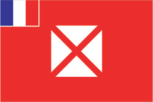
a large white modified Maltese cross - shifted a little off center toward the fly and slightly downward - on a red background; the flag of France outlined in white on two sides is in the upper hoist quadrant; the flag of France is used for official occasions Economy Wallis and Futuna
GDP
purchasing power parity - $30 million (2000 est.)
GDP - composition by sector
- agriculture
- NA%
- industry
- NA%
- services
- NA%
GDP - per capita
purchasing power parity - $2,000 (2000 est.)
GDP - real growth rate
NA%
Geographic coordinates
13 18 S, 176 12 W
Geography - note
both island groups have fringing reefs People Wallis and Futuna
Government type
NA
Highways
- paved
- 16 km (all on Ile Uvea)
- total
- 120 km (Ile Uvea 100 km, Ile Futuna 20 km)
- unpaved
- 104 km (Ile Uvea 84 km, Ile Futuna 20 km)
HIV/AIDS - adult prevalence rate
NA%
HIV/AIDS - deaths
NA
HIV/AIDS - people living with HIV/AIDS
NA
Household income or consumption by percentage share
- highest 10%
- NA%
- lowest 10%
- NA%
Imports
$300,000 f.o.b. (1999)
Imports - commodities
chemicals, machinery, passenger ships, consumer goods
Imports - partners
France 97%, Australia 2%, New Zealand 1%
Independence
none (overseas territory of France)
Industrial production growth rate
NA%
Industries
copra, handicrafts, fishing, lumber
Infant mortality rate
- female
- NA%
- male
- NA%
- total
- NA%
Inflation rate (consumer prices)
NA%
International organization participation
FZ, SPC
Internet country code
.wf
Internet Service Providers (ISPs)
1 (2000)
Internet users
NA Transportation Wallis and Futuna
Irrigated land
NA sq km
Judicial branch
none; justice generally administered under French law by the high administrator, but the three traditional kings administer customary law and there is a magistrate in Mata-Utu
Labor force
NA
Labor force - by occupation
agriculture, livestock, and fishing 80%, government 4% (2001 est.)
Land boundaries
0 km
Land use
- arable land
- 5%
- other
- 75% (1998 est.)
- permanent crops
- 20%
Languages
French, Wallisian (indigenous Polynesian language)
Legal system
French legal system
Legislative branch
- unicameral Territorial Assembly or Assemblee Territoriale (20 seats; members are elected by popular vote to serve five-year terms)
- election results
- percent of vote by party - NA%; seats by party - RPR and affiliates 13, Socialists and affiliates 7
- elections
- last held 11 March 2002 (next to be held NA March 2007)
- note
- Wallis and Futuna elects one senator to the French Senate and one deputy to the French National Assembly; French Senate - elections last held 27 September 1998 (next to be held by NA September 2007); results - percent of vote by party - NA%; seats - RPR (now UMP) 1; French National Assembly - elections last held 16 June 2002 (next to be held by NA 2007); results - percent of vote by party - NA%; seats - RPR (UMP) 1
Life expectancy at birth
- female
- NA years (2003 est.)
- male
- NA years
- total population
- NA years
Literacy
- definition
- age 15 and over can read and write
- female
- 50% (1969 est.) Government Wallis and Futuna
- male
- 50%
- total population
- 50%
Location
Oceania, islands in the South Pacific Ocean, about two-thirds of the way from Hawaii to New Zealand
Map references
Oceania
Maritime claims
- exclusive economic zone
- 200 NM
- territorial sea
- 12 NM
Merchant marine
- convenience
- France 3, US 1 (2002 est.)
- note
- includes some foreign-owned ships registered here as a flag of
- ships by type
- passenger 4
- total
- 4 ships (1,000 GRT or over) 85,572 GRT/9,004 DWT
Military - note
defense is the responsibility of France Transnational Issues Wallis and Futuna
National holiday
Bastille Day, 14 July (1789)
Nationality
- adjective
- Wallisian, Futunan, or Wallis and Futuna Islander
- noun
- Wallisian(s), Futunan(s), or Wallis and Futuna Islanders
Natural hazards
NA
Natural resources
NEGL
Net migration rate
- NA migrant(s)/1,000 population
- note
- there has been steady emigration from Wallis and Futuna to New Caledonia (2003 est.)
Political parties and leaders
Lua Kae Tahi (Giscardians) [leader NA]; Mouvement des Radicaux de Gauche or MRG [leader NA]; Rally for the Republic or RPR [Clovis LOGOLOGOFOLAU]; Taumu'a Lelei [Soane Muni UHILA]; Union Populaire Locale or UPL [Falakiko GATA]; Union Pour la Democratie Francaise or UDF [leader NA]
Political pressure groups and leaders
NA
Population
15,734 (July 2003 est.)
Population below poverty line
NA%
Population growth rate
NA (2003 est.)
Ports and harbors
Leava, Mata-Utu
Radio broadcast stations
AM 1, FM 0, shortwave 0 (2000)
Radios
NA
Railways
0 km
Religions
Roman Catholic 99%, other 1%
Suffrage
18 years of age; universal
Telephone system
- domestic
- NA
- general assessment
- NA
- international
- NA
Telephones - main lines in use
1,125 (1994)
Telephones - mobile cellular
0 (1994)
Television broadcast stations
2 (2000)
Televisions
NA
Terrain
volcanic origin; low hills
Total fertility rate
NA children born/woman (2003 est.)
Unemployment rate
NA%
Waterways
none