1995 Edition
CIA World Factbook 1995 (Project Gutenberg)
Geography
Area
total area: 9,372,610 sq km land area: 9,166,600 sq km comparative area: about half the size of Russia; about three-tenths the size of Africa; about one-half the size of South America (or slightly larger than Brazil); slightly smaller than China; about two and one-half times the size of Western Europe note: includes only the 50 states and District of Columbia
Climate
mostly temperate, but tropical in Hawaii and Florida and arctic in Alaska, semiarid in the great plains west of the Mississippi River and arid in the Great Basin of the southwest; low winter temperatures in the northwest are ameliorated occasionally in January and February by warm chinook winds from the eastern slopes of the Rocky Mountains
Coastline
19,924 km
Environment
current issues: air pollution resulting in acid rain in both the US and Canada; the US is the largest single emitter of carbon dioxide from the burning of fossil fuels; water pollution from runoff of pesticides and fertilizers; very limited natural fresh water resources in much of the western part of the country require careful management; desertification natural hazards: tsunamis, volcanoes, and earthquake activity around Pacific Basin; hurricanes along the Atlantic coast; tornadoes in the midwest; mudslides in California; forest fires in the west; flooding; permafrost in northern Alaska is a major impediment to development international agreements: party to - Air Pollution, Air Pollution-Nitrogen Oxides, Antarctic Treaty, Climate Change, Endangered Species, Environmental Modification, Marine Dumping, Marine Life Conservation, Nuclear Test Ban, Ozone Layer Protection, Ship Pollution, Tropical Timber 83, Wetlands, Whaling; signed, but not ratified - Air Pollution-Volatile Organic Compounds, Antarctic-Environmental Protocol, Biodiversity, Desertification, Hazardous Wastes, Tropical Timber 94
International disputes
maritime boundary disputes with Canada (Dixon Entrance, Beaufort Sea, Strait of Juan de Fuca, Machias Seal Island); US Naval Base at Guantanamo Bay is leased from Cuba and only mutual agreement or US abandonment of the area can terminate the lease; Haiti claims Navassa Island; US has made no territorial claim in Antarctica (but has reserved the right to do so) and does not recognize the claims of any other nation; Republic of Marshall Islands claims Wake Island
Irrigated land
181,020 sq km (1989 est.)
Land boundaries
total 12,248 km, Canada 8,893 km (including 2,477 km with Alaska), Cuba 29 km (US Naval Base at Guantanamo Bay), Mexico 3,326 km
Land use
arable land: 20% permanent crops: 0% meadows and pastures: 26% forest and woodland: 29% other: 25%
Location
North America, bordering both the North Atlantic Ocean and the North Pacific Ocean, between Canada and Mexico
Map references
North America
Maritime claims
contiguous zone: 12 nm continental shelf: not specified exclusive economic zone: 200 nm territorial sea: 12 nm
Natural resources
coal, copper, lead, molybdenum, phosphates, uranium, bauxite, gold, iron, mercury, nickel, potash, silver, tungsten, zinc, petroleum, natural gas, timber
Note
world's fourth-largest country (after Russia, Canada, and China)
Terrain
vast central plain, mountains in west, hills and low mountains in east; rugged mountains and broad river valleys in Alaska; rugged, volcanic topography in Hawaii
People and Society
Age structure
0-14 years: 22% (female 28,391,451; male 29,845,630) 15-64 years: 65% (female 86,454,415; male 85,474,002) 65 years and over: 13% (female 19,949,978; male 13,698,559) (July 1995 est.)
Birth rate
15.25 births/1,000 population (1995 est.)
Death rate
8.38 deaths/1,000 population (1995 est.)
Ethnic divisions
white 83.4%, black 12.4%, Asian 3.3%, Native American 0.8% (1992)
Infant mortality rate
7.88 deaths/1,000 live births (1995 est.)
Labor force
131.056 million (includes unemployed) (1994) by occupation: managerial and professional 27.5%, technical, sales and administrative support 30.3%, services 13.7%, manufacturing, mining, transportation, and crafts 25.5%, farming, forestry, and fishing 2.9%
Languages
English, Spanish (spoken by a sizable minority)
Life expectancy at birth
total population: 75.99 years male: 72.8 years female: 79.7 years (1995 est.)
Literacy
age 15 and over has completed five or more years of schooling (1979) total population: 97% male: 97% female: 97%
Nationality
noun: American(s) adjective: American
Net migration rate
3.34 migrant(s)/1,000 population (1995 est.)
Population
263,814,032 (July 1995 est.)
Population growth rate
1.02% (1995 est.)
Religions
Protestant 56%, Roman Catholic 28%, Jewish 2%, other 4%, none 10% (1989)
Total fertility rate
2.08 children born/woman (1995 est.)
Government
Abbreviation
US or USA
Administrative divisions
50 states and 1 district*; Alabama, Alaska, Arizona, Arkansas, California, Colorado, Connecticut, Delaware, District of Columbia*, Florida, Georgia, Hawaii, Idaho, Illinois, Indiana, Iowa, Kansas, Kentucky, Louisiana, Maine, Maryland, Massachusetts, Michigan, Minnesota, Mississippi, Missouri, Montana, Nebraska, Nevada, New Hampshire, New Jersey, New Mexico, New York, North Carolina, North Dakota, Ohio, Oklahoma, Oregon, Pennsylvania, Rhode Island, South Carolina, South Dakota, Tennessee, Texas, Utah, Vermont, Virginia, Washington, West Virginia, Wisconsin, Wyoming
Capital
Washington, DC
Constitution
17 September 1787, effective 4 March 1789
Dependent areas
American Samoa, Baker Island, Guam, Howland Island, Jarvis Island, Johnston Atoll, Kingman Reef, Midway Islands, Navassa Island, Northern Mariana Islands, Palmyra Atoll, Puerto Rico, Virgin Islands, Wake Island note: from 18 July 1947 until 1 October 1994, the US has administered the Trust Territory of the Pacific Islands, but recently entered into a new political relationship with all four political units: the Northern Mariana Islands is a Commonwealth in political union with the US (effective 3 November 1986); Palau concluded a Compact of Free Association with the US (effective 1 October 1994); the Federated States of Micronesia signed a Compact of Free Association with the US (effective 3 November 1986); the Republic of the Marshall Islands signed a Compact of Free Association with the US (effective 21 October 1986)
Digraph
US
Executive branch
chief of state and head of government: President William Jefferson CLINTON (since 20 January 1993); Vice President Albert GORE, Jr. (since 20 January 1993); election last held 3 November 1992 (next to be held 5 November 1996); results - William Jefferson CLINTON (Democratic Party) 43.2%, George BUSH (Republican Party) 37.7%, Ross PEROT (Independent) 19.0%, other 0.1% cabinet: Cabinet; appointed by the president with Senate approval
Flag
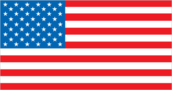
thirteen equal horizontal stripes of red (top and bottom) alternating with white; there is a blue rectangle in the upper hoist-side corner bearing 50 small white five-pointed stars arranged in nine offset horizontal rows of six stars (top and bottom) alternating with rows of five stars; the 50 stars represent the 50 states, the 13 stripes represent the 13 original colonies; known as Old Glory; the design and colors have been the basis for a number of other flags including Chile, Liberia, Malaysia, and Puerto Rico
House of Representatives
elections last held 8 November 1994 (next to be held 5 November 1996); results - percent of vote by party NA; seats - (435 total) Republican Party 231, Democratic Party 203, independent 1
Independence
4 July 1776 (from England)
Judicial branch
Supreme Court
Legal system
based on English common law; judicial review of legislative acts; accepts compulsory ICJ jurisdiction, with reservations
Legislative branch
bicameral Congress
Member of
AfDB, AG (observer), ANZUS, APEC, AsDB, Australia Group, BIS, CCC, CP, EBRD, ECE, ECLAC, ESCAP, FAO, G- 2, G- 5, G- 7, G- 8, G-10, GATT, IADB, IAEA, IBRD, ICAO, ICC, ICFTU, ICRM, IDA, IEA, IFAD, IFC, IFRCS, ILO, IMF, IMO, INMARSAT, INTELSAT, INTERPOL, IOC, IOM, ISO, ITU, MINURSO, MTCR, NACC, NATO, NEA, NSG, OAS, OECD, OSCE, PCA, SPC, UN, UN Security Council, UNCTAD, UNHCR, UNIDO, UNIKOM, UNITAR, UNMIH, UNOMOZ, UNPROFOR, UNRWA, UNTSO, UNU, UPU, WCL, WHO, WIPO, WMO, WTO, ZC
Names
conventional long form: United States of America conventional short form: United States
National holiday
Independence Day, 4 July (1776)
Political parties and leaders
Republican Party, Haley BARBOUR, national committee chairman; Jeanie AUSTIN, co-chairman; Democratic Party, David C. WILHELM, national committee chairman; several other groups or parties of minor political significance
Senate
elections last held 8 November 1994 (next to be held 5 November 1996); results - percent of vote by party NA; seats - (100 total) Republican Party 54, Democratic Party 46
Suffrage
18 years of age; universal
Type
federal republic; strong democratic tradition
Economy
Agriculture
accounts for 2% of GDP and 2.9% of labor force; favorable climate and soils support a wide variety of crops and livestock production; world's second largest producer and number one exporter of grain; surplus food producer; fish catch of 4.4 million metric tons (1990)
British pounds
(#) per US$ - 0.6350 (January 1995), 0.6529 (1994), 0.6033 (1993), 0.5664 (1992), 0.5652 (1991), 0.5603 (1990)
Budget
revenues: $1.258 trillion expenditures: $1.461 trillion, including capital expenditures of $NA (1994)
Canadian dollars
(Can$) per US$ - 1.4129 (January 1995), 1.3656 (1994), 1.2901 (1993), 1.2087 (1992), 1.1457 (1991), 1.1668 (1990)
Currency
1 United States dollar (US$) = 100 cents
Economic aid
donor: commitments, including ODA and OOF, (FY80-89), $115.7 billion
Electricity
capacity: 695,120,000 kW production: 3.1 trillion kWh consumption per capita: 11,236 kWh (1993)
Exports
$513 billion (f.o.b., 1994) commodities: capital goods, automobiles, industrial supplies and raw materials, consumer goods, agricultural products partners: Western Europe 24.3%, Canada 22.1%, Japan 10.5% (1993)
External debt
$NA
Fiscal year
1 October - 30 September
French francs
(F) per US$ - 5.2943 (January 1995), 5.5520 (1994), 5.6632 (1993), 5.2938 (1992), 5.6421 (1991), 5.4453 (1990)
German deutsche marks
(DM) per US$ - 1.5313 (January 1995), 1.6228 (1994), 1.6533 (1993), 1.5617 (1992), 1.6595 (1991), 1.6157 (1990)
Illicit drugs
illicit producer of cannabis for domestic consumption with 1987 production estimated at 3,500 metric tons or about 25% of the available marijuana; ongoing eradication program aimed at small plots and greenhouses has not reduced production
Imports
$664 billion (c.i.f., 1994) commodities: crude oil and refined petroleum products, machinery, automobiles, consumer goods, industrial raw materials, food and beverages partners: Canada, 19.3%, Western Europe 18.1%, Japan 18.1% (1993)
Industrial production
growth rate 5.4% (1994 est.)
Industries
leading industrial power in the world, highly diversified and technologically advanced; petroleum, steel, motor vehicles, aerospace, telecommunications, chemicals, electronics, food processing, consumer goods, lumber, mining
Inflation rate (consumer prices)
2.6% (1994)
Italian lire
(Lit) per US$ - 1,609.5 (January 1995), 1,612.4 (1994), 1,573.7 (1993), 1,232.4 (1992), 1,240.6 (1991), 1,198.1 (1990)
Japanese yen
(Y) per US$ - 99.75 (January 1995), 102.21 (1994), 111.20 (1993), 126.65 (1992), 134.71 (1991), 144.79 (1990)
National product
GDP - purchasing power parity - $6.7384 trillion (1994)
National product per capita
$25,850 (1994)
National product real growth rate
4.1% (1994)
Overview
The US has the most powerful, diverse, and technologically advanced economy in the world, with a per capita GDP of $25,850, the largest among major industrial nations. The economy is market oriented with most decisions made by private individuals and business firms and with government purchases of goods and services made predominantly in the marketplace. In 1989 the economy enjoyed its seventh successive year of substantial growth, the longest in peacetime history. The expansion featured moderation in wage and consumer price increases and a steady reduction in unemployment to 5.2% of the labor force. In 1990, however, growth slowed to 1% because of a combination of factors, such as the worldwide increase in interest rates, Iraq's invasion of Kuwait in August, the subsequent spurt in oil prices, and a general decline in business and consumer confidence. In 1991 output fell by 0.6%, unemployment grew, and signs of recovery proved premature. Growth picked up to 2.3% in 1992 and to 3.1% in 1993. Unemployment, however, declined only gradually, the increase in GDP being mainly attributable to gains in output per worker. The year 1994 witnessed a solid 4% gain in real output, a low inflation rate of 2.6%, and a drop in unemployment below 6%. The capture of both houses of Congress by the Republicans in the elections of 8 November 1994 means substantial changes are likely in US economic policy, including changes in the ways the US will address its major economic problems in 1995-96. These problems include inadequate investment in economic infrastructure, rapidly rising medical costs of an aging population, and sizable budget and trade deficits.
Unemployment rate
5.5% (March 1995)
Communications
Radio
broadcast stations: AM 4,987, FM 4,932, shortwave 0 radios: 530 million
Telephone system
126,000,000 telephones; 7,557,000 cellular telephones local: NA intercity: large system of fiber-optic cable, microwave radio relay, coaxial cable, and domestic satellites international: 16 satellites and 24 ocean cable systems in use; 61 INTELSAT (45 Atlantic Ocean and 16 Pacific Ocean) earth stations (1990)
Television
broadcast stations: 1,092 (about 9,000 cable TV systems) televisions: 193 million
Transportation
Airports
total: 15,032 with paved runways over 3,047 m: 181 with paved runways 2,438 to 3,047 m: 208 with paved runways 1,524 to 2,437 m: 1,242 with paved runways 914 to 1,523 m: 2,489 with paved runways under 914 m: 8,994 with unpaved runways over 3,047 m: 1 with unpaved runways 2,438 to 3,047 m: 7 with unpaved runways 1,524 to 2,438 m: 180 with unpaved runways 914 to 1,523 m: 1,730
Highways
total: 6,243,163 km paved: 3,633,520 km (including 84,865 km of expressways) unpaved: 2,609,643 km (1990)
Inland waterways
41,009 km of navigable inland channels, exclusive of the Great Lakes (est.)
Merchant marine
total: 354 ships (1,000 GRT or over) totaling 11,462,000 GRT/16,477,000 DWT ships by type: bulk 22, cargo 28, chemical tanker 16, intermodal 130, liquefied gas tanker 13, passenger-cargo 2, tanker 130, tanker tug-barge 13 note: in addition, there are 189 government-owned vessels
Pipelines
petroleum 276,000 km; natural gas 331,000 km (1991)
Ports
Anchorage, Baltimore, Boston, Charleston, Chicago, Duluth, Hampton Roads, Honolulu, Houston, Jacksonville, Los Angeles, New Orleans, New York, Philadelphia, Port Canaveral, Portland (Oregon), Prudhoe Bay, San Francisco, Savannah, Seattle, Tampa, Toledo
Railroads
total: 240,000 km mainline routes (nongovernment owned) standard gauge: 240,000 km 1.435-m gauge (1989)
Military and Security
Branches
Department of the Army, Department of the Navy (includes Marine Corps), Department of the Air Force
Defense expenditures
$284.4 billion, 4.2% of GDP (1994 est.) ________________________________________________________________________ URUGUAY