2008 Edition
CIA World Factbook 2008 (Project Gutenberg)
Introduction
Background
The islands were part of the UK's Jamaican colony until 1962, when they assumed the status of a separate crown colony upon Jamaica's independence. The governor of The Bahamas oversaw affairs from 1965 to 1973. With Bahamian independence, the islands received a separate governor in 1973. Although independence was agreed upon for 1982, the policy was reversed and the islands remain a British overseas territory.
Geography
Area
total: 430 sq km land: 430 sq km water: 0 sq km
Area - comparative
2.5 times the size of Washington, DC
Climate
tropical; marine; moderated by trade winds; sunny and relatively dry
Coastline
389 km
Elevation extremes
lowest point: Caribbean Sea 0 m highest point: Blue Hills 49 m
Environment - current issues
limited natural fresh water resources, private cisterns collect rainwater
Geographic coordinates
21 45 N, 71 35 W
Geography - note
about 40 islands (eight inhabited)
Irrigated land
NA
Land boundaries
0 km
Land use
arable land: 2.33% permanent crops: 0% other: 97.67% (2005)
Location
Caribbean, two island groups in the North Atlantic Ocean, southeast of The Bahamas, north of Haiti
Map references
Central America and the Caribbean
Maritime claims
territorial sea: 12 nm exclusive fishing zone: 200 nm
Natural hazards
frequent hurricanes
Natural resources
spiny lobster, conch
Terrain
low, flat limestone; extensive marshes and mangrove swamps
People and Society
Age structure
0-14 years: 30.7% (male 3,497/female 3,374) 15-64 years: 65.2% (male 7,640/female 6,929) 65 years and over: 4.1% (male 435/female 477) (2008 est.)
Birth rate
21.12 births/1,000 population (2008 est.)
Death rate
4.16 deaths/1,000 population (2008 est.)
Education expenditures
NA
Ethnic groups
black 90%, mixed, European, or North American 10%
HIV/AIDS - adult prevalence rate
NA
HIV/AIDS - deaths
NA
HIV/AIDS - people living with HIV/AIDS
NA
Infant mortality rate
total: 14.35 deaths/1,000 live births male: 16.56 deaths/1,000 live births female: 12.04 deaths/1,000 live births (2008 est.)
Languages
English (official)
Life expectancy at birth
total population: 75.19 years male: 72.91 years female: 77.59 years (2008 est.)
Literacy
definition: age 15 and over has ever attended school total population: 98% male: 99% female: 98% (1970 est.)
Median age
total: 27.8 years male: 28.5 years female: 27 years (2008 est.)
Nationality
noun: none adjective: none
Net migration rate
9.48 migrant(s)/1,000 population (2008 est.)
People - note
destination and transit point for illegal Haitian immigrants bound for the Turks and Caicos Islands, The Bahamas, and the US
Population
22,352 (July 2008 est.)
Population growth rate
2.644% (2008 est.)
Religions
Baptist 40%, Anglican 18%, Methodist 16%, Church of God 12%, other 14% (1990)
School life expectancy (primary to tertiary education)
total: 11 years male: 11 years female: 12 years (2005)
Sex ratio
at birth: 1.05 male(s)/female under 15 years: 1.04 male(s)/female 15-64 years: 1.1 male(s)/female 65 years and over: 0.91 male(s)/female total population: 1.07 male(s)/female (2008 est.)
Total fertility rate
2.98 children born/woman (2008 est.)
Government
Administrative divisions
none (overseas territory of the UK)
Capital
name: Grand Turk (Cockburn Town) geographic coordinates: 21 28 N, 71 08 W time difference: UTC-5 (same time as Washington, DC during Standard Time) daylight saving time: +1hr, begins first Sunday in April; ends last Sunday in October
Constitution
Turks and Caicos Islands Constitution Order 2006 (effective 9 August 2006)
Country name
conventional long form: none conventional short form: Turks and Caicos Islands abbreviation: TCI
Dependency status
overseas territory of the UK
Diplomatic representation from the US
none (overseas territory of the UK)
Diplomatic representation in the US
none (overseas territory of the UK)
Executive branch
chief of state: Queen ELIZABETH II (since 6 February 1952); represented by Governor Gordon WETHERELL (since 5 August 2008) head of government: Premier Michael Eugene MISICK (chief minister since 15 August 2003, sworn in as premier on 9 August 2006); note - the office of premier was created in the 2006 constitution cabinet: Cabinet consists of the governor, the premier, six ministers appointed by the governor from among the members of the House of Assembly, and the attorney general elections: the monarch is hereditary; governor appointed by the monarch; following legislative elections, the leader of the majority party is appointed premier by the governor
Flag description
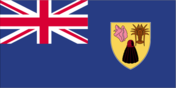
blue, with the flag of the UK in the upper hoist-side quadrant and the colonial shield centered on the outer half of the flag; the shield is yellow and contains a conch shell, lobster, and cactus
Government type
NA
Independence
none (overseas territory of the UK)
International organization participation
Caricom (associate), CDB, Interpol (subbureau), UPU
Judicial branch
Supreme Court; Court of Appeal
Legal system
based on laws of England and Wales, with a few adopted from Jamaica and The Bahamas
Legislative branch
unicameral House of Assembly (21 seats of which 15 are popularly elected; members serve four-year terms) elections: last held 9 February 2007 (next to be held in 2011) election results: percent of vote by party - PNP 60%, PDM 40%; seats by party - PNP 13, PDM 2
National holiday
Constitution Day, 30 August (1976)
Political parties and leaders
People's Democratic Movement or PDM [Floyd SEYMOUR]; Progressive National Party or PNP [Michael Eugene MISICK]
Political pressure groups and leaders
NA
Suffrage
18 years of age; universal
Economy
Agriculture - products
corn, beans, cassava (tapioca), citrus fruits; fish
Budget
revenues: $47 million expenditures: $33.6 million (1997-98 est.)
Currency (code)
US dollar (USD)
Currency code
USD
Debt - external
$NA
Economic aid - recipient
$4.1 million (1997)
Economy - overview
The Turks and Caicos economy is based on tourism, offshore financial services, and fishing. Most capital goods and food for domestic consumption are imported. The US is the leading source of tourists, accounting for more than three-quarters of the 175,000 visitors that arrived in 2004. Major sources of government revenue also include fees from offshore financial activities and customs receipts.
Electricity - consumption
9.3 million kWh (2006 est.)
Electricity - exports
0 kWh (2007 est.)
Electricity - imports
0 kWh (2007 est.)
Electricity - production
10 million kWh (2006 est.)
Electricity - production by source
fossil fuel: 100% hydro: 0% nuclear: 0% other: 0% (2001)
Exchange rates
the US dollar is used
Exports
$169.2 million (2000)
Exports - commodities
lobster, dried and fresh conch, conch shells
Exports - partners
US, UK (2006)
Fiscal year
calendar year
GDP - composition by sector
agriculture: NA% industry: NA% services: NA%
GDP - per capita (PPP)
$11,500 (2002 est.)
GDP - real growth rate
4.9% (2000 est.)
GDP (official exchange rate)
$NA
GDP (purchasing power parity)
$216 million (2002 est.)
Household income or consumption by percentage share
lowest 10%: NA% highest 10%: NA%
Imports
$175.6 million (2000)
Imports - commodities
food and beverages, tobacco, clothing, manufactures, construction materials
Imports - partners
US, UK (2006)
Industrial production growth rate
NA%
Industries
tourism, offshore financial services
Inflation rate (consumer prices)
4% (1995)
Labor force
4,848 (1990 est.)
Labor force - by occupation
note: about 33% in government and 20% in agriculture and fishing; significant numbers in tourism, financial, and other services
Natural gas - consumption
0 cu m (2007 est.)
Natural gas - exports
0 cu m (2007 est.)
Natural gas - imports
0 cu m (2007 est.)
Natural gas - production
0 cu m (2007 est.)
Natural gas - proved reserves
0 cu m (1 January 2006 est.)
Oil - consumption
80 bbl/day (2006 est.)
Oil - exports
0 bbl/day (2005)
Oil - imports
83.78 bbl/day (2005)
Oil - production
0 bbl/day (2007 est.)
Oil - proved reserves
0 bbl (1 January 2006 est.)
Population below poverty line
NA%
Unemployment rate
10% (1997 est.)
Communications
Internet country code
.tc
Internet hosts
2,352 (2008)
Internet Service Providers (ISPs)
14 (2000)
Internet users
NA
Radio broadcast stations
AM 2, FM 7, shortwave 0 (2003)
Radios
8,000 (1997)
Telephone system
general assessment: fully digital system with international direct dialing domestic: full range of services available; GSM wireless service available international: country code - 1-649; the Americas Region Caribbean Ring System (ARCOS-1) fiber optic telecommunications submarine cable provides connectivity to South and Central America, parts of the Caribbean, and the US; satellite earth station - 1 Intelsat (Atlantic Ocean)
Telephones - main lines in use
5,700 (2002)
Telephones - mobile cellular
1,700 (1999)
Television broadcast stations
0 (broadcasts received from The Bahamas; 2 cable television networks) (2003)
Televisions
NA
Transportation
Airports
8 (2007)
Airports - with paved runways
total: 6 1,524 to 2,437 m: 3 914 to 1,523 m: 1 under 914 m: 2 (2007)
Airports - with unpaved runways
total: 2 under 914 m: 2 (2007)
Merchant marine
registered in other countries: 1 (Panama 1) (2008)
Ports and terminals
Grand Turk, Providenciales
Roadways
total: 121 km paved: 24 km unpaved: 97 km (2003)
Military and Security
Manpower reaching militarily significant age annually
male: 222 female: 214 (2008 est.)
Military - note
defense is the responsibility of the UK
Transnational Issues
Disputes - international
have received Haitians fleeing economic and civil disorder
Illicit drugs
transshipment point for South American narcotics destined for the US and Europe This page was last updated on 18 December, 2008