2016 Edition
CIA World Factbook 2016 Archive (HTML)
Introduction
Background
First colonized by the Spanish, the islands came under British control in the early 19th century. The islands' sugar industry was hurt by the emancipation of the slaves in 1834. Manpower was replaced with the importation of contract laborers from India between 1845 and 1917, which boosted sugar production as well as the cocoa industry. The discovery of oil on Trinidad in 1910 added another important export. Independence was attained in 1962. The country is one of the most prosperous in the Caribbean thanks largely to petroleum and natural gas production and processing. Tourism, mostly in Tobago, is targeted for expansion and is growing. The government is coping with a rise in violent crime.
Geography
Area
- 5,128 sq km 5,128 sq km 0 sq km
- land
- 5,128 sq km
- total
- 5,128 sq km
- water
- 0 sq km
Area - comparative
slightly smaller than Delaware
Climate
tropical; rainy season (June to December)
Coastline
362 km
Elevation
- 83 m lowest point: Caribbean Sea 0 m highest point: El Cerro del Aripo 940 m
- elevation extremes
- lowest point: Caribbean Sea 0 m
- highest point
- El Cerro del Aripo 940 m
- mean elevation
- 83 m
Environment - current issues
water pollution from agricultural chemicals, industrial wastes, and raw sewage; oil pollution of beaches; deforestation; soil erosion
Environment - international agreements
- Biodiversity, Climate Change, Climate Change-Kyoto Protocol, Desertification, Endangered Species, Hazardous Wastes, Law of the Sea, Marine Dumping, Marine Life Conservation, Ozone Layer Protection, Ship Pollution, Tropical Timber 83, Tropical Timber 94, Wetlands none of the selected agreements
- party to
- Biodiversity, Climate Change, Climate Change-Kyoto Protocol, Desertification, Endangered Species, Hazardous Wastes, Law of the Sea, Marine Dumping, Marine Life Conservation, Ozone Layer Protection, Ship Pollution, Tropical Timber 83, Tropical Timber 94, Wetlands
- signed, but not ratified
- none of the selected agreements
Geographic coordinates
11 00 N, 61 00 W
Geography - note
Pitch Lake, on Trinidad's southwestern coast, is the world's largest natural reservoir of asphalt
Irrigated land
70 sq km (2012)
Land boundaries
0 km
Land use
- 10.6% arable land 4.9%; permanent crops 4.3%; permanent pasture 1.4% 44% 45.4% (2011 est.)
- agricultural land
- 10.6%
- forest
- 44%
- other
- 45.4% (2011 est.)
Location
Caribbean, islands between the Caribbean Sea and the North Atlantic Ocean, northeast of Venezuela
Map references
Central America and the Caribbean
Maritime claims
- measured from claimed archipelagic baselines 12 nm 24 nm 200 nm 200 nm or to the outer edge of the continental margin
- contiguous zone
- 24 nm
- continental shelf
- 200 nm or to the outer edge of the continental margin
- exclusive economic zone
- 200 nm
- territorial sea
- 12 nm
Natural hazards
outside usual path of hurricanes and other tropical storms
Natural resources
petroleum, natural gas, asphalt
Population - distribution
population on Trinidad concentrated in the western half of the island; on Tobago in the southern half
Terrain
mostly plains with some hills and low mountains
People and Society
Age structure
- 19.34% (male 120,214/female 115,821) 12.24% (male 77,738/female 71,629) 46.1% (male 292,819/female 269,855) 12.09% (male 73,457/female 74,062) 10.23% (male 54,334/female 70,550) (2016 est.)
- 0-14 years
- 19.34% (male 120,214/female 115,821)
- 15-24 years
- 12.24% (male 77,738/female 71,629)
- 25-54 years
- 46.1% (male 292,819/female 269,855)
- 55-64 years
- 12.09% (male 73,457/female 74,062)
- 65 years and over
- 10.23% (male 54,334/female 70,550) (2016 est.)
Birth rate
13.1 births/1,000 population (2016 est.)
Child labor - children ages 5-14
- 1,201 1% (2006 est.)
- percentage
- 1% (2006 est.)
- total number
- 1,201
Contraceptive prevalence rate
42.5% (2006)
Death rate
8.7 deaths/1,000 population (2016 est.)
Dependency ratios
- 43.2% 29.8% 13.5% 7.4% (2015 est.)
- elderly dependency ratio
- 13.5%
- potential support ratio
- 7.4% (2015 est.)
- total dependency ratio
- 43.2%
- youth dependency ratio
- 29.8%
Drinking water source
- urban: 95.1% of population rural: 95.1% of population total: 95.1% of population urban: 4.9% of population rural: 4.9% of population total: 4.9% of population (2015 est.)
- rural
- 4.9% of population
- total
- 4.9% of population (2015 est.)
- urban
- 4.9% of population
Ethnic groups
East Indian 35.4%, African 34.2%, mixed - other 15.3%, mixed African/East Indian 7.7%, other 1.3%, unspecified 6.2% (2011 est.)
Health expenditures
5.9% of GDP (2014)
HIV/AIDS - adult prevalence rate
1.22% (2015 est.)
HIV/AIDS - deaths
200 (2015 est.)
HIV/AIDS - people living with HIV/AIDS
10,800 (2015 est.)
Hospital bed density
2.7 beds/1,000 population (2012)
Infant mortality rate
- 23 deaths/1,000 live births 24.4 deaths/1,000 live births 21.7 deaths/1,000 live births (2016 est.)
- female
- 21.7 deaths/1,000 live births (2016 est.)
- male
- 24.4 deaths/1,000 live births
- total
- 23 deaths/1,000 live births
Languages
English (official), Caribbean Hindustani (a dialect of Hindi), French, Spanish, Chinese
Life expectancy at birth
- 72.9 years 69.9 years 75.9 years (2016 est.)
- female
- 75.9 years (2016 est.)
- male
- 69.9 years
- total population
- 72.9 years
Literacy
- age 15 and over can read and write 99% 99.2% 98.7% (2015 est.)
- definition
- age 15 and over can read and write
- female
- 98.7% (2015 est.)
- male
- 99.2%
- total population
- 99%
Major infectious diseases
- active local transmission of Zika virus by Aedes species mosquitoes has been identified in this country (as of August 2016); it poses an important risk (a large number of cases possible) among US citizens if bitten by an infective mosquito; other less common ways to get Zika are through sex, via blood transfusion, or during pregnancy, in which the pregnant woman passes Zika virus to her fetus (2016)
- note
- active local transmission of Zika virus by Aedes species mosquitoes has been identified in this country (as of August 2016); it poses an important risk (a large number of cases possible) among US citizens if bitten by an infective mosquito; other less common ways to get Zika are through sex, via blood transfusion, or during pregnancy, in which the pregnant woman passes Zika virus to her fetus (2016)
Major urban areas - population
PORT-OF-SPAIN (capital) 34,000 (2014)
Maternal mortality rate
63 deaths/100,000 live births (2015 est.)
Median age
- 35.5 years 35 years 36 years (2016 est.)
- female
- 36 years (2016 est.)
- male
- 35 years
- total
- 35.5 years
Nationality
- Trinidadian(s), Tobagonian(s) Trinidadian, Tobagonian
- adjective
- Trinidadian, Tobagonian
- noun
- Trinidadian(s), Tobagonian(s)
Net migration rate
-6.1 migrant(s)/1,000 population (2016 est.)
Obesity - adult prevalence rate
32.3% (2014)
Physicians density
1.18 physicians/1,000 population (2007)
Population
1,220,479 (July 2016 est.)
Population distribution
population on Trinidad is concentrated in the western half of the island, on Tobago in the southern half
Population growth rate
-0.17% (2016 est.)
Religions
Protestant 32.1% (Pentecostal/Evangelical/Full Gospel 12%, Baptist 6.9%, Anglican 5.7%, Seventh-Day Adventist 4.1%, Presbyterian/Congretational 2.5%, other Protestant 0.9%), Roman Catholic 21.6%, Hindu 18.2%, Muslim 5%, Jehovah's Witness 1.5%, other 8.4%, none 2.2%, unspecified 11.1% (2011 est.)
Sanitation facility access
- urban: 91.5% of population rural: 91.5% of population total: 91.5% of population urban: 8.5% of population rural: 8.5% of population total: 8.5% of population (2015 est.)
- rural
- 8.5% of population
- total
- 8.5% of population (2015 est.)
- urban
- 8.5% of population
Sex ratio
- 1.03 male(s)/female 1.04 male(s)/female 1.09 male(s)/female 1.09 male(s)/female 0.99 male(s)/female 0.77 male(s)/female 1.03 male(s)/female (2016 est.)
- 0-14 years
- 1.04 male(s)/female
- 15-24 years
- 1.09 male(s)/female
- 25-54 years
- 1.09 male(s)/female
- 55-64 years
- 0.99 male(s)/female
- 65 years and over
- 0.77 male(s)/female
- at birth
- 1.03 male(s)/female
- total population
- 1.03 male(s)/female (2016 est.)
Total fertility rate
1.71 children born/woman (2016 est.)
Unemployment, youth ages 15-24
- 9.2% 7.7% 11.4% (2013 est.)
- female
- 11.4% (2013 est.)
- male
- 7.7%
- total
- 9.2%
Urbanization
- 8.4% of total population (2015) -1.2% annual rate of change (2010-15 est.)
- rate of urbanization
- -1.2% annual rate of change (2010-15 est.)
- urban population
- 8.4% of total population (2015)
Government
Administrative divisions
- 9 regions, 3 boroughs, 2 cities, 1 ward Couva/Tabaquite/Talparo, Diego Martin, Mayaro/Rio Claro, Penal/Debe, Princes Town, Sangre Grande, San Juan/Laventille, Siparia, Tunapuna/Piarco Arima, Chaguanas, Point Fortin Port of Spain, San Fernando Tobago
- borough
- Arima, Chaguanas, Point Fortin
- cities
- Port of Spain, San Fernando
- regions
- Couva/Tabaquite/Talparo, Diego Martin, Mayaro/Rio Claro, Penal/Debe, Princes Town, Sangre Grande, San Juan/Laventille, Siparia, Tunapuna/Piarco
- ward
- Tobago
Capital
- Port of Spain 10 39 N, 61 31 W UTC-4 (1 hour ahead of Washington, DC, during Standard Time)
- geographic coordinates
- 10 39 N, 61 31 W
- name
- Port of Spain
- time difference
- UTC-4 (1 hour ahead of Washington, DC, during Standard Time)
Citizenship
- yes yes yes 8 years
- citizenship by birth
- yes
- citizenship by descent
- yes
- dual citizenship recognized
- yes
- residency requirement for naturalization
- 8 years
Constitution
previous 1962; latest 1976; amended many times, last in 2007 (2016)
Country name
- Republic of Trinidad and Tobago Trinidad and Tobago explorer Christopher COLUMBUS named the larger island "La Isla de la Trinidad" (The Island of the Trinity) on 31 July 1498 on his third voyage; the tobacco grown and smoked by the natives of the smaller island or its elongated cigar shape may account for the "tobago" name, which is spelled "tobaco" in Spanish
- conventional long form
- Republic of Trinidad and Tobago
- conventional short form
- Trinidad and Tobago
- etymology
- explorer Christopher COLUMBUS named the larger island "La Isla de la Trinidad" (The Island of the Trinity) on 31 July 1498 on his third voyage; the tobacco grown and smoked by the natives of the smaller island or its elongated cigar shape may account for the "tobago" name, which is spelled "tobaco" in Spanish
Diplomatic representation from the US
- Ambassador John L. ESTRADA (since 19 April 2016) 15 Queen's Park West, Port of Spain P. O. Box 752, Port of Spain [1] (868) 622-6371 through 6376 [1] (868) 822-5905
- chief of mission
- Ambassador John L. ESTRADA (since 19 April 2016)
- embassy
- 15 Queen's Park West, Port of Spain
- FAX
- [1] (868) 822-5905
- mailing address
- P. O. Box 752, Port of Spain
- telephone
- [1] (868) 622-6371 through 6376
Diplomatic representation in the US
- Ambassador Anthony Wayne Jerome PHILLIPS SPENCER (since 27 June 2016) 1708 Massachusetts Avenue NW, Washington, DC 20036 [1] (202) 467-6490 [1] (202) 785-3130 Miami, New York
- chancery
- 1708 Massachusetts Avenue NW, Washington, DC 20036
- chief of mission
- Ambassador Anthony Wayne Jerome PHILLIPS SPENCER (since 27 June 2016)
- consulate(s) general
- Miami, New York
- FAX
- [1] (202) 785-3130
- telephone
- [1] (202) 467-6490
Executive branch
- President Anthony CARMONA (since 18 March 2013) Prime Minister Keith ROWLEY (since 9 September 2015) Cabinet appointed from among members of Parliament president indirectly elected by an electoral college of selected Senate and House of Representatives members for a 5-year term (eligible for a second term); election last held on 15 February 2013 (next to be held by February 2018); the president usually appoints the leader of the majority party in the House of Representatives as prime minister Anthony CARMONA (independent) elected president; electoral college vote - 100%
- cabinet
- Cabinet appointed from among members of Parliament
- chief of state
- President Anthony CARMONA (since 18 March 2013)
- election results
- Anthony CARMONA (independent) elected president; electoral college vote - 100%
- elections/appointments
- president indirectly elected by an electoral college of selected Senate and House of Representatives members for a 5-year term (eligible for a second term); election last held on 15 February 2013 (next to be held by February 2018); the president usually appoints the leader of the majority party in the House of Representatives as prime minister
- head of government
- Prime Minister Keith ROWLEY (since 9 September 2015)
Flag description
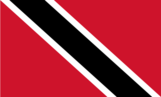
red with a white-edged black diagonal band from the upper hoist side to the lower fly side; the colors represent the elements of earth, water, and fire; black stands for the wealth of the land and the dedication of the people; white symbolizes the sea surrounding the islands, the purity of the country's aspirations, and equality; red symbolizes the warmth and energy of the sun, the vitality of the land, and the courage and friendliness of its people
Government type
parliamentary republic
Independence
31 August 1962 (from the UK)
International law organization participation
has not submitted an ICJ jurisdiction declaration; accepts ICCt jurisdiction
International organization participation
ACP, AOSIS, C, Caricom, CDB, CELAC, EITI (compliant country), FAO, G-24, G-77, IADB, IAEA, IBRD, ICAO, ICC (NGOs), ICCt, ICRM, IDA, IFAD, IFC, IFRCS, IHO, ILO, IMF, IMO, Interpol, IOC, IOM, IPU, ISO, ITSO, ITU, ITUC (NGOs), LAES, MIGA, NAM, OAS, OPANAL, OPCW, Pacific Alliance (observer), Paris Club (associate), UN, UNCTAD, UNESCO, UNIDO, UPU, WCO, WFTU (NGOs), WHO, WIPO, WMO, WTO
Judicial branch
- Supreme Court of the Judicature (consists of a chief justice for both the Court of Appeal with 12 judges and the High Court with 24 judges); note - Trinidad and Tobago can file appeals beyond its Supreme Court to the Caribbean Court of Justice, with final appeal to the Judicial Committee of the Privy Council (in London) Supreme Court chief justice appointed by the president after consultation with the prime minister and the parliamentary leader of the opposition; other judges appointed by the Judicial Legal Services Commission, headed by the chief justice and 5 members with judicial experience; all judges appointed for life with mandatory retirement normally at age 65 Courts of Summary Criminal Jurisdiction; Petty Civil Courts; Family Court
- highest resident court(s)
- Supreme Court of the Judicature (consists of a chief justice for both the Court of Appeal with 12 judges and the High Court with 24 judges); note - Trinidad and Tobago can file appeals beyond its Supreme Court to the Caribbean Court of Justice, with final appeal to the Judicial Committee of the Privy Council (in London)
- judge selection and term of office
- Supreme Court chief justice appointed by the president after consultation with the prime minister and the parliamentary leader of the opposition; other judges appointed by the Judicial Legal Services Commission, headed by the chief justice and 5 members with judicial experience; all judges appointed for life with mandatory retirement normally at age 65
- subordinate courts
- Courts of Summary Criminal Jurisdiction; Petty Civil Courts; Family Court
Legal system
English common law; judicial review of legislative acts in the Supreme Court
Legislative branch
- bicameral Parliament consists of the Senate (31 seats; 16 members appointed by the ruling party, 9 by the president, and 6 by the opposition party; members serve 5-year terms;) and the House of Representatives (41 seats; members directly elected in single-seat constituencies by simple majority vote to serve 5-year terms) Tobago has a unicameral House of Assembly (16 seats; 12 assemblymen directly elected by simple majority vote and 4 appointed councillors - 3 on the advice of the chief secretary and 1 on the advice of the minority leader; members serve 4-year terms) House of Representatives - last held on 7 September 2015 (next to be held in 2020) House of Representatives - percent of vote - NA; seats by party - PNM 23, UNC 18
- description
- bicameral Parliament consists of the Senate (31 seats; 16 members appointed by the ruling party, 9 by the president, and 6 by the opposition party; members serve 5-year terms;) and the House of Representatives (41 seats; members directly elected in single-seat constituencies by simple majority vote to serve 5-year terms)
- election results
- House of Representatives - percent of vote - NA; seats by party - PNM 23, UNC 18
- elections
- House of Representatives - last held on 7 September 2015 (next to be held in 2020)
- note
- Tobago has a unicameral House of Assembly (16 seats; 12 assemblymen directly elected by simple majority vote and 4 appointed councillors - 3 on the advice of the chief secretary and 1 on the advice of the minority leader; members serve 4-year terms)
National anthem
- "Forged From the Love of Liberty" Patrick Stanislaus CASTAGNE adopted 1962; song originally created to serve as an anthem for the West Indies Federation; adopted by Trinidad and Tobago following the Federation's dissolution in 1962
- lyrics/music
- Patrick Stanislaus CASTAGNE
- name
- "Forged From the Love of Liberty"
- note
- adopted 1962; song originally created to serve as an anthem for the West Indies Federation; adopted by Trinidad and Tobago following the Federation's dissolution in 1962
National holiday
Independence Day, 31 August (1962)
National symbol(s)
- scarlet ibis (bird of Trinidad), cocrico (bird of Tobago), Chaconia flower; national colors: red, white, black
- scarlet ibis (bird of Trinidad), cocrico (bird of Tobago), Chaconia flower; national colors
- red, white, black
Political parties and leaders
Congress of the People or COP [Prakash RAMADHAR] Democratic Action Congress or DAC [Hochoy CHARLES] (only active in Tobago) Democratic National Alliance or DNA [Charles CARSON] (coalition of NAR, DDPT, MND) Movement for National Development or MND [Garvin NICHOLAS] National Alliance for Reconstruction or NAR [Lennox SANKERSINGH] People's National Movement or PNM [Keith ROWLEY] Tobago Organization of the People or TOP [Ashworth JACK] United National Congress or UNC [Kamla PERSAD-BISSESSAR]
Political pressure groups and leaders
Jamaat-al Muslimeen [Yasin ABU BAKR]
Suffrage
18 years of age; universal
Economy
Agriculture - products
cocoa, dasheen, pumpkin, cassava, tomatoes, cucumbers, eggplant, hot pepper, pommecythere, coconut water, poultry
Budget
- $8.731 billion $9.758 billion (2014 est.)
- expenditures
- $9.758 billion (2014 est.)
- revenues
- $8.731 billion
Budget surplus (+) or deficit (-)
-4% of GDP (2014 est.)
Central bank discount rate
6.75% (04 March 2016 est.) 6.75% (31 December 2015 est.)
Commercial bank prime lending rate
8% (31 December 2015 est.) 7.9% (31 December 2014 est.)
Current account balance
-$166 million (2015 est.) $1.822 billion (2014 est.)
Debt - external
$2.115 billion (31 December 2014 est.) $2.072 billion (31 December 2013 est.)
Economy - overview
Trinidad and Tobago attracts considerable foreign direct investment from international businesses, particularly in energy, and has one of the highest per capita incomes in Latin America. Economic growth between 2000 and 2007 averaged slightly over 8% per year, significantly above the regional average of about 3.7% for that same period; however, GDP has slowed down since then, contracting during 2009-2012, making small gains in 2013 and contracting again in 2014-2015. Energy production and downstream industrial use dominate the economy. Trinidad and Tobago produces about nine times more natural gas than crude oil on an energy equivalent basis with gas contributing about two-thirds of energy sector government revenue. Oil and gas account for about 40% of GDP and 80% of exports but less than 5% of employment. In 2013, Trinidad and Tobago was the world’s sixth-largest liquefied natural gas (LNG) exporter and is home to one of the largest natural gas liquefaction facilities in the Western Hemisphere. The United States is the country’s largest trading partner, accounting for 33% of its total imports and taking 44% of its exports. Trinidad and Tobago is buffered by considerable foreign reserves and a sovereign wealth fund that equals about one-and-a-half times the national budget, but the country is in a recession and the government faces the dual challenge of gas shortages and a low price environment. A projected 70% decrease in energy revenue to the government in 2016 will likely force cuts to the government budget, which has increased by 35% over the past six years. Economic diversification is a longstanding government talking point, and Trinidad and Tobago has much potential due to its stable, democratic government and its educated, English speaking workforce. Although Trinidad and Tobago enjoys cheap electricity from natural gas, the renewable energy sector has recently garnered increased interest. The country is also a regional financial center with a well-regulated and stable financial system. Other sectors the Government of Trinidad and Tobago has targeted for increased investment and projected growth include tourism, agriculture, information and communications technology, and shipping. Unfortunately, a host of other factors, including low labor productivity, inefficient government bureaucracy, and corruption, have hampered economic development.
Exchange rates
Trinidad and Tobago dollars (TTD) per US dollar - 6.57 (2016 est.) 6.4 (2015 est.) 6.4041 (2014 est.) 6.4041 (2013 est.) 6.39 (2012 est.)
Exports
$11.81 billion (2014 est.) $12.77 billion (2013 est.)
Exports - commodities
petroleum and petroleum products, liquefied natural gas, methanol, ammonia, urea, steel products, beverages, cereal and cereal products, cocoa, fish, preserved fruits, , cosmetics, household cleaners, plastic packaging
Exports - partners
US 26.3%, Argentina 12%, Brazil 6.6%, Chile 5.3%, Dominican Republic 5.2%, Barbados 5% (2015)
Fiscal year
1 October - 30 September
GDP - composition, by end use
- 60.2% 13% 13.8% 0% 44.4% -31.5% (2014 est.)
- exports of goods and services
- 44.4%
- government consumption
- 13%
- household consumption
- 60.2%
- imports of goods and services
- -31.5% (2014 est.)
- investment in fixed capital
- 13.8%
- investment in inventories
- 0%
GDP - composition, by sector of origin
- 0.5% 37.7% 61.4% (2015 est.)
- agriculture
- 0.5%
- industry
- 37.7%
- services
- 61.4% (2015 est.)
GDP - per capita (PPP)
- $30,900 (2015 est.) $31,500 (2014 est.) $31,400 (2013 est.) data are in 2015 US dollars
- note
- data are in 2015 US dollars
GDP - real growth rate
0.2% (2015 est.) -1% (2014 est.) 2.3% (2013 est.)
GDP (official exchange rate)
$25.43 billion (2015 est.)
GDP (purchasing power parity)
- $45.19 billion (2015 est.) $45.1 billion (2014 est.) $45.56 billion (2013 est.) data are in 2015 US dollars
- note
- data are in 2015 US dollars
Gross national saving
8% of GDP (2015 est.) 18.1% of GDP (2014 est.) 20.7% of GDP (2013 est.)
Household income or consumption by percentage share
- NA% NA%
- highest 10%
- NA%
- lowest 10%
- NA%
Imports
$8.386 billion (2014 est.) $8.871 billion (2013 est.)
Imports - commodities
mineral fuels, lubricants, machinery, transportation equipment, manufactured goods, food, chemicals, live animals
Imports - partners
US 35.6%, China 6.8%, Gabon 6.6% (2015)
Industrial production growth rate
-5% (2015 est.)
Industries
petroleum and petroleum products, liquefied natural gas (LNG), methanol, ammonia, urea, steel products, beverages, food processing, cement, cotton textiles
Inflation rate (consumer prices)
4.7% (2015 est.) 5.7% (2014 est.)
Labor force
649,100 (2015 est.)
Labor force - by occupation
- 3.6% 11.2% 85.2% 62.9% (2014 est.)
- agriculture
- 3.6%
- construction and utilities
- 85.2%
- manufacturing, mining, and quarrying
- 11.2%
- services
- 62.9% (2014 est.)
Market value of publicly traded shares
$177.4 million (31 December 2015 est.) $171.6 million (31 December 2014) $170 million (31 December 2013 est.)
Population below poverty line
17% (2007 est.)
Public debt
67.4% of GDP (2015 est.) 57.6% of GDP (2014 est.)
Reserves of foreign exchange and gold
$13.59 billion (31 December 2015 est.) $12.33 billion (31 December 2014 est.)
Stock of broad money
$13.51 billion (31 December 2014 est.) $11.94 billion (31 December 2013 est.)
Stock of direct foreign investment - abroad
$1.266 billion (2014 est.)
Stock of direct foreign investment - at home
$382.9 million (31 December 2014 est.) $311.7 million (2014 est.)
Stock of domestic credit
$7.432 billion (31 December 2014 est.) $6.93 billion (31 December 2013 est.)
Stock of narrow money
$7.422 billion (31 December 2015 est.) $6.907 billion (31 December 2014 est.)
Taxes and other revenues
34.3% of GDP (2014 est.)
Unemployment rate
3.2% (2015 est.) 3.3% (2014 est.)
Energy
Carbon dioxide emissions from consumption of energy
48 million Mt (2012 est.)
Crude oil - exports
30,800 bbl/day (2015 est.)
Crude oil - imports
78,340 bbl/day (2015 est.)
Crude oil - production
78,630 bbl/day (2014 est.)
Crude oil - proved reserves
700 million bbl (1 January 2015 es)
Electricity - consumption
9.1 billion kWh (2012 est.)
Electricity - exports
0 kWh (2015 est.)
Electricity - from fossil fuels
100% of total installed capacity (2015 est.)
Electricity - from hydroelectric plants
0% of total installed capacity (2015 est.)
Electricity - from nuclear fuels
0% of total installed capacity (2015 est.)
Electricity - from other renewable sources
0% of total installed capacity (2015 est.)
Electricity - imports
0 kWh (2015 est.)
Electricity - installed generating capacity
2.353 million kW (2015 est.)
Electricity - production
9.3 billion kWh (2012 est.)
Electricity access
- 12,452 99.8% 100% 99% (2012)
- electrification - rural areas
- 99% (2012)
- electrification - total population
- 99.8%
- electrification - urban areas
- 100%
- population without electricity
- 12,452
Natural gas - consumption
24.67 billion cu m (2014 est.)
Natural gas - exports
17.41 billion cu m (2014 est.)
Natural gas - imports
0 cu m (2015 est.)
Natural gas - production
41.59 billion cu m (2014 est.)
Natural gas - proved reserves
325.7 billion cu m (1 January 2014 es)
Refined petroleum products - consumption
56,000 bbl/day (2015 est.)
Refined petroleum products - exports
113,800 bbl/day (2012 est.)
Refined petroleum products - imports
31,630 bbl/day (2015 est.)
Refined petroleum products - production
139,200 bbl/day (2015 est.)
Communications
Broadcast media
16 TV networks (11 commercial, 5 non-commercial), 2 of which are state-owned that broadcast on multiple stations; 9 TV subscription service providers (cable and satellite); 19 radio networks, 1 state-owned, broadcast over about 35 stations (2016)
Internet country code
.tt
Internet users
- 846,000 69.2% (July 2015 est.)
- percent of population
- 69.2% (July 2015 est.)
- total
- 846,000
Telephone system
- excellent international service; good local service combined fixed-line and mobile-cellular teledensity over 190 telephones per 100 persons country code - 1-868; submarine cable systems provide connectivity to US and parts of the Caribbean and South America; satellite earth station - 1 Intelsat (Atlantic Ocean); tropospheric scatter to Barbados and Guyana (2015)
- domestic
- combined fixed-line and mobile-cellular teledensity over 190 telephones per 100 persons
- general assessment
- excellent international service; good local service
- international
- country code - 1-868; submarine cable systems provide connectivity to US and parts of the Caribbean and South America; satellite earth station - 1 Intelsat (Atlantic Ocean); tropospheric scatter to Barbados and Guyana (2015)
Telephones - fixed lines
- 270,872 22 (July 2015 est.)
- subscriptions per 100 inhabitants
- 22 (July 2015 est.)
- total subscriptions
- 270,872
Telephones - mobile cellular
- 2.123 million 174 (July 2015 est.)
- subscriptions per 100 inhabitants
- 174 (July 2015 est.)
- total
- 2.123 million
Transportation
Airports
4 (2013)
Airports - with paved runways
- 1 (2013)
- 2,438 to 3,047 m
- 1 (2013)
- over 3,047 m
- 1
- total
- 2
Airports - with unpaved runways
- 1 (2013)
- 914 to 1,523 m
- 1
- total
- 2
- under 914 m
- 1 (2013)
Civil aircraft registration country code prefix
9Y (2016)
Merchant marine
- passenger 1, passenger/cargo 2, petroleum tanker 1 2 (unknown 2) (2010)
- by type
- passenger 1, passenger/cargo 2, petroleum tanker 1
- registered in other countries
- 2 (unknown 2) (2010)
- total
- 4
National air transport system
- 2,617,842 43,198,176 mt-km (2015)
- annual freight traffic on registered air carriers
- 43,198,176 mt-km (2015)
- annual passenger traffic on registered air carriers
- 2,617,842
- inventory of registered aircraft operated by air carriers
- 17
- number of registered air carriers
- 1
Pipelines
condensate 257 km; condensate/gas 11 km; gas 1,567 km; oil 587 km (2013)
Ports and terminals
- Point Fortin, Point Lisas, Port of Spain, Scarborough Galeota Point terminal Port Fortin
- LNG terminal(s) (export)
- Port Fortin
- major seaport(s)
- Point Fortin, Point Lisas, Port of Spain, Scarborough
- oil terminals
- Galeota Point terminal
Roadways
- 9,592 km 5,524 km 4,068 km (2015)
- paved
- 5,524 km
- total
- 9,592 km
- unpaved
- 4,068 km (2015)
Military and Security
Military branches
- Trinidad and Tobago Defense Force (TTDF): Trinidad and Tobago Army, Coast Guard, Air Guard, Defense Force Reserves (2010)
- Trinidad and Tobago Defense Force (TTDF)
- Trinidad and Tobago Army, Coast Guard, Air Guard, Defense Force Reserves (2010)
Military service age and obligation
18-25 years of age for voluntary military service (16 years of age with parental consent); no conscription; Trinidad and Tobago citizenship and completion of secondary school required (2012)
Transnational Issues
Disputes - international
Barbados and Trinidad and Tobago abide by the April 2006 Permanent Court of Arbitration decision delimiting a maritime boundary and limiting catches of flying fish in Trinidad and Tobago's EEZ; in 2005, Barbados and Trinidad and Tobago agreed to compulsory international arbitration under UN Convention on the Law of the Sea challenging whether the northern limit of Trinidad and Tobago's and Venezuela's maritime boundary extends into Barbadian waters; Guyana has expressed its intention to include itself in the arbitration, as the Trinidad and Tobago-Venezuela maritime boundary may also extend into its waters
Illicit drugs
transshipment point for South American drugs destined for the US and Europe; producer of cannabis
Trafficking in persons
- Trinidad and Tobago is a destination, transit, and possible source country for adults and children subjected to sex trafficking and forced labor; women and girls from Venezuela, the Dominican Republic, Guyana, and Colombia have been subjected to sex trafficking in Trinidad and Tobago’s brothels and clubs; some economic migrants from the Caribbean region and Asia are vulnerable to forced labor in domestic service and the retail sector; the steady flow of vessels transiting Trinidad and Tobago’s territorial waters may also increase opportunities for forced labor for fishing; international crime organizations are increasingly involved in trafficking, and boys are coerced to sell drugs and guns; corruption among police and immigration officials impedes anti-trafficking efforts Tier 2 Watch List – Trinidad and Tobago does not fully comply with the minimum standards for the elimination of trafficking; however, it is making significant efforts to do so; anti-trafficking law enforcement efforts decreased from the initiation of 12 prosecutions in 2013 to 1 in 2014; the government has yet to convict anyone under its 2011 anti-trafficking law, and all prosecutions from previous years remain pending; the government sustained efforts to identify victims and to refer them for care at NGO facilities, which it provided with funding; the government failed to draft a national action plan as mandated under the 2011 anti-trafficking law and did not launch a sufficiently robust awareness campaign to educate the public and officials (2015)
- current situation
- Trinidad and Tobago is a destination, transit, and possible source country for adults and children subjected to sex trafficking and forced labor; women and girls from Venezuela, the Dominican Republic, Guyana, and Colombia have been subjected to sex trafficking in Trinidad and Tobago’s brothels and clubs; some economic migrants from the Caribbean region and Asia are vulnerable to forced labor in domestic service and the retail sector; the steady flow of vessels transiting Trinidad and Tobago’s territorial waters may also increase opportunities for forced labor for fishing; international crime organizations are increasingly involved in trafficking, and boys are coerced to sell drugs and guns; corruption among police and immigration officials impedes anti-trafficking efforts
- tier rating
- Tier 2 Watch List – Trinidad and Tobago does not fully comply with the minimum standards for the elimination of trafficking; however, it is making significant efforts to do so; anti-trafficking law enforcement efforts decreased from the initiation of 12 prosecutions in 2013 to 1 in 2014; the government has yet to convict anyone under its 2011 anti-trafficking law, and all prosecutions from previous years remain pending; the government sustained efforts to identify victims and to refer them for care at NGO facilities, which it provided with funding; the government failed to draft a national action plan as mandated under the 2011 anti-trafficking law and did not launch a sufficiently robust awareness campaign to educate the public and officials (2015)