1985 Edition
CIA World Factbook 1985 (Internet Archive)
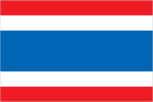
Geography
Agriculture
main crops — rice, sugar, corn, rubber, manioc
Area
- 181,035 km2; the size of Missouri; 74% forest; 16% cultivated; 10% built on, waste, and other
- 514,820 km2; about the size of Texas; 56% forest, 24% farm, 20% other
Branches
- Cabinet, State Presidium, and some form of People's Representative Assembly in Democratic Cambodia; People's Revolutionary Council, various ministries, and a "National Congress" held in early 1979 and a second time in September 1979 in PRK
- King is head of state with nominal powers; bicameral legislature (National Assembly— Senate appointed by King, elected House of Representatives); judiciary relatively independent except in important political subversive cases
Budget
(FY83) estimate of expenditures, $7.7 billion
Capital
- Phnom Penh
- Bangkok
Coastline
- about 443 km People
- 3,219 km People
Communists
strength of illegal Communist Party is about 1,000; Thai Communist insurgents throughout Thailand total an estimated 7,000, perhaps as low as 2,000
Elections
last held April 1983
Electric power
4,976,000 kW capacity (1984); 19.1 billion kWh produced (1984), 370 kWh per capita
Ethnic divisions
- 90% Khmer (Cambodian), 5% Chinese, 5% other minorities
- 75% Thai, 14% Chinese, 11% other
Exports
$6.3 billion (f .o.b., 1983); rice, sugar, corn, rubber, tin, tapioca, kenaf
Fiscal year
1 October-30 September Communications
Fishing
catch 1.9 million metric tons (1982); major fishery export, shrimp, 20,150 metric tons, about $138 million (1983)
GNP
$40.3 billion (1983), $790 per capita; 5.8% real growth in 1983 (8.2% real growth, 1975-79)
Government leaders
- CGDK — Prince NORODOM SIHANOUK, President (since June 1982); SON SANN, Prime Minister; KHIEU SAMPHAN, Vice President (since December 1979); PRK— HENG SAMRIN, President (since January 1979); HUN SEN, Foreign Minister (since January 1979)
- BHUMIBOL ADULYADEJ, King (since June 1946); Gen. (Ret.) PREM TINSULANONDA, Prime Minister (since March 1980)
Imports
$10.2 billion (c.i.f., 1983); machinery and transport equipment, fuels and lubricants, base metals, chemicals, and fertil-
Labor force
23.4 million (1981 est); 76% agriculture, 9% industry and commerce, 9% services, 6% government Government
Land boundaries
- 2,438 km Water
- 4,868 km Water
Language
- Khmer (official), French
- Thai; English secondary language of elite; ethnic and regional dialects
Legal system
- Judicial Committee chosen by People's Representative Assembly in Democratic Cambodia; no information for PRK
- based on civil law system, with influences of common law; legal education at Thammasat University; has not accepted compulsory ICJ jurisdiction
Limits of territorial waters (claimed)
- 12 nm (economic, including fishing, 200 nm)
- 12 nm (economic, including fishing, 200 nm)
Literacy
- 48% Government
- 84%
Major industries
agricultural processing, textiles, wood and wood products, cement, tin and tungsten ore mining; world's second largest tungsten producer and third largest tin producer
Major trade partners
exports — Japan, US, Singapore, Netherlands, Hong Kong, Malaysia; imports — Japan, US, FRG, UK, Singapore, Saudi Arabia; about 1% or less trade with Communist countries
Member of
- ADB, Colombo Plan, ESCAP, FAO, G-77, GATT (de facto), IAEA, IBRD, ICAO, IDA, ILO, IMF, IMO, INTERPOL, IRC, ITU, Mekong Committee (inactive), NAM, UN, UNESCO, UPU, WFTU, WHO, WMO, WTO for CGDK; none for PRK
- ADB, ANRPC, ASEAN, ASPAC, Association of Tin Producing Countries, Colombo Plan, GATT, ESCAP, FAO, G-77, IAEA, IBRD, ICAO, IDA, IFAD, IFC, IHO, ILO, IMF, IMO, INTELSAT, INTERPOL, IPU, IRC, ITC, ITU, UN, UNESCO, UPU, WHO, WMO, WTO Economy
Monetary conversion rate
27 baht=US$l (November 1984)
National holiday
- 17 April for both regimes
- Birthday of the King, 5 December
Nationality
- noun — Cambodian(s); adjective— Cambodian
- noun — Thai (sing, and pi.); adjective— Thai
Official name
- Coalition Government of Democratic Cambodia (CGDK; composed of three resistance groups deployed along the Thai border); People's Republic of Cambodia (PRK; pro-Vietnamese, in Phnom Penh)
- Kingdom of Thailand
Political parties
Social Action Party, Thai Nation Party, Thai People's Party, Thai Citizen Party, Democrat Party, Freedom and Justice Party, Nation and People Party, New Force Party, National Democracy Party; other small parties represented in parliament along with numerous independents
Political subdivisions
- 19 provinces
- 73 centrally controlled provinces
Population
- 6,249,000 (July 1985), average annual growth rate 2.1%
- 52,700,000 (July 1985), average annual growth rate 1.9%
Railroads
3,800 km 1.000-meter gauge, 97 km double track; 140 km 1.000-meter gauge under construction from Chachoeng Sao to Sattahip
Religion
- 95% Theravada Buddhism, 5% other
- 95.5% Buddhist, 4% Muslim, 0.5% other
Shortages
fuel sources, including coal and petroleum; scrap iron; and fertilizer
Suffrage
- universal over age 18 Political parties and leaders: CGDK — Democratic Cambodia Khmer Communist Party disbanded December 1981, though chief political figure still former party chairman Pol Pot, Khmer People's National Liberation Front (KPNLF) under Son Sann, and National United Front for an Independent, Neutral, Peaceful, and Cooperative Cambodia under Prince Norodom Sihanouk; PRK — Cambodian Peoples Revolutionary Party, the Communist party installed by Vietnam in 1979, and Cambodian United Front for National Construction and Defense (KUFNCD)
- universal at age 20
Type
- CGDK is nationalist coalition of one Communist and two non-Communist factions; PRK is Communist
- constitutional monarchy