2021 Edition
CIA World Factbook 2021 (factbook.json @ e0d5604b9e27)
Introduction
Background
A military power during the 17th century, Sweden has not participated in any war for two centuries. An armed neutrality was preserved in both World Wars. Since then, Sweden has pursued a successful economic formula consisting of a capitalist system intermixed with substantial welfare elements. Sweden joined the EU in 1995, but the public rejected the introduction of the euro in a 2003 referendum. The share of Sweden’s population born abroad increased from 11.3% in 2000 to 19.1% in 2018.
Geography
Area
- land
- 410,335 sq km
- total
- 450,295 sq km
- water
- 39,960 sq km
Area - comparative
almost three times the size of Georgia; slightly larger than California
Climate
temperate in south with cold, cloudy winters and cool, partly cloudy summers; subarctic in north
Coastline
3,218 km
Elevation
- highest point
- Kebnekaise South 2,100 m
- lowest point
- reclaimed bay of Lake Hammarsjon, near Kristianstad -2.4 m
- mean elevation
- 320 m
Geographic coordinates
62 00 N, 15 00 E
Geography - note
strategic location along Danish Straits linking Baltic and North Seas; Sweden has almost 100,000 lakes, the largest of which, Vanern, is the third largest in Europe
Irrigated land
1,640 sq km (2012)
Land boundaries
- border countries
- Finland 545 km, Norway 1666 km
- total
- 2,211 km
Land use
- agricultural land
- 7.5% (2018 est.)
- agricultural land: arable land
- arable land: 6.4% (2018 est.)
- agricultural land: permanent crops
- permanent crops: 0% (2018 est.)
- agricultural land: permanent pasture
- permanent pasture: 1.1% (2018 est.)
- forest
- 68.7% (2018 est.)
- other
- 23.8% (2018 est.)
Location
Northern Europe, bordering the Baltic Sea, Gulf of Bothnia, Kattegat, and Skagerrak, between Finland and Norway
Major lakes (area sq km)
- Fresh water lake(s)
- Vanern - 5,580 sq km; Vattern - 1,910 sq km; Malaren - 1,140 sq km
Map references
Europe
Maritime claims
- continental shelf
- 200-m depth or to the depth of exploitation
- exclusive economic zone
- agreed boundaries or midlines
- territorial sea
- 12 nm (adjustments made to return a portion of straits to high seas)
Natural hazards
ice floes in the surrounding waters, especially in the Gulf of Bothnia, can interfere with maritime traffic
Natural resources
iron ore, copper, lead, zinc, gold, silver, tungsten, uranium, arsenic, feldspar, timber, hydropower
Population distribution
most Swedes live in the south where the climate is milder and there is better connectivity to mainland Europe; population clusters are found all along the Baltic coast in the east; the interior areas of the north remain sparsely populated
Terrain
mostly flat or gently rolling lowlands; mountains in west
People and Society
Age structure
- 0-14 years
- 17.71% (male 928,413/female 878,028)
- 15-24 years
- 10.8% (male 569,082/female 532,492)
- 25-54 years
- 39.01% (male 2,016,991/female 1,962,617)
- 55-64 years
- 11.9% (male 610,521/female 603,795)
- 65 years and over
- 20.59% (male 974,410/female 1,126,142) (2020 est.)
Birth rate
11.93 births/1,000 population (2021 est.)
Children under the age of 5 years underweight
NA
Contraceptive prevalence rate
- 70.3% (2017)
- note
- note: percent of women aged 16-49
Current Health Expenditure
10.9% (2018)
Death rate
9.39 deaths/1,000 population (2021 est.)
Dependency ratios
- elderly dependency ratio
- 32.8
- potential support ratio
- 3.1 (2020 est.)
- total dependency ratio
- 61.2
- youth dependency ratio
- 28.4
Drinking water source
- improved: rural
- rural: 100% of population
- improved: total
- total: 100% of population
- improved: urban
- urban: 100% of population
- unimproved: rural
- rural: 0% of population
- unimproved: total
- total: 0% of population (2017 est.)
- unimproved: urban
- urban: 0% of population
Education expenditures
7.6% of GDP (2018)
Ethnic groups
- Swedish 80.3%, Syrian 1.9%, Iraqi 1.4%, Finnish 1.4%, other 15% (2020 est.)
- note
- note: data represent the population by country of birth; the indigenous Sami people are estimated to number between 20,000 and 40,000
HIV/AIDS - adult prevalence rate
0.2% (2016 est.)
HIV/AIDS - deaths
NA
HIV/AIDS - people living with HIV/AIDS
11,000 (2016 est.)
Hospital bed density
2.1 beds/1,000 population (2018)
Infant mortality rate
- female
- 2.13 deaths/1,000 live births (2021 est.)
- male
- 2.76 deaths/1,000 live births
- total
- 2.45 deaths/1,000 live births
Languages
- Languages
- Swedish (official)
- major-language sample(s)
- The World Factbook, den obestridliga källan för grundläggande information. (Swedish)The World Factbook, the indispensable source for basic information.
- note
- note: Finnish, Sami, Romani, Yiddish, and Meankieli are official minority languages
Life expectancy at birth
- female
- 84.7 years (2021 est.)
- male
- 80.61 years
- total population
- 82.6 years
Major urban areas - population
1.657 million STOCKHOLM (capital) (2021)
Maternal mortality ratio
4 deaths/100,000 live births (2017 est.)
Median age
- female
- 42.1 years (2020 est.)
- male
- 40.1 years
- total
- 41.1 years
Mother's mean age at first birth
29.5 years (2019 est.)
Nationality
- adjective
- Swedish
- noun
- Swede(s)
Net migration rate
4.87 migrant(s)/1,000 population (2021 est.)
Obesity - adult prevalence rate
20.6% (2016)
Physicians density
3.98 physicians/1,000 population (2016)
Population
10,261,767 (July 2021 est.)
Population distribution
most Swedes live in the south where the climate is milder and there is better connectivity to mainland Europe; population clusters are found all along the Baltic coast in the east; the interior areas of the north remain sparsely populated
Population growth rate
0.74% (2021 est.)
Religions
- Church of Sweden (Lutheran) 57.6%, other (includes Roman Catholic, Orthodox, Baptist, Muslim, Jewish, and Buddhist) 8.9%, none or unspecified 33.5% (2019 est.)
- note
- note: estimates reflect registered members of faith communities eligible for state funding (not all religions are state-funded and not all people who identify with a particular religion are registered members) and the Church of Sweden
Sanitation facility access
- improved: rural
- rural: 100% of population
- improved: total
- total: 100% of population
- improved: urban
- urban: 100% of population
- unimproved: rural
- rural: 0% of population
- unimproved: total
- total: 0% of population (2017 est.)
- unimproved: urban
- urban: 0% of population
School life expectancy (primary to tertiary education)
- female
- 21 years (2019)
- male
- 18 years
- total
- 19 years
Sex ratio
- 0-14 years
- 1.06 male(s)/female
- 15-24 years
- 1.07 male(s)/female
- 25-54 years
- 1.03 male(s)/female
- 55-64 years
- 1.01 male(s)/female
- 65 years and over
- 0.87 male(s)/female
- at birth
- 1.06 male(s)/female
- total population
- 1 male(s)/female (2020 est.)
Total fertility rate
1.86 children born/woman (2021 est.)
Unemployment, youth ages 15-24
- female
- 22.8% (2020 est.)
- male
- 25%
- total
- 24%
Urbanization
- rate of urbanization
- 0.89% annual rate of change (2020-25 est.)
- urban population
- 88.2% of total population (2021)
Government
Administrative divisions
21 counties (lan, singular and plural); Blekinge, Dalarna, Gavleborg, Gotland, Halland, Jamtland, Jonkoping, Kalmar, Kronoberg, Norrbotten, Orebro, Ostergotland, Skane, Sodermanland, Stockholm, Uppsala, Varmland, Vasterbotten, Vasternorrland, Vastmanland, Vastra Gotaland
Capital
- daylight saving time
- +1hr, begins last Sunday in March; ends last Sunday in October
- etymology
- "stock" and "holm" literally mean "log" and "islet" in Swedish, but there is no consensus as to what the words refer to
- geographic coordinates
- 59 20 N, 18 03 E
- name
- Stockholm
- time difference
- UTC+1 (6 hours ahead of Washington, DC, during Standard Time)
Citizenship
- citizenship by birth
- no
- citizenship by descent only
- the father must be a citizen of Sweden; in the case of a child born out of wedlock, the mother must be a citizen of Sweden and the father unknown
- dual citizenship recognized
- no, unless the other citizenship was acquired involuntarily
- residency requirement for naturalization
- 5 years
Constitution
- amendments
- proposed by Parliament; passage requires simple majority vote in two consecutive parliamentary terms with an intervening general election; passage also requires approval by simple majority vote in a referendum if Parliament approves a motion for a referendum by one third of its members; The Instrument of Government - amended several times, last in 2018; The Act of Succession - changed in 1937, 1980; The Freedom of the Press Act - amended several times, last in 2019; The Fundamental Law on Freedom of Expression - amended several times, last in 2018
- history
- Sweden has four fundamental laws which together make up the Constitution: The Instrument of Government (several previous; latest 1974); The Act of Succession (enacted 1810; changed in 1937 and 1980); The Freedom of the Press Act (many previous; latest in 1949); The Fundamental Law on Freedom of Expression (adopted 1991)
Country name
- conventional long form
- Kingdom of Sweden
- conventional short form
- Sweden
- etymology
- name ultimately derives from the North Germanic Svear tribe, which inhabited central Sweden and is first mentioned in the first centuries A.D.
- local long form
- Konungariket Sverige
- local short form
- Sverige
Diplomatic representation from the US
- chief of mission
- Ambassador (vacant); Chargé d’Affaires Pamela M. TREMONT (since 20 January 2021)
- email address and website
- STKACSinfo@state.govhttps://se.usembassy.gov/
- embassy
- Dag Hammarskjolds Vag 31, SE-115 89 Stockholm
- FAX
- [46] (08) 661-19-64
- mailing address
- 5750 Stockholm Place, Washington, DC 20521-5750
- telephone
- [46] (08) 783-53-00
Diplomatic representation in the US
- chancery
- 2900 K Street NW, Washington, DC 20007
- chief of mission
- Ambassador Karin Ulrika OLOFSDOTTER (since 8 September 2017)
- consulate(s) general
- New York
- email address and website
- ambassaden.washington@gov.sehttps://www.swedenabroad.se/en/embassies/usa-washington/
- FAX
- [1] (202) 467-2699
- telephone
- [1] (202) 467-2600
Executive branch
- cabinet
- Cabinet appointed by the prime minister
- chief of state
- King CARL XVI GUSTAF (since 15 September 1973); Heir Apparent Princess VICTORIA Ingrid Alice Desiree (daughter of the monarch, born 14 July 1977)
- elections/appointments
- the monarchy is hereditary; following legislative elections, the leader of the majority party or majority coalition usually becomes the prime minister
- head of government
- Prime Minister Magdalena ANDERSSON (since 30 November 2021); Deputy Prime Minister Morgan JOHANSSON (since 10 September 2019)
Flag description
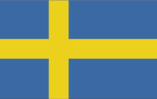
blue with a golden yellow cross extending to the edges of the flag; the vertical part of the cross is shifted to the hoist side in the style of the Dannebrog (Danish flag); the colors reflect those of the Swedish coat of arms - three gold crowns on a blue field
Government type
parliamentary constitutional monarchy
Independence
6 June 1523 (Gustav VASA elected king of Sweden, marking the abolishment of the Kalmar Union between Denmark, Norway, and Sweden)
International law organization participation
accepts compulsory ICJ jurisdiction with reservations; accepts ICCt jurisdiction
International organization participation
ADB (nonregional member), AfDB (nonregional member), Arctic Council, Australia Group, BIS, CBSS, CD, CE, CERN, EAPC, EBRD, ECB, EIB, EITI (implementing country), EMU, ESA, EU, FAO, FATF, G-9, G-10, IADB, IAEA, IBRD, ICAO, ICC (national committees), ICCt, ICRM, IDA, IEA, IFAD, IFC, IFRCS, IGAD (partners), IHO, ILO, IMF, IMO, IMSO, Interpol, IOC, IOM, IPU, ISO, ITSO, ITU, ITUC (NGOs), MIGA, MINUSMA, MONUSCO, NC, NEA, NIB, NSG, OAS (observer), OECD, OPCW, OSCE, Paris Club, PCA, PFP, Schengen Convention, UN, UNCTAD, UNESCO, UNHCR, UNIDO, UNMISS, UNMOGIP, UNRWA, UN Security Council (temporary), UNTSO, UPU, WCO, WFTU (NGOs), WHO, WIPO, WMO, WTO, ZC
Judicial branch
- highest courts
- Supreme Court of Sweden (consists of 16 justices, including the court chairman); Supreme Administrative Court (consists of 18 justices, including the court president)
- judge selection and term of office
- Supreme Court and Supreme Administrative Court justices nominated by the Judges Proposal Board, a 9-member nominating body consisting of high-level judges, prosecutors, and members of Parliament; justices appointed by the Government; following a probationary period, justices' appointments are permanent
- subordinate courts
- first instance, appellate, general, and administrative courts; specialized courts that handle cases such as land and environment, immigration, labor, markets, and patents
Legal system
civil law system influenced by Roman-Germanic law and customary law
Legislative branch
- description
- unicameral Parliament or Riksdag (349 seats; 310 members directly elected in multi-seat constituencies by open party-list proportional representation vote and 39 members in "at-large" seats directly elected by open party-list proportional representation vote; members serve 4-year terms)
- election results
- percent of vote by party - SAP 28.3%, M 19.8%, SD 17.5%, C 8.6%, V 8%, KD 6.3%, L 5.5%, MP 4.4%, other 1.6%; seats by party - SAP 100, M 70, SD 62, C 31, V 28, KD 22, L 20, MP 16; composition - men 185, women 164, percent of women 47%
- elections
- last held on 9 September 2018 (next to be held in 2022)
National anthem
- lyrics/music
- Richard DYBECK/traditional
- name
- "Du Gamla, Du Fria" (Thou Ancient, Thou Free)
- note
- note: in use since 1844; also known as "Sang till Norden" (Song of the North), is based on a Swedish folk tune; it has never been officially adopted by the government; "Kungssangen" (The King's Song) serves as the royal anthem and is played in the presence of the royal family and during certain state ceremonies
National holiday
National Day, 6 June (1983); note - from 1916 to 1982 this date was celebrated as Swedish Flag Day
National symbol(s)
three crowns, lion; national colors: blue, yellow
Political parties and leaders
Center Party (Centerpartiet) or C [Annie LOOF]Christian Democrats (Kristdemokraterna) or KD [Ebba BUSCH]Green Party (Miljopartiet de Grona) or MP [Marta STEVENI and Per BOLUND]Left Party (Vansterpartiet) or V [Nooshi DADGOSTAR]Liberal Party (Liberalerna) or L [Nyamko SABUNI]Moderate Party (Moderaterna) or M [Ulf KRISTERSSON]Swedish Social Democratic Party (Socialdemokraterna) or SAP [Magdalena ANDERSSON]Sweden Democrats (Sverigedemokraterna) or SD [Jimmie AKESSON]
Suffrage
18 years of age; universal
Economy
Agricultural products
wheat, milk, sugar beet, barley, potatoes, oats, rapeseed, pork, rye, triticale
Budget
- expenditures
- 264.4 billion (2017 est.)
- revenues
- 271.2 billion (2017 est.)
Budget surplus (+) or deficit (-)
1.3% (of GDP) (2017 est.)
Credit ratings
- Fitch rating
- AAA (2004)
- Moody's rating
- Aaa (2002)
- Standard & Poors rating
- AAA (2004)
Current account balance
- Current account balance 2018
- $13.902 billion (2018 est.)
- Current account balance 2019
- $22.339 billion (2019 est.)
Debt - external
- Debt - external 2018
- $1,012,171,000,000 (2018 est.)
- Debt - external 2019
- $911.317 billion (2019 est.)
Economic overview
Sweden’s small, open, and competitive economy has been thriving and Sweden has achieved an enviable standard of living with its combination of free-market capitalism and extensive welfare benefits. Sweden remains outside the euro zone largely out of concern that joining the European Economic and Monetary Union would diminish the country’s sovereignty over its welfare system. Timber, hydropower, and iron ore constitute the resource base of a manufacturing economy that relies heavily on foreign trade. Exports, including engines and other machines, motor vehicles, and telecommunications equipment, account for more than 44% of GDP. Sweden enjoys a current account surplus of about 5% of GDP, which is one of the highest margins in Europe. GDP grew an estimated 3.3% in 2016 and 2017 driven largely by investment in the construction sector. Swedish economists expect economic growth to ease slightly in the coming years as this investment subsides. Global economic growth boosted exports of Swedish manufactures further, helping drive domestic economic growth in 2017. The Central Bank is keeping an eye on deflationary pressures and bank observers expect it to maintain an expansionary monetary policy in 2018. Swedish prices and wages have grown only slightly over the past few years, helping to support the country’s competitiveness. In the short and medium term, Sweden’s economic challenges include providing affordable housing and successfully integrating migrants into the labor market.
Exchange rates
- currency
- Swedish kronor (SEK) per US dollar -
- Exchange rates 2013
- 6.8612 (2013 est.)
- Exchange rates 2014
- 8.4335 (2014 est.)
- Exchange rates 2018
- 9.01895 (2018 est.)
- Exchange rates 2019
- 9.52915 (2019 est.)
- Exchange rates 2020
- 8.49085 (2020 est.)
Exports
- Exports 2018
- $254.25 billion note: data are in current year dollars (2018 est.)
- Exports 2019
- $254.53 billion note: data are in current year dollars (2019 est.)
- Exports 2020
- $240.08 billion note: data are in current year dollars (2020 est.)
Exports - commodities
cars and vehicle parts, packaged medicines, refined petroleum, broadcasting equipment, lumber (2019)
Exports - partners
Germany 10%, Norway 9%, United States 8%, Denmark 7%, Finland 6%, United Kingdom 5%, Netherlands 5%, China 5% (2019)
Fiscal year
calendar year
GDP - composition, by end use
- exports of goods and services
- 45.3% (2017 est.)
- government consumption
- 26% (2017 est.)
- household consumption
- 44.1% (2017 est.)
- imports of goods and services
- -41.1% (2017 est.)
- investment in fixed capital
- 24.9% (2017 est.)
- investment in inventories
- 0.8% (2017 est.)
GDP - composition, by sector of origin
- agriculture
- 1.6% (2017 est.)
- industry
- 33% (2017 est.)
- services
- 65.4% (2017 est.)
GDP (official exchange rate)
$531.35 billion (2019 est.)
Gini Index coefficient - distribution of family income
- Gini Index coefficient - distribution of family income 1992
- 25 (1992)
- Gini Index coefficient - distribution of family income 2017
- 28.8 (2017 est.)
Household income or consumption by percentage share
- highest 10%
- 24% (2012)
- lowest 10%
- 3.4%
Imports
- Imports 2018
- $241.53 billion note: data are in current year dollars (2018 est.)
- Imports 2019
- $232.81 billion note: data are in current year dollars (2019 est.)
- Imports 2020
- $217.68 billion note: data are in current year dollars (2020 est.)
Imports - commodities
cars and vehicle parts, crude petroleum, refined petroleum, broadcasting equipment, computers (2019)
Imports - partners
Germany 18%, Netherlands 9%, Denmark 7%, Norway 7%, China 6%, Finland 5%, Belgium 5%, Poland 5% (2019)
Industrial production growth rate
4.1% (2017 est.)
Industries
iron and steel, precision equipment (bearings, radio and telephone parts, armaments), wood pulp and paper products, processed foods, motor vehicles
Inflation rate (consumer prices)
- Inflation rate (consumer prices) 2017
- 1.7% (2017 est.)
- Inflation rate (consumer prices) 2018
- 1.9% (2018 est.)
- Inflation rate (consumer prices) 2019
- 1.7% (2019 est.)
Labor force
5.029 million (2020 est.)
Labor force - by occupation
- agriculture
- 2%
- industry
- 12%
- services
- 86% (2014 est.)
Population below poverty line
17.1% (2018 est.)
Public debt
- note
- note: data cover general government debt and include debt instruments issued (or owned) by government entities other than the treasury; the data include treasury debt held by foreign entities; the data include debt issued by subnational entities, as well as intragovernmental debt; intragovernmental debt consists of treasury borrowings from surpluses in the social funds, such as for retirement, medical care, and unemployment; debt instruments for the social funds are not sold at public auctions
- Public debt 2016
- 42.3% of GDP (2016 est.)
- Public debt 2017
- 40.8% of GDP (2017 est.)
Real GDP (purchasing power parity)
- note
- note: data are in 2010 dollars
- Real GDP (purchasing power parity) 2018
- $532.67 billion note: data are in 2017 dollars (2018 est.)
- Real GDP (purchasing power parity) 2019
- $539.96 billion note: data are in 2017 dollars (2019 est.)
- Real GDP (purchasing power parity) 2020
- $524.75 billion note: data are in 2017 dollars (2020 est.)
Real GDP growth rate
- Real GDP growth rate 2017
- 2.82% (2017 est.)
- Real GDP growth rate 2018
- 2.06% (2018 est.)
- Real GDP growth rate 2019
- 1.29% (2019 est.)
Real GDP per capita
- note
- note: data are in 2010 dollars
- Real GDP per capita 2018
- $52,300 note: data are in 2017 dollars (2018 est.)
- Real GDP per capita 2019
- $52,500 note: data are in 2017 dollars (2019 est.)
- Real GDP per capita 2020
- $50,700 note: data are in 2017 dollars (2020 est.)
Reserves of foreign exchange and gold
- Reserves of foreign exchange and gold 31 December 2016
- $59.39 billion (31 December 2016 est.)
- Reserves of foreign exchange and gold 31 December 2017
- $62.22 billion (31 December 2017 est.)
Taxes and other revenues
50.6% (of GDP) (2017 est.)
Unemployment rate
- Unemployment rate 2018
- 6.33% (2018 est.)
- Unemployment rate 2019
- 6.78% (2019 est.)
Unemployment, youth ages 15-24
- female
- 22.8% (2020 est.)
- male
- 25%
- total
- 24%
Energy
Crude oil - exports
14,570 bbl/day (2017 est.)
Crude oil - imports
400,200 bbl/day (2017 est.)
Crude oil - production
0 bbl/day (2018 est.)
Crude oil - proved reserves
0 bbl (1 January 2018 est.)
Electricity - consumption
133.5 billion kWh (2016 est.)
Electricity - exports
26.02 billion kWh (2016 est.)
Electricity - from fossil fuels
5% of total installed capacity (2016 est.)
Electricity - from hydroelectric plants
42% of total installed capacity (2017 est.)
Electricity - from nuclear fuels
22% of total installed capacity (2017 est.)
Electricity - from other renewable sources
32% of total installed capacity (2017 est.)
Electricity - imports
14.29 billion kWh (2016 est.)
Electricity - installed generating capacity
40.29 million kW (2016 est.)
Electricity - production
152.9 billion kWh (2016 est.)
Electricity access
- electrification - total population
- 100% (2020)
Natural gas - consumption
764.5 million cu m (2017 est.)
Natural gas - exports
0 cu m (2017 est.)
Natural gas - imports
764.5 million cu m (2017 est.)
Natural gas - production
0 cu m (2017 est.)
Natural gas - proved reserves
0 cu m (1 January 2014 est.)
Refined petroleum products - consumption
323,100 bbl/day (2017 est.)
Refined petroleum products - exports
371,100 bbl/day (2017 est.)
Refined petroleum products - imports
229,600 bbl/day (2017 est.)
Refined petroleum products - production
413,200 bbl/day (2017 est.)
Communications
Broadband - fixed subscriptions
- subscriptions per 100 inhabitants
- 40.61 (2020 est.)
- total
- 4,101,078 (2020)
Broadcast media
publicly owned TV broadcaster operates 2 terrestrial networks plus regional stations; multiple privately owned TV broadcasters operating nationally, regionally, and locally; about 50 local TV stations; widespread access to pan-Nordic and international broadcasters through multi-channel cable and satellite TV; publicly owned radio broadcaster operates 3 national stations and a network of 25 regional channels; roughly 100 privately owned local radio stations with some consolidating into near national networks; an estimated 900 community and neighborhood radio stations broadcast intermittently
Internet country code
.se
Internet users
- percent of population
- 94.54% (2020 est.)
- total
- 9.93 million (2021 est.)
Telecommunication systems
- domestic
- fixed-line 19 per 100 and mobile-cellular 126 per 100; coaxial and multiconductor cables carry most of the voice traffic; parallel microwave radio relay systems carry some additional telephone channels (2019)
- general assessment
- Sweden’s telecom market includes mature mobile and broadband sectors stimulated by investment of the main operators in new technologies; one of the best developed LTE infrastructures in the region; ranked among leading countries for fixed-line, mobile-cellular, Internet, and broadband penetration; best developed LTE infrastructure in the region; government promotes national broadband strategy to increase connectivity (2020)
- international
- country code - 46; landing points for Botina, SFL, SFS-4, Baltic Sea Submarine Cable, Eastern Light, Sweden-Latvia, BCS North-Phase1, EE-S1, LV-SE1, BCS East-West Interlink, NordBalt, Baltica, Denmark-Sweden-15,-17,-18, Scandinavian Ring -North,-South, IP-Only Denmark-Sweden, Donica North, Kattegate-1,-2, Energinet Laeso-Varberg and GC2 submarine cables providing links to other Nordic countries and Europe; satellite earth stations - 1 Intelsat (Atlantic Ocean), 1 Eutelsat, and 1 Inmarsat (Atlantic and Indian Ocean regions); note - Sweden shares the Inmarsat earth station with the other Nordic countries (Denmark, Finland, Iceland, and Norway) (2019)
- note
- note: the COVID-19 pandemic continues to have a significant impact on production and supply chains globally; since 2020, some aspects of the telecom sector have experienced downturn, particularly in mobile device production; many network operators delayed upgrades to infrastructure; progress towards 5G implementation was postponed or slowed in some countries; consumer spending on telecom services and devices was affected by large-scale job losses and the consequent restriction on disposable incomes; the crucial nature of telecom services as a tool for work and school from home became evident, and received some support from governments
Telephones - fixed lines
- subscriptions per 100 inhabitants
- 16.08 (2020 est.)
- total subscriptions
- 1,624,271 (2020)
Telephones - mobile cellular
- subscriptions per 100 inhabitants
- 128.3 (2020 est.)
- total subscriptions
- 12,959,858 (2020)
Transportation
Airports
- total
- 231 (2013)
Airports - with paved runways
- 1,524 to 2,437 m
- 75
- 2,438 to 3,047 m
- 12
- 914 to 1,523 m
- 22
- over 3,047 m
- 3
- total
- 149
- under 914 m
- 37 (2013)
Airports - with unpaved runways
- 914 to 1,523 m
- 5
- total
- 82
- under 914 m
- 77 (2013)
Civil aircraft registration country code prefix
SE
Heliports
2 (2013)
Merchant marine
- by type
- general cargo 49, oil tanker 22, other 299 (2021)
- total
- 370
National air transport system
- inventory of registered aircraft operated by air carriers
- 316
- number of registered air carriers
- 11 (2020)
Pipelines
1626 km gas (2013)
Ports and terminals
- LNG terminal(s) (import)
- Brunnsviksholme, Lysekil
- major seaport(s)
- Brofjorden, Goteborg, Helsingborg, Karlshamn, Lulea, Malmo, Stockholm, Trelleborg, Visby
Railways
- narrow gauge
- 65 km 0.891-m gauge (65 km electrified) (2016)
- standard gauge
- 14,062 km 1.435-m gauge (12,322 km electrified) (2016)
- total
- 14,127 km (2016)
Roadways
- note
- note: includes 98,500 km of state roads, 433,034 km of private roads, and 41,600 km of municipal roads
- paved
- 140,100 km (2016)
- total
- 573,134 km (includes 2,050 km of expressways) (2016)
- unpaved
- 433,034 km (2016)
Waterways
2,052 km (2010)
Military and Security
Military - note
Sweden maintains a policy of military non-alignment, but cooperates with NATO and regional countries; it joined NATO’s Partnership for Peace program in 1994 and is one of the Alliance’s most active partners, contributing to recent NATO-led missions in Afghanistan, Iraq, and Kosovo the Swedish military cooperates closely with the militaries of other Nordic countries through the Nordic Defense Cooperation (NORDEFCO), which consists of Denmark, Finland, Iceland, Norway, and Sweden; areas of cooperation include armaments, education, human resources, training and exercises, and operations; NORDEFCO was established in 2009 Sweden is a signatory of the EU’s Common Security and Defense Policy and contributes to CSDP missions and operations
Military and security forces
Swedish Armed Forces (Forsvarsmakten): Army, Navy, Air Force; Home Guard (2021)
Military and security service personnel strengths
information varies; approximately 16,000 active duty troops (7,000 Army; 3,000 Navy; 3,000 Air Force; 3,000 other, including staff, logistics, support, medical, cyber, intelligence, etc); approximately 22,000 Home Guard (2021)
Military deployments
approximately 450 Mali (EUTM, MINUSMA, Task Force Takuba) (2021)
Military equipment inventories and acquisitions
the inventory of the Swedish Armed Forces is comprised of domestically-produced and imported Western weapons systems; since 2010, the US is the leading supplier of military hardware to Sweden, followed by France and Germany; Sweden's defense industry is capable of producing a range of air, land, and naval systems (2020)
Military expenditures
- Military Expenditures 2016
- 1.1% of GDP (2016)
- Military Expenditures 2017
- 1% of GDP (2017)
- Military Expenditures 2018
- 1% of GDP (2018)
- Military Expenditures 2019
- 1.1% of GDP (2019)
- Military Expenditures 2020
- 1.1% of GDP (2020 est.)
Military service age and obligation
18-47 years of age for male and female voluntary military service; service obligation: 7.5 months (Army), 7-15 months (Navy), 8-12 months (Air Force); after completing initial service, soldiers have a reserve commitment until age 47; compulsory military service, abolished in 2010, was reinstated in January 2018; conscription is selective, includes both female and male (age 18), and requires 9-12 months of service (2019)
Transnational Issues
Disputes - international
none
Refugees and internally displaced persons
- refugees (country of origin)
- 114,609 (Syria), 29,927 (Afghanistan), 27,421 (Eritrea), 12,784 (Somalia), 11,635 (Iraq), 7,507 (Iran) (2020)
- stateless persons
- 50,414 (2020); note - the majority of stateless people are from the Middle East and Somalia
Terrorism
Terrorist group(s)
- Islamic State of Iraq and ash-Sham (ISIS)
- note
- note: details about the history, aims, leadership, organization, areas of operation, tactics, targets, weapons, size, and sources of support of the group(s) appear(s) in Appendix-T
Environment
Air pollutants
- carbon dioxide emissions
- 43.25 megatons (2016 est.)
- methane emissions
- 4.42 megatons (2020 est.)
- particulate matter emissions
- 5.89 micrograms per cubic meter (2016 est.)
Climate
temperate in south with cold, cloudy winters and cool, partly cloudy summers; subarctic in north
Environment - current issues
marine pollution (Baltic Sea and North Sea); acid rain damage to soils and lakes; air pollution; inappropriate timber harvesting practices
Environment - international agreements
- party to
- Air Pollution, Air Pollution-Heavy Metals, Air Pollution-Multi-effect Protocol, Air Pollution-Nitrogen Oxides, Air Pollution-Persistent Organic Pollutants, Air Pollution-Sulphur 85, Air Pollution-Sulphur 94, Air Pollution-Volatile Organic Compounds, Antarctic-Environmental Protection, Antarctic-Marine Living Resources, Antarctic Treaty, Biodiversity, Climate Change, Climate Change-Kyoto Protocol, Climate Change-Paris Agreement, Comprehensive Nuclear Test Ban, Desertification, Endangered Species, Environmental Modification, Hazardous Wastes, Law of the Sea, Marine Dumping-London Convention, Marine Dumping-London Protocol, Nuclear Test Ban, Ozone Layer Protection, Ship Pollution, Tropical Timber 2006, Wetlands, Whaling
- signed, but not ratified
- none of the selected agreements
Land use
- agricultural land
- 7.5% (2018 est.)
- agricultural land: arable land
- arable land: 6.4% (2018 est.)
- agricultural land: permanent crops
- permanent crops: 0% (2018 est.)
- agricultural land: permanent pasture
- permanent pasture: 1.1% (2018 est.)
- forest
- 68.7% (2018 est.)
- other
- 23.8% (2018 est.)
Major lakes (area sq km)
- Fresh water lake(s)
- Vanern - 5,580 sq km; Vattern - 1,910 sq km; Malaren - 1,140 sq km
Revenue from coal
- coal revenues
- 0% of GDP (2018 est.)
Revenue from forest resources
- forest revenues
- 0.21% of GDP (2018 est.)
Total renewable water resources
174 billion cubic meters (2017 est.)
Total water withdrawal
- agricultural
- 75 million cubic meters (2017 est.)
- industrial
- 1.345 billion cubic meters (2017 est.)
- municipal
- 955 million cubic meters (2017 est.)
Urbanization
- rate of urbanization
- 0.89% annual rate of change (2020-25 est.)
- urban population
- 88.2% of total population (2021)
Waste and recycling
- municipal solid waste generated annually
- 4.377 million tons (2015 est.)
- municipal solid waste recycled annually
- 1,416,835 tons (2015 est.)
- percent of municipal solid waste recycled
- 32.4% (2015 est.)