2011 Edition
CIA World Factbook 2011 Archive (HTML)
Introduction
Background
First discovered by the Norwegians in the 12th century, the islands served as an international whaling base during the 17th and 18th centuries. Norway's sovereignty was recognized in 1920; five years later it officially took over the territory.
Geography
Area
- 62,045 sq km 62,045 sq km 0 sq km includes Spitsbergen and Bjornoya (Bear Island)
- total
- 62,045 sq km
- water
- 0 sq km
Area - comparative
slightly smaller than West Virginia
Climate
arctic, tempered by warm North Atlantic Current; cool summers, cold winters; North Atlantic Current flows along west and north coasts of Spitsbergen, keeping water open and navigable most of the year
Coastline
3,587 km
Elevation extremes
- Arctic Ocean 0 m Newtontoppen 1,717 m
- highest point
- Newtontoppen 1,717 m
- lowest point
- Arctic Ocean 0 m
Environment - current issues
NA
Geographic coordinates
78 00 N, 20 00 E
Geography - note
northernmost part of the Kingdom of Norway; consists of nine main islands; glaciers and snowfields cover 60% of the total area; Spitsbergen Island is the site of the Svalbard Global Seed Vault, a seed repository established by the Global Crop Diversity Trust and the Norwegian Government
Irrigated land
NA
Land boundaries
0 km
Land use
- 0% 0% 100% (no trees; the only bushes are crowberry and cloudberry) (2005)
- arable land
- 0%
- other
- 100% (no trees; the only bushes are crowberry and cloudberry) (2005)
- permanent crops
- 0%
Location
Northern Europe, islands between the Arctic Ocean, Barents Sea, Greenland Sea, and Norwegian Sea, north of Norway
Map references
Europe
Maritime claims
- 4 nm 200 nm unilaterally claimed by Norway but not recognized by Russia
- exclusive fishing zone
- 200 nm unilaterally claimed by Norway but not recognized by Russia
- territorial sea
- 4 nm
Natural hazards
ice floes often block the entrance to Bellsund (a transit point for coal export) on the west coast and occasionally make parts of the northeastern coast inaccessible to maritime traffic
Natural resources
coal, iron ore, copper, zinc, phosphate, wildlife, fish
Terrain
wild, rugged mountains; much of high land ice covered; west coast clear of ice about one-half of the year; fjords along west and north coasts
People and Society
Age structure
- NA NA NA (2009 est.)
- 0-14 years
- NA
- 15-64 years
- NA
- 65 years and over
- NA (2009 est.)
Birth rate
NA
Death rate
NA
Education expenditures
NA
Ethnic groups
Norwegian 55.4%, Russian and Ukrainian 44.3%, other 0.3% (1998)
HIV/AIDS - adult prevalence rate
0% (2001)
HIV/AIDS - deaths
0 (2001)
HIV/AIDS - people living with HIV/AIDS
0 (2001)
Infant mortality rate
- NA NA NA
- female
- NA
- male
- NA
- total
- NA
Languages
Norwegian, Russian
Life expectancy at birth
- NA NA NA
- female
- NA
- male
- NA
- total population
- NA
Literacy
NA
Net migration rate
NA
Population
2,019 (July 2011 est.)
Population growth rate
-0.024% (2011 est.)
Sex ratio
NA
Total fertility rate
NA
Government
Capital
- Longyearbyen 78 13 N, 15 33 E UTC+1 (6 hours ahead of Washington, DC during Standard Time) +1hr, begins last Sunday in March; ends last Sunday in October
- daylight saving time
- +1hr, begins last Sunday in March; ends last Sunday in October
- geographic coordinates
- 78 13 N, 15 33 E
- name
- Longyearbyen
- time difference
- UTC+1 (6 hours ahead of Washington, DC during Standard Time)
Country name
- none Svalbard (sometimes referred to as Spitzbergen)
- conventional long form
- none
- conventional short form
- Svalbard (sometimes referred to as Spitzbergen)
Dependency status
territory of Norway; administered by the Polar Department of the Ministry of Justice, through a governor (sysselmann) residing in Longyearbyen, Spitsbergen; by treaty (9 February 1920) sovereignty was awarded to Norway
Executive branch
- King HARALD V of Norway (since 17 January 1991) Governor Odd Olsen INGERO (since September 2009); Assistant Governor Lars FAUSE (since September 2008) none; the monarchy is hereditary; governor and assistant governor responsible to the Polar Department of the Ministry of Justice
- chief of state
- King HARALD V of Norway (since 17 January 1991)
- elections
- none; the monarchy is hereditary; governor and assistant governor responsible to the Polar Department of the Ministry of Justice
- head of government
- Governor Odd Olsen INGERO (since September 2009); Assistant Governor Lars FAUSE (since September 2008)
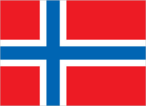
Flag description
the flag of Norway is used
Government type
NA
Independence
none (territory of Norway)
International organization participation
none
Legal system
the laws of Norway where applicable apply
National anthem
- as a territory of Norway, "Ja, vi elsker dette landet" is official (see Norway)
- note
- as a territory of Norway, "Ja, vi elsker dette landet" is official (see Norway)
Political pressure groups and leaders
NA
Economy
Budget
- $25.07 million $NA (2004 est.)
- expenditures
- $NA (2004 est.)
- revenues
- $25.07 million
Economy - overview
Coal mining, tourism, and international research are the major revenue sources on Svalbard. Coal mining is the dominant economic activity and a treaty of 9 February 1920 gave the 41 signatories equal rights to exploit mineral deposits, subject to Norwegian regulation. Although US, UK, Dutch, and Swedish coal companies have mined in the past, the only companies still engaging in this are Norwegian and Russian. The settlements on Svalbard are essentially company towns. The Norwegian state-owned coal company employs nearly 60% of the Norwegian population on the island, runs many of the local services, and provides most of the local infrastructure. There is also some hunting of seal, reindeer, and fox.
Exchange rates
Norwegian kroner (NOK) per US dollar - 6.044 (2010) 6.288 (2009) 5.86 (2007) 6.418 (2006)
Exports
$197.6 million (2000)
GDP - real growth rate
NA%
GDP (purchasing power parity)
$NA
Imports
$NA
Labor force
1,234 in Norwegian settlements (2003)
Communications
Broadcast media
the Norwegian Broadcasting Corporation (NRK) began direct television transmission to Svalbard via satellite in 1984; Longyearbyen households have access to 3 NRK radio and 2 television stations (2008)
Internet country code
.sj
Telephone system
- probably adequate local telephone service country code - 47-790; satellite earth station - 1 of unknown type (for communication with Norwegian mainland only)
- domestic
- local telephone service
- general assessment
- probably adequate
- international
- country code - 47-790; satellite earth station - 1 of unknown type (for communication with Norwegian mainland only)
Telephones - main lines in use
NA
Transportation
Airports
4 (2010)
Airports - with paved runways
- 1 (2010)
- 2,438 to 3,047 m
- 1 (2010)
- total
- 1
Airports - with unpaved runways
- 3 (2010)
- total
- 3
- under 914 m
- 3 (2010)
Heliports
1 (2010)
Ports and terminals
Barentsburg, Longyearbyen, Ny-Alesund, Pyramiden
Military and Security
Military - note
Svalbard is a territory of Norway, demilitarized by treaty on 9 February 1920; Norwegian military activity is limited to fisheries surveillance by the Norwegian Coast Guard
Military branches
no regular military forces
Transnational Issues
Disputes - international
despite recent discussions, Russia and Norway dispute their maritime limits in the Barents Sea and Russia's fishing rights beyond Svalbard's territorial limits within the Svalbard Treaty zone