1986 Edition
CIA World Factbook 1986 (Internet Archive)
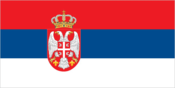
Geography
Agriculture
diversified agriculture with many small private holdings and large agricultural combines; main crops — corn, wheat, tobacco, sugar beets, and sunflowers; occasionally a net exporter of foodstuffs and live animals; imports tropical products, cotton, wool, and vegetable meal feeds
Area
255,804 km2; the size of Wyoming; 34% forest, 32% arable, 25% meadow and pasture, 9% other
Branches
- bicameral legislature (Federal Assembly — Federal Chamber, Chamber of Republics and Provinces); executive includes cabinet (Federal Executive Council) and the federal administration; judiciary; the State Presidency is a collective, rotating policymaking body composed of a representative from each republic and province, Radovan Vlajkovic presides as President of the Republic until May 1986, when he will be replaced by the representative from Kosovo Province, Sinan Hasani
- Yugoslav People's Army — Ground Forces, Naval Forces, Air and Air Defense Forces, Frontier Guard, Territorial Defense Force
Capital
Belgrade
CNP
$128.8 billion (1984 est., at 1983 prices), $5,600 per capita; real growth rate -1.7% (1984)
Coastline
- 1,521 km (mainland), plus 2,4 14 km (offshore islands) People
- 37 km People
Communists
2,167,860 party members (December 1985)
Crude steel
4.2 million metric tons produced (1984), 184 kg per capita
Elections
Federal Assembly elected every four years by a complicated, indirect system of voting Political parties and leaders: League of Communists of Yugoslavia (LCY) only; leaders are 23 members of party Presidium selected proportionally from republics, provinces, and Yugoslav People's Army, with the president rotating on an annual basis and the secretary rotating every two years; current president is Vidoje Zarkovic, a Montenegrin (until June 1986); Party Congress scheduled for June 1986, to elect new Central Committee
Electric power
19,575,000 kW capacity (1985); 77.516 billion kWh produced (1985), 3,350 kWh per capita
Ethnic divisions
- 36.2% Serb, 19.7% Croat, 8.9% Muslim, 7.8% Slovene, 7.7% Albanian, 5.9% Macedonian, 5.4% Yugoslav, 2.5% Montenegrin, 1.9% Hungarian, 4.0% other (1981 census)
- over 200 African ethnic groups, the majority are Bantu; four largest tribes — Mongo, Luba, Kongo (all Bantu), and the Mangbetu-Azande (Hamitic) make up about 45% of the population
Exports
$10.3 billion (f.o.b., 1984); 52% raw materials and semimanufactures, 31% consumer goods, 17% equipment
Fiscal year
calendar year (all data refer to calendar year or to middle or end of calendar year as indicated) Communications
Fishing
catch 73,505 metric tons (1984) Zaire
Freight carried
rail — 89.6 million metric tons, 27.9 billion metric ton/km (1983); highway — 177.2 million metric tons, 19.1 billion metric ton/km (1983); waterway — 20.9 million metric tons, 4. 1 billion metric ton/km (excluding international transit traffic) (1983)
Government leader
Milka PLANINC, President of the Federal Executive Council (since 1982); nonrenewable four-year term expires May 1986
Highways
116,400km total; 63,100 km asphalt, concrete, stone block; 35,000 km asphalt treated, gravel, crushed stone; 18,300 km earth (1983)
Imports
$12.0 billion (c.i.f., 1984); 82% raw materials and semimanufactures, 13% equipment, 5% consumer goods
Infant mortality rate
- 30/1,000 (1982)
- 108/1,000(1984)
Inland waterways
2,600 km (1982)
Labor force
10.1 million (1983); 25% agriculture, 29% mining and manufacturing; (est.) unemployment about 14% of domestic labor force (January-August 1985) Government
Land boundaries
9,902 km Water
Language
- Serbo-Croatian, Slovene, Macedonian (all official); Albanian, Hungarian
- French (official), English, Lingala, Swahili, Kingwana, Kikongo, Tshiluba
Lanti boundaries
3,001 km Water
Legal system
mixture of civil law system and Communist legal theory; constitution adopted 1974; legal education at several law schools; has not accepted compulsory ICJ jurisdiction
Life expectancy
- men 68, women 73
- men 46, women 49
Limits of territorial waters (claimed)
- 12
- 12 nm (200 nm fishing)
Literacy
90.5%
Major industries
metallurgy, machinery and equipment, oil refining, chemicals, textiles, wood processing, food processing
Major trade partners
61% non-Communist countries; 39% Communist countries, of which 21% USSR (1984)
Member of
ASSIMER, CEMA (observer but participates in certain commissions), FAO, G-77, GATT, IAEA, IBA, IBRD, ICAC, ICAO, IDA, IDE— Inter-American Development Bank, IFAD, IFC, IHO, ILO, IMF, IMO, INTELSAT, International Lead and Zinc Study Group, INTERPOL, IPU, ITC, ITU, NAM, OECD (participant in some activities), UN, UNESCO, UPU, WHO, WIPO, WMO, WTO Economy
Military budget
announced for fiscal year ending 31 December 1985, 391.3 billion dinars; about 4.8% of national income Land 2,345,409 km2; one-fourth the size of the US; 45% forest, 22% agricultural (2% cultivated or pasture), 33% other
Military manpower
males 15-49, 6,005,000; 4,850,000 fit for military service; 184,000 reach military age (19) annually
Monetary conversion rate
296.4 dinars=US$l (November 1985)
National holiday
Proclamation of the Socialist Federal Republic of Yugoslavia, 29 November
Nationality
- noun — Yugoslav(s); adjective — Yugoslav
- noun — Zairian(s); adjective — Zairian
Natural resources
coal, copper, bauxite, timber, iron, antimony, chromium, lead, zinc, asbestos, mercury
Official name
Socialist Federal Republic of
Other political or pressure groups
Socialist Alliance of Working People of Yugoslavia (SA WPY), the major mass front organization; Confederation of Trade Unions of Yugoslavia (CTUY), League of Socialist Youth of Yugoslavia, Federation of Veterans' Associations of Yugoslavia (SUBNOR)
Pipelines
1,373 km crude oil; 2,760 km natural gas; 150 km refined products
Political subdivisions
six republics with two autonomous provinces (within the Republic of Serbia)
Population
- 23,284,000 (July 1986), average annual growth rate 0.7%
- 31,333,000 (July 1986), average annual growth rate 2.7%
Ports
9 major (most important: Rijeka, Split, Koper, Bar, and Ploce), 24 minor; principal inland water port is Belgrade Defense Forces
Railroads
9,399 km total; 9,399 km 1.435meter standard gauge; 890 km double track; 3,451 km electrified (1983)
Religion
- 50% Serbian Orthodox, 30% Roman Catholic, 10% Muslim, 1% Protestant, 9% other or none
- 50% Roman Catholic, 20% Protestant, 10% Kimbanguist, 10% Muslim, 10% other syncretic sects and traditional beliefs
Shortages
electricity, fuels
Suffrage
universal over age 18
Type
Communist state, federal republic in form