1984 Edition
CIA World Factbook 1984 (Internet Archive)
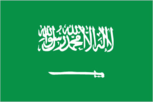
Geography
Agriculture
- large-scale subsistence farming, heavily dependent on monsoon rainfall; main crops are jute and rice; shortages — grain, cotton, and oilseed
- dates, grains, livestock; not selfsufficient in food
Aid
economic commitments — US, including Ex-Im, $525 million (FY70-82); other Western bilateral (ODA and OOF), $869 million (1970-79); military— US, $1.816 billion (FY70-82)
Airfields
- 20 total, 14 usable; 15 with permanent-surface runways; 4 with runways 2,440-3,659 m, 7 with runways 1,2202,439 m
- 78 total, 75 usable; 55 with permanent-surface runways; 1 with runways over 3,659 m, 21 with runways 2,4403,659 m, 20 with runways 1,220-2,439 m
- 79 total, 70 usable; 26 with permanent-surface runways; 2 with runways over 3,659 m, 14 with runways 2,4403,659 m, 28 with runways 1,220-2,439 m
- 201 total, 152 usable; 60 with permanent-surface runways; 10 with runways over 3,659 m, 22 with runways 2,4403,659 m, 88 with runways 1,220-2,439 m
- 67 total, 63 usable; 26 with permanent-surface runways; 21 with runways 2,440-3,659 m, 5 with runways 1,220-2,439 m
Area
- 17,818 km2 (excluding neutral zone but including islands); nearly all desert, waste, or urban; insignificant forest; 1% cultivated
- About 11,000 km2; negligible forest; mostly desert, waste, or urban
- Estimated at about 2,331,000 km2 (boundaries undefined and disputed); 98% desert, waste, or urban; 1% agricultural; 1% forest
Branches
- Army, Naval Wing, Air Wing
- constitution (currently suspended) provides for unicameral legislature (Parliament), strong President; independent judiciary; President has substantial control over the judiciary
- Army, Navy, Air Force; paramilitary forces — Bangladesh Rifles, Bangladesh Ansars, Armed Police Reserve, Coastal Police
- Hellenic Army, Hellenic Navy, Hellenic Air Force
- Council of Ministers; legislature — National Assembly
- Royal Moroccan Army, Royal Moroccan Navy, Royal Moroccan Air Force
- King rules in consultation with royal family and Council of Ministers
- Syrian Arab Army, Syrian Arab Air Force, Syrian Arab Navy
Budget
- (FY82) current expenditures, $670 million; capital expenditures, $1.3 billion
- (1982) central government revenues $9.8 billion, expenditures $13.4 billion, $3.6 billion deficit
- (1983 est.) revenue $5.5 billion, current expenditure $3.7 billion, development expenditure $2.7 billion
- FY84 appropriation $75.4 billion; current expenditure $31.9 billion, capital expenditure $43.5 billion
- 1982— revenues $7.0billion (excluding Arab aid payments), expenditures $8.5 billion
Capital
- Dhaka
- Kuwait Po/ttica/suWitnsions:3governorates, 25 voting constituencies
- Riyadh; Foreign Ministry and foreign diplomatic representatives located in Jidda
Civil air
- 9 major transport aircraft
- 34 major transport aircraft
- 17 major transport aircraft
- 148 major transport aircraft
- 8 major transport aircraft
Coastline
- 580 km People
- approx. 44,087 km, (includes minor islands) People
- 499 km • People
- 563 km People
- 2,510 km People
- 1,424 km (this includes 113 km Mafia Island; 177 km Pemba Island; and 212 km Zanzibar) People
Communists
- 2,500 members (est.)
- insignificant
- negligible
Elections
- some local elections held in December 1983; higher local elections scheduled for March 1984 postponed; presidential and parliamentary elections may be held in 1984 Political parties and leaders: Bangladesh Nationalist Party, Begum Ziaur Rahman; Awami League, Sheikh Hasina Wazed; United People's Party, Kazi Zafar Ahmed; Democratic League, Khondakar Mushtaque Ahmed; Muslim League, Khan A. Sabur; Jatiya Samajtantrik Dal (National Socialist Party), M. A. Jalil; Bangladesh Communist Party (pro-Soviet), Manindra Moni Singh; numerous small parties; political activity banned following March 1982 coup; ban lifted in March 1984
- National Assembly elected in February 1981 Political parties and leaders: political parties prohibited, some small clandestine groups are active
Electric power
- 1,000,000 kW capacity (1983); 3.3 billion kWh produced (1983), 34 kWh per capita
- 16,853,300 kW capacity (1983); 44.29 billion kWh produced (1983), 4,241 kWh per capita
Ethnic divisions
- 98% Bengali; 300,000400,000 "Biharis" and fewer than one million tribals
- 86% Greenlander (Eskimos and Greenland-born whites), 14% Danish
- 39% Kuwaiti, 39% other Arab, 9% South Asian, 4% Iranian, 9% other
- 40% Arab, 18% Pakistani, 18% Indian, 10% Iranian
- 90% Arab, 10% AfroAsian
- 99% native African consisting of well over 100 tribes; 1% Asian, European, and Arab
Exports
- $650 million (f.o.b., FY83); raw and manufactured jute, leather, tea
- $40 billion (f.o.b., 1983 est); 99% petroleum and petroleum products
Fiscal year
- 1 July-30 June Communications
- calendar year Communications
- calendar year Communications
- follows Islamic year; the 1982-83 Saudi fiscal year covers the period 24 April 1982 to 13 April 1983 Communications
- calendar year Communications
Fishing
catch 600,000 metric tons (1981)
GDP
$120 billion (FY83 est), $14,117 per capita; annual growth in nonoil GDP in constant 1969/70 prices approx. 10% (1981-83)
GNP
$11.0 billion (FY82, current prices), $117 per capita; real growth, 0.9% (FY82)
Government leader
- Jabir alAhmad al-Jabir Al SABAH, Amir
- FAHD bin 'Abd al- 'Aziz Al Sa'ud, King and Prime Minister
Government leaders
Lt. Gen. Hussain Mohammad ERSHAD, President and Chief Martial Law Administrator
Highways
- 45,633 km total; 4,076 km paved, 2,693 km gravel, 38,864 km earth
- 38,938 km total; 16,090 km paved, 13,676 km crushed stone and gravel, 5,632 km improved earth, 3,540 km unimproved earth
- 55,970 km total; 24,700 km bituminous treated, 4,000 km gravel, crushed stone, and improved earth, 27,270 km unimproved earth
- 50,000 km total; 22,000 km bituminous, 28,000 km gravel and improved earth
- 16,939 km total; 12,051 km paved, 2,625 km gravel or crushed stone, 2,263 km improved earth
Imports
- $2.3 billion (c.i.f, FY83); foodgrains, fuels, raw cotton, fertilizer, manufactured products Major trade partners .-exports— US 10%, Mozambique 7%, Iran 6. 1%, Pakistan 5%, Sudan 5%; imports — Western Europe 16%, Japan 12%, US 6% (FY83)
- $43 billion (f.o.b., 1983 est.); manufactured goods, transportation equipment, construction materials, and processed food products
Inland waterways
- 7,000 km; river steamers navigate main waterways
- system consists of three coastal canals and three unconnected rivers, which provide navigable length of just under 80km
- 672 km; of little importance
Labor force
- 31.5 million (FY82); extensive export of labor to Saudi Arabia, UAE, Oman, and Kuwait; 74% of labor force is in agriculture, 15% services, 11% industry and commerce (FY81/82) Government
- 21,378; largely engaged in fishing, hunting, and sheep breeding Government
- 630,000 (1983 est); 74% services, 11% industry, 11% construction; 70% of labor force is non-Kuwaiti
- 100,000 (1980 est); 90% nonOatari Government
- about 33% (one-half foreign) of population; 44% commerce, services, and government; 28% agriculture; 21% construction; 4% industry; 3% oil and mining Government
Land boundaries
- 2,535 km Water
- 459 km Water
- 56 km Water
- 4,537 km Water
- 3,883 km Water
Language
- Bangla (official), English widely used
- Danish, Eskimo dialects
- Arabic (official); English widely spoken
- Arabic (official); English is commonly used as second language
- Arabic
- Swahili and English (official); English primary language of commerce, administration, and higher education; Swahili widely understood and generally used for communication between ethnic groups; first language of most people is one of the local languages
Legal system
- martial law currently prevails and civilian legal system suspended; traditionally based on English common law; constitution adopted December 1972; amended January 1975 to more authoritarian presidential system; changed by proclamation in April 1977 to reflect Islamic character of nation; further change, by proclamation in December 1978, to provide for the appointments of the Prime Minister and the Deputy Prime Minister, as well as other ministers of Cabinet rank, and to further define the powers of the President
- civil law system with Islamic law significant in personal matters; constitution took effect in 1963; popularly elected 50-man National Assembly (the 15 cabinet members can also vote) reinstated in March 1981 after being suspended in 1976; judicial review of legislative acts not yet determined; has not accepted compulsory ICJ jurisdiction
- based on Islamic law, several secular codes have been introduced; commercial disputes handled by special committees; has not accepted compulsory ICJ jurisdiction
Limits of territorial waters (claimed)
- 12 nm (economic including fishing 200 nm)
- 3 nm (fishing 200 nm)
- 12 nm
- 3 nm
- 12 nm (plus 6 nm "necessary supervision zone")
- 50 nm
Literacy
- 25%
- 99%
- about 71%
- 40%
- 52%
Major industries
- jute manufactures, food processing, and cotton textiles
- petroleum production 5.5 million b/d (1983); payments to Saudi Arabian Government, $78 billion (FY83); cement production and small steel-rolling mill and oil refinery; several other light industries, including factories producing detergents, plastic products, furniture
Major trade partners
exports — Japan, US, France; imports — US, Japan, FRG
Member of
- ADB, Afro-Asian People's Solidarity Organization, Colombo Plan, Commonwealth, ESCAP, FAO, G-77, GATT, IAEA, IBRD, ICAO, IDA, IDB— Islamic Development Bank, IFAD, IFC, ILO, IMF, IMO,INTELSAT, INTERPOL, IOC, IRC, ITU, NAM, QIC, UN, UNCTAD, UNESCO, UPU, WHO, WFTU, WMO, WTO Economy
- Arab League, FAO, G-77, GATT, GCC, IAEA, IBRD, ICAO, IDA, IDE— Islamic Development Bank, IFAD, IFC, ILO, IMF, IMO, INTELSAT, INTERPOL, IPU, ITU, NAM, OAPEC, QIC, OPEC, UN, UNESCO, UPU, WFTU, WHO, WMO, WTO
- Arab League, FAO, G-77, GCC, IAEA, IBRD, ICAO, IDA, IDE— Islamic Development Bank, IFAD, IFC, ILO, IMF, IMO, INTELSAT, International Maritime Satellite Organization, INTERPOL, ITU, IWC — International Wheat Council, NAM, OAPEC, QIC, OPEC, UN, UNESCO, UPU, WHO, WMO Economy
Military budget
- for fiscal year ending 31 December 1983, $103 million; 7.7% of central government budget Land 142,775 km2; 66% arable (including cultivated and fallow); 18% uncultivated (not available); 16% forest
- for fiscal year ending 30 June 1984, $249 million; about 11% of central government budget Barbados DOMINICAN REPUBLIC PUERTCT RICO Caribbean Sea A tlantic Ocean
- proposed for fiscal year ending 31 December 1983, $2.135 billion; about 16.5% of central government budget Land 2,175,600 km2; 84% permanent ice and snow; less than 1% arable (of which only a fraction cultivated); 15% other Water
- for fiscal year ending 31 December 1983, $1.1 billion; 22.2% of central government budget
Military manpower
- males 15-49, 116,000; 68,000 fit for military service
- males 15-49, 23,444,000; 14,420,000 fit for military service
- males 15-49, 2,365,000; 1,912,000 fit for military service; about 77,000 reach military age (21) annually
- males 15-49, 5,179,000; 3,199,000 fit for military service; 255,000 reach military age (18) annually; limited conscription
- males 15-49, 2,216,000; 1,242,000 fit for military service; about 105,000 reach military age (19) annually Land 939,652 km2 (including islands of Zanzibar and Pemba, 2,642 km2); forest 45%, meadow and pasture 37%, inland water 6%, arable 4%, crop 1%, other 7%
Monetary conversion rate
- 23.75 takas= US$1 (February 1984)
- 102.75 Greek drachmas=US$l (9 January 1984)
- 6.9 dirhams= US$1 (average 1983); 7.86 dirhams=US$l (October 1983)
- 3.4750 Saudi riyals=US$l (October 1983)
- 3.925 Syrian pounds=US$l (official rate, February 1984); two other officially sanctioned rates — the "parallel" and "tourist" rates — are determined by the government guided by supply and demand
National holiday
- National Day, 26 March
- National Day, 25 February
- 23 September
Nationality
- noun — Bangladeshi(s); adjective — Bangladesh
- noun — Greenlander(s); adjective — Greenlandic
- noun — Kuwaiti(s); adjective — Kuwaiti
- noun — Qatari(s); adjective — Qatar!
- noun — Saudi(s); adjective — Saudi Arabian or Saudi
- noun — Tanzanian(s); adjective — Tanzanian
Offical name
State of Qatar
Official name
- People's Republic of Bangladesh
- Greenland
- State of Kuwait
- Kingdom of Saudi Arabia
Organized labor
labor unions, first authorized in 1964, formed in oil industry and among government personnel Government
Other political or pressure groups
large (300,000) Palestinian community
Pipelines
- 433 km natural gas
- crude oil, 26 km; refined products, 547km
- 362 km crude oil; 491 km (abandoned) refined products; 241 km natural gas
- 6,000 km crude oil; 150 km refined products; 2,200 km natural gas, includes 1,600 km of natural gas liquids
- 1,304 km crude oil; 515 km refined products
Political subdivisions
- 21 districts, to be revised to approximately 370 (lianas (rural townships), consisting of 4,470 unions (village groupings)
- 18 amirates
Population
- 99,585,000 (July 1984), average annual growth rate 3.1%
- 53,000 (July 1984), average annual growth rate 1.2%
- 1,758,000 (July 1984), average annual growth rate 6.2%
- 276,000 (July 1984), average annual growth rate 3.3%
- 10,794,000 (July 1984), average annual growth rate 3.3%
- 2 1,202,000 (July 1984), average annual growth rate 3.2%
Ports
- 1 major (Chittagong), 2 minor
- 4 major, 10 secondary, 37 minor
- 10 major (including Spanishcontrolled Ceuta and Melilla), 14 minor
- 5 major (Jidda, Dammam, Ras Tanura, Jubail, Yanbu'), 10 minor
- 3 major (Tartus, Latakia, Baniyas), 2
Railroads
- 4,085 km total (1980); 2,198 km 1.000-meter gauge, 1,852km 1.676-meter broad gauge, 35 km 0.762-meter narrow gauge, 300 km double track; government owned
- 2,476 km total; 1,565 km 1.435meter standard gauge, of which 36 km electrified and 100 km double track, 889 km 1.000-meter gauge; 22 km 0.750-meter narrow gauge; all government owned
- 1,756 km 1.435-meter standard gauge, 161 km double track; 708 km electrified
- 575 km 1.435-meter standard gauge
- 1,543 km total; 1,281 km standard gauge, 262 km 1.050-meter narrow gauge
Religion
- 83% Muslim, about 16% Hindu, less than 1% Buddhist, Christian, and other
- Evangelical Lutheran
- 95% Muslim, 5% Christian, Hindu, Parsi, and other
- 95% Muslim
- 100% Muslim
- Mainland— 35% Christian, 35% Muslim, 30% indigenous beliefs; Zanzibar — almost all Muslim
Suffrage
- universal over age 18
- nativeborn and naturalized males age 21 or over; law requires 20 years residency after naturalization
Supply
from several West European countries, especially France and UK
Telecommunications
- adequate international radiocommunications and landline service; fair domestic wire and microwave service; fair broadcast service; 100,000 (est.) telephones (0. 1 per 100 popl.); 9 AM, 6 FM, 7 TV stations, and 1 ground satellite station Defense Forces
- adequate, modern networks reach all areas on mainland and islands; 2.80 million telephones (28.9 per 100 popl.); 28 AM, 37 FM, and 195 TV stations; 5 submarine cables; 1 satellite station with 2 Atlantic Ocean antennas and 1 Indian Ocean antenna Defense Forces
- good system composed of wire lines, cables, and radiorelay links; principal centers Casablanca and Rabat, secondary centers Fes, Marrakech, Oujda, Tangier and Tetouan; 227,000 telephones ( 1 . 1 per 1 00 popl. ); 1 4 AM, 6 FM, and 47 TV stations; 4 submarine cables; 2 Atlantic Ocean satellite stations Defense Forces
- good system exists, major expansion program completed with microwave, coaxial cable, satellite systems; 760,000 telephones (8.0 per 100 popl.); 21 AM, 2 FM, 63 TV stations; 2 Atlantic and 1 Indian Ocean satellite stations; 13 domestic satellite stations Saudia Arabia (continued)
- good international and domestic services using coaxial cable and radio-relay; 236,000 telephones (2.7 per 100 pop!.); 9 AM, no FM, and 40 TV stations; 1 Indian Ocean satellite station Defense Forces
Type
- republic; under martial law since 24 March 1982
- "self-governing" province of Kingdom of Denmark; two representatives in Danish parliament; separate Minister for Greenland in the Danish Cabinet
- nominal constitutional monarchy
- traditional monarchy; independence declared in 1971
- monarchy