1982 Edition
CIA World Factbook 1982 (Wikisource)
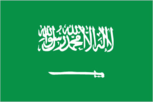
Geography
Coastline
2,510 km
Land boundaries
4,537 km WATER
Limits of territorial waters (claimed)
12 nm (plus 6 nm "necessary supervision zone")
People and Society
Ethnic divisions
90% Arab, 10% Afro-Asian (est.)
Labor force
about 33% (one-half foreign) of population; 44% commerce, services, and government; 28% agriculture, 21% construction, 4% industry, 3% oil and mining
Language
Arabic
Literacy
15-25% (est.)
Nationality
noun—Saudi(s); adjective—Saudi Arabian or Saudi
Population
19,795,000 (July 1982), average annual growth rate 2.8%
Religion
100% Muslim
Government
Branches
King Khalid (Al Sa'ud, Khalid ibn 'Abd al-'Aziz) rules in consultation with royal family (especially Crown Prince Fahd), and Council of Ministers
Capital
Riyadh; foreign ministry and foreign diplomatic representatives located in Jiddah
Communists
negligible
Government leader
King and Prime Minister Khalid ibn 'Abd al-'Aziz Al SA'UD
Legal system
largely based on Islamic law, several secular codes have been introduced; commercial disputes handled by special committees; has not accepted compulsory ICJ jurisdiction
Member of
Arab League, FAO, G-77, GCC, IAEA, IBRD, ICAO, IDA, IFAD, IFC, ILO, IMCO, IMF, ISCON, ITU, IWC—International Wheat Council, NAM, OAPEC, OPEC, UN, UNESCO, UPU, WHO, WMO
National holiday
23 September
Official name
Kingdom of Saudi Arabia
Political subdivisions
18 amirates
Type
monarchy
Economy
Agriculture
dates, grains, livestock; not self-sufficient in food
Budget
FY82 appropriation $88.7 billion; current expenditure $27.5 billion, project expenditure $61.2 billion
Electric power
10,460,800 kW capacity (1980); 27,490 billion kWh produced (1980), 2,719 kWh per capita
Exports
$110 billion (f.o.b., 1981); 99% petroleum and petroleum products
Fiscal year
follows Islamic year; the 1980-81 Saudi fiscal year covers the period 15 May 1980 through 4 May 1981
GDP
$115 billion (FY80 est.), $9,500 per capita; annual growth in real nonoil GNP approx. 15% (1976/80 average, nonoil)
Imports
$34 billion (f.o.b., 1981); manufactured goods, transportation equipment, construction materials, and proc- essed food products
Major industries
petroleum production 10.2 million b/d (1980); payments to Saudi Arabian Government, $54 billion (1979); cement production and small steel-rolling mill and oil refinery; several other light industries, including factories producing detergents, plastic products, furniture, etc.; PETROMIN, a semipublic agency associated with the Ministry of Petroleum, has recently completed a major fertilizer plant
Major trade partners
exports—US, Western Europe, Japan; imports—US, Japan, West Germany
Monetary conversion rate
1 Saudi riyal= US$0.30 (1980; linked to SDR, freely convertible)
Communications
Airfields
157 total, 122 usable; 52 with permanent-surface runways; 7 with runways over 3,659 m, 21 with runways 2,440-3,659 m, 62 with runways 1,220-2,439 m, 4 with runways over 3,660 m
Civil air
112 major transport aircraft, including 22 leased in
Highways
30,100 km total; 16,500 km paved, 13,600 km improved earth
Pipelines
5,850 km crude oil; 386 km refined products; 1,570 km natural gas, includes 1,370 km of natural gas liquids
Ports
3 major (Jidda, Ad Damman, Ras Tanura), 6 minor
Railroads
575 km standard gauge (1.435 m)
Telecommunications
good system exists, major expansion program nearly complete with microwave, coaxial cable, satellite systems; 200,000 telephones (2.5 per 100 popl.); 6 AM, 1 FM, 27 TV stations, 1 submarine cable; 1 Atlantic and 1 Indian Ocean satellite station; 13 domestic satellite stations
Military and Security
Military budget
for fiscal year ending 30 April 1982, $24,640 million; about 28% of central government budget
Military manpower
males 15-49, 2,562,000; 1,464,000 fit for military service; about 93,000 reach military age (18) annually