2021 Edition
CIA World Factbook 2021 (factbook.json @ e0d5604b9e27)
Introduction
Background
Although sighted by Christopher COLUMBUS in 1493 and claimed for Spain, it was the Dutch who occupied the island in 1631 to exploit its salt deposits. The Spanish retook the island in 1633, but continued to be harassed by the Dutch. The Spanish finally relinquished Saint Martin to the French and Dutch, who divided it between themselves in 1648. Friction between the two sides caused the border to frequently fluctuate over the next two centuries, with the French eventually holding the greater portion of the island (about 61%). The cultivation of sugar cane introduced African slavery to the island in the late 18th century; the practice was not abolished until 1848. The island became a free port in 1939; the tourism industry was dramatically expanded during the 1970s and 1980s. In 2003, the populace of Saint Martin voted to secede from Guadeloupe and in 2007, the northern portion of the island became a French overseas collectivity. In 2010, the southern Dutch portion of the island became the independent nation of Sint Maarten within the Kingdom of the Netherlands. On 6 September 2017, Hurricane Irma passed over the island of Saint Martin causing extensive damage to roads, communications, electrical power, and housing; the UN estimated that 90% of the buildings were damaged or destroyed.
Geography
Area
- land
- 54.4 sq km
- total
- 54 sq km
- water
- negligible
Area - comparative
more than one-third the size of Washington, DC
Climate
temperature averages 27-29 degrees Celsius all year long; low humidity, gentle trade winds, brief, intense rain showers; hurricane season stretches from July to November
Coastline
58.9 km (for entire island)
Elevation
- highest point
- Pic du Paradis 424 m
- lowest point
- Caribbean Ocean 0 m
Geographic coordinates
18 05 N, 63 57 W
Geography - note
the southern border is shared with Sint Maarten, a country within the Kingdom of the Netherlands; together, these two entities make up the smallest landmass in the world shared by two self-governing states
Land boundaries
- border countries
- Sint Maarten 16 km
- total
- 16 km
Location
Caribbean, located in the Leeward Islands (northern) group; French part of the island of Saint Martin in the Caribbean Sea; Saint Martin lies east of the US Virgin Islands
Map references
Central America and the Caribbean
Natural hazards
subject to hurricanes from July to November
Natural resources
salt
Population distribution
most of the population is found along the coast, with a largest concentrations around the capital Marigot, Orleans, and Grand-Case
People and Society
Age structure
- 0-14 years
- 25.63% (male 4,148/female 4,197)
- 15-24 years
- 10.28% (male 1,647/female 1,701)
- 25-54 years
- 46.2% (male 7,201/female 7,841)
- 55-64 years
- 8.71% (male 1,328/female 1,508)
- 65 years and over
- 9.17% (male 1,305/female 1,680) (2020 est.)
Birth rate
14.2 births/1,000 population (2021 est.)
Children under the age of 5 years underweight
NA
Contraceptive prevalence rate
NA
Current Health Expenditure
NA
Death rate
4.56 deaths/1,000 population (2021 est.)
Dependency ratios
- elderly dependency ratio
- NA
- potential support ratio
- NA
- total dependency ratio
- NA
- youth dependency ratio
- NA
Drinking water source
- improved: rural
- rural: NA
- improved: total
- total: NA
- improved: urban
- urban: NA
- unimproved: rural
- rural: NA
- unimproved: total
- total: NA
- unimproved: urban
- urban: NA
Education expenditures
NA
Ethnic groups
Creole (Mulatto), Black, Guadeloupe Mestizo (French-East Asia), White, East Indian, other
HIV/AIDS - adult prevalence rate
NA
HIV/AIDS - deaths
NA
HIV/AIDS - people living with HIV/AIDS
NA
Infant mortality rate
- female
- 5.65 deaths/1,000 live births (2021 est.)
- male
- 8 deaths/1,000 live births
- total
- 6.85 deaths/1,000 live births
Languages
- Languages
- French (official), Dutch, English, Guadeloupian Creole, Haitian Creole, Italian, Martiniquan Creole, Papiamento (dialect of Netherlands Antilles), Spanish
- major-language sample(s)
- The World Factbook, une source indispensable d'informations de base. (French)The World Factbook, the indispensable source for basic information.
Life expectancy at birth
- female
- 83.6 years (2021 est.)
- male
- 77.24 years
- total population
- 80.36 years
Median age
- female
- 34.1 years (2020 est.)
- male
- 32.5 years
- total
- 33.3 years
Net migration rate
-6.09 migrant(s)/1,000 population (2021 est.)
Population
32,680 (July 2021 est.)
Population distribution
most of the population is found along the coast, with a largest concentrations around the capital Marigot, Orleans, and Grand-Case
Population growth rate
0.36% (2021 est.)
Religions
Roman Catholic, Jehovah's Witness, Protestant, Hindu
Sex ratio
- 0-14 years
- 0.99 male(s)/female
- 15-24 years
- 0.97 male(s)/female
- 25-54 years
- 0.92 male(s)/female
- 55-64 years
- 0.88 male(s)/female
- 65 years and over
- 0.78 male(s)/female
- at birth
- 1.04 male(s)/female
- total population
- 0.92 male(s)/female (2020 est.)
Total fertility rate
1.8 children born/woman (2021 est.)
Government
Capital
- etymology
- marigot is a French term referring to a body of water, a watercourse, a side-stream, or a tributary rivulet; the name likely refers to a stream at the site of the city's original founding
- geographic coordinates
- 18 04 N, 63 05 W
- name
- Marigot
- time difference
- UTC-4 (1 hour ahead of Washington, DC, during Standard Time)
Citizenship
see France
Constitution
- amendments
- amendment procedures of France's constitution apply
- history
- 4 October 1958 (French Constitution)
Country name
- conventional long form
- Overseas Collectivity of Saint Martin
- conventional short form
- Saint Martin
- etymology
- explorer Christopher COLUMBUS named the island after Saint MARTIN of Tours because the 11 November 1493 day of discovery was the saint's feast day
- local long form
- Collectivite d'outre mer de Saint-Martin
- local short form
- Saint-Martin
Dependency status
- overseas collectivity of France
- note
- note: the only French overseas collectivity that is part of the EU
Diplomatic representation from the US
- embassy
- none (overseas collectivity of France)
Diplomatic representation in the US
none (overseas collectivity of France)
Executive branch
- cabinet
- Executive Council; note - there is also an advisory economic, social, and cultural council
- chief of state
- President Emmanuel MACRON (since 14 May 2017); represented by Prefect Serge GOUTEYRON (since 16 December 2020)
- election results
- Daniel GIBBS (TDG) elected president; Territorial Council vote - 18 votes, 4 blank, 1 invalid
- elections/appointments
- French president directly elected by absolute majority popular vote in 2 rounds if needed for a 5-year term (eligible for a second term); prefect appointed by French president on the advice of French Ministry of Interior; president of Territorial Council elected by its members for a 5-year term; election last held on 26 March 2017
- head of government
- President of Territorial Council Daniel GIBBS (since 2 April 2017); First Vice President Valerie DAMASEAU (since 2 April 2017)
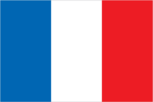
Flag description
the flag of France is used
Government type
parliamentary democracy (Territorial Council); overseas collectivity of France
Independence
none (overseas collectivity of France)
International organization participation
UPU
Legal system
French civil law
Legislative branch
- description
- unicameral Territorial Council (23 seats; members directly elected by absolute majority vote in 2 rounds if needed to serve 5-year terms); Saint Martin elects 1 member to the French Senate and 1member (shared with Saint Barthelemy) to the French National Assembly
- election results
- Territorial Council - percent of vote by party (first round) - TDG 49.1%, MJP 13.7%, MVP 12.3%, HOPE 8.7%, Continuons pour Saint-Martin 6.5%, other 9.7%; seats by party - NA; percent of vote by party (second round) - TDG 64.3%, MJP 24.2%, MVP 11.5.5%; seats by party - TDG 18, MJP 4, MVP 1; composition - men 13, women 10, percent of women 43.5%
- elections
- Territorial Council - last held on 18 and 25 March 2017 (next to be held in March 2022)
- note
- French Senate - held on 28 September 2014 (next to be held not later than September 2020) French National Assembly - last held on 11 and 18 June 2017 (next to be held by June 2022) French Senate - 1 seat: UMP 1 French National Assembly - 1 seat: UMP 1
National anthem
- lyrics/music
- Gerard KEMPS
- name
- O Sweet Saint Martin's Land
- note
- note: the song, written in 1958, is used as an unofficial anthem for the entire island (both French and Dutch sides); as a collectivity of France, in addition to the local anthem, "La Marseillaise" remains official on the French side (see France); as a constituent part of the Kingdom of the Netherlands, in addition to the local anthem, "Het Wilhelmus" remains official on the Dutch side (see Netherlands)
National holiday
Fete de la Federation, 14 July (1790); note - local holiday is Schoelcher Day (Slavery Abolition Day) 12 July (1848), as well as St. Martin's Day, 11 November (1985), which commemorates the discovery of the island by COLUMBUS on Saint Martin's Day, 11 November 1493; the latter holiday celebrated on both halves of the island
National symbol(s)
brown pelican
Political parties and leaders
Continuons pour St. Martin [Aline HANSON]En marche vers le progres or MVP [Alain RICHARDSON]Gereration Hope or HOPE [Jules CHARVILLE]Movement for Justice and Prosperity or MJP [Louis MUSSINGTON]New Direction [Jeanne VANTERPOOL]Rally Responsibility Success (Rassemblement Responsabilite Reussite or RRR [Alain RICHARDSON]Team Daniel Gibbs 2017 or TDG [Daniel GIBBS]Union for Progress (Union Pour le Progres or UPP) [Louis-Constant FLEMING]; affiliated with UMP
Suffrage
18 years of age, universal
Economy
Economic overview
The economy of Saint Martin centers on tourism with 85% of the labor force engaged in this sector. Over one million visitors come to the island each year with most arriving through the Princess Juliana International Airport in Sint Maarten. The financial sector is also important to Saint Martin’s economy as it facilitates financial mediation for its thriving tourism sector. No significant agriculture and limited local fishing means that almost all food must be imported. Energy resources and manufactured goods are also imported, primarily from Mexico and the US. Saint Martin is reported to have one of the highest per capita income in the Caribbean. As with the rest of the Caribbean, Saint Martin’s financial sector is having to deal with losing correspondent banking relationships.In September 2017, Hurricane Irma destroyed 95% of the French side of Saint Martin. Along the coastline of Marigot, the nerve center of the economy, the storm wiped out restaurants, shops, banks and open-air markets impacting more than 36,000 inhabitants.
Exchange rates
- currency
- euros (EUR) per US dollar -
- Exchange rates 2013
- 0.7634 (2013 est.)
- Exchange rates 2014
- 0.885 (2014 est.)
- Exchange rates 2015
- 0.9214 (2015 est.)
- Exchange rates 2016
- 0.903 (2016 est.)
- Exchange rates 2017
- 0.885 (2017 est.)
Exports - commodities
gold, special use vessels, furniture, scrap aluminum, rum (2019)
Exports - partners
United States 35%, Netherlands 26%, Antigua and Barbuda 21%, France 10% (2019)
GDP - composition, by sector of origin
- agriculture
- 1% (2000)
- industry
- 15% (2000)
- services
- 84% (2000)
GDP (official exchange rate)
$561.5 million (2005 est.)
Imports - commodities
jewelry, diamonds, pearls, recreational boats, cars (2019)
Imports - partners
United States 76%, Netherlands 7%, France 7% (2019)
Industries
tourism, light industry and manufacturing, heavy industry
Labor force
17,300 (2008 est.)
Labor force - by occupation
85 directly or indirectly employed in tourist industry
Real GDP (purchasing power parity)
- Real GDP (purchasing power parity) 2005
- $561.5 million (2005 est.)
Real GDP per capita
- Real GDP per capita 2005
- $19,300 (2005 est.)
Energy
Electricity access
- electrification - total population
- 100% (2020)
Communications
Broadcast media
1 local TV station; access to about 20 radio stations, including RFO Guadeloupe radio broadcasts via repeater
Internet country code
.mf; note - .gp, the Internet country code for Guadeloupe, and .fr, the Internet country code for France, might also be encountered
Internet users
- percent of population
- 3.5% (July 2016 est.)
- total
- 7,339 (2021 est.)
Telecommunication systems
- domestic
- direct dial capability with both fixed and wireless systems (2018)
- general assessment
- fully integrated access; good interisland and international connections; broadband access; expanded FttP (Fiber to the Home) and LTE markets; regulatory development; telecom sector contributes greatly to the overall GDP; telecom sector is a growth area (2020)
- international
- country code - 590; landing points for the SMPR-1, Southern Caribbean Fiber and the SSCS submarine cables providing connectivity to numerous Caribbean islands (2019)
- note
- note: the COVID-19 pandemic continues to have a significant impact on production and supply chains globally; since 2020, some aspects of the telecom sector have experienced downturn, particularly in mobile device production; many network operators delayed upgrades to infrastructure; progress towards 5G implementation was postponed or slowed in some countries; consumer spending on telecom services and devices was affected by large-scale job losses and the consequent restriction on disposable incomes; the crucial nature of telecom services as a tool for work and school from home became evident, and received some support from governments
Transportation
Airports
- total
- 1 (2013)
Airports - with paved runways
- 914 to 1,523 m
- 1 (2019)
- total
- 1
Transportation - note
nearest airport for international flights is Princess Juliana International Airport (SXM) located on Sint Maarten
Military and Security
Military - note
defense is the responsibility of France
Military and security forces
no armed forces; Saint Martin Police Force (Korps Politie Sint Marteen)
Transnational Issues
Illicit drugs
transshipment point for cocaine, heroin, and marijuana destined for Puerto Rico and the U.S. Virgin Islands as well as Europe
Environment
Climate
temperature averages 27-29 degrees Celsius all year long; low humidity, gentle trade winds, brief, intense rain showers; hurricane season stretches from July to November
Environment - current issues
excessive population pressure (increasing settlement); waste management; salinity intrusions into the main land of the island; fresh water supply is dependent on desalination of sea water; over exploitation of marine resources (reef fisheries, coral and shell); indiscriminate anchoring of boats damages coral reefs,causing underwater pollution and changes the sediment dynamics of Saint Martin's Island
Waste and recycling
- municipal solid waste generated annually
- 15,480 tons (2012 est.)