1987 Edition
CIA World Factbook 1987 (Internet Archive)
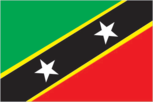
Geography
Climate
subtropical tempered by constant sea breezes; little seasonal temperature variation; one rainy season (May to November)
Coastline
135 km
Comparative area
about twice the size of Washington, D. C.
Contiguous zone
24 nm
Environment
lies within Caribbean hurricane belt
Extended economic zone
200 nm
Land use
22% arable land; 17% permanent crops; 3% meadows and pastures; 17% forest and woodland; 41% other
Special notes
none
Terrain
volcanic with mountainous interiors
Territorial sea
12 nm
Total area
- 10 km Saint Christopher Caribbean BASSETERAE Sea Caribbean Sea
- 360 km?; land area: 360 km?
People and Society
Ethnic divisions
mainly of black African descent
Labor force
20,000 (1981)
Language
English
Literacy
80% St. Christopher and Nevis (continued)
Nationality
noun—Kittsian(s), Nevisian(s); adjective—Kittsian, Nevisian
Organized labor
6,700
Population
54,775 (July 1987), average annual growth rate 2.96%
Religion
Anglican, other Protestant sects, Roman Catholic
Government
Administrative divisions
14 parishs
Branches
legislative, 11-member popularly elected House of Assembly; executive, Cabinet headed by Prime Minister; separate Nevis Island Legislature and Nevis Island Assembly headed by Premier
Capital
Basseterre, St. Christopher; Charlestown, Nevis
Communists
none known
Elections
at least every five years; last election held June 1984 Political parties and leaders: St. Christopher and Nevis Labor Party (SKNLP), Lee Moore; People’s Action Movement (PAM), Kennedy Simmonds; Nevis Reformation Party (NRP), Simeon Daniel
Government leaders
Dr. Kennedy Alphonse SIMMONDS, Prime Minister (since 1980); Sir Clement ARRINDELL, Governor General (since 1981)
Legal system
based on English common law; constitution of 1960; highest judicial organ is Court of Appeal of Leeward and Windward Islands
Member of
CARICOM, Commonwealth, FAO, IBRD, IMF, ISO, OAS, UN
Official name
Federation of St. Christopher and Nevis
Suffrage
universal adult suffrage
Type
independent state within Commonwealth, recognizing Elizabeth 11 as Chief of State
Voting strength
(June 1984 election) House of Assembly—PAM, 6 seats; SKNLP, 2 seats; NRP, 3 seats
Economy
Agriculture
main crops—sugar on St. Christopher, cotton on Nevis
Aid
bilateral commitments, including Ex-lm, from Western (non-US) countries (1970-81), $15 million
Budget
(1984) revenues, $19 million; expenditures, $26 million
Electric power
11,380 kW capacity; 32 million kWh produced, 800 kWh per capita (1986)
Exports
$30.6 million (1983); sugar
GDP
$66.7 million, $1,250 per capita; 1.0% real growth (1986 est.)
Imports
$47.3 million (1983); foodstuffs, manufactures, fuel
Major industries
sugar processing, tourism, cotton, salt, copra
Major trade partners
exports—50% US, 35% UK; imports—21% UK, 17% Japan, 11% US (1978)
Monetary conversion rate
2.70 East Caribbean dollars=US$1 (December 1985)
Communications
Airfields
2 total, 2 usable; 2 with permanent-surface runways; | with runways 2,440-3,659 m
Civil air
no major transport aircraft
Highways
300 km total; 125 km paved, 125 km otherwise improved, 50 km unimproved earth
Ports
1 major—Basseterre, St. Christopher, and 1 minor—Charlestown, Nevis
Railroads
58 km 0.760-meter narrow gauge on St. Christopher for sugarcane
Telecommunications
good interisland VHF/UHF/SHF radio connections and international link via Antigua and Barbuda and St. Martin; about 2,400 telephones (5.0 per 100 popl.); 2 AM, 4 TV stations
Military and Security
Branches
Royal St. Christopher and Nevis Police Force