2014 Edition
CIA World Factbook 2014 Archive (HTML)
Introduction
Background
Founded in the 12th century, the Principality of Muscovy, was able to emerge from over 200 years of Mongol domination (13th-15th centuries) and to gradually conquer and absorb surrounding principalities. In the early 17th century, a new ROMANOV Dynasty continued this policy of expansion across Siberia to the Pacific. Under PETER I (ruled 1682-1725), hegemony was extended to the Baltic Sea and the country was renamed the Russian Empire. During the 19th century, more territorial acquisitions were made in Europe and Asia. Defeat in the Russo-Japanese War of 1904-05 contributed to the Revolution of 1905, which resulted in the formation of a parliament and other reforms. Repeated devastating defeats of the Russian army in World War I led to widespread rioting in the major cities of the Russian Empire and to the overthrow in 1917 of the imperial household. The communists under Vladimir LENIN seized power soon after and formed the USSR. The brutal rule of Iosif STALIN (1928-53) strengthened communist rule and Russian dominance of the Soviet Union at a cost of tens of millions of lives. The Soviet economy and society stagnated in the following decades until General Secretary Mikhail GORBACHEV (1985-91) introduced glasnost (openness) and perestroika (restructuring) in an attempt to modernize communism, but his initiatives inadvertently released forces that by December 1991 splintered the USSR into Russia and 14 other independent republics. Since then, Russia has shifted its post-Soviet democratic ambitions in favor of a centralized semi-authoritarian state in which the leadership seeks to legitimize its rule through managed national elections, populist appeals by President PUTIN, and continued economic growth. Russia has severely disabled a Chechen rebel movement, although violence still occurs throughout the North Caucasus.
Geography
Area
- 17,098,242 sq km 16,377,742 sq km 720,500 sq km
- total
- 17,098,242 sq km
- water
- 720,500 sq km
Area - comparative
Area comparison map:
Climate
ranges from steppes in the south through humid continental in much of European Russia; subarctic in Siberia to tundra climate in the polar north; winters vary from cool along Black Sea coast to frigid in Siberia; summers vary from warm in the steppes to cool along Arctic coast
Coastline
37,653 km
Elevation extremes
- Caspian Sea -28 m Gora El'brus 5,633 m (highest point in Europe)
- highest point
- Gora El'brus 5,633 m (highest point in Europe)
- lowest point
- Caspian Sea -28 m
Environment - current issues
air pollution from heavy industry, emissions of coal-fired electric plants, and transportation in major cities; industrial, municipal, and agricultural pollution of inland waterways and seacoasts; deforestation; soil erosion; soil contamination from improper application of agricultural chemicals; scattered areas of sometimes intense radioactive contamination; groundwater contamination from toxic waste; urban solid waste management; abandoned stocks of obsolete pesticides
Environment - international agreements
- Air Pollution, Air Pollution-Nitrogen Oxides, Air Pollution-Sulfur 85, Antarctic-Environmental Protocol, Antarctic-Marine Living Resources, Antarctic Seals, Antarctic Treaty, Biodiversity, Climate Change, Climate Change-Kyoto Protocol, Desertification, Endangered Species, Environmental Modification, Hazardous Wastes, Law of the Sea, Marine Dumping, Ozone Layer Protection, Ship Pollution, Tropical Timber 83, Wetlands, Whaling Air Pollution-Sulfur 94
- party to
- Air Pollution, Air Pollution-Nitrogen Oxides, Air Pollution-Sulfur 85, Antarctic-Environmental Protocol, Antarctic-Marine Living Resources, Antarctic Seals, Antarctic Treaty, Biodiversity, Climate Change, Climate Change-Kyoto Protocol, Desertification, Endangered Species, Environmental Modification, Hazardous Wastes, Law of the Sea, Marine Dumping, Ozone Layer Protection, Ship Pollution, Tropical Timber 83, Wetlands, Whaling
- signed, but not ratified
- Air Pollution-Sulfur 94
Freshwater withdrawal (domestic/industrial/agricultural)
- 66.2 cu km/yr (20%/60%/20%) 454.9 cu m/yr (2001)
- per capita
- 454.9 cu m/yr (2001)
- total
- 66.2 cu km/yr (20%/60%/20%)
Geographic coordinates
60 00 N, 100 00 E
Geography - note
largest country in the world in terms of area but unfavorably located in relation to major sea lanes of the world; despite its size, much of the country lacks proper soils and climates (either too cold or too dry) for agriculture; Mount El'brus is Europe's tallest peak; Lake Baikal, the deepest lake in the world, is estimated to hold one fifth of the world's fresh water
Irrigated land
43,460 sq km (2008)
Land boundaries
- 22,407 km Azerbaijan 338 km, Belarus 1,312 km, China (southeast) 4,133 km, China (south) 46 km, Estonia 324 km, Finland 1,309 km, Georgia 894 km, Kazakhstan 7,644 km, North Korea 18 km, Latvia 332 km, Lithuania (Kaliningrad Oblast) 261 km, Mongolia 3,452 km, Norway 191 km, Poland (Kaliningrad Oblast) 209 km, Ukraine 1,944 km
- border countries
- Azerbaijan 338 km, Belarus 1,312 km, China (southeast) 4,133 km, China (south) 46 km, Estonia 324 km, Finland 1,309 km, Georgia 894 km, Kazakhstan 7,644 km, North Korea 18 km, Latvia 332 km, Lithuania (Kaliningrad Oblast) 261 km, Mongolia 3,452 km, Norway 191 km, Poland (Kaliningrad Oblast) 209 km, Ukraine 1,944 km
- total
- 22,407 km
Land use
- 7.11% 0.1% 92.79% (2011)
- arable land
- 7.11%
- other
- 92.79% (2011)
- permanent crops
- 0.1%
Location
North Asia bordering the Arctic Ocean, extending from Europe (the portion west of the Urals) to the North Pacific Ocean
Map references
Asia
Maritime claims
- 12 nm 24 nm 200 nm 200 m depth or to the depth of exploitation
- contiguous zone
- 24 nm
- continental shelf
- 200 m depth or to the depth of exploitation
- exclusive economic zone
- 200 nm
- territorial sea
- 12 nm
Natural hazards
- permafrost over much of Siberia is a major impediment to development; volcanic activity in the Kuril Islands; volcanoes and earthquakes on the Kamchatka Peninsula; spring floods and summer/autumn forest fires throughout Siberia and parts of European Russia significant volcanic activity on the Kamchatka Peninsula and Kuril Islands; the peninsula alone is home to some 29 historically active volcanoes, with dozens more in the Kuril Islands; Kliuchevskoi (elev. 4,835 m), which erupted in 2007 and 2010, is Kamchatka's most active volcano; Avachinsky and Koryaksky volcanoes, which pose a threat to the city of Petropavlovsk-Kamchatskiy, have been deemed Decade Volcanoes by the International Association of Volcanology and Chemistry of the Earth's Interior, worthy of study due to their explosive history and close proximity to human populations; other notable historically active volcanoes include Bezymianny, Chikurachki, Ebeko, Gorely, Grozny, Karymsky, Ketoi, Kronotsky, Ksudach, Medvezhia, Mutnovsky, Sarychev Peak, Shiveluch, Tiatia, Tolbachik, and Zheltovsky
- volcanism
- significant volcanic activity on the Kamchatka Peninsula and Kuril Islands; the peninsula alone is home to some 29 historically active volcanoes, with dozens more in the Kuril Islands; Kliuchevskoi (elev. 4,835 m), which erupted in 2007 and 2010, is Kamchatka's most active volcano; Avachinsky and Koryaksky volcanoes, which pose a threat to the city of Petropavlovsk-Kamchatskiy, have been deemed Decade Volcanoes by the International Association of Volcanology and Chemistry of the Earth's Interior, worthy of study due to their explosive history and close proximity to human populations; other notable historically active volcanoes include Bezymianny, Chikurachki, Ebeko, Gorely, Grozny, Karymsky, Ketoi, Kronotsky, Ksudach, Medvezhia, Mutnovsky, Sarychev Peak, Shiveluch, Tiatia, Tolbachik, and Zheltovsky
Natural resources
wide natural resource base including major deposits of oil, natural gas, coal, and many strategic minerals, reserves of rare earth elements, timber formidable obstacles of climate, terrain, and distance hinder exploitation of natural resources
Terrain
broad plain with low hills west of Urals; vast coniferous forest and tundra in Siberia; uplands and mountains along southern border regions
Total renewable water resources
4,508 cu km (2011)
People and Society
Age structure
- 16.4% (male 11,980,138/female 11,344,818) 10.7% (male 7,828,947/female 7,482,143) 45.8% (male 31,928,886/female 33,319,671) 13.8% (male 8,408,637/female 11,287,153) 13.1% (male 5,783,983/female 13,105,896) (2014 est.)
- 0-14 years
- 16.4% (male 11,980,138/female 11,344,818)
- 15-24 years
- 10.7% (male 7,828,947/female 7,482,143)
- 25-54 years
- 45.8% (male 31,928,886/female 33,319,671)
- 55-64 years
- 13.8% (male 8,408,637/female 11,287,153)
- 65 years and over
- 13.1% (male 5,783,983/female 13,105,896) (2014 est.)
Birth rate
11.87 births/1,000 population (2014 est.)
Contraceptive prevalence rate
79.5% percent of women under age 50 (2007)
Death rate
13.83 deaths/1,000 population (2014 est.)
Dependency ratios
- 41.3 % 22.8 % 18.5 % 5.4 (2014 est.)
- elderly dependency ratio
- 18.5 %
- potential support ratio
- 5.4 (2014 est.)
- total dependency ratio
- 41.3 %
- youth dependency ratio
- 22.8 %
Drinking water source
- urban: 98.7% of population rural: 92.2% of population total: 97% of population urban: 1.3% of population rural: 7.8% of population total: 3% of population (2012 est.)
- rural
- 7.8% of population
- total
- 3% of population (2012 est.)
- urban
- 1.3% of population
Education expenditures
4.1% of GDP (2008)
Ethnic groups
Russian 77.7%, Tatar 3.7%, Ukrainian 1.4%, Bashkir 1.1%, Chuvash 1%, Chechen 1%, other 10.2%, unspecified 3.9% more than 190 ethnic groups are represents in Russia's 2010 census (2010 est.)
Health expenditures
6.2% of GDP (2011)
HIV/AIDS - adult prevalence rate
1% (2009 est.)
HIV/AIDS - deaths
NA
HIV/AIDS - people living with HIV/AIDS
980,000 (2009 est.)
Hospital bed density
9.7 beds/1,000 population (2006)
Infant mortality rate
- 7.08 deaths/1,000 live births 7.93 deaths/1,000 live births 6.18 deaths/1,000 live births (2014 est.)
- female
- 6.18 deaths/1,000 live births (2014 est.)
- total
- 7.08 deaths/1,000 live births
Languages
Russian (official) 96.3%, Dolgang 5.3%, German 1.5%, Chechen 1%, Tatar 3%, other 10.3% shares sum to more than 100% because some respondents gave more than one answer on the census (2010 est.)
Life expectancy at birth
- 70.16 years 64.37 years 76.3 years (2014 est.)
- female
- 76.3 years (2014 est.)
- total population
- 70.16 years
Literacy
- age 15 and over can read and write 99.7% 99.7% 99.6% (2010 est.)
- definition
- age 15 and over can read and write
- female
- 99.6% (2010 est.)
- male
- 99.7%
- total population
- 99.7%
Major infectious diseases
- intermediate bacterial diarrhea tickborne encephalitis highly pathogenic H5N1 avian influenza has been identified in this country; it poses a negligible risk with extremely rare cases possible among US citizens who have close contact with birds (2013)
- degree of risk
- intermediate
- food or waterborne diseases
- bacterial diarrhea
- vectorborne disease
- tickborne encephalitis
Major urban areas - population
MOSCOW (capital) 11.621 million; Saint Petersburg 4.866 million; Novosibirsk 1.478 million; Yekaterinburg 1.355 million; Nizhniy Novgorod 1.245 million; Samara 1.166 million (2011)
Maternal mortality rate
34 deaths/100,000 live births (2010)
Median age
- 38.9 years 36 years 41.9 years (2014 est.)
- female
- 41.9 years (2014 est.)
- male
- 36 years
- total
- 38.9 years
Mother's mean age at first birth
24.6 (2009 est.)
Nationality
- Russian(s) Russian
- adjective
- Russian
- noun
- Russian(s)
Net migration rate
1.69 migrant(s)/1,000 population (2014 est.)
Obesity - adult prevalence rate
26.5% (2008)
Physicians density
4.31 physicians/1,000 population (2006)
Population
142,470,272 (July 2014 est.)
Population growth rate
-0.03% (2014 est.)
Religions
Russian Orthodox 15-20%, Muslim 10-15%, other Christian 2% (2006 est.) estimates are of practicing worshipers; Russia has large populations of non-practicing believers and non-believers, a legacy of over seven decades of Soviet rule
Sanitation facility access
- urban: 74.4% of population rural: 59.3% of population total: 70.5% of population urban: 25.6% of population rural: 40.7% of population total: 29.5% of population (2012 est.)
- rural
- 40.7% of population
- total
- 29.5% of population (2012 est.)
- urban
- 25.6% of population
School life expectancy (primary to tertiary education)
- 14 years 14 years 15 years (2009)
- female
- 15 years (2009)
- male
- 14 years
- total
- 14 years
Sex ratio
- 1.06 male(s)/female 1.06 male(s)/female 1.05 male(s)/female 0.96 male(s)/female 0.86 male(s)/female 0.44 male(s)/female 0.86 male(s)/female (2014 est.)
- 0-14 years
- 1.06 male(s)/female
- 15-24 years
- 1.05 male(s)/female
- 25-54 years
- 0.96 male(s)/female
- 55-64 years
- 0.86 male(s)/female
- 65 years and over
- 0.44 male(s)/female
- at birth
- 1.06 male(s)/female
- total population
- 0.86 male(s)/female (2014 est.)
Total fertility rate
1.61 children born/woman (2014 est.)
Unemployment, youth ages 15-24
- 14.8% 14.5% 15.1% (2012)
- female
- 15.1% (2012)
- total
- 14.8%
Urbanization
- 73.8% of total population (2011) 0.13% annual rate of change (2010-15 est.)
- rate of urbanization
- 0.13% annual rate of change (2010-15 est.)
- urban population
- 73.8% of total population (2011)
Government
Administrative divisions
- 46 provinces (oblastey, singular - oblast), 21 republics (respublik, singular - respublika), 4 autonomous okrugs (avtonomnykh okrugov, singular - avtonomnyy okrug), 9 krays (krayev, singular - kray), 2 federal cities (goroda, singular - gorod), and 1 autonomous oblast (avtonomnaya oblast') Amur (Blagoveshchensk), Arkhangel'sk, Astrakhan', Belgorod, Bryansk, Chelyabinsk, Irkutsk, Ivanovo, Kaliningrad, Kaluga, Kemerovo, Kirov, Kostroma, Kurgan, Kursk, Leningrad, Lipetsk, Magadan, Moscow, Murmansk, Nizhniy Novgorod, Novgorod, Novosibirsk, Omsk, Orenburg, Orel, Penza, Pskov, Rostov, Ryazan', Sakhalin (Yuzhno-Sakhalinsk), Samara, Saratov, Smolensk, Sverdlovsk (Yekaterinburg), Tambov, Tomsk, Tula, Tver', Tyumen', Ul'yanovsk, Vladimir, Volgograd, Vologda, Voronezh, Yaroslavl' Adygeya (Maykop), Altay (Gorno-Altaysk), Bashkortostan (Ufa), Buryatiya (Ulan-Ude), Chechnya (Groznyy), Chuvashiya (Cheboksary), Dagestan (Makhachkala), Ingushetiya (Magas), Kabardino-Balkariya (Nal'chik), Kalmykiya (Elista), Karachayevo-Cherkesiya (Cherkessk), Kareliya (Petrozavodsk), Khakasiya (Abakan), Komi (Syktyvkar), Mariy-El (Yoshkar-Ola), Mordoviya (Saransk), North Ossetia (Vladikavkaz), Sakha [Yakutiya] (Yakutsk), Tatarstan (Kazan'), Tyva (Kyzyl), Udmurtiya (Izhevsk) Chukotka (Anadyr'), Khanty-Mansi (Khanty-Mansiysk), Nenets (Nar'yan-Mar), Yamalo-Nenets (Salekhard) Altay (Barnaul), Kamchatka (Petropavlovsk-Kamchatskiy), Khabarovsk, Krasnodar, Krasnoyarsk, Perm', Primorskiy [Maritime] (Vladivostok), Stavropol', Zabaykal'sk (Chita) Moscow [Moskva], Saint Petersburg [Sankt-Peterburg] Yevrey [Jewish] (Birobidzhan) administrative divisions have the same names as their administrative centers (exceptions have the administrative center name following in parentheses) the United States does not recognize Russia's annexation of Ukraine's Autonomous Republic of Crimea and the municipality of Sevastopol, nor their redesignation as the Republic of Crimea and the Federal City of Sevastopol
- autonomous oblast
- Yevrey [Jewish] (Birobidzhan)
- autonomous okrugs
- Chukotka (Anadyr'), Khanty-Mansi (Khanty-Mansiysk), Nenets (Nar'yan-Mar), Yamalo-Nenets (Salekhard)
- federal cities
- Moscow [Moskva], Saint Petersburg [Sankt-Peterburg]
- krays
- Altay (Barnaul), Kamchatka (Petropavlovsk-Kamchatskiy), Khabarovsk, Krasnodar, Krasnoyarsk, Perm', Primorskiy [Maritime] (Vladivostok), Stavropol', Zabaykal'sk (Chita)
- oblasts
- Amur (Blagoveshchensk), Arkhangel'sk, Astrakhan', Belgorod, Bryansk, Chelyabinsk, Irkutsk, Ivanovo, Kaliningrad, Kaluga, Kemerovo, Kirov, Kostroma, Kurgan, Kursk, Leningrad, Lipetsk, Magadan, Moscow, Murmansk, Nizhniy Novgorod, Novgorod, Novosibirsk, Omsk, Orenburg, Orel, Penza, Pskov, Rostov, Ryazan', Sakhalin (Yuzhno-Sakhalinsk), Samara, Saratov, Smolensk, Sverdlovsk (Yekaterinburg), Tambov, Tomsk, Tula, Tver', Tyumen', Ul'yanovsk, Vladimir, Volgograd, Vologda, Voronezh, Yaroslavl'
- republics
- Adygeya (Maykop), Altay (Gorno-Altaysk), Bashkortostan (Ufa), Buryatiya (Ulan-Ude), Chechnya (Groznyy), Chuvashiya (Cheboksary), Dagestan (Makhachkala), Ingushetiya (Magas), Kabardino-Balkariya (Nal'chik), Kalmykiya (Elista), Karachayevo-Cherkesiya (Cherkessk), Kareliya (Petrozavodsk), Khakasiya (Abakan), Komi (Syktyvkar), Mariy-El (Yoshkar-Ola), Mordoviya (Saransk), North Ossetia (Vladikavkaz), Sakha [Yakutiya] (Yakutsk), Tatarstan (Kazan'), Tyva (Kyzyl), Udmurtiya (Izhevsk)
Capital
- Moscow 55 45 N, 37 36 E UTC+4 (9 hours ahead of Washington, DC, during Standard Time) +1hr; note - Russia has announced that it will remain on daylight saving time permanently, which began on 27 March 2011 Russia has 9 time zones
- daylight saving time
- +1hr; note - Russia has announced that it will remain on daylight saving time permanently, which began on 27 March 2011
- geographic coordinates
- 55 45 N, 37 36 E
- name
- Moscow
- time difference
- UTC+4 (9 hours ahead of Washington, DC, during Standard Time)
Constitution
several previous (during Russian Empire and Soviet eras); latest drafted 12 July 1993, adopted by referendum 12 December 1993, effective 25 December 1993; amended 2008 (2013)
Country name
- Russian Federation Russia Rossiyskaya Federatsiya Rossiya Russian Empire, Russian Soviet Federative Socialist Republic
- conventional long form
- Russian Federation
- conventional short form
- Russia
- former
- Russian Empire, Russian Soviet Federative Socialist Republic
- local long form
- Rossiyskaya Federatsiya
- local short form
- Rossiya
Diplomatic representation from the US
- Chargé d'Affaires Sheila GWALTNEY (since 27 February 2014) Bolshoy Deviatinskiy Pereulok No. 8, 121099 Moscow PSC-77, APO AE 09721 [7] (495) 728-5000 [7] (495) 728-5090 Saint Petersburg, Vladivostok, Yekaterinburg
- chief of mission
- Chargé d'Affaires Sheila GWALTNEY (since 27 February 2014)
- consulate(s) general
- Saint Petersburg, Vladivostok, Yekaterinburg
- embassy
- Bolshoy Deviatinskiy Pereulok No. 8, 121099 Moscow
- FAX
- [7] (495) 728-5090
- mailing address
- PSC-77, APO AE 09721
- telephone
- [7] (495) 728-5000
Diplomatic representation in the US
- Ambassador Sergey Ivanovich KISLYAK (since 16 September 2008) 2650 Wisconsin Avenue NW, Washington, DC 20007 [1] (202) 298-5700, 5701, 5704, 5708 [1] (202) 298-5735 Houston, New York, San Francisco, Seattle
- chancery
- 2650 Wisconsin Avenue NW, Washington, DC 20007
- chief of mission
- Ambassador Sergey Ivanovich KISLYAK (since 16 September 2008)
- consulate(s) general
- Houston, New York, San Francisco, Seattle
- FAX
- [1] (202) 298-5735
- telephone
- [1] (202) 298-5700, 5701, 5704, 5708
Executive branch
- President Vladimir Vladimirovich PUTIN (since 7 May 2012) Premier Dmitriy Anatolyevich MEDVEDEV (since 8 May 2012); First Deputy Premier Igor Ivanovich SHUVALOV (since 12 May 2008); Deputy Premiers Arkadiy Vladimirovich DVORKOVICH (since 21 May 2012), Olga Yuryevna GOLODETS (since 21 May 2012), Aleksandr Gennadiyevich KHLOPONIN (since 19 January 2010), Dmitriy Nikolayevich KOZAK (since 14 October 2008), Dmitriy Olegovich ROGOZIN (since 23 December 2011), Sergey Eduardovich PRIKHODKO (since 22 May 2013), Yuriy Petrovich TRUTNEV (since 31 August 2013) the "Government" is composed of the premier, his deputies, and ministers; all are appointed by the president, and the premier is also confirmed by the Duma there is also a Presidential Administration (PA) that provides staff and policy support to the president, drafts presidential decrees, and coordinates policy among government agencies; a Security Council also reports directly to the president president elected by popular vote for a six-year term (eligible for a second term); election last held on 4 March 2012 (next to be held in March 2018); note - the term length was extended from four to six years in late 2008, effective after the 2012 election; there is no vice president; if the president dies in office, cannot exercise his powers because of ill health, is impeached, or resigns, the premier serves as acting president until a new presidential election is held, which must be within three months; premier appointed by the president with the approval of the Duma Vladimir PUTIN elected president; percent of vote - Vladimir PUTIN 63.6%, Gennadiy ZYUGANOV 17.2%, Mikhail PROKHOROV 8%, Vladimir ZHIRINOVSKIY 6.2%, Sergey MIRONOV 3.9%, other 1.1%; Dmitriy MEDVEDEV approved as premier by Duma; vote - 299 to 144
- cabinet
- the "Government" is composed of the premier, his deputies, and ministers; all are appointed by the president, and the premier is also confirmed by the Duma
- chief of state
- President Vladimir Vladimirovich PUTIN (since 7 May 2012)
- election results
- Vladimir PUTIN elected president; percent of vote - Vladimir PUTIN 63.6%, Gennadiy ZYUGANOV 17.2%, Mikhail PROKHOROV 8%, Vladimir ZHIRINOVSKIY 6.2%, Sergey MIRONOV 3.9%, other 1.1%; Dmitriy MEDVEDEV approved as premier by Duma; vote - 299 to 144
- elections
- president elected by popular vote for a six-year term (eligible for a second term); election last held on 4 March 2012 (next to be held in March 2018); note - the term length was extended from four to six years in late 2008, effective after the 2012 election; there is no vice president; if the president dies in office, cannot exercise his powers because of ill health, is impeached, or resigns, the premier serves as acting president until a new presidential election is held, which must be within three months; premier appointed by the president with the approval of the Duma
- head of government
- Premier Dmitriy Anatolyevich MEDVEDEV (since 8 May 2012); First Deputy Premier Igor Ivanovich SHUVALOV (since 12 May 2008); Deputy Premiers Arkadiy Vladimirovich DVORKOVICH (since 21 May 2012), Olga Yuryevna GOLODETS (since 21 May 2012), Aleksandr Gennadiyevich KHLOPONIN (since 19 January 2010), Dmitriy Nikolayevich KOZAK (since 14 October 2008), Dmitriy Olegovich ROGOZIN (since 23 December 2011), Sergey Eduardovich PRIKHODKO (since 22 May 2013), Yuriy Petrovich TRUTNEV (since 31 August 2013)
Flag description
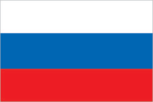
three equal horizontal bands of white (top), blue, and red the colors may have been based on those of the Dutch flag; despite many popular interpretations, there is no official meaning assigned to the colors of the Russian flag; this flag inspired other Slav countries to adopt horizontal tricolors of the same colors but in different arrangements, and so red, blue, and white became the Pan-Slav colors
Government type
federation
Independence
- 24 August 1991 (from the Soviet Union); notable earlier dates: 1157 (Principality of Vladimir-Suzdal created); 16 January 1547 (Tsardom of Muscovy established); 22 October 1721 (Russian Empire proclaimed); 30 December 1922 (Soviet Union established)
- 24 August 1991 (from the Soviet Union); notable earlier dates
- 1157 (Principality of Vladimir-Suzdal created); 16 January 1547 (Tsardom of Muscovy established); 22 October 1721 (Russian Empire proclaimed); 30 December 1922 (Soviet Union established)
International law organization participation
has not submitted an ICJ jurisdiction declaration; non-party state to the ICCt
International organization participation
APEC, Arctic Council, ARF, ASEAN (dialogue partner), BIS, BRICS, BSEC, CBSS, CD, CE, CERN (observer), CICA, CIS, CSTO, EAEC, EAPC, EAS, EBRD, FAO, FATF, G-20, GCTU, IAEA, IBRD, ICAO, ICC (national committees), ICRM, IDA, IFC, IFRCS, IHO, ILO, IMF, IMO, IMSO, Interpol, IOC, IOM (observer), IPU, ISO, ITSO, ITU, ITUC (NGOs), LAIA (observer), MIGA, MINURSO, MONUSCO, NSG, OAS (observer), OIC (observer), OPCW, OSCE, Paris Club, PCA, PFP, SCO, UN, UNCTAD, UNESCO, UNHCR, UNIDO, UNISFA, UNMIL, UNMISS, UNOCI, UNSC (permanent), UNTSO, UNWTO, UPU, WCO, WFTU (NGOs), WHO, WIPO, WMO, WTO, ZC
Judicial branch
- Supreme Court of the Russian Federation (consists of 23 members); Constitutional Court (consists of 19 members); Superior Court of Arbitration (consists of a chairman and 4 deputy chairmen); note - as of January 2014 legislation was pending that would merge the Constitutional Court and Superior Court of Arbitration all members of Russia's three highest courts nominated by the president and appointed by the Federation Council (the upper house of the legislature); members of all three courts appointed for life Higher Arbitration Court; regional (kray) and provincial (oblast) courts; Moscow and St. Petersburg city courts; autonomous province and district courts; note - the 14 Russian Republics have court systems specified by their own constitutions
- highest court(s)
- Supreme Court of the Russian Federation (consists of 23 members); Constitutional Court (consists of 19 members); Superior Court of Arbitration (consists of a chairman and 4 deputy chairmen); note - as of January 2014 legislation was pending that would merge the Constitutional Court and Superior Court of Arbitration
- judge selection and term of office
- all members of Russia's three highest courts nominated by the president and appointed by the Federation Council (the upper house of the legislature); members of all three courts appointed for life
- subordinate courts
- Higher Arbitration Court; regional (kray) and provincial (oblast) courts; Moscow and St. Petersburg city courts; autonomous province and district courts; note - the 14 Russian Republics have court systems specified by their own constitutions
Legal system
civil law system; judicial review of legislative acts
Legislative branch
- bicameral Federal Assembly or Federalnoye Sobraniye consists of an upper house, the Federation Council or Sovet Federatsii (166 seats; two members appointed by the top executive and legislative officials in each of the 83 federal administrative units - oblasts, krays, republics, autonomous okrugs and oblasts, and the federal cities of Moscow and Saint Petersburg; term lengths are not fixed but instead are determined by the regional bodies represented) and a lower house, the State Duma or Gosudarstvennaya Duma (450 seats; as of 2007, all members elected by proportional representation from party lists winning at least 7% of the vote; members elected by popular vote to serve five-year terms) State Duma - last held on 4 December 2011 (next to be held in December 2016) State Duma - United Russia 49.6%, CPRF 19.2%, Just Russia 13.2%, LDPR 11.7%, other 6.3%; total seats by party - United Russia 238, CPRF 92, Just Russia 64, LDPR 56
- election results
- State Duma - United Russia 49.6%, CPRF 19.2%, Just Russia 13.2%, LDPR 11.7%, other 6.3%; total seats by party - United Russia 238, CPRF 92, Just Russia 64, LDPR 56
- elections
- State Duma - last held on 4 December 2011 (next to be held in December 2016)
National anthem
- "Gimn Rossiyskoy Federatsii" (National Anthem of the Russian Federation) Sergey Vladimirovich MIKHALKOV/Aleksandr Vasilyevich ALEKSANDROV in 2000, Russia adopted the tune of the anthem of the former Soviet Union (composed in 1939); the lyrics, also adopted in 2000, were written by the same person who authored the Soviet lyrics in 1943
- lyrics/music
- Sergey Vladimirovich MIKHALKOV/Aleksandr Vasilyevich ALEKSANDROV
- name
- "Gimn Rossiyskoy Federatsii" (National Anthem of the Russian Federation)
National holiday
Russia Day, 12 June (1990)
National symbol(s)
bear; double-headed eagle
Political parties and leaders
seventy eight political parties are registered with Russia's Ministry of Justice (as of January 2014), but only four parties maintain representation in Russia's national legislature: A Just Russia [Sergey MIRONOV] Communist Party of the Russian Federation or CPRF [Gennadiy ZYUGANOV] Liberal Democratic Party of Russia or LDPR [Vladimir ZHIRINOVSKIY] United Russia [Dmitriy MEDVEDEV]
Political pressure groups and leaders
Confederation of Labor of Russia (KTR) Federation of Independent Trade Unions of Russia Golos Association in Defense of Voters' Rights Memorial Movement Against Illegal Migration Russkiye Solidarnost The World Russian People's Congress Union of the Committees of Soldiers' Mothers Union of Russian Writers other - business associations, environmental organizations, religious groups (especially those with Orthodox or Muslim affiliation), and veterans groups
Suffrage
18 years of age; universal
Economy
Agriculture - products
grain, sugar beets, sunflower seeds, vegetables, fruits; beef, milk
Budget
- $439 billion $450.3 billion (2013 est.)
- expenditures
- $450.3 billion (2013 est.)
- revenues
- $439 billion
Budget surplus (+) or deficit (-)
-0.5% of GDP (2013 est.)
Central bank discount rate
8.25% (31 December 2012 est.) 8% (31 December 2011) this is the so-called refinancing rate, but in Russia banks do not get refinancing at this rate; this is a reference rate used primarily for fiscal purposes
Commercial bank prime lending rate
9.3% (31 December 2013 est.) 9.1% (31 December 2012 est.)
Current account balance
$74.8 billion (2012 est.) $71.43 billion (2012 est.)
Debt - external
$714.2 billion (30 September 2013 est.) $636.4 billion (31 December 2012 est.)
Distribution of family income - Gini index
42 (2012) 41.7 (2011)
Economy - overview
Russia has undergone significant changes since the collapse of the Soviet Union, moving from a globally-isolated, centrally-planned economy towards a more market-based and globally-integrated economy, but stalling as a partially reformed, statist economy with a high concentration of wealth in officials' hands. Economic reforms in the 1990s privatized most industry, with notable exceptions in the energy and defense-related sectors. The protection of property rights is still weak and the private sector remains subject to heavy state interference. Russia is one of the world's leading producers of oil and natural gas and is also a top exporter of metals such as steel and primary aluminum. Russia's manufacturing sector is generally uncompetitive on world markets and is geared toward domestic consumption. Russia's reliance on commodity exports makes it vulnerable to boom and bust cycles that follow the volatile swings in global prices. The economy, which had averaged 7% growth during 1998-2008 as oil prices rose rapidly, was one of the hardest hit by the 2008-09 global economic crisis as oil prices plummeted and the foreign credits that Russian banks and firms relied on dried up. Slowly declining oil prices over the past few years and difficulty attracting foreign direct investment have contributed to a noticeable slowdown in GDP growth rates. In late 2013, the Russian Economic Development Ministry reduced its growth forecast through 2030 to an average of only 2.5% per year, down from its previous forecast of 4.0 to 4.2%. In 2014, following Russia's military intervention in Ukraine, prospects for economic growth declined further, with expections that GDP growth could drop as low as zero.
Exchange rates
Russian rubles (RUB) per US dollar - 31.82 (2013 est.) 30.84 (2012 est.) 30.368 (2010 est.) 31.74 (2009) 24.853 (2008)
Exports
$515 billion (2013 est.) $528 billion (2012 est.)
Exports - commodities
petroleum and petroleum products, natural gas, metals, wood and wood products, chemicals, and a wide variety of civilian and military manufactures
Exports - partners
Netherlands 14.6%, China 6.8%, Germany 6.8%, Italy 6.2%, Turkey 5.2%, Ukraine 5.2%, Belarus 4.7% (2012 est.)
Fiscal year
calendar year
GDP - composition, by end use
- 51.3% 18.8% 22% 1.4% 29.6% -23% (2013 est.)
- exports of goods and services
- 29.6%
- government consumption
- 18.8%
- household consumption
- 51.3%
- imports of goods and services
- -23%
- investment in fixed capital
- 22%
- investment in inventories
- 1.4%
GDP - composition, by sector of origin
- 4.2% 37.5% 58.3% (2013 est.)
- agriculture
- 4.2%
- industry
- 37.5%
- services
- 58.3% (2013 est.)
GDP - per capita (PPP)
$18,100 (2013 est.) $17,800 (2012 est.) $17,100 (2011 est.) data are in 2013 US dollars
GDP - real growth rate
1.3% (2013 est.) 3.4% (2012 est.) 4.3% (2011 est.)
GDP (official exchange rate)
$2.113 trillion (2013 est.)
GDP (purchasing power parity)
$2.553 trillion (2013 est.) $2.52 trillion (2012 est.) $2.437 trillion (2011 est.) data are in 2013 US dollars
Gross national saving
28.3% of GDP (2013 est.) 29.5% of GDP (2012 est.) 30.6% of GDP (2011 est.)
Household income or consumption by percentage share
- 5.7% 42.4% (2011 est.)
- highest 10%
- 42.4% (2011 est.)
- lowest 10%
- 5.7%
Imports
$341 billion (2013 est.) $335.7 billion (2012 est.)
Imports - commodities
machinery, vehicles, pharmaceutical products, plastic, semi-finished metal products, meat, fruits and nuts, optical and medical instruments, iron, steel
Imports - partners
China 16.6%, Germany 12.2%, Ukraine 5.7%, Japan 5%, United States 4.9%, France 4.4%, Italy 4.3% (2012 est.)
Industrial production growth rate
0.1% (2013 est.)
Industries
complete range of mining and extractive industries producing coal, oil, gas, chemicals, and metals; all forms of machine building from rolling mills to high-performance aircraft and space vehicles; defense industries (including radar, missile production, advanced electronic components), shipbuilding; road and rail transportation equipment; communications equipment; agricultural machinery, tractors, and construction equipment; electric power generating and transmitting equipment; medical and scientific instruments; consumer durables, textiles, foodstuffs, handicrafts
Inflation rate (consumer prices)
6.8% (2013 est.) 5.1% (2012 est.)
Labor force
75.29 million (2013 est.)
Labor force - by occupation
- 9.7% 27.8% 62.5% (2012)
- agriculture
- 9.7%
- industry
- 27.8%
- services
- 62.5% (2012)
Market value of publicly traded shares
$874.7 billion (31 December 2012 est.) $796.4 billion (31 December 2011) $1.005 trillion (31 December 2010 est.)
Population below poverty line
11% (2013 est.)
Public debt
7.9% of GDP (2013 est.) 8% of GDP (2012 est.) data cover general government debt, and includes debt instruments issued (or owned) by government entities other than the treasury; the data include treasury debt held by foreign entities; the data include debt issued by subnational entities, as well as intra-governmental debt; intra-governmental debt consists of treasury borrowings from surpluses in the social funds, such as for retirement, medical care, and unemployment, debt instruments for the social funds are not sold at public auctions
Reserves of foreign exchange and gold
$515.6 billion (01 December 2013 est.) $537.6 billion (31 December 2012 est.)
Stock of broad money
$1.061 trillion (31 December 2012 est.) $893.1 billion (31 December 2011 est.)
Stock of direct foreign investment - abroad
$439.2 billion (31 December 2013 est.) $387.2 billion (31 December 2012 est.)
Stock of direct foreign investment - at home
$552.8 billion (31 December 2013 est.) $497.8 billion (31 December 2012 est.)
Stock of domestic credit
$947 billion (31 December 2013 est.) $922.6 billion (31 December 2012 est.)
Stock of narrow money
$452.8 billion (31 December 2012 est.) $399.3 billion (31 December 2011 est.)
Taxes and other revenues
20.7% of GDP (2013 est.)
Unemployment rate
5.8% (2013 est.) 5.5% (2012 est.)
Energy
Carbon dioxide emissions from consumption of energy
1.788 billion Mt (2011 est.)
Crude oil - exports
4.72 million bbl/day (2013 est.)
Crude oil - imports
16,380 bbl/day (2012 est.)
Crude oil - production
10.44 million bbl/day (2013 est.)
Crude oil - proved reserves
80 billion bbl (1 January 2013 est.)
Electricity - consumption
1.038 trillion kWh (2012 est.)
Electricity - exports
19.14 billion kWh (2012 est.)
Electricity - from fossil fuels
67.7% of total installed capacity (2012 est.)
Electricity - from hydroelectric plants
15.1% of total installed capacity (2012 est.)
Electricity - from nuclear fuels
17.8% of total installed capacity (2012 est.)
Electricity - from other renewable sources
0% of total installed capacity (2012 est.)
Electricity - imports
2.661 billion kWh (2012 est.)
Electricity - installed generating capacity
223.1 million kW (2012 est.)
Electricity - production
1.057 trillion kWh (2013 est.)
Natural gas - consumption
457.2 billion cu m (2013 est.)
Natural gas - exports
196 billion cu m (2013 est.)
Natural gas - imports
32.5 billion cu m (2012 est.)
Natural gas - production
669.7 billion cu m (2013 est.)
Natural gas - proved reserves
47.8 trillion cu m (1 January 2013 est.)
Refined petroleum products - consumption
3.196 million bbl/day (2012 est.)
Refined petroleum products - exports
2.92 million bbl/day (2012 est.)
Refined petroleum products - imports
24,300 bbl/day (2013 est.)
Refined petroleum products - production
4.812 million bbl/day (2010 est.)
Communications
Broadcast media
6 national TV stations with the federal government owning 1 and holding a controlling interest in a second; state-owned Gazprom maintains a controlling interest in a third national channel; government-affiliated Bank Rossiya owns controlling interest in a fourth and fifth, while the sixth national channel is owned by the Moscow city administration; roughly 3,300 national, regional, and local TV stations with over two-thirds completely or partially controlled by the federal or local governments; satellite TV services are available; 2 state-run national radio networks with a third majority-owned by Gazprom; roughly 2,400 public and commercial radio stations (2007)
Internet country code
.ru; note - Russia also has responsibility for a legacy domain ".su" that was allocated to the Soviet Union and is being phased out
Internet hosts
14.865 million (2012)
Internet users
40.853 million (2009)
Telephone system
- the telephone system is experiencing significant changes; there are more than 1,000 companies licensed to offer communication services; access to digital lines has improved, particularly in urban centers; Internet and e-mail services are improving; Russia has made progress toward building the telecommunications infrastructure necessary for a market economy; the estimated number of mobile subscribers jumped from fewer than 1 million in 1998 to more than 235 million in 2011; fixed line service has improved but a large demand remains cross-country digital trunk lines run from Saint Petersburg to Khabarovsk, and from Moscow to Novorossiysk; the telephone systems in 60 regional capitals have modern digital infrastructures; cellular services, both analog and digital, are available in many areas; in rural areas, the telephone services are still outdated, inadequate, and low density country code - 7; Russia is connected internationally by undersea fiber optic cables; satellite earth stations provide access to Intelsat, Intersputnik, Eutelsat, Inmarsat, and Orbita systems (2011)
- domestic
- cross-country digital trunk lines run from Saint Petersburg to Khabarovsk, and from Moscow to Novorossiysk; the telephone systems in 60 regional capitals have modern digital infrastructures; cellular services, both analog and digital, are available in many areas; in rural areas, the telephone services are still outdated, inadequate, and low density
- general assessment
- the telephone system is experiencing significant changes; there are more than 1,000 companies licensed to offer communication services; access to digital lines has improved, particularly in urban centers; Internet and e-mail services are improving; Russia has made progress toward building the telecommunications infrastructure necessary for a market economy; the estimated number of mobile subscribers jumped from fewer than 1 million in 1998 to more than 235 million in 2011; fixed line service has improved but a large demand remains
- international
- country code - 7; Russia is connected internationally by undersea fiber optic cables; satellite earth stations provide access to Intelsat, Intersputnik, Eutelsat, Inmarsat, and Orbita systems (2011)
Telephones - main lines in use
42.9 million (2012)
Telephones - mobile cellular
261.9 million (2012)
Transportation
Airports
1,218 (2013)
Airports - with paved runways
- 125 (2013)
- 1,524 to 2,437 m
- 123
- 2,438 to 3,047 m
- 197
- 914 to 1,523 m
- 95
- over 3,047 m
- 54
- total
- 594
- under 914 m
- 125 (2013)
Airports - with unpaved runways
- 457 (2013)
- 1,524 to 2,437 m
- 69
- 2,438 to 3,047 m
- 13
- 914 to 1,523 m
- 81
- over 3,047 m
- 4
- total
- 624
Heliports
49 (2013)
Merchant marine
- 1,143 bulk carrier 20, cargo 642, carrier 3, chemical tanker 57, combination ore/oil 42, container 13, passenger 15, passenger/cargo 7, petroleum tanker 244, refrigerated cargo 84, roll on/roll off 13, specialized tanker 3 155 (Belgium 4, Cyprus 13, Estonia 1, Ireland 1, Italy 14, Latvia 2, Netherlands 2, Romania 1, South Korea 1, Switzerland 3, Turkey 101, Ukraine 12) 439 (Antigua and Barbuda 3, Belgium 1, Belize 30, Bulgaria 2, Cambodia 50, Comoros 12, Cook Islands 1, Cyprus 46, Dominica 3, Georgia 6, Hong Kong 1, Kiribati 1, Liberia 109, Malaysia 2, Malta 45, Marshall Islands 5, Moldova 5, Mongolia 2, Panama 49, Romania 1, Saint Kitts and Nevis 13, Saint Vincent and the Grenadines 11, Sierra Leone 7, Singapore 2, Spain 6, Vanuatu 7, unknown 19) (2010)
- foreign-owned
- 155 (Belgium 4, Cyprus 13, Estonia 1, Ireland 1, Italy 14, Latvia 2, Netherlands 2, Romania 1, South Korea 1, Switzerland 3, Turkey 101, Ukraine 12)
- registered in other countries
- 439 (Antigua and Barbuda 3, Belgium 1, Belize 30, Bulgaria 2, Cambodia 50, Comoros 12, Cook Islands 1, Cyprus 46, Dominica 3, Georgia 6, Hong Kong 1, Kiribati 1, Liberia 109, Malaysia 2, Malta 45, Marshall Islands 5, Moldova 5, Mongolia 2, Panama 49, Romania 1, Saint Kitts and Nevis 13, Saint Vincent and the Grenadines 11, Sierra Leone 7, Singapore 2, Spain 6, Vanuatu 7, unknown 19) (2010)
- total
- 1,143
Pipelines
condensate 122 km; gas 163,872 km; liquid petroleum gas 1,378 km; oil 80,820 km; oil/gas/water 40 km; refined products 13,658 km; water 23 km (2013)
Ports and terminals
- Kaliningrad, Nakhodka, Novorossiysk, Primorsk, Vostochnyy Saint Petersburg (Neva River) Kavkaz oil terminal Saint Petersburg (2,365,174)
- container port(s) (TEUs)
- Saint Petersburg (2,365,174)
- major seaport(s)
- Kaliningrad, Nakhodka, Novorossiysk, Primorsk, Vostochnyy
- oil terminal(s)
- Kavkaz oil terminal
- river port(s)
- Saint Petersburg (Neva River)
Railways
- 87,157 km 86,200 km 1.520-m gauge (40,300 km electrified) 957 km 1.067-m gauge (on Sakhalin Island) an additional 30,000 km of non-common carrier lines serve industries (2006)
- narrow gauge
- 957 km 1.067-m gauge (on Sakhalin Island)
- total
- 87,157 km
Roadways
- 1,283,387 km 927,721 km (includes 39,143 km of expressways) 355,666 km (2012)
- total
- 1,283,387 km
- unpaved
- 355,666 km (2012)
Waterways
102,000 km (including 48,000 km with guaranteed depth; the 72,000 km system in European Russia links Baltic Sea, White Sea, Caspian Sea, Sea of Azov, and Black Sea) (2009)
Military and Security
Manpower available for military service
- 34,765,736 35,410,779 (2013 est.)
- females age 16-49
- 35,410,779 (2013 est.)
- males age 16-49
- 34,765,736
Manpower fit for military service
- 22,597,728 23,017,006 (2013 est.)
- females age 16-49
- 23,017,006 (2013 est.)
- males age 16-49
- 22,597,728
Manpower reaching militarily significant age annually
- 696,768 664,847 (2013 est.)
- female
- 664,847 (2013 est.)
- male
- 696,768
Military branches
- Ground Troops (Sukhoputnyye Voyskia, SV), Navy (Voyenno-Morskoy Flot, VMF), Air Forces (Voyenno-Vozdushniye Sily, VVS); Airborne Troops (Vozdushno-Desantnyye Voyska, VDV), Missile Troops of Strategic Purpose (Raketnyye Voyska Strategicheskogo Naznacheniya, RVSN) referred to commonly as Strategic Rocket Forces, and Aerospace Defense Troops (Voyska Vozdushno-Kosmicheskoy Oborony or Voyska VKO) are independent "combat arms," not subordinate to any of the three branches; Russian Ground Troops include the following combat arms: motorized-rifle troops, tank troops, missile and artillery troops, air defense of the Ground Troops (2014)
- Ground Troops (Sukhoputnyye Voyskia, SV), Navy (Voyenno-Morskoy Flot, VMF), Air Forces (Voyenno-Vozdushniye Sily, VVS); Airborne Troops (Vozdushno-Desantnyye Voyska, VDV), Missile Troops of Strategic Purpose (Raketnyye Voyska Strategicheskogo Naznacheniya
- motorized-rifle troops, tank troops, missile and artillery troops, air defense of the Ground Troops (2014)
Military expenditures
4.47% of GDP (2012) 4.13% of GDP (2011) 4.47% of GDP (2010)
Military service age and obligation
18-27 years of age for compulsory or voluntary military service; males are registered for the draft at 17 years of age; service obligation is 1 year (conscripts can only be sent to combat zones after 6 months of training); reserve obligation for non-officers to age 50; enrollment in military schools from the age of 16, cadets classified as members of the armed forces the chief of the General Staff Mobilization Directorate announced in May 2013 that for health reasons, only 65% of draftees called up during the spring 2013 draft campaign were fit for military service, and over 12% of these were sent for an additional medical examination (by way of comparison, 69.9% in 2012 and 57.7% in 2011 were deemed fit for military service); approximately 50% of draft-age Russian males receive some type of legal deferment each draft cycle (2014)
Transnational Issues
Disputes - international
Russia remains concerned about the smuggling of poppy derivatives from Afghanistan through Central Asian countries; China and Russia have demarcated the once disputed islands at the Amur and Ussuri confluence and in the Argun River in accordance with the 2004 Agreement, ending their centuries-long border disputes; the sovereignty dispute over the islands of Etorofu, Kunashiri, Shikotan, and the Habomai group, known in Japan as the "Northern Territories" and in Russia as the "Southern Kurils," occupied by the Soviet Union in 1945, now administered by Russia, and claimed by Japan, remains the primary sticking point to signing a peace treaty formally ending World War II hostilities; Russia's military support and subsequent recognition of Abkhazia and South Ossetia independence in 2008 continue to sour relations with Georgia; Azerbaijan, Kazakhstan, and Russia ratified Caspian seabed delimitation treaties based on equidistance, while Iran continues to insist on a one-fifth slice of the sea; Norway and Russia signed a comprehensive maritime boundary agreement in 2010; various groups in Finland advocate restoration of Karelia (Kareliya) and other areas ceded to the Soviet Union following World War II but the Finnish Government asserts no territorial demands; Russia and Estonia signed a technical border agreement in May 2005, but Russia recalled its signature in June 2005 after the Estonian parliament added to its domestic ratification act a historical preamble referencing the Soviet occupation and Estonia's pre-war borders under the 1920 Treaty of Tartu; Russia contends that the preamble allows Estonia to make territorial claims on Russia in the future, while Estonian officials deny that the preamble has any legal impact on the treaty text; Russia demands better treatment of the Russian-speaking population in Estonia and Latvia; Lithuania and Russia committed to demarcating their boundary in 2006 in accordance with the land and maritime treaty ratified by Russia in May 2003 and by Lithuania in 1999; Lithuania operates a simplified transit regime for Russian nationals traveling from the Kaliningrad coastal exclave into Russia, while still conforming, as an EU member state with an EU external border, where strict Schengen border rules apply; preparations for the demarcation delimitation of land boundary with Ukraine have commenced; the dispute over the boundary between Russia and Ukraine through the Kerch Strait and Sea of Azov is suspended due to the occupation of Crimea by Russia; Kazakhstan and Russia boundary delimitation was ratified on November 2005 and field demarcation should commence in 2007; Russian Duma has not yet ratified 1990 Bering Sea Maritime Boundary Agreement with the US; Denmark (Greenland) and Norway have made submissions to the Commission on the Limits of the Continental shelf (CLCS) and Russia is collecting additional data to augment its 2001 CLCS submission
Illicit drugs
limited cultivation of illicit cannabis and opium poppy and producer of methamphetamine, mostly for domestic consumption; government has active illicit crop eradication program; used as transshipment point for Asian opiates, cannabis, and Latin American cocaine bound for growing domestic markets, to a lesser extent Western and Central Europe, and occasionally to the US; major source of heroin precursor chemicals; corruption and organized crime are key concerns; major consumer of opiates
Refugees and internally displaced persons
- at least 34,900 (armed conflict, human rights violations, generalized violence in North Caucasus, particularly Chechnya and North Ossetia) (2013) 178,000 (2012); note - Russia's stateless population consists of Roma, Meskhetian Turks, and ex-Soviet citizens from the former republics; between 2003 and 2010 more than 600,000 stateless people were naturalized; most Meskhetian Turks, followers of Islam with origins in Georgia, fled or were evacuated from Uzbekistan after a 1989 pogrom and have lived in Russia for more than the required five-year residency period; they continue to be denied registration for citizenship and basic rights by local Krasnodar Krai authorities on the grounds that they are temporary illegal migrants
- IDPs
- at least 34,900 (armed conflict, human rights violations, generalized violence in North Caucasus, particularly Chechnya and North Ossetia) (2013)
- stateless persons
- 178,000 (2012); note - Russia's stateless population consists of Roma, Meskhetian Turks, and ex-Soviet citizens from the former republics; between 2003 and 2010 more than 600,000 stateless people were naturalized; most Meskhetian Turks, followers of Islam with origins in Georgia, fled or were evacuated from Uzbekistan after a 1989 pogrom and have lived in Russia for more than the required five-year residency period; they continue to be denied registration for citizenship and basic rights by local Krasnodar Krai authorities on the grounds that they are temporary illegal migrants
Trafficking in persons
- Russia is a source, transit, and destination country for men, women, and children who are subjected to forced labor and sex trafficking, although labor trafficking is the predominant problem; people from Russia and other countries in Europe, Central Asia, and Asia, including Vietnam and North Korea, are subjected to conditions of forced labor in Russia's construction, manufacturing, agriculture, repair shop, and domestic services industries, as well as forced begging and narcotics cultivation; North Koreans contracted under bilateral government arrangements to work in the timber industry in the Russian Far East reportedly are subjected to forced labor; Russian women and children were reported to be victims of sex trafficking in Russia, Northeast Asia, Europe, Central Asia, and the Middle East, while women from European, African, and Central Asian countries were reportedly forced into prostitution in Russia Tier 3 - Russia does not fully comply with the minimum standards for the elimination of trafficking and because it is not deemed to be making significant efforts to do so was downgraded to Tier 3 after the maximum of two consecutive annual waivers; the number of prosecutions remains low compared to estimates of Russia's trafficking problem; the government did not develop or deploy a formal system for the identification of trafficking victims or their referral to protective services, although some victims were reportedly cared for through ad hoc efforts; the government has reported minimal efforts to identify or care for the large number of migrant workers vulnerable to labor exploitation and has not investigated allegations of slave-like conditions in North Korean-operated timber camps (2013)
- current situation
- Russia is a source, transit, and destination country for men, women, and children who are subjected to forced labor and sex trafficking, although labor trafficking is the predominant problem; people from Russia and other countries in Europe, Central Asia, and Asia, including Vietnam and North Korea, are subjected to conditions of forced labor in Russia's construction, manufacturing, agriculture, repair shop, and domestic services industries, as well as forced begging and narcotics cultivation; North Koreans contracted under bilateral government arrangements to work in the timber industry in the Russian Far East reportedly are subjected to forced labor; Russian women and children were reported to be victims of sex trafficking in Russia, Northeast Asia, Europe, Central Asia, and the Middle East, while women from European, African, and Central Asian countries were reportedly forced into prostitution in Russia
- tier rating
- Tier 3 - Russia does not fully comply with the minimum standards for the elimination of trafficking and because it is not deemed to be making significant efforts to do so was downgraded to Tier 3 after the maximum of two consecutive annual waivers; the number of prosecutions remains low compared to estimates of Russia's trafficking problem; the government did not develop or deploy a formal system for the identification of trafficking victims or their referral to protective services, although some victims were reportedly cared for through ad hoc efforts; the government has reported minimal efforts to identify or care for the large number of migrant workers vulnerable to labor exploitation and has not investigated allegations of slave-like conditions in North Korean-operated timber camps (2013)