1998 Edition
CIA World Factbook 1998 (Internet Archive)
Geography
Area
total: 17,075,200 sq km land: 16,995,800 sq km water: 79,400 sq km
Area-comparative
slightly less than 1.8 times the size of the US
Climate
ranges from steppes in the south through humid continental in much of European Russia; subarctic in Siberia to tundra climate in the polar north; winters vary from cool along Black Sea coast to frigid in Siberia; summers vary from warm in the steppes to cool along Arctic coast
Coastline
37,653 km
Elevation extremes
lowest point: Caspian Sea -28 m highest point: Mount El'brus 5,633 m
Environment-current issues
air pollution from heavy industry, emissions of coal-fired electric plants, and transportation in major cities; industrial and agricultural pollution of inland waterways and sea coasts; deforestation; soil erosion; soil contamination from improper application of agricultural chemicals; scattered areas of sometimes intense radioactive contamination
Environment-international agreements
party to: Air Pollution, Air Pollution-Nitrogen Oxides, Air Pollution-Sulphur 85, Antarctic-Environmental Protocol, Antarctic Treaty, Biodiversity, Climate Change, Endangered Species, Environmental Modification, Hazardous Wastes, Law of the Sea, Marine Dumping, Nuclear Test Ban, Ozone Layer Protection, Ship Pollution, Tropical Timber 83, Wetlands signed, but not ratified: Air Pollution-Sulphur 94
Geographic coordinates
60 00 N, 100 00 E
Geography-note
largest country in the world in terms of area but unfavorably located in relation to major sea lanes of the world; despite its size, much of the country lacks proper soils and climates (either too cold or too dry) for agriculture
Irrigated land
40,000 sq km (1993 est.)
Land boundaries
total: 19,917 km border countries: Azerbaijan 284 km, Belarus 959 km, China (southeast) 3,605 km, China (south) 40 km, Estonia 294 km, Finland 1,313 km, Georgia 723 km, Kazakhstan 6,846 km, North Korea 19 km, Latvia 217 km, Lithuania (Kaliningrad Oblast) 227 km, Mongolia 3,441 km, Norway 167 km, Poland (Kaliningrad Oblast) 206 km, Ukraine 1,576 km
Land use
arable land: 8% permanent crops: 0% permanent pastures: 4% forests and woodland: 46% other: 42% (1993 est.)
Location
Northern Asia (that part west of the Urals is sometimes included with Europe), bordering the Arctic Ocean, between Europe and the North Pacific Ocean
Map references
Asia
Maritime claims
continental shelf: 200-m depth or to the depth of exploitation exclusive economic zone: 200 nm territorial sea: 12 nm
Natural hazards
permafrost over much of Siberia is a major impediment to development; volcanic activity in the Kuril Islands; volcanoes and earthquakes on the Kamchatka Peninsula
Natural resources
wide natural resource base including major deposits of oil, natural gas, coal, and many strategic minerals, timber note: formidable obstacles of climate, terrain, and distance hinder exploitation of natural resources
Terrain
broad plain with low hills west of Urals; vast coniferous forest and tundra in Siberia; uplands and mountains along southern border regions
People and Society
Age structure
0-14 years: 20% (male 14,756,787; female 14,189,564) 15-64 years: 68% (male 48,138,173; female 51,366,412) 65 years and over: 12% (male 5,699,334; female 12,710,752) (July 1998 est.)
Birth rate
9.57 births/1,000 population (1998 est.)
Death rate
14.89 deaths/1,000 population (1998 est.)
Ethnic groups
Russian 81.5%, Tatar 3.8%, Ukrainian 3%, Chuvash 1.2%, Bashkir 0.9%, Byelorussian 0.8%, Moldavian 0.7%, other 8.1%
Infant mortality rate
23.26 deaths/1,000 live births (1998 est.)
Languages
Russian, other
Life expectancy at birth
total population: 64.97 years male: 58.61 years female: 71.64 years (1998 est.)
Literacy
definition: age 15 and over can read and write total population: 98% male: 100% female: 97% (1989 est.)
Nationality
noun: Russian(s) adjective: Russian
Net migration rate
2.21 migrant(s)/1,000 population (1998 est.)
Population
146,861,022 (July 1998 est.)
Population growth rate
-0.31% (1998 est.)
Religions
Russian Orthodox, Muslim, other
Sex ratio
at birth: 1.05 male(s)/female under 15 years: 1.03 male(s)/female 15-64 years: 0.93 male(s)/female 65 years and over: 0.44 male(s)/female (1998 est.)
Total fertility rate
1.34 children born/woman (1998 est.)
Government
Administrative divisions
oblasts (oblastey, singular-oblast'), 21 autonomous republics* (avtonomnyk respublik, singular-avtonomnaya respublika), 10 autonomous okrugs**(avtonomnykh okrugov, singular-avtonomnyy okrug), 6 krays*** (krayev, singular-kray), 2 federal cities (singular-gorod)****, and 1 autonomous oblast*****(avtonomnaya oblast'); Adygeya (Maykop)*, Aginskiy Buryatskiy (Aginskoye)**, Altay (Gorno-Altaysk)*, Altayskiy (Barnaul)***, Amurskaya (Blagoveshchensk), Arkhangel'skaya, Astrakhanskaya, Bashkortostan (Ufa)*, Belgorodskaya, Bryanskaya, Buryatiya (Ulan-Ude)*, Chechnya (Groznyy)*, Chelyabinskaya, Chitinskaya, Chukotskiy (Anadyr')**, Chuvashiya (Cheboksary)*, Dagestan (Makhachkala)*, Evenkiyskiy (Tura)**, Ingushetiya (Nazran')*, Irkutskaya, Ivanovskaya, Kabardino-Balkariya (Nal'chik)*, Kaliningradskaya, Kalmykiya (Elista)*, Kaluzkskaya, Kamchatskaya (Petropavlovsk-Kamchatskiy), Karachayevo-Cherkesiya (Cherkessk)*, Kareliya (Petrozavodsk)*, Kemerovskaya, Khabarovskiy***, Khakasiya (Abakan)*, Khanty-Mansiyskiy (Khanty-Mansiysk)**, Kirovskaya, Komi (Syktyvkar)*, Koryakskiy (Palana)**, Kostromskaya, Krasnodarskiy***, Krasnoyarskiy***, Kurganskaya, Kurskaya, Leningradskaya, Lipetskaya, Magadanskaya, Mariy-El (Yoshkar-Ola)*, Mordoviya (Saransk)*, Moskovskaya, Moskva****, Murmanskaya, Nenetskiy (Nar'yan-Mar)**, Nizhegorodskaya, Novgorodskaya, Novosibirskaya, Omskaya, Orenburgskaya, Orlovskaya (Orel), Penzenskaya, Permskaya, Komi-Permyatskiy (Kudymkar)**, Primorskiy (Vladivostok)***, Pskovskaya, Rostovskaya, Ryazanskaya, Sakha (Yakutsk)*, Sakhalinskaya (Yuzhno-Sakhalinsk), Samarskaya, Sankt-Peterburg****, Saratovskaya, Severnaya Osetiya-Alaniya (Vladikavkaz)*, Smolenskaya, Stavropol'skiy***, Sverdlovskaya (Yekaterinburg), Tambovskaya, Tatarstan (Kazan')*, Taymyrskiy (Dudinka)**, Tomskaya, Tul'skaya, Tverskaya, Tyumenskaya, Tyva (Kyzyl)*, Udmurtiya (Izhevsk)*, Ul'yanovskaya, Ust'-Ordynskiy Buryatskiy (Ust'-Ordynskiy)**, Vladimirskaya, Volgogradskaya, Vologodskaya, Voronezhskaya, Yamalo-Nenetskiy (Salekhard)**, Yaroslavskaya, Yevreyskaya*****; note-when using a place name with an adjectival ending 'skaya' or 'skiy,' the word Oblast' or Avonomnyy Okrug or Kray should be added to the place name note: the autonomous republics of Chechnya and Ingushetiya were formerly the autonomous republic of Checheno-Ingushetia (the boundary between Chechnya and Ingushetia has yet to be determined); the cities of Moscow and St. Petersburg are federal cities; administrative divisions have the same names as their administrative centers (exceptions have the administrative center name following in parentheses)
Constitution
adopted 12 December 1993
Country name
conventional long form: Russian Federation conventional short form: Russia local long form: Rossiyskaya Federatsiya local short form: Rossiya former: Russian Soviet Federative Socialist Republic
Data code
RS
Executive branch
chief of state: President Boris Nikolayevich YEL'TSIN (since 12 June 1991) head of government: Premier and Chairman of the Russian Federation Government Sergey Vladilenovich KIRIYENKO (since 23 March 1998), Deputy Premiers and Deputy Chairmen of the Government Viktor Borisovich KHRISTENKO (since 28 April 1998), Boris Yefimovich NEMTSOV (since 28 April 1998), Oleg Nikolayevich SYSUYEV (since 17 March 1997) cabinet: Ministries of the Government or "Government" appointed by the president note: there is also a Presidential Administration that drafts presidential edicts and provides staff and policy support to the entire executive branch; a Security Council that was originally established as a presidential advisory body in June 1991 with responsibility for managing individual and state security; a Defense Council and a Foreign Policy Council formed in July 1996 and October 1996 respectively elections: president elected by popular vote for a four-year term; election last held 16 June 1996 with runoff election on 3 July 1996 (next to be held NA June 2000); note-no vice president; if the president dies in office, cannot exercise his powers because of ill health, is impeached, or resigns, the premier succeeds him; the premier serves as acting president until a new presidential election is held, which must be within three months; premier and deputy premiers appointed by the president with the approval of the Duma election results: Boris Nikolayevich YEL'TSIN elected president; percent of vote in runoff - YEL'TSIN 54%, Gennadiy Andreyevich ZYUGANOV 40%
FAX
- [1] (202) 298-5735 consulate(s) general: New York, San Francisco, and Seattle Diplomatic representation from the US: chief of mission: Ambassador James F. COLLINS embassy: Novinskiy Bul'var 19/23, Moscow mailing address: APO AE 09721 telephone: [7] (095) 252-24-51 through 59
- [7] (095) 956-42-61 consulate(s) general: St. Petersburg, Vladivostok, Yekaterinburg
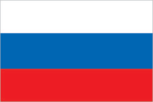
Flag description
three equal horizontal bands of white (top), blue, and red
Government type
federation
Independence
24 August 1991 (from Soviet Union)
International organization participation
BIS (pending member), BSEC, CBSS, CCC, CE, CERN (observer), CIS, EAPC, EBRD, ECE, ESCAP, IAEA, IBRD, ICAO, ICRM, IDA, IFC, IFRCS, IHO, ILO, IMF, IMO, Inmarsat, Intelsat, Interpol, IOC, IOM (observer), ISO, ITU, LAIA (observer), MINUGUA, MINURSO, MTCR, NSG, OAS (observer), OSCE, PCA, PFP, UN, UN Security Council, UNCTAD, UNESCO, UNHCR, UNIDO, UNIKOM, UNITAR, UNMIBH, UNMOP, UNOMIG, UNPREDEP, UNTSO, UPU, WFTU, WHO, WIPO, WMO, WToO, WTrO (applicant), ZC Diplomatic representation in the US: chief of mission: Ambassador Yuliy Mikhaylovich VORONTSOV chancery: 2650 Wisconsin Avenue NW, Washington, DC 20007 telephone: [1] (202) 298-5700 through 5704
Judicial branch
Constitutional Court, judges are appointed for life by the Federation Council on recommendation of the president; Supreme Court, judges are appointed for life by the Federation Council on recommendation of the president; Superior Court of Arbitration, judges are appointed for life by the Federation Council on recommendation of the president Political parties and leaders: pro-market democrats: Yabloko Bloc [Grigoriy Alekseyevich YAVLINSKIY]; Russia's Democratic Choice Party [Yegor Timurovich GAYDAR]; Forward, Russia! [Boris Grigor'yevich FEDOROV] centrists/special interest parties: Our Home Is Russia [Viktor Stepanovich CHERNOMYRDIN]; Russian People's Republican Party [Aleksandr Ivanovich LEBED]; Congress of Russian Communities [Dmitriy Olegovich ROGOZIN]; Women of Russia [Alevtina Vasil'yevna FEDULOVA and Yekaterina Filippovna LAKHOVA] anti-market and/or ultranationalist: Communist Party of the Russian Federation [Gennadiy Andreyevich ZYUGANOV]; Liberal Democratic Party of Russia [Vladimir Vol'fovich ZHIRINOVSKIY]; Agrarian Party [Mikhail Ivanovich LAPSHIN]; Power To the People [Nikolay Ivanovich RYZHKOV and Sergey Nikolayevich BABURIN]; Russian Communist Workers' Party [Viktor Ivanovich ANPILOV and Viktor Arkad'yevich TYUL'KIN] note: some 269 political parties, blocs, and associations tried to gather enough signatures to run slates of candidates in the 17 December 1995 Duma elections; 43 succeeded Political pressure groups and leaders: NA
Legal system
based on civil law system; judicial review of legislative acts
Legislative branch
bicameral Federal Assembly or Federal'noye Sobraniye consists of the Federation Council or Sovet Federatsii (178 seats, filled ex-officio by the top executive and legislative officials in each of the 89 federal administrative units-oblasts, krays, republics, autonomous okrugs and oblasts, and the cities of Moscow and St. Petersburg; members serve four-year terms) and the State Duma or Gosudarstvennaya Duma (450 seats, half elected in single-member districts and half elected from national party lists; members are elected by direct popular vote to serve four-year terms) elections: State Duma-last held 17 December 1995 (next to be held NA December 1999) election results: State Duma-percent of vote received by parties clearing the 5% threshold entitling them to a proportional share of the 225 party list seats-Communist Party of the Russian Federation 22.3%, Liberal Democratic Party of Russia 11.2%, Our Home Is Russia 10.1%, Yabloko Bloc 6.9%; seats by party-Communist Party of the Russian Federation 157, independents 78, Our Home Is Russia 55, Liberal Democratic Party of Russia 51, Yabloko Bloc 45, Agrarian Party of Russia 20, Russia's Democratic Choice 9, Power To the People 9, Congress of Russian Communities 5, Forward, Russia! 3, Women of Russia 3, other parties 15
National capital
Moscow
National holiday
Independence Day, June 12 (1990)
Suffrage
18 years of age; universal
Economy
Agriculture-products
grain, sugar beets, sunflower seed, vegetables, fruits (because of its northern location does not grow citrus, cotton, tea, and other warm climate products); meat, milk
Budget
revenues: $59 billion expenditures: $70 billion, including capital expenditures of $NA (1997 est.)
Currency
1 ruble (R) = 100 kopeks
Debt-external
$135 billion (yearend 1996)
Economic aid
recipient: ODA, $15 billion drawn (1990-97) note: US commitments, including Ex-Im, $15 billion (1990-96); other countries, ODA and OOF bilateral commitments (1990-96), $125 billion
Economy-overview
Russia, a vast country with a wealth of natural resources, a well-educated population, and a diverse, but declining, industrial base, continues to experience formidable difficulties in moving from its old centrally planned economy to a modern market economy. After seven consecutive years of contraction 1990-96 in which GDP fell by one-third, GDP grew by 0.4% in 1997, according to official statistics. Moscow continued to make strides in its battle against inflation, which fell to 11%, half the 1996 rate. The central government made good on most back wages owed public-sector employees-including the military-although the stock of wage arrears to employees of private enterprises remained large. Privatization revenues increased significantly, largely on the strength of a few high-profile tenders, such as that of telecommunications giant Svyazinvest. On the downside, Moscow continued to struggle with a severe fiscal imbalance. Lagging tax collections led the government to adopt a revised budget in spring 1997 that cut spending by about 20% despite protests from the legislature. Russia's traditional trade surplus continued to contract-largely because of soft international commodity prices-and Moscow's WTrO accession made only halting progress. Although President YEL'TSIN brought in a new economic team early in 1997, key structural reform initiatives continue to move slowly. A revised tax code remains stuck in the Duma, while little progress is being made on agricultural land reform. Small business development has lagged. Prospects for a return to robust growth have been set back by the spillover from Asia's financial turmoil, which hit Russia hard during the last quarter of 1997. Moscow at first tried to both support the ruble and keep interest rates down, but this policy proved unsustainable, and in early December 1997 the Central Bank let interest rates rise sharply. As the year ended, Russian authorities were attempting to put the best face on the financial situation, while at the same time scaling back their previous optimistic growth projections for 1998 to 1%-2%. Because of Russia's severe macroeconomic constraints, resources allocated to the military sector have declined sharply since the implosion of the USSR in December 1991.
Electricity-capacity
214.687 million kW (1995)
Electricity-consumption per capita
5,508 kWh (1995)
Electricity-production
834 billion kWh (1997)
Exchange rates
rubles per US$1-5,941 (December 1997), 5,785 (1997), 5,121 (1996), 4,559 (1995), 2,191 (1994), 992 (1993)
Exports
total value: $86.7 billion (1997) commodities: petroleum and petroleum products, natural gas, wood and wood products, metals, chemicals, and a wide variety of civilian and military manufactures partners: Europe, North America, Japan, Third World countries
Fiscal year
calendar year Communications
GDP
purchasing power parity-$692 billion (1997 est.)
GDP-composition by sector
agriculture: 7% industry: 39% services: 54% (1996)
GDP-per capita
purchasing power parity-$4,700 (1997 est.)
GDP-real growth rate
0.4% (1997 est.)
Imports
total value: $66.9 billion (1997) commodities: machinery and equipment, consumer goods, medicines, meat, grain, sugar, semifinished metal products partners: Europe, North America, Japan, Third World countries
Industrial production growth rate
1.9% (1997 est.)
Industries
complete range of mining and extractive industries producing coal, oil, gas, chemicals, and metals; all forms of machine building from rolling mills to high-performance aircraft and space vehicles; shipbuilding; road and rail transportation equipment; communications equipment; agricultural machinery, tractors, and construction equipment; electric power generating and transmitting equipment; medical and scientific instruments; consumer durables, textiles, foodstuffs, handicrafts
Inflation rate-consumer price index
11% (1997 est.)
Labor force
total: 66 million (1997) by occupation: NA
Radio broadcast stations
AM NA, FM NA, shortwave NA; note-there are about 1,050 (including AM, FM, and shortwave) radio broadcast stations throughout the country
Radios
50 million (1993 est.)(radio receivers with multiple speaker systems for program diffusion 74,300,000)
Telephone system
total pay phones for long distant calls 34,100; enlisting foreign help, by means of joint ventures, to speed up the modernization of its telecommunications system; in 1992, only 661,000 new telephones were installed compared with 855,000 in 1991, and in 1992 the number of unsatisfied applications for telephones reached 11,000,000; expanded access to international electronic mail service available via Sprint network; the inadequacy of Russian telecommunications is a severe handicap to the economy, especially with respect to international connections domestic: NMT-450 analog cellular telephone networks are operational and growing in Moscow and St. Petersburg; intercity fiber-optic cable installation remains limited international: international traffic is inadequately handled by a system of satellites, landlines, microwave radio relay, and outdated submarine cables; much of this traffic passes through the international gateway switch in Moscow which carries most of the international traffic for the other countries of the Commonwealth of Independent States; a new Russian Intersputnik satellite will link Moscow and St. Petersburg with Rome from whence calls will be relayed to destinations in Europe and overseas; satellite earth stations-NA Intelsat, 4 Intersputnik (2 Atlantic Ocean region and 2 Indian Ocean region), NA Eutelsat, 1 Inmarsat (Pacific Ocean region), and NA Orbita
Telephones
25.4 million (1993 est.)
Television broadcast stations
7,183
Televisions
54.85 million (1992 est.)
Unemployment rate
9% (1997 est.) with considerable additional underemployment
Transportation
Airports
2,517 (1994 est.) Airports-with paved runways: total: 630 over 3,047 m: 54 2,438 to 3,047 m: 202 1,524 to 2,437 m: 108 914 to 1,523 m: 115 under 914 m: 151 (1994 est.) Airports-with unpaved runways: total: 1,887 over 3,047 m: 25 2,438 to 3,047 m: 45 1,524 to 2,437 m: 134 914 to 1,523 m: 291 under 914 m: 1,392 (1994 est.)
Highways
total: 948,000 km (including 416,000 km which serve specific industries or farms and are not maintained by governmental highway maintenance departments) paved: 336,000 km unpaved: 612,000 km (including 411,000 km of graveled or other forms of macadam surface and 201,000 km of unstabilized earth) (1995 est.)
Merchant marine
total: 540 ships (1,000 GRT or over) totaling 4,531,937 GRT/6,253,940 DWT ships by type: barge carrier 1, bulk 18, cargo 291, combination bulk 21, combination ore/oil 12, container 24, multifunction large-load carrier 2, oil tanker 107, passenger 2, passenger-cargo 4, refrigerated cargo 20, roll-on/roll-off cargo 28, short-sea passenger 9, specialized tanker 1 note: Russia owns an additional 176 ships (1,000 GRT or over) totaling 3,240,776 DWT operating under the registries of The Bahamas, Cambodia, Cyprus, Honduras, Liberia, Malta, Panama, Saint Vincent and the Grenadines, and Singapore (1997 est.)
Pipelines
crude oil 48,000 km; petroleum products 15,000 km; natural gas 140,000 km (30 June 1993) Ports and harbors: Arkhangel'sk, Astrakhan', Kaliningrad, Kazan', Khabarovsk, Kholmsk, Krasnoyarsk, Moscow, Murmansk, Nakhodka, Nevel'sk, Novorossiysk, Petropavlovsk, St. Petersburg, Rostov, Sochi, Tuapse, Vladivostok, Volgograd, Vostochnyy, Vyborg
Railways
total: 154,000 km; note-87,000 km in common carrier service (38,000 km electrified); 67,000 km serve specific industries and are not available for common carrier use broad gauge: 154,000 km 1.520-m gauge (1 January 1994)
Waterways
total navigable routes in general use 101,000 km; routes with navigation guides serving the Russian River Fleet 95,900 km; routes with night navigational aids 60,400 km; man-made navigable routes 16,900 km (1 January 1994)
Military and Security
Military branches
Ground Forces, Navy, Air Forces, Air Defense Forces, Strategic Rocket Forces note: the air force and air defense force are to merge in mid-1998
Military expenditures-dollar figure
$NA note: the Intelligence Community estimates that defense spending in Russia fell by about 10% in real terms in 1996, reducing Russian defense outlays to about one-sixth of peak Soviet levels in the late 1980s (1997 est.)
Military expenditures-percent of GDP
NA%
Military manpower-availability
males age 15-49: 38,585,841 (1998 est.) Military manpower-fit for military service: males: 30,098,346 (1998 est.)
Military manpower-military age
18 years of age
Military manpower-reaching military age annually
males: 1,128,416 (1998 est.)
Transnational Issues
Disputes-international
two disputed sections of the boundary with China remain to be settled; islands of Etorofu, Kunashiri, and Shikotan and the Habomai group occupied by the Soviet Union in 1945, now administered by Russia, claimed by Japan; Caspian Sea boundaries are not yet determined among Azerbaijan, Iran, Kazakhstan, Russia, and Turkmenistan; Estonian and Russian negotiators reached a technical border agreement in December 1996 which has not been ratified; Estonia claimed over 2,000 sq km of territory in the Narva and Pechora regions of Russia - based on boundary established under the 1920 Peace Treaty of Tartu; based on the 1920 Treaty of Riga, Latvia had claimed the Abrene/Pytalovo section of border ceded by the Latvian Soviet Socialist Republic to Russia in 1944; draft treaty delimiting the boundary with Latvia has not been signed; has made no territorial claim in Antarctica (but has reserved the right to do so) and does not recognize the claims of any other nation; 1997 border agreement with Lithuania not yet ratified; Svalbard is the focus of a maritime boundary dispute in the Barents Sea between Norway and Russia
Illicit drugs
limited cultivation of cannabis and opium poppy, mostly for domestic consumption; government has active eradication program; increasingly used as transshipment point for Southwest and Southeast Asian opiates and cannabis and Latin American cocaine to Western Europe, the US, and growing domestic market Introduction in April 1994 between Tutsi and Hutu factions, more than 2 million refugees fled to neighboring Burundi, Tanzania, Uganda, and Zaire, now called Democratic Republic of the Congo. According to the UN High Commission on Refugees, in 1996 and early 1997 nearly 1,300,000 Hutus returned to Rwanda; of these, 720,000 returned from Democratic Republic of the Congo, 480,000 from Tanzania, 88,000 from Burundi, and 10,000 from Uganda.