1996 Edition
CIA World Factbook 1996 (Project Gutenberg)
Introduction
Description
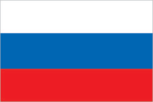
three equal horizontal bands of white (top), blue, and red
Location
60 00 N, 100 00 E -- Northern Asia (that part west of the Urals is sometimes included with Europe), bordering the Arctic Ocean, between Europe and the North Pacific Ocean Flag ----
Geography
Area
- comparative area
- slightly more than 1.8 times the size of the US
- land area
- 16,995,800 sq km
- total area
- 17,075,200 sq km
Climate
ranges from steppes in the south through humid continental in much of European Russia; subarctic in Siberia to tundra climate in the polar north; winters vary from cool along Black Sea coast to frigid in Siberia; summers vary from warm in the steppes to cool along Arctic coast
Coastline
37,653 km
Environment
- current issues
- air pollution from heavy industry, emissions of coal-fired electric plants, and transportation in major cities; industrial and agricultural pollution of inland waterways and sea coasts; deforestation; soil erosion; soil contamination from improper application of agricultural chemicals; scattered areas of sometimes intense radioactive contamination
- international agreements
- party to - Air Pollution, Air Pollution-Nitrogen Oxides, Air Pollution-Sulphur 85, Antarctic Treaty, Biodiversity, Climate Change, Endangered Species, Environmental Modification, Hazardous Wastes, Marine Dumping, Nuclear Test Ban, Ozone Layer Protection, Ship Pollution, Tropical Timber 83, Wetlands; signed, but not ratified - Air Pollution-Sulphur 94, Antarctic-Environmental Protocol, Law of the Sea
- natural hazards
- permafrost over much of Siberia is a major impediment to development; volcanic activity in the Kuril Islands; volcanoes and earthquakes on the Kamchatka Peninsula
Geographic coordinates
60 00 N, 100 00 E
Geographic note
largest country in the world in terms of area but unfavorably located in relation to major sea lanes of the world; despite its size, much of the country lacks proper soils and climates (either too cold or too dry) for agriculture
International disputes
inherited disputes from former USSR including sections of the boundary with China; islands of Etorofu, Kunashiri, and Shikotan and the Habomai group occupied by the Soviet Union in 1945, administered by Russia, claimed by Japan; maritime dispute with Norway over portion of the Barents Sea; Caspian Sea boundaries are not yet determined; potential dispute with Ukraine over Crimea; Estonia claims over 2,000 sq km of Russian territory in the Narva and Pechora regions; the Abrene section of the border ceded by the Latvian Soviet Socialist Republic to Russia in 1944; has made no territorial claim in Antarctica (but has reserved the right to do so) and does not recognize the claims of any other nation
Irrigated land
56,000 sq km (1992)
Land boundaries
- border countries
- Azerbaijan 284 km, Belarus 959 km, China (southeast) 3,605 km, China (south) 40 km, Estonia 290 km, Finland 1,313 km, Georgia 723 km, Kazakstan 6,846 km, North Korea 19 km, Latvia 217 km, Lithuania (Kaliningrad Oblast) 227 km, Mongolia 3,441 km, Norway 167 km, Poland (Kaliningrad Oblast) 206 km, Ukraine 1,576 km
- total
- 19,913 km
Land use
- arable land
- 8%
- forest and woodland
- 45%
- meadows and pastures
- 5%
- other
- 42%
- permanent crops
- NEGL%
Location
Northern Asia (that part west of the Urals is sometimes included with Europe), bordering the Arctic Ocean, between Europe and the North Pacific Ocean
Map references
Asia
Maritime claims
- continental shelf
- 200-m depth or to the depth of exploitation
- exclusive economic zone
- 200 nm
- territorial sea
- 12 nm
Natural resources
- wide natural resource base including major deposits of oil, natural gas, coal, and many strategic minerals, timber
- note
- formidable obstacles of climate, terrain, and distance hinder exploitation of natural resources
Terrain
- broad plain with low hills west of Urals; vast coniferous forest and tundra in Siberia; uplands and mountains along southern border regions
- highest point
- Mount El'brus 5,633 m
- lowest point
- Caspian Sea -28 m
People and Society
Age structure
0-14 years: 21% (male 15,792,573; female 15,213,854) 15-64 years: 67% (male 48,145,679; female 51,125,902) 65 years and over: 12% (male 5,403,066; female 12,497,413) (July 1996 est.)
Birth rate
10.15 births/1,000 population (1996 est.)
Death rate
16.34 deaths/1,000 population (1996 est.)
Ethnic divisions
Russian 81.5%, Tatar 3.8%, Ukrainian 3%, Chuvash 1.2%, Bashkir 0.9%, Byelorussian 0.8%, Moldavian 0.7%, other 8.1%
Infant mortality rate
24.7 deaths/1,000 live births (1996 est.)
Languages
Russian, other
Life expectancy at birth
- female
- 70.31 years (1996 est.)
- male
- 56.51 years
- total population
- 63.24 years
Literacy
- age 15 and over can read and write (1989 est.)
- female
- 97%
- male
- 100%
- total population
- 98%
Nationality
- adjective
- Russian
- noun
- Russian(s)
Net migration rate
5.47 migrant(s)/1,000 population (1996 est.)
Population
148,178,487 (July 1996 est.)
Population growth rate
-0.07% (1996 est.)
Religions
Russian Orthodox, Muslim, other
Sex ratio
- all ages
- 0.88 male(s)/female (1996 est.)
- at birth
- 1.05 male(s)/female
- under 15 years
- 1.04 male(s)/female 15-64 years: 0.94 male(s)/female 65 years and over: 0.43 male(s)/female
Total fertility rate
1.42 children born/woman (1996 est.)
Government
Administrative divisions
- 21 autonomous republics (avtomnykh respublik, singular - avtomnaya respublika); Adygea (Maykop), Bashkortostan (Ufa), Buryatia (Ulan-Ude), Chechnya (Groznyy), Chuvashia (Cheboksary), Dagestan (Makhachkala), Gorno-Altay (Gorno-Altaysk), Ingushetia (Nazran'), Kabardino-Balkaria (Nal'chik), Kalmykia (Elista), Karachay-Cherkessia (Cherkessk), Karelia (Petrozavodsk), Khakassia (Abakan), Komi (Syktyvkar), Mari El (Yoshkar-Ola), Mordovia (Saransk), North Ossetia (Vladikavkaz), Tatarstan (Kazan'), Tuva (Kyzyl), Udmurtia (Izhevsk), Yakutia - also known as Sakha (Yakutsk); 49 oblasts (oblastey, singular - oblast'); Amur (Blagoveshchensk), Arkhangel'sk, Astrakhan', Belgorod, Bryansk, Chelyabinsk, Chita, Irkutsk, Ivanovo, Kaliningrad, Kaluga, Kamchatka (Petropavlovsk-Kamchatskiy), Kemerovo, Kirov, Kostroma, Kurgan, Kursk, Leningrad (St. Petersburg), Lipetsk, Magadan, Moscow, Murmansk, Nizhniy Novgorod, Novgorod, Novosibirsk, Omsk, Orel, Orenburg, Penza, Perm', Pskov, Rostov, Ryazan', Sakhalin (Yuzhno-Sakhalinsk), Samara, Saratov, Smolensk, Sverdlovsk (Yekaterinburg), Tambov, Tomsk, Tula, Tver', Tyumen', Ul'yanovsk, Vladimir, Volgograd, Vologda, Voronezh, Yaroslavl'; 6 krays (krayev, singular - kray); Altay (Barnaul), Khabarovsk, Krasnodar, Krasnoyarsk, Primorskiy (Vladivostok), Stavropol'; 10 autonomous okrugs; Aga (Aginskoye), Chukotka (Anadyr'), Evenkia (Tura), Khantia-Mansia (Khanty-Mansiysk), Koryakia (Palana), Nenetsia (Nar'yan-Mar), Permyakia (Kudymkar), Taymyria (Dudinka), Ust'-Onda (Ust'-Ordynskiy), Yamalia (Salekhard); 1 autonomous oblast (avtomnykh oblast'); Birobijan
- note
- the autonomous republics of Chechnya and Ingushetia were formerly the autonomous republic of Checheno-Ingushetia (the boundary between Chechnya and Ingushetia has yet to be determined); the cities of Moscow and St. Petersburg are federal cities; an administrative division has the same name as its administrative center (exceptions have the administrative center name following in parentheses)
Capital
Moscow
Constitution
adopted 12 December 1993
Council of Heads of Administrations
includes the leaders of the 66 autonomous territories and regions, and the mayors of Moscow and St. Petersburg
Council of Heads of Republics
includes the leaders of the 21 ethnic-based Republics
Data code
RS
Diplomatic representation in US
- chancery
- 2650 Wisconsin Avenue NW, Washington, DC 20007
- chief of mission
- Ambassador Yuliy Mikhaylovich VORONTSOV
- telephone
- [1] (202) 298-5700 through 5704
Executive branch
- chief of state
- President Boris Nikolayevich YEL'TSIN (since 12 June 1991) was elected for a five-year term by universal suffrage under the constitution of 12 December 1993, but subsequent presidents, beginning with the 16 June 1996 election, will serve a four-year term; election last held 12 June 1991 (next to be held 16 June 1996); results - percent of vote NA; note - no vice president; if the president dies in office, cannot exercise his powers because of ill health, is impeached, or resigns, the premier succeeds him; the premier serves as acting president until a new presidential election is held, which must be within three months
- head of government
- Premier and Chairman of the Russian Federation Government Viktor Stepanovich CHERNOMYRDIN (since 14 December 1992), First Deputy Premiers and First Deputy Chairmen of the Government Oleg SOSKOVETS (since 30 April 1993) and Vladimir KADANNIKOV (since 25 January 1996) were appointed by the president on approval of the Dumas
FAX
- [1] (202) 298-5735
- [7] (095) 956-42-61
- consulate(s) general
- New York, San Francisco, and Seattle
- consulate(s) general
- St. Petersburg, Vladivostok, Yekaterinburg
Federation Council
178 seats, filled ex-officio by the top executive and legislative officials in each of the 89 federal administrative units (oblasts, krays, republics, autonomous okrugs and oblasts, and the cities of Moscow and St. Petersburg)
Flag
three equal horizontal bands of white (top), blue, and red
Group of Assistants
schedules president's appointments, processes presidential edicts and other official documents, and houses the president's press service and primary speechwriters
Independence
24 August 1991 (from Soviet Union)
International organization participation
BSEC, CBSS, CCC, CE, CERN (observer), CIS, EBRD, ECE, ESCAP, IAEA, IBRD, ICAO, ICRM, IDA, IFC, IFRCS, ILO, IMF, IMO, Inmarset, Intelsat, Interpol, IOC, IOM (observer), ISO, ITU, MINURSO, MTCR, NACC, NSG, OAS (observer), OSCE, PCA, PFP, UN, UN Security Council, UNAMIR, UNAVEM III, UNCRO, UNCTAD, UNESCO, UNHCR, UNIDO, UNIKOM, UNITAR, UNMIH, UNOMIG, UNPREDEP, UNPROFOR, UNTSO, UPU, WHO, WIPO, WMO, WToO, WTrO (applicant), ZC
Judicial branch
Constitutional Court, judges are appointed by the Federation Council on recommendation of the president; Supreme Court (highest court for criminal, civil, and administrative cases), judges are appointed by the Federation Council on recommendation of the president; Superior Court of Arbitration (highest court that resolves economic disputes), judges are appointed by the Federation Council on recommendation of the president
Legal system
based on civil law system; judicial review of legislative acts
Legislative branch
bicameral Federal Assembly
Name of country
- conventional long form
- Russian Federation
- conventional short form
- Russia
- former
- Russian Soviet Federative Socialist Republic
- local long form
- Rossiyskaya Federatsiya
- local short form
- Rossiya
National holiday
Independence Day, June 12 (1990)
Other political or pressure groups
NA
Political parties and leaders
- centrists/special interest parties
- Congress of Russian Communities, Yuriy SKOKOV; Women of Russia, Alevtina FEDULOVA and Yekaterina LAKHOVA anti-market and/or ultranationalist parties: Communist Party of the Russian Federation, Gennadiy ZYUGANOV; Liberal Democratic Party of Russia, Vladimir ZHIRINOVSKIY; Agrarian Party, Mikhail LAPSHIN; Power To the People, Nikolay RYZHKOV and Sergey BABURIN; Russian Communist Workers' Party, Viktor ANPILOV and Viktor TYULKIN
- note
- some 269 political parties, blocs, and associations tried to gather enough signatures to run slates of candidates in the 17 December 1995 Duma elections; 43 succeeded
- pro-market democrats
- Our Home Is Russia, Viktor CHERNOMYRDIN; Yabloko Bloc, Grigoriy YAVLINSKIY; Russia's Democratic Choice Party, Yegor GAYDAR; Forward, Russia!, Boris FEDOROV
Presidential Administration
- drafts presidential edicts and provides staff and policy support to the entire executive branch
- cabinet
- Ministries of the Government or "Government" was appointed by the president
Presidential Council
prepares policy papers for the president
Security Council
originally established as a presidential advisory body in June 1991, but restructured in March 1992, with responsibility for managing individual and state security
State Duma
- elections last held 17 December 1995 (next to be held NA December 1999); results - percent of vote received by parties clearing the 5% threshold entitling them to a proportional share of
- the 225 party list seats
- Communist Party of the Russian Federation 22.3%, Liberal Democratic Party of Russia 11.2%, Our Home Is Russia 10.1%, Yabloko Bloc 6.9%; seats - (450 total - half elected in single-member districts and half elected from national party lists) Communist Party of the Russian Federation 157, Independents 78, Our Home Is Russia 55, Liberal Democratic Party of Russia 51, Yabloko Bloc 45, Agrarian Party of Russia 20, Russia's Democratic Choice 9, Power To the People 9, Congress of Russian Communities 5, Forward, Russia! 3, Women of Russia 3, other parties 15
Suffrage
18 years of age; universal
Type of government
federation
US diplomatic representation
- chief of mission
- Ambassador Thomas R. PICKERING
- embassy
- Novinskiy Bul'var 19/23, Moscow
- mailing address
- APO AE 09721
- telephone
- [7] (095) 252-24-51 through 59
Economy
Agriculture
grain, sugar beets, sunflower seed, vegetables, fruits (because of its northern location does not grow citrus, cotton, tea, and other warm climate products); meat, milk
Budget
- expenditures
- $NA, including capital expenditures of $NA
- revenues
- $NA
Currency
1 ruble (R) = 100 kopeks
Economic aid
- note
- US commitments, including Ex-Im (1990-95), $14 billion (1990-95); other countries, ODA and OOF bilateral commitments (1990-95), $125 billion
- recipient
- ODA, $2.8 billion (1993)
Economic overview
Russia, a vast country with a wealth of natural resources, a well-educated population, and a diverse industrial base, continues to experience formidable difficulties in moving from its old centrally planned economy to a modern-market economy. The break-up of the USSR into 15 successor states in late 1991 destroyed major economic links that have been only partially replaced. As a result of these dislocations and the failure of the government to implement a rigorous and consistent reform program, output in Russia has dropped by one-third since 1990 (instead of the one-half previously estimated). On the one hand, President YEL'TSIN's government has made substantial strides in converting to a market economy since launching its economic reform program in January 1992 by freeing nearly all prices, slashing defense spending, eliminating the old centralized distribution system, completing an ambitious voucher privatization program in 1994, establishing private financial institutions, and decentralizing foreign trade. On the other hand, Russia has made little progress in a number of key areas that are needed to provide a solid foundation for the transition to a market economy; and the strong showing of the communists and nationalists in the Duma elections in December 1995 casts a shadow over prospects for further reforms. In 1995, the new cash privatization program went slower than planned. The state claims that the nonstate sector produced approximately 70% of GDP in 1995, up from 62% in 1994, although these figures apparently include many enterprises that have only nominally moved out of state control. Moscow has been slow to develop the legal framework necessary to fully support a market economy and to encourage foreign investment. Stockholder rights remain ill-defined and the Duma has yet to adopt a land code that would allow development of land markets as sources of needed capital. Russia's securities market remains largely unregulated and suffers from the lack of a comprehensive securities law. In addition, Moscow has yet to develop a social safety net that would allow faster restructuring by relieving enterprises of the burden of providing social benefits for their workers. Most rank-and-file Russians perceive they are worse off because of growing crime and health problems, the drop in real wages, the great rise in wage arrears, and the widespread threat of unemployment. The number of Russians living below the official poverty level rose by 10% to 36.6 million people, or 25% of the population. The decline in output slowed during 1995, and some sectors showed signs of a turnaround; analysts forecast the resumption of growth in 1996 - at a low rate. Russian official data, which fail to capture a considerable portion of private sector output and employment, show that GDP declined by 4% in 1995, as compared with a 15% decline in 1994. Despite continued declines in agricultural and industrial production, unemployment climbed only slowly to about 8% of the work force by yearend because government policies aimed at softening the impact of reforms have created incentives for enterprises to keep workers on the rolls even as production slowed to a crawl. Moscow renewed tightened financial policies in early 1995 and succeeded in reducing monthly consumer price inflation from 18% in January to about 3% in December, the lowest monthly rate since the beginning of reform. According to official trade statistics, Russia ran a $19.9 billion trade surplus for 1995, up from $15.9 billion in 1994. It continued to shift its trade away from the other former Soviet republics toward the West, with the CIS countries' share of Russian trade falling to 22% in 1995. Russia made good progress with official and commercial creditors in 1995 in resolving the issue of its $105 billion in Soviet-era debts. When completed, these Paris Club and London Club rescheduling agreements will reduce Russia's repayment liabilities from $20 billion to less than $5 billion annually through the end of the decade. Capital flight reportedly continued to be a problem in 1995, with billions of additional dollars in assets being moved abroad, primarily to bank accounts in Europe.
Electricity
- capacity
- 213,100,000 kW
- consumption per capita
- 5,800 kWh (1994)
- production
- 876 billion kWh
Exchange rates
rubles per US$1 - 4,640 (29 December 1995), 3,550 (29 December 1994), 1,247 (27 December 1993)
Exports
- $77.8 billion (f.o.b., 1995)
- commodities
- petroleum and petroleum products, natural gas, wood and wood products, metals, chemicals, and a wide variety of civilian and military manufactures
- partners
- Europe, North America, Japan, Third World countries, Cuba
External debt
$130 billion (yearend 1995)
Fiscal year
calendar year
GDP
purchasing power parity - $796 billion (1995 estimate as extrapolated from World Bank estimate for 1994)
GDP composition by sector
- agriculture
- 6%
- industry
- 41%
- services
- 53%
GDP per capita
$5,300 (1995 est.)
GDP real growth rate
-4% (1995 est.)
Illicit drugs
illicit cultivator of cannabis and opium poppy; mostly for domestic consumption; government has active eradication program; used as transshipment point for Asian and Latin American illicit drugs to Western Europe and Latin America
Imports
- $57.9 billion (c.i.f., 1995)
- commodities
- machinery and equipment, consumer goods, medicines, meat, grain, sugar, semifinished metal products
- partners
- Europe, North America, Japan, Third World countries, Cuba
Industrial production growth rate
-3% (1995 est.)
Industries
complete range of mining and extractive industries producing coal, oil, gas, chemicals, and metals; all forms of machine building from rolling mills to high-performance aircraft and space vehicles; shipbuilding; road and rail transportation equipment; communications equipment; agricultural machinery, tractors, and construction equipment; electric power generating and transmitting equipment; medical and scientific instruments; consumer durables, textiles, foodstuffs, handicrafts
Inflation rate (consumer prices)
7% monthly average (1995 est.)
Labor force
- 85 million (1993)
- by occupation
- production and economic services 83.9%, government 16.1%
Unemployment rate
8.2% (December 1995) with considerable additional underemployment
Communications
Branches
Ground Forces, Navy, Air Forces, Air Defense Forces, Strategic Rocket Forces
Defense expenditures
- $NA, NA% of GDP
- note
- the Intelligence Community estimates that defense spending in Russia fell by about 20% in real terms in 1995, reducing Russian defense outlays to about one-fifth of peak Soviet levels in the late 1980s
Manpower availability
- males age 15-49
- 38,673,991
- males fit for military service
- 30,224,738
- males reach military age (18) annually
- 1,105,004 (1996 est.)
Radio broadcast stations
AM NA, FM NA, shortwave NA; note - there are about 1,050 (including AM, FM, and shortwave) radio broadcast stations throughout the country
Radios
50 million (1993 est.)(radio receivers with multiple speaker systems for program diffusion 74,300,000)
Telephone system
- total pay phones for long distant calls 34,100; enlisting foreign help, by means of joint ventures, to speed up the modernization of its telecommunications system; in 1992, only 661,000 new telephones were installed compared with 855,000 in 1991, and in 1992 the number of unsatisfied applications for telephones reached 11,000,000; expanded access to international electronic mail service available via Sprint network; the inadequacy of Russian telecommunications is a severe handicap to the economy, especially with respect to international connections
- domestic
- NMT-450 analog cellular telephone networks are operational and growing in Moscow and St. Petersburg; intercity fiber-optic cable installation remains limited
- international
- international traffic is inadequately handled by a system of satellites, landlines, microwave radio relay, and outdated submarine cables; much of this traffic passes through the international gateway switch in Moscow which carries most of the international traffic for the other countries of the Commonwealth of Independent States; a new Russian Intersputnik satellite will link Moscow and St. Petersburg with Rome from whence calls will be relayed to destinations in Europe and overseas; satellite earth stations - NA Intelsat, 4 Intersputnik (2 Atlantic Ocean Region and 2 Indian Ocean Region), NA Eutelsat, 1 Inmarsat (Pacific Ocean Region), and NA Orbita
Telephones
25.4 million (1993 est.)
Television broadcast stations
7,183
Televisions
54.85 million (1992 est.) Defense
Transportation
Airports
- total
- 2,517
- with paved runways 1 524 to 2 437 m
- 108
- with paved runways 2 438 to 3 047 m
- 202
- with paved runways 914 to 1 523 m
- 115
- with paved runways over 3 047 m
- 54
- with paved runways under 914 m
- 151
- with unpaved runways 1 524 to 2 437 m
- 134
- with unpaved runways 2 438 to 3 047 m
- 45
- with unpaved runways 914 to 1 523 m
- 291
- with unpaved runways over 3 047 m
- 25
- with unpaved runways under 914 m
- 1,392 (1994 est.)
Highways
- paved
- NA km
- total
- 934,000 km (including 445,000 km which serve specific industries or farms and are not available for common carrier use)
- unpaved
- NA km (1994 est.)
Merchant marine
- note
- Russia owns an additional 163 ships (1,000 GRT or over) totaling 2,276,829 DWT operating under the registries of Malta, Cyprus, Liberia, Panama, Saint Vincent and the Grenadines, Honduras, The Bahamas, and Vanuatu (1995 est.)
- ships by type
- barge carrier 2, bulk 25, cargo 406, chemical tanker 6, combination bulk 21, combination ore/oil 17, container 31, multifunction large-load carrier 3, oil tanker 134, passenger 4, passenger-cargo 5, refrigerated cargo 19, roll-on/roll-off cargo 54, short-sea passenger 16, specialized tanker 2
- total
- 745 ships (1,000 GRT or over) totaling 6,730,178 GRT/9,385,565 DWT
Pipelines
crude oil 48,000 km; petroleum products 15,000 km; natural gas 140,000 km (30 June 1993)
Ports
Arkhangel'sk, Astrakhan', Kaliningrad, Kazan', Khabarovsk, Kholmsk, Krasnoyarsk, Moscow, Murmansk, Nakhodka, Nevel'sk, Novorossiysk, Petropavlovsk, St. Petersburg, Rostov, Sochi, Tuapse, Vladivostok, Volgograd, Vostochnyy, Vyborg
Railways
- broad gauge
- 154,000 km 1.520-m gauge (1 January 1994)
- total
- 154,000 km; note - 87,000 km in common carrier service (38,000 km electrified); 67,000 km serve specific industries and are not available for common carrier use
Waterways
total navigable routes in general use 101,000 km; routes with navigation guides serving the Russian River Fleet 95,900 km; routes with night navigational aids 60,400 km; man-made navigable routes 16,900 km (1 January 1994)