1993 Edition
CIA World Factbook 1993 (Project Gutenberg)
Geography
Area
total area: 17,075,200 km2 land area: 16,995,800 km2 comparative area: slightly more than 1.8 times the size of the US
Climate
ranges from steppes in the south through humid continental in much of European Russia; subarctic in Siberia to tundra climate in the polar north; winters vary from cool along Black Sea coast to frigid in Siberia; summers vary from warm in the steppes to cool along Arctic coast
Coastline
37,653 km
Environment
despite its size, only a small percentage of land is arable and much is too far north for cultivation; permafrost over much of Siberia is a major impediment to development; catastrophic pollution of land, air, water, including both inland waterways and sea coasts
International disputes
- China; boundary with Latvia, Lithuania, and Estonia; Etorofu, Kunashiri, and Shikotan Islands and the Habomai island group occupied by the Soviet Union in 1945, claimed by Japan; maritime dispute with Norway over portion of the Barents Sea; has made no territorial claim in Antarctica (but has reserved the right to do so) and does not recognize the claims of any other nation
- inherited disputes from former USSR including
- sections of the boundary with
Irrigated land
61,590 km2 (1990)
Land boundaries
total 20,139 km, Azerbaijan 284 km, Belarus 959 km, China (southeast) 3,605 km, China (south) 40 km, Estonia 290 km, Finland 1,313 km, Georgia 723 km, Kazakhstan 6,846 km, North Korea 19 km, Latvia 217 km, Lithuania (Kaliningrad Oblast) 227 km, Mongolia 3,441 km, Norway 167 km, Poland (Kaliningrad Oblast) 432 km, Ukraine 1,576 km
Land use
arable land: NA% permanent crops: NA% meadows and pastures: NA% forest and woodland: NA%
Location
Europe/North Asia, between Europe and the North Pacific Ocean
Map references
Asia, Commonwealth of Independent States - Central Asian States, Commonwealth of Independent States - European States, Standard Time Zones of the World
Maritime claims
continental shelf: 200 m depth or to depth of exploitation exclusive economic zone: 200 nm territorial sea: 12 nm
Natural resources
wide natural resource base including major deposits of oil, natural gas, coal, and many strategic minerals, timber note: formidable obstacles of climate, terrain, and distance hinder exploitation of natural resources
Note
largest country in the world in terms of area but unfavorably located in relation to major sea lanes of the world
Terrain
broad plain with low hills west of Urals; vast coniferous forest and tundra in Siberia; uplands and mountains along southern border regions
People and Society
Birth rate
12.73 births/1,000 population (1993 est.)
Death rate
11.32 deaths/1,000 population (1993 est.)
Ethnic divisions
Russian 81.5%, Tatar 3.8%, Ukrainian 3%, Chuvash 1.2%, Bashkir 0.9%, Belarusian 0.8%, Moldavian 0.7%, other 8.1%
Infant mortality rate
27.6 deaths/1,000 live births (1993 est.)
Labor force
75 million (1993 est.) by occupation: production and economic services 83.9%, government 16.1%
Languages
Russian, other
Life expectancy at birth
total population: 68.69 years male: 63.59 years female: 74.04 years (1993 est.)
Literacy
age 9-49 can read and write (1970) total population: 100% male: 100% female: 100%
Nationality
noun: Russian(s) adjective: Russian
Net migration rate
0.69 migrant(s)/1,000 population (1993 est.)
Population
149,300,359 (July 1993 est.)
Population growth rate
0.21% (1993 est.)
Religions
Russian Orthodox, Muslim, other
Total fertility rate
1.83 children born/woman (1993 est.)
Government
Administrative divisions
21 autonomous republics (avtomnykh respublik, singular - avtomnaya respublika); Adygea (Maykop), Bashkortostan (Ufa), Buryatia (Ulan-Ude), Chechenia, Chuvashia (Cheboksary), Dagestan (Makhachkala), Gorno-Altay (Gorno-Altaysk), Ingushetia, Kabardino-Balkaria (Nal'chik), Kalmykia (Elista), Karachay-Cherkessia (Cherkessk), Karelia (Petrozavodsk), Khakassia (Abakan), Komi (Syktyvkar), Mari El (Yoshkar-Ola), Mordvinia (Saransk), North Ossetia (Vladikavkaz; formerly Ordzhonikidze), Tatarstan (Kazan'), Tuva (Kyzyl), Udmurtia (Izhevsk), Yakutia (Yakutsk); 49 oblasts (oblastey, singular - oblast'); Amur (Blagoveshchensk), Arkhangel'sk, Astrakhan', Belgorod, Bryansk, Chelyabinsk, Chita, Irkutsk, Ivanovo, Kaliningrad, Kaluga, Kamchatka (Petropavlovsk-Kamchatskiy), Kemerovo, Kirov, Kostroma, Kurgan, Kursk, St. Petersburg (Leningrad), Lipetsk, Magadan, Moscow, Murmansk, Nizhniy Novgorod (formerly Gor'kiy), Novgorod, Novosibirsk, Omsk, Orel, Orenburg, Penza, Perm', Pskov, Rostov, Ryazan', Sakhalin (Yuzhno-Sakhalinsk), Samara (formerly Kuybyshev), Saratov, Smolensk, Sverdlovsk (Yekaterinburg), Tambov, Tomsk, Tula, Tver' (formerly Kalinin), Tyumen', Ul'yanovsk, Vladimir, Volgograd, Vologda, Voronezh, Yaroslavl'; 6 krays (krayev, singular - kray); Altay (Barnaul), Khabarovsk, Krasnodar, Krasnoyarsk, Primorskiy (Vladivostok), Stavropol' note: the autonomous republics of Chechenia and Ingushetia were formerly the automous republic of Checheno-Ingushetia (the boundary between Chechenia and Ingushetia has yet to be determined); the cities of Moscow and St. Petersburg have oblast status; an administrative division has the same name as its administrative center (exceptions have the administrative center name following in parentheses); 4 more administrative divisions may be added
Capital
Moscow
Chief of State
President Boris Nikolayevich YEL'TSIN (since 12 June 1991); Vice President Aleksandr Vladimirovich RUTSKOY (since 12 June 1991); Chairman of the Supreme Soviet Ruslan KHASBULATOV (28 October 1991)
Congress of People's Deputies
last held March 1990 (next to be held 1995); results - percent of vote by party NA%; seats - (1,063 total) number of seats by party NA; election held before parties were formed
Constitution
adopted in 1978; a new constitution is in the process of being drafted
Digraph
RS
Diplomatic representation in US
chief of mission: Ambassador Vladimir Petrovich LUKIN chancery: 1125 16th Street NW, Washington, DC 20036 telephone: (202) 628-7551 and 8548 consulates general: New York and San Francisco
Executive branch
president, vice president, Security Council, Presidential Administration, Council of Ministers, Group of Assistants, Council of Heads of Republics
FAX
[7] (095) 255-9965 consulates: St. Petersburg (formerly Leningrad), Vladivostok
Flag
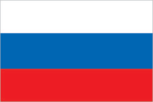
three equal horizontal bands of white (top), blue, and red
Head of Government
Chairman of the Council of Ministers Viktor Stepanovich CHERNOMYRDIN (since NA December 1992); First Deputy Chairmen of the Council of Ministers Vladimir SHUMEYKO (since 9 June 1992), Oleg LOBW (since NA April 1993), Oleg SOSKOVETS (since NA April 1993)
Independence
24 August 1991 (from Soviet Union)
Judicial branch
Constitutional Court, Supreme Court
Legal system
based on civil law system; judicial review of legislative acts; does not accept compulsory ICJ jurisdiction
Legislative branch
unicameral Congress of People's Deputies, bicameral Supreme Soviet
Member of
BSEC, CBSS, CCC, CERN (observer), CIS, CSCE, EBRD, ECE, ESCAP, IAEA, IBRD, ICAO, ICFTU, IDA, ILO, IMF, IMO, INMARSAT, INTELSAT, INTERPOL, IOC, IOM (observer), ISO, ITU, LORCS, MINURSO, NACC, NSG, OAS (observer), PCA, UN, UNCTAD, UNESCO, UNIDO, UNIKOM, UNPROFOR, UN Security Council, UNTAC, UN Trusteeship Council, UNTSO, UPU, WFTU, WHO, WIPO, WMO, WTO, ZC
Names
conventional long form: Russian Federation conventional short form: Russia local long form: Rossiyskaya Federatsiya local short form: Rossiya former: Russian Soviet Federative Socialist Republic
National holiday
Independence Day, June 12
Other political or pressure groups
Civic Union, Aleksandr RUTSKOY, Nikolay TRAVKIN, Arkadiy VOL'SKIY, chairmen
Political parties and leaders
proreformers: Christian Democratic Party, Aleksandr CHUYEV; Christian Democratic Union of Russia, Aleksandr OGORODNIKOV; Democratic Russia Movement, pro-government faction, Lev PONOMAREV, Gleb YAKUNIN, Vladimir BOKSER; Democratic Russia Movement, radical-liberal faction, Yuriy AFANAS'YEV, Marina SAL'YE; Economic Freedom Party, Konstantin BOROVOY, Svyatoslav FEDOROV; Free Labor Party, Igor' KOROVIKOV; Party of Constitutional Democrats, Viktor ZOLOTAREV; Republican Party of Russia, Vladimir LYSENKO, Vyacheslav SHOSTAKOVSKIY; Russian Democratic Reform Movement, Gavriil POPOV; Social Democratic Party, Boris ORLOV; Social Liberal Party, Vladimir FILIN moderate reformers: All-Russian Renewal Union (member Civic Union), Arkadiy VOL'SKIY, Aleksandr VLADISLAVLEV; Democratic Party of Russia (member Civic Union), Nikolay TRAVKIN, Valeriy KHOMYAKOV; People's Party of Free Russia (member Civic Union), Aleksandr RUTSKOY, Vasiliy LIPITSKIY; Russian Union of Industrialists and Entrepreneurs, Arkadiy VOL'SKIY, Aleksandr VLADISLAVLEV antireformers: Communists and neo-Communists have 7 parties - All-Union Communist Party of Bolsheviks, Nina ANDREYEVA; Labor Party, Boris KAGARLITSKIY; Russian Communist Worker's Party, Viktor ANPILOV, Gen. Albert MAKASHOV; Russian Party of Communists, Anatoliy KRYUCHKOV; Socialist Party of Working People, Roy MEDVEDEV; Union of Communists, Aleksey PRIGARIN; Working Russia Movement, Viktor ANPILOV; National Patriots have 6 parties - Constitutional Democratic Party, Mikhail ASTAF'YEV; Council of People and Patriotic Forces of Russia, Gennadiy ZYUGANOV; National Salvation Front, Mikhail ASTAF'YEV, Sergey BABURIN, Vladimir ISAKOV, Il'ya KONSTANTINOV, Aleksandr STERLIGOV; Russian Christian Democratic Movement, Viktor AKSYUCHITS; Russian National Assembly, Aleksandr STERLIGOV; Russian National Union, Sergey BABURIN, Nikolay PAVLOV; extremists have 5 parties - Liberal Democratic Party, Vladimir ZHIRNOVKSKIY; Nashi Movement, Viktor ALKSNIS; National Republican Party of Russia, Nikolay LYSENKO; Russian Party, Viktor KORCHAGIN; Russian National Patriotic Front (Pamyat), Dmitriy VASIL'YEV
President
last held 12 June 1991 (next to be held 1996); results - percent of vote by party NA%
Suffrage
18 years of age; universal
Supreme Soviet
last held May 1990 (next to be held 1995); results - percent of vote by party NA%; seats - (252 total) number of seats by party NA; elected from Congress of People's Deputies
Type
federation
US diplomatic representation
chief of mission: (vacant) embassy: Ulitsa Chaykovskogo 19/21/23, Moscow mailing address: APO AE 09721 telephone: [7] (095) 252-2450 through 2459
Economy
Agriculture
grain, sugar beet, sunflower seeds, meat, milk, vegetables, fruits; because of its northern location does not grow citrus, cotton, tea, and other warm climate products
Budget
revenues $NA; expenditures $NA, including capital expenditures of $NA
Currency
1 ruble (R) = 100 kopeks
Economic aid
US commitments, including Ex-Im (1990-92), $9.0 billion; other countries, ODA and OOF bilateral commitments (1988-92), $91 billion
Electricity
213,000,000 KW capacity; 1,014.8 billion kWh produced, 6,824 kWh per capita (1 January 1992)
Exchange rates
rubles per US$1 - 415 (24 December 1992) but subject to wide fluctuations
Exports
$39.2 billion (f.o.b., 1992) commodities: petroleum and petroleum products, natural gas, wood and wood products, metals, chemicals, and a wide variety of civilian and military manufactures partners: Europe
External debt
$80 billion (yearend 1992 est.)
Fiscal year
calendar year
Illicit drugs
illicit producer of cannabis and opium; mostly for domestic consumption; government has active eradication program; used as transshipment point for illicit drugs to Western Europe
Imports
$35.0 billion (f.o.b., 1992) commodities: machinery and equipment, chemicals, consumer goods, grain, meat, sugar, semifinished metal products partners: Europe, North America, Japan, Third World countries, Cuba
Industrial production
growth rate -19% (1992)
Industries
complete range of mining and extractive industries producing coal, oil, gas, chemicals, and metals; all forms of machine building from rolling mills to high-performance aircraft and space vehicles; ship- building; road and rail transportation equipment; communications equipment; agricultural machinery, tractors, and construction equipment; electric power generating and transmitting equipment; medical and scientific instruments; consumer durables
Inflation rate (consumer prices)
25% per month (December 1992)
National product
GDP $NA
National product per capita
$NA
National product real growth rate
-19% (1992)
Overview
Russia, a vast country with a wealth of natural resources and a diverse industrial base, continues to experience great difficulties in moving from its old centrally planned economy to a modern market economy. President YEL'TSIN's government made significant strides toward a market economy in 1992 by freeing most prices, slashing defense spending, unifying foreign exchange rates, and launching an ambitious privatization program. At the same time, GDP fell 19%, according to official statistics, largely reflecting government efforts to restructure the economy, shortages of essential imports caused by the breakdown in former Bloc and interstate trade, and reduced demand following the freeing of prices in January. The actual decline, however, may have been less steep, because industrial and agricultural enterprises had strong incentives to understate output to avoid taxes, and official statistics may not have fully captured the output of the growing private sector. Despite the large drop in output, unemployment at yearend stood at an estimated 3%-4% of Russia's 74-million-person labor force; many people, however, are working shortened weeks or are on forced leave. Moscow's financial stabilization program got off to a good start at the beginning of 1992 but began to falter by midyear. Under pressure from industrialists and the Supreme Soviet, the government loosened fiscal policies in the second half. In addition, the Russian Central Bank relaxed its tight credit policy in July at the behest of new Acting Chairman, Viktor GERASHCHENKO. This loosening of financial policies led to a sharp increase in prices during the last quarter, and inflation reached about 25% per month by yearend. The situation of most consumers worsened in 1992. The January price liberalization and a blossoming of private vendors filled shelves across the country with previously scarce food items and consumer goods, but wages lagged behind inflation, making such goods unaffordable for many consumers. Falling real wages forced most Russians to spend a larger share of their income on food and to alter their eating habits. Indeed, many Russians reduced their consumption of higher priced meat, fish, milk, vegetables, and fruit, in favor of more bread and potatoes. As a result of higher spending on food, consumers reduced their consumption of nonfood goods and services. Despite a slow start and some rough going, the Russian government by the end of 1992 scored some successes in its campaign to break the state's stranglehold on property and improve the environment for private businesses. More peasant farms were created than expected; the number of consumers purchasing goods from private traders rose sharply; the portion of the population working in the private sector increased to nearly one-fifth; and the nine-month-long slump in the privatization of small businesses was ended in the fall. Although the output of weapons fell sharply in 1992, most defense enterprises continued to encounter numerous difficulties developing and marketing consumer products, establishing new supply links, and securing resources for retooling. Indeed, total civil production by the defense sector fell in 1992 because of shortages of inputs and lower consumer demand caused by higher prices. Ruptured ties with former trading partners, output declines, and sometimes erratic efforts to move to world prices and decentralize trade - foreign and interstate - took a heavy toll on Russia's commercial relations with other countries. For the second year in a row, foreign trade was down sharply, with exports falling by as much as 25% and imports by 21%. The drop in imports would have been much greater if foreign aid - worth an estimated $8 billion - had not allowed the continued inflow of essential products. Trade with the other former Soviet republics continued to decline, and support for the ruble as a common currency eroded in the face of Moscow's loose monetary policies and rapidly rising prices throughout the region. At the same time, Russia paid only a fraction of the $20 billion due on the former USSR's roughly $80 billion debt; debt rescheduling remained hung up because of a dispute between Russia and Ukraine over division of the former USSR's assets. Capital flight also remained a serious problem in 1992. Russia's economic difficulties did not
Unemployment rate
3%-4% of labor force (1 January 1993 est.)
Communications
Airports
total: 2,550 useable: 964 with permanent surface runways: 565 with runways over 3,659 m: 19 with runways 2,440-3,659 m: 275 with runways 1,220-2,439 m: 426
Highways
893,000 km total, of which 677,000 km are paved or gravelled and 216,000 km are dirt; 456,000 km are for general use and are maintained by the Russian Highway Corporation (formerly Russian Highway Ministry); the 437,000 km not in general use are the responsibility of various other organizations (formerly ministries); of the 456,000 km in general use, 265,000 km are paved, 140,000 km are gravelled, and 51,000 km are dirt; of the 437,000 km not in general use, 272,000 km are paved or gravelled and 165,000 are dirt (31 December 1991)
Inland waterways
total navigable routes 102,000 km; routes with navigation guides serving the Russian River Fleet 97,300 km (including illumination and light reflecting guides); routes with other kinds of navigational aids 34,300 km; man-made navigable routes 16,900 km (31 December 1991)
Merchant marine
865 ships (1,000 GRT or over) totaling 8,073,954 GRT/11,138,336 DWT; includes 457 cargo, 82 container, 3 multi-function large load carrier, 2 barge carrier, 72 roll-on/roll-off, 124 oil tanker, 25 bulk cargo, 9 chemical tanker, 2 specialized tanker, 16 combination ore/oil, 5 passenger cargo, 18 short-sea passenger, 6 passenger, 28 combination bulk, 16 refrigerated cargo
Pipelines
crude oil 72,500 km, petroleum products 10,600 km, natural gas 136,000 km (1992)
Ports
coastal - St. Petersburg (Leningrad), Kaliningrad, Murmansk, Petropavlovsk, Arkhangel'sk, Novorossiysk, Vladivostok, Nakhodka, Kholmsk, Korsakov, Magadan, Tiksi, Tuapse, Vanino, Vostochnyy, Vyborg; inland - Astrakhan', Nizhniy Novgorod (Gor'kiy), Kazan', Khabarovsk, Krasnoyarsk, Samara (Kuybyshev), Moscow, Rostov, Volgograd
Railroads
158,100 km all 1.520-meter broad gauge; 86,800 km in common carrier service, of which 48,900 km are diesel traction and 37,900 km are electric traction; 71,300 km serves specific industry and is not available for common carrier use (31 December 1991)
Telecommunications
NMT-450 analog cellular telephone networks are opertional in Moscow and St. Petersburg; expanding access to international E-mail service via Sprint networks; the inadequacy of Russian telecommunications is a severe handicap to the economy, especially with respect to international connections; total installed telephones 24,400,000, of which in urban areas 20,900,000 and in rural areas 3,500,000; of these, total installed in homes 15,400,000; total pay phones for long distant calls 34,100; telephone density is about 164 telephones per 1,000 persons; international traffic is handled by an inadequate system of satellites, land lines, microwave radio relay and outdated submarine cables; this traffic passes through the international gateway switch in Moscow which carries most of the international traffic for the other countries of the Confederation of Independent States; a new Russian Raduga satellite will soon link Moscow and St. Petersburg with Rome from whence calls will be relayed to destinations in Europe and overseas; satellite ground stations - INTELSAT, Intersputnik, Eutelsat (Moscow), INMARSAT, Orbita; broadcast stations - 1,050 AM/FM/SW (reach 98.6% of population), 7,183 TV; receiving sets - 54,200,000 TV, 48,800,000 radio receivers; intercity fiberoptic cables installation remains limited
Military and Security
Branches
Ground Forces, Navy, Air Forces, Air Defense Forces, Strategic Rocket Forces, Command and General Support, Security Forces note: strategic nuclear units and warning facilities are under joint CIS control; Russian defense forces will be comprised of those ground-, air-, and sea-based conventional assets currently on Russian soil and those still scheduled to be withdrawn from other countries
Defense expenditures
$NA, NA% of GDP
Manpower availability
males age 15-49 37,092,361; fit for military service 29,253,668; reach military age (18) annually 1,082,115 (1993 est.)