1992 Edition
CIA World Factbook 1992 (Project Gutenberg)
Geography
Climate
ranges from steppes in the south through humid continental in much of European Russia; subarctic in Siberia to tundra climate in the polar north; winters vary from cool along Black Sea coast to frigid in Siberia; summers vary from warm in the steppes to cool along Arctic coast
Coastline
37,653 km
Comparative area
slightly more than 1.8 times the size of the US
Contiguous zone
NA nm
Continental shelf
200-meter depth or to depth of exploitation
Disputes
- China, a section of the boundary with Tajikistan; boundary with Latvia, Lithuania, and Estonia; Etorofu, Kunashiri, and Shikotan Islands and the Habomai island group occupied by the Soviet Union in 1945, claimed by Japan; maritime dispute with Norway over portion of the Barents Sea; has made no territorial claim in Antarctica (but has reserved the right to do so) and does not recognize the claims of any other nation
- inherited disputes from former USSR including
- sections of the boundary with
Environment
despite its size, only a small percentage of land is arable and much is too far north; permafrost over much of Siberia is a major impediment to development; catastrophic pollution of land, air, water, including both inland waterways and sea coasts
Exclusive economic zone
200 nm
Exclusive fishing zone
NA nm
Land area
16,995,800 km2
Land boundaries
20,139 km total; Azerbaijan 284 km, Belarus 959 km, China (southeast) 3,605 km, China (south) 40 km, Estonia 290 km, Finland 1,313 km, Georgia 723 km, Kazakhstan 6,846 km, North Korea 19 km, Latvia 217 km, Lithuania (Kaliningrad Oblast) 227 km, Mongolia 3,441 km, Norway 167 km, Poland (Kaliningrad Oblast) 432 km, Ukraine 1,576 km
Land use
NA% arable land; NA% permanent crops; NA% meadows and pastures; NA% forest and woodland; NA% other; includes NA% irrigated
Natural resources
wide natural resource base including major deposits of oil, natural gas, coal, and many strategic minerals; timber; note - formidable obstacles of climate, terrain, and distance hinder exploitation of natural resources
Note
largest country in the world in terms of area but unfavorably located in relation to major sea lanes of the world
Terrain
broad plain with low hills west of Urals; vast coniferous forest and tundra in Siberia; uplands and mountains along southern border regions
Territorial sea
12 nm
Total area
17,075,200 km2
People and Society
Birth rate
15 births/1,000 population (1992)
Death rate
11 deaths/1,000 population (1992)
Ethnic divisions
Estonian NA%, Latvian NA%, Lithuanian NA%, Russian NA%, other NA%
Infant mortality rate
31 deaths/1,000 live births (1992)
Labor force
78,682,000 (1989); industry and construction 43.0%, agriculture and forestry 13.0%, transport and communication 7.9%, trade and distribution 7.9%, other 28.2%
Languages
Estonian NA%, Latvian NA%, Lithuanian NA%, Russian NA%, other NA%
Life expectancy at birth
63 years male, 74 years female (1992)
Literacy
NA% (male NA%, female NA%) age 15 and over can read and write
Nationality
noun - Russian(s); adjective - Russian
Net migration rate
1 migrant/1,000 population (1992)
Organized labor
NA
Population
149,527,479 (July 1992), growth rate 0.4% (1992)
Religions
Russian Orthodox NA%, unknown NA%, none NA%, other NA%
Total fertility rate
2.1 children born/woman (1992)
Government
Administrative divisions
20 autonomous republics (avtomnykh respublik, singular - automnaya respublika); Adygea (Maykop), Bashkortostan (Ufa), Buryatia (Ulan-Ude), Checheno-Ingushetia (Groznyy), Chuvashia (Cheboksary), Dagestan (Makhachkala), Gorno-Altay (Gorno-Altaysk), Kabardino-Balkaria (Nal`chik), Kalmykia (Elista), Karachay-Cherkessia (Cherkessk), Karelia (Petrozavodsk), Khakassia (Abakan), Komi (Syktyvkar), Mari El (Yoshkar-Ola), Mordvinia (Saransk), North Ossetia (Vladikavkaz; formerly Ordzhonikidze), Tatarstan (Kazan'), Tuva (Kyzyl), Udmurtia (Izhevsk), Yakutia (Yakutsk); 49 oblasts (oblastey, singular - oblast'); Amur (Blagoveshchensk), Arkhangel'sk, Astrakhan', Belgorod, Bryansk, Chelyabinsk, Chita, Irkutsk, Ivanovo, Kaliningrad, Kaluga, Kamchata (Petropavlovsk-Kamchatskiy), Kemerovo, Kirov, Kostroma, Kurgan, Kursk, Leningrad (St. Petersburg), Lipetsk, Magadan, Moscow, Murmansk, Nizhegorod (Nizhniy Novgorod; formerly Gor'kiy), Novgorod, Novosibirsk, Omsk, Orel, Orenburg, Penza, Perm', Pskov, Rostov, Ryazan', Sakhalin (Yuzhno-Sakhalinsk), Samara (formerly Kuybyshev), Saratov, Smolensk, Sverdlovsk (Yekaterinburg), Tambov, Tomsk, Tula, Tver' (formerly Kalinin), Tyumen', Ul'yanovsk, Vladmir, Volgograd, Vologda, Voronezh, Yaroslavl'; 6 krays (krayer, singular - kray); Altay (Barnaul), Khabarovsk, Krasnodar, Krasnoyarsk, Primorskiy (Vladivostok), Stavropol; note - the cities of Moscow and St. Petersburg have oblast status; an administrative division has the same name as its administrative center (exceptions have the administrative center name following in parentheses); it is possible that 4 more administrative divisions will be added
Capital
Moscow
Communists
NA
Congress of People's Deputies
last held March 1990 (next to be held 1995); results - percent of vote by party NA%; seats - (1,063 total) number of seats by party NA
Constitution
a new constitution is in the process of being drafted
Diplomatic representation
Ambassador LUKIN; Chancery at 1125 16th Street NW, Washington, DC 20036; telephone (202) 628-7551 US: Ambassador Robert S. STRAUSS; Embassy at Ulitsa Chaykovskogo 19/21/23, Moscow (mailing address is APO AE 09721); telephone [7] (095) 252-2450 through 59; there is a consulate at St. Petersburg (formerly Leningrad); future consulates will be in Yekaterinburg and Vladivostok
Executive branch
president, vice president, Security Council, President's Administration, Council of Ministers
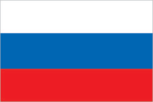
Flag
tricolor; three equal bands of white (top), blue, red (bottom)
Independence
24 August 1991, declared by Supreme Council (from Soviet Union; formerly Russian Soviet Federative Socialist Republic); 1 December 1991 referendum on independence passed
Judicial branch
Constitutional Court
Legal system
based on civil law system; judicial review of legislative acts; does not accept compulsory ICJ jurisdiction
Legislative branch
Congress of People's Deputies, Supreme Soviet
Long-form name
Russian Federation
Member of
CIS, CSCE, ESCAP, ECE, IAEA, IBRD, ICAO, ICFTU, IMF, INTERPOL, IMO, INMARSAT, IOC, ISO, ITU, LORCS, NACC, NSG, PCA, UN, UNCTAD, UNESCO, UNTSO, UPU, WFTU, WHO, WIPO, WMO, WTO, ZG
National holiday
NA
Other political or pressure groups
NA
Political parties and leaders
Democratic Russia, A. Lev PONOMAREV and Gleb YAKUNIN, cochairmen; Democratic Party of Russia, Nikolay TRAVKIN, chairman; People's Party of Free Russia, Aleksandr RUTSKOY, chairman; Russian Movement for Democratic Reforms, Gavriil POPOV, chairman
President
last held 12 June 1991 (next to be held 1996); results - percent of vote by party NA%
Suffrage
universal at age 18
Supreme Soviet
last held May 1990 (next to be held 1995); results - percent of vote by party NA%; seats - (252 total) number of seats by party NA
Type
federation
Economy
Agriculture
grain, meat, milk, vegetables, fruits; because of its northern location Russia does not grow citrus, cotton, tea, and other warm climate products
Budget
NA
Currency
ruble (plural - rubles); 1 ruble (R) = 100 kopeks
Economic aid
US commitments, including Ex-Im (FY70-87), $NA; Western (non-US) countries, ODA and OOF bilateral commitments (1970-86), $NA; Communist countries (1971-86), $NA million
Electricity
42,500 MW capacity; 1,100 billion kWh produced, 7,430 kWh per capita (1991)
Exchange rates
150 rubles per US$1 (20 July 1992) but subject to wide fluctuations
Exports
$58.7 billion (f.o.b., 1991) commodities: petroleum and petroleum products, natural gas, wood and wood products, coal, nonferrous metals, chemicals, and a wide variety of civilian and military manufactures partners: Western Europe, Japan, Eastern Europe
External debt
$40 billion (end of 1991 est.)
Fiscal year
calendar year
GDP
purchasing power equivalent - $NA, per capita $NA; real growth rate - 9% (1991)
Illicit drugs
illicit producers of cannabis and opium; mostly for domestic consumption; government has active eradication program; used as transshipment point for illicit drugs to Western Europe
Imports
$43.5 billion (c.i.f., 1991) commodities: machinery and equipment, chemicals, consumer goods, grain, meat, semifinished metal products partners: Western and Eastern Europe, Japan, Third World countries, Cuba
Industrial production
-8% after adjustment for inflation due to shift to more expensive products, -2% before this adjustment (1991)
Industries
complete range of mining and extractive industries producing coal, oil, gas, chemicals, and metals; all forms of machine building from rolling mills to high-performance aircraft and space vehicles; ship- building; road and rail transportation equipment; communications equipment; agricultural machinery, tractors, and construction equipment; electric power generating and transmitting equipment; medical and scientific instruments; consumer durables
Inflation rate (consumer prices)
89% (1991)
Overview
Russia, one of the world's largest economies, possesses a wealth of natural resources and a diverse industrial base. Within the now-dismantled USSR, it had produced 60% of total output, with 55% of the total labor force and 60% of the total capital stock. Russia depends on its world-class deposits of oil and gas not only for its own needs but also for vital hard currency earnings. Self-sufficient in coal and iron ore, it has a crude steel production capacity of about 95 million tons, second only to Japan. Russia's machine-building sector - 60% of the old USSR's - lags behind world standards of efficiency and quality of product. Other major industrial sectors - chemicals, construction materials, light industry, and food processing - also suffer from quality problems, obsolescent capital equipment, and pollution. Consumer goods have had lower priority, and the product mix has not mirrored household preferences. Furthermore, the transition to a more market-oriented economy has disrupted channels of supply to factories and distribution outlets; substantial imports of foods and medical supplies have helped maintain minimum standards of consumption. Russia inherited 70% of the former USSR's defense production facilities and is experiencing major social problems during conversion of many of these plants to civilian production. Russia produces almost half of the old USSR's farm products, but most warm-climate crops must be imported. Under the old USSR, production of industrial and agricultural goods often was concentrated in a single firm or a single republic. Today, producing units often have lost their major customers and their major sources of supply, and the market institutions and incentives for adjusting to the new political and economic situations are only slowly emerging. Rank-and-file Russians will continue to suffer major deprivations in 1992 and beyond before the country begins to realize its great economic potential. The comprehensive economic reform program enacted in January 1992 faces many economic and political hurdles before it will lead to sustained economic growth.
Unemployment rate
NA%
Communications
Airports
NA total, NA usable; NA with permanent-surface runways; NA with runways over 3,659 m; NA with runways 2,440-3,659 m; NA with runways 1,220-2,439 m
Civil air
NA major transport aircraft
Highways
879,100 km total (1990); 652,500 km hard-surfaced, 226,600 km earth
Inland waterways
NA km perennially navigable
Merchant marine
842 ships (1,000 GRT or over) totaling 8,151,393 GRT/11,308,812 DWT; includes 494 cargo, 39 container, 2 barge carrier, 3 roll-on/float-off, 69 roll-on/roll-off, 131 petroleum tanker, 53 bulk cargo, 9 chemical tanker, 2 specialized liquid carriers, 17 combination ore/oil, 23 passenger
Pipelines
crude oil and petroleum products 68,400 km, natural gas NA km
Ports
maritime - St. Petersburg (Leningrad), Kaliningrad, Murmansk, Arkhangel'sk, Novorossiysk, Vladivostok, Nakhodka, Kholmsk, Korsakov, Magadan, Tiksi, Tuapse, Vanino, Vostochnyy, Vyborg; inland - Astrakhan', Nizhniy Novgorod (Gor'kiy), Kazan', Khabarovsk, Krasnoyarsk, Samara (Kuybyshev), Moscow, Rostov, Volgograd
Railroads
87,180 km all 1.520-meter broad gauge (includes NA km electrified); does not include industrial lines (1990)
Telecommunications
the telephone system is inadequate for a large industrial country, consisting of about 36 million lines of which only about 3% are switched automatically; as of 31 January 1990, 10.8 million applications for telephones for household use could not be satisfied; telephone density is 11 per 100 persons; international connections are made via satellite, land line, microwave, and outdated submarine cables, and are generally unsatisfactory; the international gateway switch in Moscow handles international traffic for the other former Soviet republics as well as for Russia; broadcast stations - 1,050 AM/FM/SW (reach 98.6% of population), 310 TV (580 repeaters) (reach 98% of population); satellite ground stations - INTELSAT, Intersputnik, INMARSAT, Orbita
Military and Security
Branches
Russian defence forces will be comprised of those ground-, air-, and sea-based conventional assets currently on Russian soil and those scheduled to be withdrawn from other countries; strategic forces will remain under CIS control
Defense expenditures
$NA, NA% of GDP
Manpower availability
males 15-49, 36,288,000; 27,216,000 fit for military service; 1,020,341 reach military age (18) annually