1989 Edition
CIA World Factbook 1989 (Internet Archive)
Geography
Climate
- variable, with mostly westerly winds throughout the year, interspersed with periods of calm; nearly all precipitation falls as snow
- mostly temperate to arctic continental; winters vary from cool along Black Sea to frigid in Siberia; summers vary from hot in southern deserts to cool along Arctic coast
Coastline
- undetermined
- 42,777 km
Comparative area
- slightly larger than Rhode Island
- slightly less than 2.5 times the size of US
Continental shelf
- 200 meters or to depth of exploitation
- 200 meters or to depth of exploitation
Disputes
- administered by the UK, claimed by Argentina
- bilateral negotiations are under way to resolve four disputed sections of the boundary with China (Pamir, Argun, Amur, and Khabarovsk areas); US Government has not recognized the incorporation of Estonia, Latvia, and Lithuania into the Soviet Union; Habomai Islands, Etorofu, Kunashiri, and Shikotan islands occupied by Soviet Union since 1945, claimed by Japan; Kuril Islands administered by Soviet Union; maritime dispute with Norway over portion of Barents Sea; has made no territorial claim in Antarctica (but has reserved the right tc do so) and does not recognize the claims of any other nation; Bessarabia question with Romania; Kurdish question among Iran, Iraq, Syria, Turkey, and the USSR
Environment
- reindeer, introduced early in this century, live on South Georgia; weather conditions generally make it difficult to approach the South Sandwich Islands; the South Sandwich Islands are subject to active volcanism
- despite size and diversity, small percentage of land is arable and much is too far north; some of most fertile land is water deficient or has insufficient growing season; many better climates have poor soils; hot, dry, desiccating sukhovey wind affects south; desertification; continuous permafrost over much of Siberia is a major impediment to development
Exclusive fishing zone
200 nm
Extended economic zone
200 nm
Land boundaries
- none
- 19,933 km total; Afghanistan 2,384 km, Czechoslovakia 98 km, China 7,520 km, Finland 1,313 km, Hungary 1 35 km, Iran 1 ,690 km. North Korea 17 km, Mongolia 3,441 km, Norway 196 km, Poland 1,215 km, Romania 1,307km, Turkey 617 km
Land use
- 0% arable land; 0% permanent crops; 0% meadows and pastures; 0% forest and woodland; 100% other; largely covered by permanent ice and snow with some sparse vegetation consisting of grass, moss, and lichen
- 10% arable land; NEGL% permanent crops; 1 7% meadows and pastures; 41% forest and woodland; 32% other; includes 1% irrigated
Natural resources
- fish
- self-sufficient in oil, natural gas, coal, and strategic minerals (except bauxite, alumina, tantalum, tin, tungsten, fluorspar, and molybdenum), timber, gold, manganese, lead, zinc, nickel, mercury, potash, phosphates
Note
- the north coast of South Georgia has several large bays, which provide good anchorage
- largest country in world, but unfavorably located in relation to major sea lanes of world
Terrain
- most of the islands, rising steeply from the sea, are rugged and mountainous; South Georgia is largely barren and has steep, glacier-covered mountains; the South Sandwich Islands are of volcanic origin with some active volcanoes
- broad plain with low hills west of Urals; vast coniferous forest and tundra in Siberia, deserts in Central Asia, mountains in south
Territorial sea
- 1 2 nm
- 1 2 nm
Total area
- 4,066 km2; land area: 4,066 km2; includes Shag and Clerke Rocks
- 22,402,200 km2; land area: 22,272,000 km2
Total area
50km South At/antic Ocean Scotia Sea Administered by U.K.. claimed by Argentina Stt retionil map IV
People and Society
Birth rate
18 births/ 1,000 population (1990)
Death rate
1 0 deaths/ 1 ,000 population (1990)
Ethnic divisions
Russian 50.78%, Ukrainian 15.45%, Uzbek 5.84%, Byelorussian 3.51%, Kazakh 2.85%, Azerbaijan 2.38%, Armenian 1.62%, Tajik 1.48%, Georgian 1.39%, Moldavian 1.17%, Lithuanian 1.07%, Turkmen 0.95%, Kirghiz 0.89%, Latvian 0.51%, Estonian 0.36%, others 9.75%
Infant mortality rate
24 deaths/ 1 ,000 live births (1990)
Labor force
152,300,000 civilians; 80% industry and other nonagricultural fields, 20% agriculture; shortage of skilled labor (1989)
Language
Russian (official); more than 200 languages and dialects (at least 18 with more than 1 million speakers); 75% Slavic group, 8% other Indo-European, 12% Altaic, 3% Uralian, 2% Caucasian
Life expectancy at birth
65 years male, 74 years female (1990)
Literacy
99%
Nationality
noun — Soviet(s); adjective — Soviet
Net migration rate
0 migrants/ 1 ,000 population (1990)
Organized labor
98% of workers are union members; all trade unions are organized within the All-Union Central Council of Trade Unions (AUCCTU) and conduct their work under guidance of the Communist party
Population
- no permanent population; there is a small military garrison on South Georgia and the British Antarctic Survey has a biological station on Bird Island; the South Sandwich islands are uninhabited
- 290,938,469 (July 1990), growth rate 0.7% (1990)
Religion
20% Russian Orthodox; 1 0% Muslim; 7% Protestant, Georgian Orthodox, Armenian Orthodox, and Roman Catholic; less than 1% Jewish; 60% atheist (est.)
Total fertility rate
2.4 children born/ woman (1990)
Government
Administrative divisions
- none (dependent territory of the UK)
- 1 soviet federative socialist republic* (sovetskaya federativnaya sotsialistcheskaya respublika) and 1 4 soviet socialist republics (sovetskiye sotsialisticheskiye respubliki, singular — sovetskaya sotsialisticheskaya respublika); Armenian Soviet Socialist Republic, Azerbaijan Soviet Socialist Republic, Byelorussian Soviet Socialist Republic, Estonian Soviet Socialist Republic, Georgian Soviet Socialist Republic, Kazakh Soviet Socialist Republic, Kirghiz Soviet Socialist Republic, Latvian Soviet Socialist Republic, Lithuanian Soviet Socialist Republic, Moldavian Soviet Socialist Republic, Russian Soviet Federative Socialist Republic*, Tajik Soviet Socialist Republic, Turkmen Soviet Socialist Republic, Ukrainian Soviet Socialist Republic, Uzbek Soviet Socialist Republic; note — the Russian Soviet Federative Socialist Republic is often abbreviated RSFSR and Soviet Socialist Republic is often abbreviated SSR
Capital
- Grytviken Harbour on South Georgia is the chief town
- Moscow
Communists
about 19 million party members
Constitution
- 3 October 1985
- 7 October 1977
Diplomatic representation
Ambassadordesignate Aleksandr BESSMERTNYKH; Chancery at 1125 16th Street NW, Washington DC 20036; telephone (202) 628-7551 or 8548; there is a Soviet Consulate General in San Francisco; US — Ambassador Jack F. MATLOCK, Jr.; Embassy at Ulitsa Chaykovskogo 19/21 / 23, Moscow (mailing address is APO New York 09862); telephone [7] (096) 252-245 1 through 59; there is a US Consulate General in Leningrad
Elections
President — last held 14 March 1990 (next to be held NA 1995); resultsMikhail Sergeyevich Gorbachev was elected by the Congress of People's Deputies; Congress of People 's Deputies — last held 12 March 1990 (next to be held NA); results— CPSU is the only party; seats — (2,250 total) CPSU 1,931, non-CPSU 319; USSR Supreme Soviet— last held NA June 1989 (next to be held NA); results— CPSU is the only party; seats — (542 total) CPSU 475, non-CPSU 67; Council of the Union — last held Spring 1989 (next to be held NA); results— CPSU is the only party; sents — (271 total) CPSU 239, non-CPSU 32; Council of Nationalities — last held Spring 1989 (next to be held NA); results— CPSU is the only party; seats — (271 total) CPSU 236, non-CPSU 35
Executive branch
- British monarch, commissioner
- president
Flag
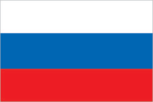
red with the yellow silhouette of a crossed hammer and sickle below a yellow-edged five-pointed red star in the upper hoist-side corner
Independence
- none (dependent territory of the UK)
- 1721 (Russian Empire proclaimed)
Judicial branch
- none
- Supreme Court of the USSR
Leaders
- Chief of State — Queen ELIZABETH II (since 6 February 1952), represented by Commissioner William Hugh FULLERTON (since 1988; resident at Stanley, Falkland Islands)
- Chid' of State — President Mikhail Sergeyevich GORBACHEV (since 14 March 1 990; General Secretary of the Central Committee of the Communist Party since 11 March 1985); Head of Government — Chairman of the USSR Council of Ministers Nikolay Ivanovich RYZHKOV (since 28 September 1985) Political parties and leaders: only party — Communist Party of the Soviet Union (CPSU), President Mikhail Sergeyevich Gorbachev, general secretary of the Central Committee of the CPSU; note — the CPSU is the only party, but others are forming
Legal system
- English common law
- civil law system as modified by Communist legal theory; no judicial review of legislative acts; has not accepted compulsory ICJ jurisdiction
Legislative branch
- none
- the Congress of People's Deputies is the supreme organ of USSR state power and selects the bicameral USSR Supreme Soviet (Verkhovnyy Sovyet) which consists of two coequal houses — Council of the Union (Sovet Soyuza) and Council of Nationalities (Sovet Natsionalnostey)
Long-form name
- South Georgia and the South Sandwich Islands (no short-form name)
- Union of Soviet Socialist Republics; abbreviated USSR
Member of
CEMA, ESCAP, IAEA, IBEC, ICAC, ICAO, ICCO, ICES, ILO, ILZSG, IMO, INRO, INTERPOL, IPU, ISO, ITC, ITU, International Whaling Commission, IWC — International Wheat Council, UN, UNCTAD, UNESCO, UPU, Warsaw Pact, WFTU, WHO, WIPO, WMO, WTO
National holiday
- Liberation Day, 14 June (1982)
- Great October Socialist Revolution, 7-8 November (1917)
Other political or pressure groups
Komsomol, trade unions, and other organizations that facilitate Communist control; regional popular fronts, informal organizations, and nascent parties with varying attitudes toward the Communist Party establishment
Suffrage
universal at age 18
Type
- dependent territory of the UK
- Communist state
Economy
Agriculture
accounts for roughly 20% of GNP and labor force; production based on large collective and state farms; inefficiently managed; wide range of temperate crops and livestock produced; world's second-largest grain producer after the US; shortages of grain, oilseeds, and meat; world's leading producer of sawnwood and roundwood; annual fish catch among the world's largest — 11.2 million metric tons (1987)
Aid
donor — extended to non-Communist less developed countries (1954-88), $47.4 billion; extended to other Communist countries (1954-88), $147.6 billion
Budget
- revenues $291,777; expenditures $451,01 1, including capital expenditures of SNA (FY88 est.)
- revenues $622 billion; expenditures $781 billion, including capital expenditures of $1 19 billion (1989 est.)
Currency
ruble (plural — rubles); 1 ruble (R) = 100 kopeks
Electricity
- 900 kW capacity; 2 million kWh produced, NA kWh per capita (1989)
- 355,000,000 kW capacity; 1,790,000 million kWh produced, 6,150 kWh per capita (1989)
Exchange rates
rubles (R) per US$1 — 0.600 (February 1990), 0.629 (1989), 0.629 (1988), 0.633 (1987), 0.704 (1986), 0.838 (1985); note — the exchange rate is administratively set and should not be used indiscriminately to convert domestic rubles to dollars; on 1 November 1989 the USSR began using a rate of 6.26 rubles to the dollar for Western tourists buying rubles and for Soviets traveling abroad, but retained the official exchange rate for most trade transactions Fiscal year calendar year
Exports
$110.7 billion (f.o.b., 1988); commodities— petroleum and petroleum products, natural gas, metals, wood, agricultural products, and a wide variety of manufactured goods (primarily capital goods and arms); partners — Eastern Europe 49%, EC 14%, Cuba 5%, US, Afghanistan (1988)
External debt
$27.3 billion (1988)
GNP
$2,659.5 billion, per capita $9,211; real growth rate 1.4% (1989 est. based on Soviet statistics; cutbacks in Soviet reporting on products included in sample make the estimate subject to greater uncertainty than in earlier years)
Illicit drugs
illegal producer of cannabis and opium poppy, mostly for domestic consumption; government has begun eradication program to control cultivation; used as a transshipment country
Imports
$107.3 billion (c.i.f., 1988); commodities— grain and other agricultural products, machinery and equipment, steel products (including large-diameter pipe), consumer manufactures; partners — Eastern Europe 54%, EC 11%, Cuba, China, US (1988)
Industrial production
growth rate 0.2% (1989 est.)
Industries
diversified, highly developed capital goods and defense industries; consumer goods industries comparatively less developed
Inflation rate (consumer prices)
6% (1989 est.)
Overview
- Some fishing takes place in adjacent waters. There is a potential source of income from harvesting fin fish and krill. The islands receive income from postage stamps produced in the UK.
- The first five years of perestroyka (economic restructuring) have undermined the institutions and processes Soviet Union (continued) of the Soviet command economy without replacing them with efficiently functioning markets. The initial reforms featured greater authority for enterprise managers over prices, wages, product mix, investment, sources of supply, and customers. But in the absence of effective market discipline, the result was the disappearance of low-price goods, excessive wage increases, an even larger volume of unfinished construction projects, and, in general, continued economic stagnation. The Gorbachev regime has made at least four serious errors in economic policy in these five years: the unpopular and short-lived anti-alcohol campaign; the initial cutback in imports of consumer goods; the failure to act decisively for the privatization of agriculture; and the buildup of a massive overhang of unspent rubles in the hands of households and enterprises. In October 1989, a top economic adviser, Leonid Abalkin presented an ambitious but reasonable timetable for the conversion to a partially privatized market system in the 1990s. In December 1989, however, Premier Ryzhkov's conservative approach prevailed, namely, the contention that a period of retrenchment was necessary to provide a stable financial and legislative base for launching further reforms. Accordingly, the new strategy was to put the reform process on hold in 1990-92 by recentralizing economic authority and to placate the rank-and-file through sharp increases in consumer goods output. In still another policy twist, the leadership in early 1990 was considering a marked speedup in the marketization process. Because the economy is caught in between two systems, there was in 1989 an even greater mismatch between what was produced and what would serve the best interests of enterprises and households. Meanwhile, the seething nationality problems have been dislocating regional patterns of economic specialization and pose a further major threat to growth prospects over the next few years.
Unemployment rate
officially, no unemployment
Communications
Airports
- none
- 6,950 total, 4,530 usable; 1,050 with permanent-surface runways; 30 with runways over 3,659 m; 490 with runways 2,440-3,659 m; 660 with runways 1,2202,439 m
Branches
Ground Forces, Navy, Air Defense Forces, Air Forces, Strategic Rocket Forces Military manpower males 15-49, 69,634,893; 55,588,743 fit for military service; 2,300,127 million reach military age (18) annually (down somewhat from 2,500,000 a decade ago)
Civil air
4,500 major transport aircraft
Defense expenditures
NA
Highways
- NA
- 1,609,900 km total; 1,196,000 km hard-surfaced (asphalt, concrete, stone block, asphalt treated, gravel, crushed stone); 413,900 km earth (1987)
Inland waterways
122,500 km navigable, exclusive of Caspian Sea (1987)
Merchant marine
1,646 ships (1,000 GRT or over) totaling 16,436,063 GRT/ 22,732,215 DWT; includes 53 passenger, 937 cargo, 52 container, 1 1 barge carrier, 5 roll-on/float off cargo, 5 railcar carrier, 108 roll-on/roll-orT cargo, 251 petroleum, oils, and lubricants (POL) tanker, 1 1 liquefied gas, 21 combination ore/oil, 4 specialized liquid carrier, 17 chemical tanker, 171 bulk; note — 639 merchant ships are based in Black Sea, 383 in Baltic Sea, 408 in Soviet Far East, and 216 in Barents Sea and White Sea; the Soviet Ministry of Merchant Marine is beginning to use foreign registries for its merchant ships to increase the economic competitiveness of the fleet in the international market — the first reregistered ships have gone to the Cypriot flag
Note
defense is the responsibility of the UK 2000 km Arctic Ocean Barents Sea *.j; Murmansk ^ Baku* Caspian Sea The United States Government has not recognized the incorporation ot Estonia. Latvia, and Lithuania into the Soviet union Other boundary representation is not necessarily authoritative Sw regional maps VIII and XI
Pipelines
81,500 km crude oil and refined products; 195,000 km natural gas (1987)
Ports
- Grytviken Harbour on South Georgia
- Leningrad, Riga, Tallinn, Kaliningrad, Liepaja, Ventspils, Murmansk, Arkhangel'sk, Odessa, Novorossiysk, Il'ichevsk, Nikolayev, Sevastopol', Vladivostok, Nakhodka; inland ports are Astrakhan', Baku, Gor'kiy, Kazan', Khabarovsk, Krasnoyarsk, Kuybyshev, Moscow, Rostov, Volgograd, Kiev
Railroads
146,100 km total; 51,700 km electrified; does not include industrial lines (1987)
Telecommunications
- coastal radio station at Grytviken; no broadcast stations Defense Forces
- extensive network of AM-FM stations broadcasting both Moscow and regional programs; main TV centers in Moscow and Leningrad plus 1 1 more in the Soviet republics; hundreds of TV stations; 85,000,000 TV sets; 162,000,000 radio receivers; many satellite earth stations and extensive satellite networks (including 2 Atlantic Ocean INTELSAT and 1 Indian Ocean INTELSAT earth stations) Defense Forces