1985 Edition
CIA World Factbook 1985 (Internet Archive)
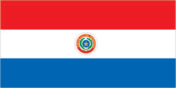
Geography
Agriculture
- main crops — coffee, cocoa, coconuts, timber, tea
- main crops — oilseeds, cotton, wheat, manioc, sweet potatoes, tobacco, corn, rice, sugarcane; self-sufficient in most foods
Aid
- economic — Australia, $1,158 million committed (1976-81); World Bank group (1968-September 1969), $14.8 million committed; US, including Ex-Im (FY70-83), $125 million; other Western countries, ODA and OOF bilateral commitments (1980-82), $4.2 billion
- economic bilateral commitments, US (FY70-83) $151 million, other Western countries, ODA and OOF (1970-82) $490 million; military commitments (FY70-83), US $18 million
Airfields
- 535 total, 436 usable; 15 with permanent-surface runways; 2 with runways 2,440-3,659 m; 37 with runways 1,2202,439 m
- 884 total, 769 usable; 6 with permanent-surface runways; 2 with runway 2,440-3,659 m, 27 with runways 1,2202,439 m
Branches
- Papua New Guinea Defense Force
- President heads executive; bicameral legislature (Senate, Chamber of Deputies); judiciary headed by Supreme Court
- Paraguayan Army, Paraguayan Navy, Paraguayan Air Force
Budget
- (1983) expenditures, $1.02 million
- (1983 est.) revenues, $494 million; expenditures, $741 million
Capital
Asuncion
Civil air
- about 15 major transport aircraft
- 4 major transport aircraft
Communists
Oscar Creydt faction and Miguel Angel Soler faction (both illegal); est. 3,000 to 4,000 party members and sympathizers in Paraguay, very few are hard core; party in exile is small and deeply divided
Elections
President and Congress elected together every five years (last election February 1983) Political parties and leaders: Colorado Party, Juan Ramon Chaves; Authentic Radical Liberay Party (PLRA), Miguel Angel Martinez Yaryes; Christian Christian Democratic Party (PDC), Alfredo Rojas Leon; Febrerista Revolutionary Party (PRF), Euclides Acevedo; Liberal Party (PL), Joaquin Burgos; Popular Colorado Movement (MOPOCO), Miguel Angel Gonzalez Casabianca; Radical Liberal Party (PLR), Percio Franco
Electric power
- 720,000 kW capacity (1984); 1.6 billion kWh produced (1984), 477 kWh per capita
- 1,100,000 kW capacity (1984); 2.9 billion kWh produced (1983), 800 kWh per capita
Ethnic divisions
95% mestizo (Spanish and Indian), 5% white and Indian
Exports
- $960.0 million (f .o.b., 1979); copper, coconut products, coffee beans, cocoa, copra, timber
- $326 million (f.o.b., 1983); cotton, oilseeds, meat products, tobacco, timber, coffee, essential oils, tung oil
Fiscal year
- calendar year Communications
- calendar year Communications
GDP
$2.5 billion (1984), $700-900 per capita (depending on exchange rate); 7% public consumption; 66% private consumption (1983), 28% gross domestic investment, 4-5% real growth rate (1980); real growth rate 1982, -2%
GNP
$2 billion (1980), $650 per capita; real growth (1979) 3% est.
Government leader
Gen. (Ret.) Alfredo STROESSNER, President (since May 1954)
Highways
- 19,200 km total; 640 km paved, 10,960 km gravel, crushed stone, or stabilized soil surface, 7,600 km unimproved earth
- 21,960 km total; 1,788 km paved, 474 km gravel, and 19,698 km earth
Imports
- $935.5 million (c.i.f., 1979)
- $551 million (f.o.b., 1983); fuels and lubricants, machinery and motors, motor vehicles, beverages and tobacco, foodstuffs
Inland waterways
- 10,940 km
- 3,100 km
Labor force
1. 1 million (1983 est.); 44% agriculture; 34% industry and commerce, 18% services, 4% government; unemployment rate 15% (1984)
Land boundaries
3,444 km People
Language
Spanish (official) and Guarani
Legal system
based on Argentine codes, Roman law, and French codes; constitution promulgated 1967; judicial review of legisla live acts in Supreme Court; legal education at National University of Asuncion and Catholic University of Our Lady of the Assumption; does not accept compulsory ICJ jurisdiction
Literacy
81%
Major industries
- sawmilling and timber processing, copper mining (Bougainville), fish canning
- meat packing, oilseed crushing, milling, brewing, textiles, light consumer goods, cement
Major trade partners
- Australia, UK, Japan
- exports — 21% Brazil, 14% Netherlands, 12% Argentina, 12% FRG, 9% US, 7% Switzerland, 2% Japan; imports— 28% Brazil, 19% Argentina, 7% FRG, 6% US, 5% Japan, 5% UK (1983)
Member of
FAO, G-77, IADB, IAEA, IBRD, ICAO, ICO, IDA, IDB— Inter-American Development Bank, IFAD, IFC, ILO, IMF, INTELSAT, INTERPOL, IPU, IRC, ITU, LAIA, OAS, SELA, UN, UNESCO, UPU, WHO, WMO, WSG Economy
Military budget
- for fiscal year ending 31 December 1984, $29.4 million; about 3% of central government budget 20J »p. See region*! map IV Land 406,750 km2; the size of California; 52% forest; 24% meadow and pasture; 22% urban, waste, and other; 2% crop
- for fiscal year ending 31 December 1984, $128.4 million; 14.4% of central government budget
Military manpower
- males 15-49, 800,000; about 443,000 fit for military service
- males 15-49, 885,000; 703,000 fit for military service; 43,000 reach military age (17) annually
Monetary conversion rate
- ,8658kina=US$l (February 1984)
- 240 guaranies=US$l (October 1984)
National holiday
Independence Day, 14 May
Nationality
noun — Paraguayan(s); adjective— Paraguayan
Official name
Republic of Paraguay
Organized labor
about 5% of labor force Government
Other political or pressure groups
Popular Colorado Movement (MoPoCo) led by Epifanio Mendez, in exile; National Accord includes MoPoCo and Febrerista, Radical Liberal, and Christian Democratic Parties •
Political subdivisions
19 departments and the national capital
Population
3,722,000 (July 1985), average annual growth rate 2.7%
Ports
- 5 principal, 9 minor
- 1 major (Asuncion), 9 minor (all river)
Railroads
- none
- 970 km total; 440 km 1.435-meter standard gauge, 60 km 1.000-meter gauge, 470 km various narrow gauge (privately owned)
Religion
97% Roman Catholic; Mennonite and other Protestant denominations
Suffrage
universal; compulsory between ages of 18-60
Supply
dependent on Australia
Telecommunications
- Papua New Guinea telecom services are adequate and are being improved; facilities provide radiobroadcast, radiotelephone and telegraph, coastal radio, aeronautical radio and international radiocommunication services; submarine cables extend from Madang to Australia and Guam; 45,274 telephones (1.5 per 100 popl.); 31 AM, no FM, or TV stations Defense Forces
- principal center in Asuncion, fair intercity microwave net; 64,300 telephones (2.0 per 100 popl.); 35 AM, 21 FM, 5 TV stations; 1 Atlantic Ocean satellite station Defense Forces
Type
republic; under authoritarian rule
Voting strength
(February 1983 general election) 90% Colorado Party, 5.6% Radical Liberal Party, 3.2% Liberal Party; Febrerista Party boycotted elections