1985 Edition
CIA World Factbook 1985 (Internet Archive)
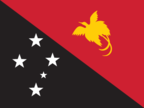
Geography
Airfields
131 total, 128 usable; 42 with permanent-surface runways; 2 with runways 2,440-3,659 m; 16 with runways 1,2202,439 m
Branches
- Defense Forces of the Republic of Panama (formerly known as the National Guard) includes military ground forces (stil! designated National Guard), Panamanian Air Force, National Navy, Panama Canal Defense Force, police force, traffic police/highway patrol, National Department of Investigation, and Department of Immigration
- executive — National Executive Council; legislature — House of Assembly (109 members); judiciary — court system consists of Supreme Court of Papua New Guinea and various inferior courts (district courts, local courts, children's courts, wardens' courts)
Capital
Port Moresby
Civil air
16 major transport aircraft
Coastline
about 5,152 km People
Communists
no significant strength
Elections
preferential-type elections for 109-member House of Assembly every five years, last held in June 1982
Ethnic divisions
predominantly Melanesian and Papuan; some Negrito, Micronesian, and Polynesian
Government leaders
Sir Kingsford DIBELA, Governor General (since March 1983); Michael Thomas SOMARE, Prime Minister (since August 1982)
Labor force
1.44 million (1979); 352,500 (1980) in salaried employment; 53% agriculture, 20% government, 17% industry and commerce, 10% services Government
Land boundaries
966 km Water
Language
715 indigenous languages; pidgin English in much of the country and Motu in Papua region are linguae francae; English spoken by 1-2% of population
Legal system
based on English common law
Limits of territorial waters (claimed)
12 nm (economic including fishing 200 nm)
Literacy
32%
Member of
ADB, ANRPC, CIPEC (associate), Commonwealth, ESCAP (associate), FAO, G-77, GATT (de facto), IBRD, ICAO, IDA, IFAD, IFC, ILO, IMF, IMO, INTELSAT, INTERPOL, ITU, South Pacific Commission, South Pacific Forum, UN, UNESCO, UPU, WHO, WMO
Military budget
for fiscal year beginning 1 January 1985, $92 million; 3.4% of central government budget South Pacific Ocean New Ireland New % Britain Bougainville *.'"•*.• Coral Sea Land 461,691 km2; slightly larger than California; 70% forest, 3% cultivated, 2% pasture, 25% other
Military manpower
males 15-49, 523,000; 360,000 fit for military service; no conscription
National holiday
Independence Day, 16 September
Nationality
noun — Papua New Guinean(s); adjective — Papua New Guinean
Official name
Papua New Guinea
Pipelines
refined products, 96 km; crude oil, 130km
Political parties
Pangu Party, People's Progress Party, United Party, Papua Besena, National Party, Melanesian Alliance
Political subdivisions
19 provinces
Population
3,326,000 (July 1985), average annual growth rate 2.1%
Ports
2 major (Cristobal and Balboa), 8 minor
Religion
over half of population nominally Christian (490,000 Catholic, 320,000 Lutheran, other Protestant sects); remainder indigenous beliefs
Suffrage
universal adult
Telecommunications
domestic and international telecom facilities well developed; connection into Central American microwave net; 2 Atlantic Ocean satellite antennas; 213,000 telephones (10.0 per 100 popl.); 72 AM, 30 FM, 14 TV stations; 1 coaxial submarine cable Defense Forces
Type
independent parliamentary state within Commonwealth recognizing Elizabeth II as head of state