1986 Edition
CIA World Factbook 1986 (Internet Archive)
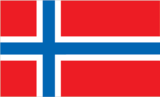
Geography
Agriculture
animal husbandry predominates; main crops — feed grains, potatoes, fruits, vegetables; 40% self-sufficient; food shortages — food grains, sugar
Aid
donor — ODA and OOF economic commitments (1970-83), $2.1 billion
Airfields
- 1 (Australian-owned airport) with runway 1,220-2,429 m
- 96 total, 95 usable; 54 with permanent-surface runways; 12 with runways 2,440-3,659 m, 14 with runways 1,220-2,439 m
Branches
- legislative authority rests jointly with Crown and parliament (Storting — Lagting, upper house; Odelsting, lower house); executive power vested in Crown but exercised by Cabinet responsible to parliament; Supreme Court, 5 superior courts, 104 lower courts
- Royal Norwegian Army, Royal Norwegian Navy, Royal Norwegian Air Force
Budget
revenues, $29.0 billion; expenditures, $25.7 billion
Capital
Oslo
Civil air
62 major transport aircraft
Coastline
mainland 3,419 km; islands 2,413 km (excludes long fjords and numerous small islands and minor indentations, which total as much as 16,093 km overall) People
Communists
15,500 est.; 5,500 Norwegian Communist Party (NKP); 10,000 Workers Communist Party Marxist-Leninist (AKPML, pro-Chinese)
Crude petroleum
35.0 million metric tons produced (1984), exports $6.3 billion (1984)
Crude steel
915,000 metric tons produced (1984), 228 kg per capita
Elections
held every four years (next in 1989) Political parties and leaders: Labor, Gro Harlem Brundtland; Conservative, Rolf Presthus (in April 1986); Center, Johan J. Jakobsen; Christian People's, Kjell Magne Bondevik; Liberal, Odd Einar Dorum; Socialist Left, Theo Koritzinsky; Norwegian Communist, Hans I. Kleven; Progressive, Carl I. Hagen
Electric power
23,035,000 kW capacity (1985); 119.082 billion kWh produced (1985), 28,626 kWh per capita
Ethnic divisions
Germanic (Nordic, Alpine, Baltic) and racial-cultural minority of 20,000 Lapps
Exports
$18.9 billion (f.o.b., 1984); principal items — oil, natural gas, metals, chemicals, machinery, fish and fish products, pulp and paper, ships
Fiscal year
- 1 July-30 June Communications
- calendar year Communications
Fishing
catch 2.48 million metric tons (1984); exports $766 million (1984)
GNP
$53.15 billion in 1984, $12,838 per capita; 48.0% private consumption; 19.4% government consumption; 26.4% gross fixed investment; —0.7% change in stockbuilding; net exports of goods and services 10.0%; 1984 growth rate 3.8%, in 1980 prices
Government leaders
OLAV V, King (since 1957); Rare WILLOCH, Prime Minister (since September 1981)
Highways
- 80 km of roads, including 53 km of sealed roads; remainder are earth formed or coral surfaced
- 78,1 16 km total; 17,699 km concrete and bitumen; 19,277 km bituminous treated; 41,140 km gravel, crushed stone, and earth
Imports
$13.9 million (c.i.f., 1984); principal items — machinery, fuels and lubricants, transport equipment, chemicals, foodstuffs, clothing, ships
Infant mortality rate
7.9/1,000(1983)
Inland waterways
- no water on Neapean and Philip
- 1,577 km; 1.5-2.4 m draft vessels maximum
Labor force
2.031 million (1984); 30.9% services; 19.6% mining and manufacturing; 16.7% commerce; 8.8% transportation; 7.6% construction; 7.2% agriculture, forestry, fishing; 5.7% banking and financial services (1983); 3.9% unemployed (1984)
Land boundaries
2,579 km Water
Language
Norwegian (official); small Lappand Finnish-speaking minorities
Legal system
mixture of customary law, civil law system, and common law traditions; constitution adopted in 1814 and modified in 1884; Supreme Court renders advisory opinions to legislature when asked; legal education at University of Oslo; accepts compulsory ICJ jurisdiction, with reservations
Life expectancy
men 72.7, women 79.5
Limits of territorial waters (claimed)
4 nm (200 nm exclusive economic zone)
Literacy
100%
Major industries
oil and gas, food processing, shipbuilding, wood pulp, paper products, metals, chemicals
Major trade partners
59.4% EC (25.3% UK, 16.2% FRG, 12.9% Sweden), 6.7% US (1984)
Member of
ADB, Council of Europe, DAC, EC (Free Trade Agreement), EFTA, ESRO (observer), FAO, GATT, IAEA, IBRD, ICAC, ICAO, ICES, ICO, IDA, IEA (associate member), IFAD, IFC, IHO, ILO, IMF, IMO, INTELSAT, INTERPOL, International Lead and Zinc Study Group, IPU, ITU, IWC— International Whaling Commission, IWC — International Wheat Council, NATO, Nordic Council, OECD, UN, UNESCO, UPU, WHO, WIPO, WMO, WSG Economy
Military budget
for fiscal year ending 31 December 1984, $1.6 billion; 10.6% of central government budget
Military manpower
males 15-49, 1,049,000; 852,000 fit for military service; 33,000 reach military age (20) annually
Monetary conversion rate
- 1.44 Australian dollars=US$l (5 February 1986)
- 7.69 kroner= US$1 (23 December 1985)
National holiday
Constitution Day, 17 May
Nationality
noun — Norwegian(s); adjective— Norwegian
Natural resources
oil, copper, gas, pyrites, nickel, iron, zinc, lead, fish, timber, hydroelectric power
Official name
Kingdom of Norway
Organized labor
66% of labor force (1985) Government
Pipelines
refined products, 53 km
Political subdivisions
19 counties, 407 communes, 47 towns
Population
4,165,000 (July 1986), average annual growth rate 0.3%
Ports
- none; loading jetties at Kingston and Cascade
- 9 major, 69 minor
Railroads
- none
- 4,257 km 1.435-meter standard gauge; Norwegian State Railways (NSB) operates 4,242 km (2,443 km electrified and 94 km double track); 16 km privately owned and electrified
Religion
94% Evangelical Lutheran (state church), 4% other Protestant and Roman Catholic, 2% other
Shortages
most raw materials except timber, petroleum, iron, copper, and ilmenite ore; dairy products and fish
Suffrage
universal at age 18 but not compulsory
Telecommunications
- 1,500 radio receivers (1982); radio link service between island and Sydney; 987 telephones (1982) Defense Forces Defense is the responsibility of Australia Jan Mayen and Svalbard are not shown. See ref ionil map V Land Continental Norway, 324,219 km2; slightly larger than New Mexico; Svalbard, 62,160 km2; Jan Mayen, 373 km2; 21% forest; 3% arable, 2% meadow and pasture; 74% other
- high-quality domestic and international telephone, telegraph, and telex services; 2.39 million telephones (57.9 per 100 popl.); 8 AM, 843 FM, 1,744 TV stations; 4 coaxial submarine cables; 6 domestic satellite stations Defense Forces
Type
constitutional monarchy
Voting strength
(1985 election) Labor, 40.8%; Conservative, 30.4%; Christian People's, 8.3%; Center, 6.6%; Socialist Left (Socialist Electoral Alliance), 5.5%; Progressive, 3.7%; Liberal, 3.1%; Red Electoral Alliance, 0.6%; Liberal People's Party (antitax), 0.5%; Norwegian Communist, 0.2%; other 0.4%