2023 Edition
CIA World Factbook 2023 (factbook.json @ 0d4fa4984ecb)
Introduction
Background
Present-day Niger originated from the nomadic peoples of the Saharan north and the agriculturalists of the south. The Taureg kingdom of Takedda was one of the largest kingdoms in the north and played a prominent role in regional trade in the 14th century. In the south, the primary ethnic groups were the Songhai-Zarma in the west, the Hausa in the center, and the Kanuri in the east. When European colonizers arrived in the 19th century, the region was an assemblage of disparate local kingdoms. In the late 19th century, the British and French agreed to partition the middle regions of the Niger River, and France began its conquest of what would become the colony of Niger. France experienced determined local resistance - particularly during the Tuareg uprising (1916-1917) - but established a colonial administration in 1922. After achieving independence from France in 1960, Niger experienced single-party or military rule until 1991 when political pressure forced General Ali SAIBOU to allow multiparty elections. Political infighting and democratic backsliding led to coups in 1996 and 1999. In December of that year, military officers restored democratic rule and held elections that brought Mamadou TANDJA to power. TANDJA was reelected in 2004 and spearheaded a 2009 constitutional amendment allowing him to extend his presidential term. In February 2010, military officers led another coup that deposed TANDJA. ISSOUFOU Mahamadou was elected in April 2011 and reelected in early 2016. In February 2021, BAZOUM Mohammed won the presidential election, marking Niger’s first transition from one democratically elected president to another. Nonetheless, a military junta once again seized power in a late-July 2023 coup, detaining President BAZOUM, and announcing the creation of a National Council for the Salvation of the Homeland.Niger is one of the poorest countries in the world with minimal government services and insufficient funds to develop its resource base. It is ranked last in the world on the UN Development Program's Human Development Index. The largely agrarian and subsistence-based economy is frequently disrupted by extended droughts common to the Sahel region of Africa. The Nigerien Government continues its attempts to diversify the economy through increased oil production and mining projects. In addition, Niger is facing increased security concerns on its borders from various external threats including insecurity in Libya, spillover from the conflict and terrorism in Mali, and violent extremism in northeastern Nigeria.
Geography
Area
- land
- 1,266,700 sq km
- total
- 1.267 million sq km
- water
- 300 sq km
Area - comparative
slightly less than twice the size of Texas
Climate
desert; mostly hot, dry, dusty; tropical in extreme south
Coastline
0 km (landlocked)
Elevation
- highest point
- Idoukal-n-Taghes 2,022 m
- lowest point
- Niger River 200 m
- mean elevation
- 474 m
Geographic coordinates
16 00 N, 8 00 E
Geography - note
landlocked; one of the hottest countries in the world; northern four-fifths is desert, southern one-fifth is savanna, suitable for livestock and limited agriculture
Irrigated land
2,666 sq km (2020)
Land boundaries
- border countries
- Algeria 951 km; Benin 277 km; Burkina Faso 622 km; Chad 1,196 km; Libya 342 km; Mali 838 km; Nigeria 1,608 km
- total
- 5,834 km
Land use
- agricultural land
- 35.1% (2018 est.)
- agricultural land: arable land
- arable land: 12.3% (2018 est.)
- agricultural land: permanent crops
- permanent crops: 0.1% (2018 est.)
- agricultural land: permanent pasture
- permanent pasture: 22.7% (2018 est.)
- forest
- 1% (2018 est.)
- other
- 63.9% (2018 est.)
Location
Western Africa, southeast of Algeria
Major aquifers
Lake Chad Basin, Lullemeden-Irhazer Basin, Murzuk-Djado Basin
Major lakes (area sq km)
- fresh water lake(s)
- Lake Chad (endorheic lake shared with Chad, Nigeria, and Cameroon) - 10,360-25,900 sq kmnote - area varies by season and year to year
Major rivers (by length in km)
Niger (shared with Guinea [s], Mali, Benin, and Nigeria [m]) - 4,200 kmnote – [s] after country name indicates river source; [m] after country name indicates river mouth
Major watersheds (area sq km)
Atlantic Ocean drainage: Niger (2,261,741 sq km)Internal (endorheic basin) drainage: Lake Chad (2,497,738 sq km)
Map references
Africa
Maritime claims
none (landlocked)
Natural hazards
recurring droughts
Natural resources
uranium, coal, iron ore, tin, phosphates, gold, molybdenum, gypsum, salt, petroleum
Population distribution
majority of the populace is located in the southernmost extreme of the country along the border with Nigeria and Benin as shown in this population distribution map
Terrain
predominately desert plains and sand dunes; flat to rolling plains in south; hills in north
People and Society
Age structure
- 0-14 years
- 49.7% (male 6,360,952/female 6,261,000)
- 15-64 years
- 47.6% (male 5,896,312/female 6,192,116)
- 65 years and over
- 2.7% (2023 est.) (male 329,421/female 357,039)
Alcohol consumption per capita
- beer
- 0.04 liters of pure alcohol (2019 est.)
- other alcohols
- 0 liters of pure alcohol (2019 est.)
- spirits
- 0.06 liters of pure alcohol (2019 est.)
- total
- 0.11 liters of pure alcohol (2019 est.)
- wine
- 0.01 liters of pure alcohol (2019 est.)
Birth rate
46.9 births/1,000 population (2023 est.)
Children under the age of 5 years underweight
34.6% (2022)
Contraceptive prevalence rate
11% (2021)
Current health expenditure
6.2% of GDP (2020)
Currently married women (ages 15-49)
80.3% (2023 est.)
Death rate
9.7 deaths/1,000 population (2023 est.)
Demographic profile
Niger has the highest total fertility rate (TFR) of any country in the world, averaging close to 7 children per woman in 2022. A slight decline in fertility over the last few decades has stalled. This leveling off of the high fertility rate is in large part a product of the continued desire for large families. In Niger, the TFR is lower than the desired fertility rate, which makes it unlikely that contraceptive use will increase. The high TFR sustains rapid population growth and a large youth population – almost 70% of the populace is under the age of 25, as of 2020. Gender inequality, including a lack of educational opportunities for women and early marriage and childbirth, also contributes to high population growth. Because of large family sizes, children are inheriting smaller and smaller parcels of land. The dependence of most Nigeriens on subsistence farming on increasingly small landholdings, coupled with declining rainfall and the resultant shrinkage of arable land, are all preventing food production from keeping up with population growth. For more than half a century, Niger's lack of economic development has led to steady net outmigration. In the 1960s, Nigeriens mainly migrated to coastal West African countries to work on a seasonal basis. Some headed to Libya and Algeria in the 1970s to work in the booming oil industry until its decline in the 1980s. Since the 1990s, the principal destinations for Nigerien labor migrants have been West African countries, especially Burkina Faso and Cote d’Ivoire, while emigration to Europe and North America has remained modest. During the same period, Niger’s desert trade route town Agadez became a hub for West African and other Sub-Saharan migrants crossing the Sahara to North Africa and sometimes onward to Europe. More than 60,000 Malian refugees have fled to Niger since violence between Malian government troops and armed rebels began in early 2012. Ongoing attacks by the Boko Haram Islamist insurgency, dating to 2013 in northern Nigeria and February 2015 in southeastern Niger, pushed tens of thousands of Nigerian refugees and Nigerien returnees across the border to Niger and displaced thousands of locals in Niger’s already impoverished Diffa region.
Dependency ratios
- elderly dependency ratio
- 5
- potential support ratio
- 20.1 (2021 est.)
- total dependency ratio
- 105.4
- youth dependency ratio
- 100.4
Drinking water source
- improved: rural
- rural: 63.1% of population
- improved: total
- total: 68.6% of population
- improved: urban
- urban: 95.8% of population
- unimproved: rural
- rural: 36.9% of population
- unimproved: total
- total: 31.4% of population (2020 est.)
- unimproved: urban
- urban: 4.2% of population
Education expenditures
3.8% of GDP (2020 est.)
Ethnic groups
Hausa 53.1%, Zarma/Songhai 21.2%, Tuareg 11%, Fulani (Peuhl) 6.5%, Kanuri 5.9%, Gurma 0.8%, Arab 0.4%, Tubu 0.4%, other/unavailable 0.9% (2006 est.)
Gross reproduction rate
3.31 (2023 est.)
Hospital bed density
0.4 beds/1,000 population (2017)
Infant mortality rate
- female
- 60.5 deaths/1,000 live births
- male
- 70.5 deaths/1,000 live births
- total
- 65.5 deaths/1,000 live births (2023 est.)
Languages
French (official), Hausa, Djerma
Life expectancy at birth
- female
- 62.1 years
- male
- 58.9 years
- total population
- 60.5 years (2023 est.)
Literacy
- definition
- age 15 and over can read and write
- female
- 29% (2018)
- male
- 45.8%
- total population
- 37.3%
Major infectious diseases
- animal contact diseases
- rabies
- degree of risk
- very high (2023)
- food or waterborne diseases
- bacterial and protozoal diarrhea, hepatitis A, and typhoid fever
- note
- note: on 31 August 2023, the US Centers for Disease Control and Prevention (CDC) issued a Travel Alert for polio in Africa; Niger is currently considered a high risk to travelers for circulating vaccine-derived polioviruses (cVDPV); vaccine-derived poliovirus (VDPV) is a strain of the weakened poliovirus that was initially included in oral polio vaccine (OPV) and that has changed over time and behaves more like the wild or naturally occurring virus; this means it can be spread more easily to people who are unvaccinated against polio and who come in contact with the stool or respiratory secretions, such as from a sneeze, of an “infected” person who received oral polio vaccine; the CDC recommends that before any international travel, anyone unvaccinated, incompletely vaccinated, or with an unknown polio vaccination status should complete the routine polio vaccine series; before travel to any high-risk destination, the CDC recommends that adults who previously completed the full, routine polio vaccine series receive a single, lifetime booster dose of polio vaccine
- respiratory diseases
- meningococcal meningitis
- vectorborne diseases
- malaria and dengue fever
- water contact diseases
- schistosomiasis
Major urban areas - population
1.437 million NIAMEY (capital) (2023)
Maternal mortality ratio
441 deaths/100,000 live births (2020 est.)
Median age
- female
- 15.5 years
- male
- 14.8 years
- total
- 15.1 years (2023 est.)
Mother's mean age at first birth
- 18.5 years (2012 est.)
- note
- note: data represents median age at first birth among women 20-49
Nationality
- adjective
- Nigerien
- noun
- Nigerien(s)
Net migration rate
-0.6 migrant(s)/1,000 population (2023 est.)
Obesity - adult prevalence rate
5.5% (2016)
Physicians density
0.04 physicians/1,000 population (2020)
Population
25,396,840 (2023 est.)
Population distribution
majority of the populace is located in the southernmost extreme of the country along the border with Nigeria and Benin as shown in this population distribution map
Population growth rate
3.66% (2023 est.)
Religions
Muslim 99.3%, Christian 0.3%, animist 0.2%, none 0.1% (2012 est.)
Sanitation facility access
- improved: rural
- rural: 13.5% of population
- improved: total
- total: 24.8% of population
- improved: urban
- urban: 81.9% of population
- unimproved: rural
- rural: 86.5% of population
- unimproved: total
- total: 75.2% of population (2020 est.)
- unimproved: urban
- urban: 18.1% of population
School life expectancy (primary to tertiary education)
- female
- 6 years (2017)
- male
- 7 years
- total
- 6 years
Sex ratio
- 0-14 years
- 1.02 male(s)/female
- 15-64 years
- 0.95 male(s)/female
- 65 years and over
- 0.92 male(s)/female
- at birth
- 1.03 male(s)/female
- total population
- 0.98 male(s)/female (2023 est.)
Tobacco use
- female
- 1.1% (2020 est.)
- male
- 13.7% (2020 est.)
- total
- 7.4% (2020 est.)
Total fertility rate
6.73 children born/woman (2023 est.)
Urbanization
- rate of urbanization
- 4.72% annual rate of change (2020-25 est.)
- urban population
- 17.1% of total population (2023)
Government
Administrative divisions
7 regions (regions, singular - region) and 1 capital district* (communaute urbaine); Agadez, Diffa, Dosso, Maradi, Niamey*, Tahoua, Tillaberi, Zinder
Capital
- etymology
- according to tradition, the site was originally a fishing village named after a prominent local tree referred to as "nia niam"
- geographic coordinates
- 13 31 N, 2 07 E
- name
- Niamey
- time difference
- UTC+1 (6 hours ahead of Washington, DC, during Standard Time)
Citizenship
- citizenship by birth
- no
- citizenship by descent only
- at least one parent must be a citizen of Niger
- dual citizenship recognized
- yes
- residency requirement for naturalization
- unknown
Constitution
- amendments
- proposed by the president of the republic or by the National Assembly; consideration of amendments requires at least three-fourths majority vote by the Assembly; passage requires at least four-fifths majority vote; if disapproved, the proposed amendment is dropped or submitted to a referendum; constitutional articles on the form of government, the multiparty system, the separation of state and religion, disqualification of Assembly members, amendment procedures, and amnesty of participants in the 2010 coup cannot be amended; amended 2011, 2017; suspended indefinitely by military coup on 26 July 2023
- history
- several previous; passed by referendum 31 October 2010, entered into force 25 November 2010
Country name
- conventional long form
- Republic of Niger
- conventional short form
- Niger
- etymology
- named for the Niger River that passes through the southwest of the country; from a native term "Ni Gir" meaning "River Gir"
- local long form
- Republique du Niger
- local short form
- Niger
- note
- note: pronounced nee-zhair
Diplomatic representation from the US
- chief of mission
- Appointed Ambassador Kathleen FITZGIBBON (since 19 August 2023); note - Ambassador FITZGIBBON has not presented her credentials due to the current political crisis
- email address and website
- consulateniamey@state.govhttps://ne.usembassy.gov/
- embassy
- BP 11201, Niamey
- FAX
- [227] 20-73-55-60
- mailing address
- 2420 Niamey Place, Washington DC 20521-2420
- telephone
- [227] 20-72-26-61
Diplomatic representation in the US
- chancery
- 2204 R Street NW, Washington, DC 20008
- chief of mission
- Ambassador Mamadou Kiari LIMAN-TINGUIRI (since 19 April 2022)
- email address and website
- communication@embassyofniger.orghttp://www.embassyofniger.org/
- FAX
- [1] (202) 483-3169
- telephone
- [1] (202) 483-4224
Executive branch
- cabinet
- Cabinet appointed by the president
- chief of state
- President Mohamed BAZOUM (since 2 April 2021); note - BAZOUM has been under house arrest since a military coup on 26 July 2023
- election results
- 2020/2021: percent of vote in first round - Mohamed BAZOUM (PNDS-Tarrayya) 39.3%, Mahamane OUSMANE (MODEN/FA Lumana Africa) 17%, Seini OUMAROU (MNSD-Nassara) 9%, Albade ABOUDA (MPR-Jamhuriya) 7.1%, other 27.6%; percent of vote in second round - Mohamed BAZOUM 55.7%, Mahamane OUSMANE 44.3%2016: ISSOUFOU Mahamadou reelected president in second round; percent of vote in first round - ISSOUFOU Mahamadou (PNDS-Tarrayya) 48.6%, Hama AMADOU (MODEN/FA Lumana Africa) 17.8%, Seini OUMAROU (MNSD-Nassara) 11.3%, other 22.3%; percent of vote in second round - ISSOUFOU Mahamadou 92%, Hama AMADOU 8%
- elections/appointments
- president directly elected by absolute majority popular vote in 2 rounds if needed for a 5-year term (eligible for a second term); election last held on 27 December 2020 with a runoff held on 21 February 2021 (next to be held in 2025); prime minister appointed by the president, authorized by the National Assembly
- head of government
- Prime Minister Ouhoumoudou MAHAMADOU (since 3 April 2021)
Flag description
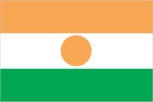
- three equal horizontal bands of orange (top), white, and green with a small orange disk centered in the white band; the orange band denotes the drier northern regions of the Sahara; white stands for purity and innocence; green symbolizes hope and the fertile and productive southern and western areas, as well as the Niger River; the orange disc represents the sun and the sacrifices made by the people
- note
- note: similar to the flag of India, which has a blue spoked wheel centered in the white band
Government type
semi-presidential republic
Independence
3 August 1960 (from France)
International law organization participation
has not submitted an ICJ jurisdiction declaration; accepts ICCt jurisdiction
International organization participation
ACP, AfDB, AU (suspended), CD, ECOWAS, EITI (compliant country), Entente, FAO, FZ, G-77, IAEA, IBRD, ICAO, ICCt, ICRM, IDA, IDB, IFAD, IFC, IFRCS, ILO, IMF, Interpol, IOC, IOM, IPU, ISO (correspondent), ITSO, ITU, ITUC (NGOs), LCBC, MIGA, MINUSCA, MNJTF, MONUSCO, NAM, OIC, OIF, OPCW, UN, UNCTAD, UNESCO, UNIDO, UNOOSA, UNWTO, UPU, WADB (regional), WAEMU, WCO, WFTU (NGOs), WHO, WIPO, WMO, WTO
Judicial branch
- highest court(s)
- Constitutional Court (consists of 7 judges); High Court of Justice (consists of 7 members)
- judge selection and term of office
- Constitutional Court judges nominated/elected - 1 by the president of the Republic, 1 by the president of the National Assembly, 2 by peer judges, 2 by peer lawyers, 1 law professor by peers, and 1 from within Nigerien society; all appointed by the president; judges serve 6-year nonrenewable terms with one-third of membership renewed every 2 years; High Judicial Court members selected from among the legislature and judiciary; members serve 5-year terms
- subordinate courts
- Court of Cassation; Council of State; Court of Finances; various specialized tribunals and customary courts
Legal system
mixed legal system of civil law, based on French civil law, Islamic law, and customary law
Legislative branch
- description
- unicameral National Assembly or Assemblee Nationale (171 statutory seats - 166 currently; 158 members directly elected from 8 multi-member constituencies in 7 regions and Niamey by party-list proportional representation, 8 reserved for minorities elected in special single-seat constituencies by simple majority vote, 5 seats reserved for Nigeriens living abroad - l seat per continent - elected in single-seat constituencies by simple majority vote; members serve 5-year terms)
- election results
- percent of vote by party - percent of vote by party - PNDS-Tarrayya 37.04%, MODEN/FA Lumana 8.71%, MPR-Jamhuriya 7.59%, MNSD-Nassara 6.77%, RDR-Tchanji 4.41%, CPR-Inganci 4.15%, MPN-Kishin Kassa 3.97%, PJP Generation Dubara 2.88%, ANDP Zaman Lahya 2.46%, RPP Farrilla 2.10%, ARD Adaltchi-Mutuntchi 1.74%, AMEN AMIN 1.43%, MDEN Falala 1.42%, other 15.33%; seats by party - PNDS-Tarrayya 79, MODEN/FA Lumana 19, MPR-Jamhuriya 14, MNSD-Nassara 13, CPR-Inganci 8, MPN-Kishin Kassa 6, ANDP-Zaman Lahiya 3, RPP Farrilla 2, PJP Generation Dubara 2, ARD Adaltchi-Mutuntchi 2, AMEN AMIN 2, other 16; composition - men 123, women 43, percent of women 25.9%
- elections
- last held on 27 December 2020 (next to be held in December 2025)
National anthem
- lyrics/music
- Maurice Albert THIRIET/Robert JACQUET and Nicolas Abel Francois FRIONNET
- name
- "La Nigerienne" (The Nigerien)
- note
- note: adopted 1961
National heritage
- selected World Heritage Site locales
- Air and Ténéré Natural Reserves (n); W-Arly-Pendjari Complex (n); Historic Agadez (c)
- total World Heritage Sites
- 3 (1 cultural, 2 natural)
National holiday
Republic Day, 18 December (1958); note - commemorates the founding of the Republic of Niger which predated independence from France in 1960
National symbol(s)
zebu; national colors: orange, white, green
Political parties and leaders
- Alliance for Democracy and the RepublicAlliance for Democratic Renewal or ARD-Adaltchi-Mutuntchi [Laouan MAGAGI] Alliance of Movements for the Emergence of Niger or AMEN AMIN [Omar Hamidou TCHIANA]Congress for the Republic or CPR-Inganci [Maradi Kassoum MOCTAR]Democratic Alternation for Equity in NigerDemocratic and Republican Renewal-RDR-Tchanji [Mahamane OUSMANE]Democratic Movement for the Emergence of NigerNational Movement for the Development of Society-Nassara or MNSD-Nassara [Seini OUMAROU]Nigerien Alliance for Democracy and Progress-Zaman Lahiya or ANDP-Zaman Lahiya [Moussa Hassane BARAZE]Nigerien Democratic Movement for an African Federation or MODEN/FA Lumana [Hama AMADOU]Nigerien Party for Democracy and Socialism or PNDS-Tarrayya [Mahamadou ISSOUFOU]Nigerien Patriotic Movement or MPN-Kishin Kassa [Ibrahim YACOUBA]Nigerien Rally for Democracy and PeacePatriotic Movement for the Republic or MPR-Jamhuriya [Albade ABOUBA]Peace, Justice, Progress–Generation DoubaraRally for Democracy and Progress-Jama'a or RDP-Jama'a [Hamid ALGABID]Rally for Peace and ProgressSocial Democratic Rally or RSD-Gaskiyya [Amadou CHEIFFOU]Social Democratic Party or PSD-Bassira [Sanoussi MAREINI]
- note
- note 1: only parties with seats in the National Assembly are listednote 2: the SPLM and SPLM-DC are banned political parties
Suffrage
18 years of age; universal
Economy
Agricultural products
millet, cow peas, sorghum, onions, milk, groundnuts, cassava, cabbages, goat milk, fruit
Budget
- expenditures
- $2.785 billion (2019 est.)
- revenues
- $2.325 billion (2019 est.)
Budget surplus (+) or deficit (-)
-5% (of GDP) (2017 est.)
Credit ratings
- Moody's rating
- B3 (2019)
- note
- note: The year refers to the year in which the current credit rating was first obtained.
Current account balance
- Current account balance 2018
- -$1.625 billion (2018 est.)
- Current account balance 2019
- -$1.572 billion (2019 est.)
- Current account balance 2020
- -$1.816 billion (2020 est.)
Debt - external
- Debt - external 31 December 2016
- $2.926 billion (31 December 2016 est.)
- Debt - external 31 December 2017
- $3.728 billion (31 December 2017 est.)
Economic overview
low-income Sahel economy; major instability and humanitarian crises limit economic activity; COVID-19 eliminated recent antipoverty gains; economy rebounding since December 2020 Nigerian border reopening and new investments; uranium resource rich
Exchange rates
- Currency
- Communaute Financiere Africaine francs (XOF) per US dollar -
- Exchange rates 2017
- 580.657 (2017 est.)
- Exchange rates 2018
- 555.446 (2018 est.)
- Exchange rates 2019
- 585.911 (2019 est.)
- Exchange rates 2020
- 575.586 (2020 est.)
- Exchange rates 2021
- 554.531 (2021 est.)
Exports
- Exports 2018
- $1.45 billion (2018 est.)
- Exports 2019
- $1.387 billion (2019 est.) note: data are in current year dollars
- Exports 2020
- $1.338 billion (2020 est.) note: data are in current year dollars
Exports - commodities
gold, sesame seeds, uranium, refined petroleum, onions (2021)
Exports - partners
United Arab Emirates 54%, China 25%, France 7%, Pakistan 5% (2019)
Fiscal year
calendar year
GDP - composition, by end use
- exports of goods and services
- 16.4% (2017 est.)
- government consumption
- 9.4% (2017 est.)
- household consumption
- 70.2% (2017 est.)
- imports of goods and services
- -34.6% (2017 est.)
- investment in fixed capital
- 38.6% (2017 est.)
- investment in inventories
- 0% (2017 est.)
GDP - composition, by sector of origin
- agriculture
- 41.6% (2017 est.)
- industry
- 19.5% (2017 est.)
- services
- 38.7% (2017 est.)
GDP (official exchange rate)
$12.926 billion (2019 est.)
Gini Index coefficient - distribution of family income
- Gini Index coefficient - distribution of family income 2018
- 37.3 (2018 est.)
Household income or consumption by percentage share
- highest 10%
- 26.8% (2014)
- lowest 10%
- 3.2%
Imports
- Imports 2018
- $3.369 billion (2018 est.)
- Imports 2019
- $3.395 billion (2019 est.) note: data are in current year dollars
- Imports 2020
- $3.542 billion (2020 est.) note: data are in current year dollars
Imports - commodities
rice, packaged medicines, palm oil, cars, cement (2019)
Imports - partners
China 19%, France 9%, United Arab Emirates 7%, Cote d'Ivoire 6%, India 6%, Nigeria 5%, Togo 5%, Turkey 5% (2019)
Industrial production growth rate
4.09% (2021 est.)
Industries
uranium mining, petroleum, cement, brick, soap, textiles, food processing, chemicals, slaughterhouses
Inflation rate (consumer prices)
- Inflation rate (consumer prices) 2019
- -2.49% (2019 est.)
- Inflation rate (consumer prices) 2020
- 2.9% (2020 est.)
- Inflation rate (consumer prices) 2021
- 3.84% (2021 est.)
Labor force
9.411 million (2021 est.)
Population below poverty line
40.8% (2018 est.)
Public debt
- Public debt 2016
- 45.2% of GDP (2016 est.)
- Public debt 2017
- 45.3% of GDP (2017 est.)
Real GDP (purchasing power parity)
- note
- note: data are in 2017 dollars
- Real GDP (purchasing power parity) 2019
- $28.541 billion (2019 est.)
- Real GDP (purchasing power parity) 2020
- $29.554 billion (2020 est.)
- Real GDP (purchasing power parity) 2021
- $29.964 billion (2021 est.)
Real GDP growth rate
- Real GDP growth rate 2019
- 5.94% (2019 est.)
- Real GDP growth rate 2020
- 3.55% (2020 est.)
- Real GDP growth rate 2021
- 1.39% (2021 est.)
Real GDP per capita
- note
- note: data are in 2017 dollars
- Real GDP per capita 2019
- $1,200 (2019 est.)
- Real GDP per capita 2020
- $1,200 (2020 est.)
- Real GDP per capita 2021
- $1,200 (2021 est.)
Reserves of foreign exchange and gold
- Reserves of foreign exchange and gold 31 December 2016
- $1.186 billion (31 December 2016 est.)
- Reserves of foreign exchange and gold 31 December 2017
- $1.314 billion (31 December 2017 est.)
Taxes and other revenues
21.4% (of GDP) (2017 est.)
Unemployment rate
- Unemployment rate 2019
- 0.55% (2019 est.)
- Unemployment rate 2020
- 0.62% (2020 est.)
- Unemployment rate 2021
- 0.75% (2021 est.)
Youth unemployment rate (ages 15-24)
- female
- 0.7%
- male
- 1.2%
- total
- 1% (2021 est.)
Energy
Carbon dioxide emissions
- from coal and metallurgical coke
- 499,000 metric tonnes of CO2 (2019 est.)
- from consumed natural gas
- 0 metric tonnes of CO2 (2019 est.)
- from petroleum and other liquids
- 1.875 million metric tonnes of CO2 (2019 est.)
- total emissions
- 2.374 million metric tonnes of CO2 (2019 est.)
Coal
- consumption
- 224,000 metric tons (2020 est.)
- exports
- 0 metric tons (2020 est.)
- imports
- 0 metric tons (2020 est.)
- production
- 224,000 metric tons (2020 est.)
- proven reserves
- 6 million metric tons (2019 est.)
Electricity
- consumption
- 1,325,420,000 kWh (2019 est.)
- exports
- 0 kWh (2019 est.)
- imports
- 1.057 billion kWh (2019 est.)
- installed generating capacity
- 324,000 kW (2020 est.)
- transmission/distribution losses
- 313 million kWh (2019 est.)
Electricity access
- electrification - rural areas
- 9% (2021)
- electrification - total population
- 18.6% (2021)
- electrification - urban areas
- 65.9% (2021)
- population without electricity
- 21 million (2020)
Electricity generation sources
- biomass and waste
- 0% of total installed capacity (2020 est.)
- fossil fuels
- 94.1% of total installed capacity (2020 est.)
- geothermal
- 0% of total installed capacity (2020 est.)
- hydroelectricity
- 0% of total installed capacity (2020 est.)
- nuclear
- 0% of total installed capacity (2020 est.)
- solar
- 5.9% of total installed capacity (2020 est.)
- tide and wave
- 0% of total installed capacity (2020 est.)
- wind
- 0% of total installed capacity (2020 est.)
Energy consumption per capita
- Total energy consumption per capita 2019
- 1.54 million Btu/person (2019 est.)
Natural gas
- consumption
- 0 cubic meters (2021 est.)
- exports
- 0 cubic meters (2021 est.)
- imports
- 0 cubic meters (2021 est.)
- production
- 0 cubic meters (2021 est.)
- proven reserves
- 0 cubic meters (2021 est.)
Petroleum
- crude oil and lease condensate exports
- 0 bbl/day (2018 est.)
- crude oil and lease condensate imports
- 0 bbl/day (2018 est.)
- crude oil estimated reserves
- 150 million barrels (2021 est.)
- refined petroleum consumption
- 13,800 bbl/day (2019 est.)
- total petroleum production
- 8,000 bbl/day (2021 est.)
Refined petroleum products - exports
5,422 bbl/day (2015 est.)
Refined petroleum products - imports
3,799 bbl/day (2015 est.)
Refined petroleum products - production
15,280 bbl/day (2015 est.)
Communications
Broadband - fixed subscriptions
- subscriptions per 100 inhabitants
- 0.1 (2020 est.)
- total
- 12,000 (2020 est.)
Broadcast media
state-run TV station; 3 private TV stations provide a mix of local and foreign programming; state-run radio has only radio station with national coverage; about 30 private radio stations operate locally; as many as 100 community radio stations broadcast; transmissions of multiple international broadcasters are available
Internet country code
.ne
Internet users
- percent of population
- 22% (2021 est.)
- total
- 5.5 million (2021 est.)
Telecommunication systems
- domestic
- fixed-line less than 1 per 100 persons and mobile-cellular at nearly 56 per 100 persons (2021)
- general assessment
- Niger is one of the largest countries in West Africa but also one of the poorest in the world; as with many African markets, a lack of fixed telecoms infrastructure has led to growth in mobile services; Niger’s mobile penetration is modest compared to other countries in the region, while fixed broadband penetration is negligible; recent international investment to complete the Trans-Saharan Dorsal optical fibre (SDR) network has extended the reach of fiber infrastructure in the country, and also increased international capacity; new cables linking the country with Chad and Burkina Faso have extended Niger’s connectivity with international cable infrastructure (2022)
- international
- country code - 227; satellite earth stations - 2 Intelsat (1 Atlantic Ocean and 1 Indian Ocean)
Telephones - fixed lines
- subscriptions per 100 inhabitants
- (2021 est.) less than 1
- total subscriptions
- 58,000 (2021)
Telephones - mobile cellular
- subscriptions per 100 inhabitants
- 56 (2021 est.)
- total subscriptions
- 14 million (2021 est.)
Transportation
Airports
30 (2021)
Airports - with paved runways
- 10
- note
- note: paved runways have a concrete or asphalt surface but not all have facilities for refueling, maintenance, or air traffic control; the length of a runway required for aircraft to safely operate depends on a number of factors including the type of aircraft, the takeoff weight (including passengers, cargo, and fuel), engine types, flap settings, landing speed, elevation of the airport, and average maximum daily air temperature; paved runways can reach a length of 5,000 m (16,000 ft.), but the “typical” length of a commercial airline runway is between 2,500-4,000 m (8,000-13,000 ft.)
Airports - with unpaved runways
- 20
- note
- note: unpaved runways have a surface composition such as grass or packed earth and are most suited to the operation of light aircraft; unpaved runways are usually short, often less than 1,000 m (3,280 ft.) in length; airports with unpaved runways often lack facilities for refueling, maintenance, or air traffic control
Civil aircraft registration country code prefix
5U
Heliports
1 (2021)
Merchant marine
- by type
- general cargo 1, other 1
- total
- 2 (2022)
National air transport system
- inventory of registered aircraft operated by air carriers
- 3
- number of registered air carriers
- 2 (2020)
Pipelines
464 km oil
Roadways
- paved
- 3,912 km (2010)
- total
- 18,949 km (2010)
- unpaved
- 15,037 km (2010)
Waterways
300 km (2012) (the Niger, the only major river, is navigable to Gaya between September and March)
Military and Security
Military - note
while the FAN is responsible for ensuring external security, much of its focus is internal, particularly counterinsurgency/counterterrorism operations against terrorist groups operating in the areas bordering Burkina Faso, Libya, Mali, and Nigeria, as well as much of northern Niger and the Diffa and Lake Chad regions; these groups include the Islamic State of Iraq and ash-Sham (ISIS) in the Greater Sahara, Boko Haram, ISIS-West Africa, and Jama’at Nusrat al-Islam wal-Muslimin (JNIM); up to 70% of the security forces are assigned to fighting militants and protecting bordersthe FAN is a lightly armed, but experienced military; it has conducted training and combat operations with foreign partners, including the French and US; the EU has also provided security assistance, particularly to the GN, GNN, and the National Police; the FAN also conducts counterterrorism operations with the G4 Sahel Group and the Multinational Joint Task Force (MNJTF), which coordinates the Lake Chad states’ operations against Boko Haram; it conducted counterinsurgency operations against Taureg rebels during the periods of 1990-95 and 2007-09in recent years, Niger has focused on making its security services more mobile to improve their effectiveness in countering terrorism and protecting the country’s borders; with training support and material assistance from the US and the EU, each security service has created new units or reconfigured existing units with an emphasis on mobility, hybridization, and specialized training; since the 2010s, the Army has created a special operations command, several special intervention battalions, and an anti-terrorism unit known as the 1st Expeditionary Force of Niger (EFoN); the GN has created mobile units modeled on European gendarmerie forces known as the Rapid Action Group—Surveillance and Response in the Sahel (Groupe d'action Rapides—Surveillance et Intervention au Sahel or GAR-SI Sahel); the GNN has developed mobile Multipurpose Squadrons (Escadrons Polyvalentes de la Garde Nationale de Niger or EP-GNN), while the National Police have created Mobile Border Control Companies (Compagnie Mobile de Contrôle des Frontières or CMCF); Niger has also established training centers for special forces in Tillia and peacekeeping in Ouallam; meanwhile, the Air Force has received a few armed UAVs from Turkeythe Army was established in 1960 from French colonial forces, while the Air Force was formed as the Niger National Escadrille in 1961; the GN received its first Nigerien commander in 1962; since its establishment, Niger’s military has played a significant role in the country’s politics, conducting successful coups in 1974, 1996, 1999, and 2010, and ruling Niger for much of the period before 1999; it seized control of the government again in 2023 (2023)
Military and security forces
- Nigerien Armed Forces (Forces Armees Nigeriennes, FAN): Army, Nigerien Air Force, Niger Gendarmerie (GN)Ministry of Interior: Niger National Guard (GNN), National Police (2023)
- note
- note 1: the Gendarmerie (GN) and the National Guard (GNN) are paramilitary forces; the GN has primary responsibility for rural security while the GNN is responsible for domestic security and the protection of high-level officials and government buildings; the GNN in past years was known as the National Forces of Intervention and Security and the Republican Guardnote 2: the National Police includes the Directorate of Territorial Surveillance, which is charged with border management
Military and security service personnel strengths
- information varies; estimated 30-35,000 active FAN troops; estimated 5-10,000 paramilitary Gendarmerie and National Guard personnel (2023)
- note
- note: in 2020, the Nigerien Government announced it intended to increase the size of the FAN to 50,000 by 2025
Military deployments
note: Niger also has committed about 1,000 troops to the Multinational Joint Task Force (MNJTF) against Boko Haram and other terrorist groups operating in the general area of the Lake Chad Basin and along Nigeria's northeast border; national MNJTF troop contingents are deployed within their own country territories, although cross‐border operations are conducted periodically
Military equipment inventories and acquisitions
the FAN's inventory consists of a wide variety of older weapons; in recent years, it has received small amounts of mostly secondhand equipment and donations from several countries, including Egypt and the US (2023)
Military expenditures
- Military Expenditures 2018
- 1.9% of GDP (2018 est.)
- Military Expenditures 2019
- 1.7% of GDP (2019 est.)
- Military Expenditures 2020
- 2% of GDP (2020 est.)
- Military Expenditures 2021
- 1.8% of GDP (2021 est.)
- Military Expenditures 2022
- 1.7% of GDP (2022 est.)
Military service age and obligation
18 is the legal minimum age for selective compulsory or voluntary military service for unmarried men and women; 24-month service term (2023)
Transnational Issues
Disputes - international
Niger-Benin-Nigeria: location of Niger-Benin-Nigeria tripoint is unresolved Niger-Burkina Faso: the dispute with Burkina Faso was referred to the International Court of Justice (ICJ) in 2010; the ICJ ruled in 2013 that 786 sq km should go to Burkina Faso and 277 sq km to Niger; the ruling was implemented in 2015 and 2016, with Burkina Faso gaining 14 towns and Niger 4 Niger-Cameroon-Nigeria: only Nigeria and Cameroon have heeded the Lake Chad Commission's admonition to ratify the delimitation treaty that also includes the Chad-Niger and Niger-Nigeria boundaries Niger-Libya: Libya claims about 25,000 sq km in a currently dormant dispute in the Tummo region
Illicit drugs
a transit country for illegal drugs shipped through Niger to Africa, Europe, and the Middle East; drugs from South America, cocaine, heroin, cannabis, and various synthetics transit through Niger to European and Middle Eastern markets; hashish from Morocco is trafficked through Niger to Libya and Egypt and Europe and the Middle East; Nigerien citizens and migrants crossing Niger consume significant quantities of the opioid tramadol from neighboring Nigeria
Refugees and internally displaced persons
- IDPs
- 335,277 (includes the regions of Diffa, Tillaberi, and Tahoua; unknown how many of the 11,000 people displaced by clashes between government forces and the Tuareg militant group, Niger Movement for Justice, in 2007 are still displaced; inter-communal violence; Boko Haram attacks in southern Niger, 2015) (2023)
- refugees (country of origin)
- 221,810 (Nigeria), 67,191 (Mali) (refugees and asylum seekers) (2023)
Terrorism
Terrorist group(s)
- Boko Haram; Islamic State of Iraq and ash-Sham in the Greater Sahara (ISIS-GS); Islamic State of Iraq and ash-Sham – West Africa (ISIS-WA); Jama'at Nusrat al-Islam wal-Muslimin (JNIM); al-Mulathamun Battalion (al-Mourabitoun)
- note
- note: details about the history, aims, leadership, organization, areas of operation, tactics, targets, weapons, size, and sources of support of the group(s) appear(s) in Appendix-T
Environment
Air pollutants
- carbon dioxide emissions
- 2.02 megatons (2016 est.)
- methane emissions
- 22.99 megatons (2020 est.)
- particulate matter emissions
- 50.15 micrograms per cubic meter (2019 est.)
Climate
desert; mostly hot, dry, dusty; tropical in extreme south
Environment - current issues
overgrazing; soil erosion; deforestation; desertification; contaminated water; inadequate potable water; wildlife populations (such as elephant, hippopotamus, giraffe, and lion) threatened because of poaching and habitat destruction
Environment - international agreements
- party to
- Biodiversity, Climate Change, Climate Change-Kyoto Protocol, Climate Change-Paris Agreement, Comprehensive Nuclear Test Ban, Desertification, Endangered Species, Environmental Modification, Hazardous Wastes, Law of the Sea, Nuclear Test Ban, Ozone Layer Protection, Wetlands
- signed, but not ratified
- none of the selected agreements
Food insecurity
- widespread lack of access
- due to internal conflict, high food prices, and floods - about 3.28 million people are projected to be acutely food insecure during the June to August 2023 lean season period; this would be an improvement on the situation in 2022, mostly reflecting the sharp upturn in crop yields following the below average cereal output in 2021; persistent insecurity continues to disrupt livelihoods and has displaced over 370,000 people, mostly in the Diffa, Tahoua and Tillabery regions, as of May 2023; high food prices, as well as the floods in 2022 that affected about 327,000 people, are additional factors that have aggravated food insecurity (2023)
Land use
- agricultural land
- 35.1% (2018 est.)
- agricultural land: arable land
- arable land: 12.3% (2018 est.)
- agricultural land: permanent crops
- permanent crops: 0.1% (2018 est.)
- agricultural land: permanent pasture
- permanent pasture: 22.7% (2018 est.)
- forest
- 1% (2018 est.)
- other
- 63.9% (2018 est.)
Major aquifers
Lake Chad Basin, Lullemeden-Irhazer Basin, Murzuk-Djado Basin
Major lakes (area sq km)
- fresh water lake(s)
- Lake Chad (endorheic lake shared with Chad, Nigeria, and Cameroon) - 10,360-25,900 sq kmnote - area varies by season and year to year
Major rivers (by length in km)
Niger (shared with Guinea [s], Mali, Benin, and Nigeria [m]) - 4,200 kmnote – [s] after country name indicates river source; [m] after country name indicates river mouth
Major watersheds (area sq km)
Atlantic Ocean drainage: Niger (2,261,741 sq km)Internal (endorheic basin) drainage: Lake Chad (2,497,738 sq km)
Revenue from coal
0.03% of GDP (2018 est.)
Revenue from forest resources
4.41% of GDP (2018 est.)
Total renewable water resources
34.05 billion cubic meters (2020 est.)
Total water withdrawal
- agricultural
- 2.35 billion cubic meters (2020 est.)
- industrial
- 40 million cubic meters (2020 est.)
- municipal
- 190 million cubic meters (2020 est.)
Urbanization
- rate of urbanization
- 4.72% annual rate of change (2020-25 est.)
- urban population
- 17.1% of total population (2023)
Waste and recycling
- municipal solid waste generated annually
- 1,865,646 tons (1993 est.)
- municipal solid waste recycled annually
- 74,626 tons (2005 est.)
- percent of municipal solid waste recycled
- 4% (2005 est.)