2010 Edition
CIA World Factbook 2010 (Project Gutenberg)
Introduction
Background
Niger became independent from France in 1960 and experienced single-party and military rule until 1991, when Gen. Ali SAIBOU was forced by public pressure to allow multiparty elections, which resulted in a democratic government in 1993. Political infighting brought the government to a standstill and in 1996 led to a coup by Col. Ibrahim BARE. In 1999, BARE was killed in a counter coup by military officers who restored democratic rule and held elections that brought Mamadou TANDJA to power in December of that year. TANDJA was reelected in 2004 and in 2009 spearheaded a constitutional amendment that would allow him to extend his term as president. In February 2010, a military coup deposed TANDJA, immediately suspended the constitution and dissolved the Cabinet, and promised that elections would be held following a transitional period of unspecified duration. Niger is one of the poorest countries in the world with minimal government services and insufficient funds to develop its resource base. The largely agrarian and subsistence-based economy is frequently disrupted by extended droughts common to the Sahel region of Africa. A predominately Tuareg ethnic group emerged in February 2007, the Nigerien Movement for Justice (MNJ), and attacked several military targets in Niger's northern region throughout 2007 and 2008. Successful government offensives in 2009 limited the rebels' operational capabilities.
Geography
Area
- land
- 1,266,700 sq km
- total
- 1.267 million sq km
- water
- 300 sq km
Area - comparative
slightly less than twice the size of Texas
Climate
desert; mostly hot, dry, dusty; tropical in extreme south
Coastline
0 km (landlocked)
Elevation extremes
- highest point
- Idoukal-n-Taghes 2,022 m
- lowest point
- Niger River 200 m
Environment - current issues
overgrazing; soil erosion; deforestation; desertification; wildlife populations (such as elephant, hippopotamus, giraffe, and lion) threatened because of poaching and habitat destruction
Environment - international agreements
- party to
- Biodiversity, Climate Change, Climate Change-Kyoto Protocol, Desertification, Endangered Species, Environmental Modification, Hazardous Wastes, Ozone Layer Protection, Wetlands signed, but not ratified: Law of the Sea
Freshwater withdrawal (domestic/industrial/agricultural)
- per capita
- 156 cu m/yr (2000)
- total
- 2.18 cu km/yr (4%/0%/95%)
Geographic coordinates
16 00 N, 8 00 E
Geography - note
landlocked; one of the hottest countries in the world; northern four-fifths is desert, southern one-fifth is savanna, suitable for livestock and limited agriculture
Irrigated land
730 sq km (2003)
Land boundaries
- border countries
- Algeria 956 km, Benin 266 km, Burkina Faso 628 km, Chad 1,175 km, Libya 354 km, Mali 821 km, Nigeria 1,497 km
- total
- 5,697 km
Land use
- arable land
- 11.43%
- other
- 88.56% (2005)
- permanent crops
- 0.01%
Location
Western Africa, southeast of Algeria
Map references
Africa
Maritime claims
none (landlocked)
Natural hazards
recurring droughts
Natural resources
uranium, coal, iron ore, tin, phosphates, gold, molybdenum, gypsum, salt, petroleum
Terrain
predominately desert plains and sand dunes; flat to rolling plains in south; hills in north
Total renewable water resources
33.7 cu km (2003)
People and Society
Age structure
0-14 years: 49.6% (male 3,840,379/female 3,758,674) 15-64 years: 48% (male 3,658,361/female 3,690,373) 65 years and over: 2.3% (male 159,984/female 198,481) (2010 est.)
Birth rate
51.08 births/1,000 population (2010 est.)
Death rate
14.47 deaths/1,000 population (July 2010 est.)
Education expenditures
3.7% of GDP (2008)
Ethnic groups
Haoussa 55.4%, Djerma Sonrai 21%, Tuareg 9.3%, Peuhl 8.5%, Kanouri Manga 4.7%, other 1.2% (2001 census)
HIV/AIDS - adult prevalence rate
0.8% (2007 est.)
HIV/AIDS - deaths
4,000 (2007 est.)
HIV/AIDS - people living with HIV/AIDS
60,000 (2007 est.)
Infant mortality rate
- female
- 109.34 deaths/1,000 live births (2010 est.)
- male
- 119.52 deaths/1,000 live births
- total
- 114.5 deaths/1,000 live births
Languages
French (official), Hausa, Djerma
Life expectancy at birth
- female
- 54.26 years (2010 est.)
- male
- 51.75 years
- total population
- 52.99 years
Literacy
- definition: age 15 and over can read and write
- female
- 15.1% (2005 est.)
- male
- 42.9%
- total population
- 28.7%
Major infectious diseases
- animal contact disease
- rabies
- degree of risk
- very high
- food or waterborne diseases
- bacterial and protozoal diarrhea, hepatitis A, and typhoid fever
- respiratory disease
- meningococcal meningitis note: highly pathogenic H5N1 avian influenza has been identified in this country; it poses a negligible risk with extremely rare cases possible among US citizens who have close contact with birds (2009)
- vectorborne disease
- malaria
- water contact disease
- schistosomiasis
Median age
- female
- 15.4 years (2010 est.)
- male
- 15 years
- total
- 15.2 years
Nationality
- adjective
- Nigerien
- noun
- Nigerien(s)
Net migration rate
0 migrant(s)/1,000 population (2010 est.)
Population
15,878,271 (July 2010 est.)
Population growth rate
3.66% (2010 est.)
Religions
Muslim 80%, other (includes indigenous beliefs and Christian) 20%
School life expectancy (primary to tertiary education)
- female
- 4 years (2009)
- male
- 5 years
- total
- 5 years
Sex ratio
- at birth
- 1.03 male(s)/female under 15 years: 1.02 male(s)/female 15-64 years: 0.99 male(s)/female 65 years and over: 0.8 male(s)/female
- total population
- 1 male(s)/female (2010 est.)
Total fertility rate
7.68 children born/woman (2010 est.)
Urbanization
- rate of urbanization
- 4% annual rate of change (2005-10 est.)
- urban population
- 16% of total population (2008)
Government
Administrative divisions
8 regions (regions, singular - region) includes 1 capital district* (communite urbaine); Agadez, Diffa, Dosso, Maradi, Niamey*, Tahoua, Tillaberi, Zinder
Capital
- geographic coordinates
- 13 31 N, 2 07 E
- name
- Niamey
- time difference
- UTC+1 (6 hours ahead of Washington, DC during Standard Time)
Constitution
adopted 18 July 1999
Country name
- conventional long form
- Republic of Niger
- conventional short form
- Niger
- local long form
- Republique du Niger
- local short form
- Niger
Diplomatic representation from the US
- chief of mission
- Ambassador Bisa WILLIAMS
- embassy
- Rue Des Ambassades, Niamey
- FAX
- [227] 20-73-31-67
- mailing address
- B. P. 11201, Niamey
- telephone
- [227] 20-72-26-61 thru 64
Diplomatic representation in the US
- chancery
- 2204 R Street NW, Washington, DC 20008
- chief of mission
- Ambassador Aminata Djibrilla Maiga TOURE
- FAX
- [1] (202)483-3169
- telephone
- [1] (202) 483-4224 through 4227
Executive branch
- cabinet
- 26-member Cabinet appointed by the president (Cabinet dissolved following the 18 February 2010 coup) (For more information visit the World Leaders website )
- chief of state
- Djibo SALOU, chairman of the Supreme Council for the Restoration of Democracy, and a leader of the military coup that deposed President Mamadou TANDJA on 18 February 2010
- election results
- Mamadou TANDJA reelected president; percent of vote - Mamadou TANDJA 65.5%, Mahamadou ISSOUFOU 34.5%
- elections
- president elected by popular vote for a five-year term (eligible for a second term); second round of election last held on 4 December 2004; a presidential election to restore civilian rule is scheduled for 31 January 2011
- head of government
- Prime Minister Mahamadou DANDA (since 19 February 2010); appointed by the president and shares some executive responsibilities with the president
Flag description
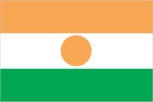
three equal horizontal bands of orange (top), white, and green with a small orange disk centered in the white band; the orange band denotes the drier northern regions of the Sahara; white stands for purity and innocence; green symbolizes hope and the fertile and productive southern and western areas, as well as the Niger River; the orange disc represents the sun and the sacrifices made by the people note: similar to the flag of India, which has a blue spoked wheel centered in the white band
Government type
republic
Independence
3 August 1960 (from France)
International organization participation
ACP, AfDB, AU, ECOWAS (suspended), Entente, FAO, FZ, G-77, IAEA, IBRD, ICAO, ICCt, ICRM, IDA, IDB, IFAD, IFC, IFRCS, ILO, IMF, Interpol, IOC, IOM, ITSO, ITU, ITUC, MONUSCO, NAM, OIC, OIF, OPCW, UN, UNCTAD, UNESCO, UNIDO, UNMIL, UNMIS, UNOCI, UNWTO, UPU, WADB (regional), WAEMU, WCO, WFTU, WHO, WIPO, WMO, WTO
Judicial branch
State Court or Cour d'Etat; Court of Appeals or Cour d'Appel
Legal system
based on French civil law system and customary law; has not accepted compulsory ICJ jurisdiction
Legislative branch
- unicameral National Assembly (113 seats; members elected by popular vote to serve five-year terms)
- election results
- percent of vote by party - NA; seats by party - MNSD 76, RSD 15, RDP 7, PNA-Alouma 1, Alkalami 1, Nigerien Party of the Masses for Labor 1, independents 12
- elections
- last held on 20 October 2009 (next to be held in 2014)
National anthem
- lyrics/music
- Maurice Albert THIRIET/Robert JACQUET and Nicolas Abel Francois FRIONNET note: adopted 1961
- name
- "La Nigerienne" (The Nigerian)
National holiday
Republic Day, 18 December (1958); note - commemorates the founding of the Republic of Niger which predated independence from France in 1960
Political parties and leaders
Alkalama; Democratic and Social Convention-Rahama or CDS-Rahama [Mahamane OUSMANE]; National Movement for a Developing Society-Nassara or MNSD-Nassara [Hama AMADOU]; Niger Social Democratic Party or PSDN; Nigerien Alliance for Democracy and Social Progress-Zaman Lahiya or ANDP-Zaman Lahiya [Moumouni DJERMAKOYE]; Nigerien Party for Autonomy or PNA-Alouma [Sanousi JACKOU]; Nigerien Party for Democracy and Socialism or PNDS-Tarrayya [Issifou MAHAMADOU]; Nigerien Party of the Masses for Labor; Nigerien Progressive Party or PPN-RDA; Rally for Democracy and Progress or RDP-jama'a [Hamid ALGABID]; Social and Democratic Rally or RSD-Gaskiyya [Cheiffou AMADOU]
Political pressure groups and leaders
The Nigerien Movement for Justice or MNJ, a predominantly Tuareg rebel group
Suffrage
18 years of age; universal
Economy
Agriculture - products
cowpeas, cotton, peanuts, millet, sorghum, cassava (tapioca), rice; cattle, sheep, goats, camels, donkeys, horses, poultry
Central bank discount rate
4.25% (31 December 2009) 4.75% (31 December 2008)
Commercial bank prime lending rate
NA% (31 December 2009 est.) NA% (31 December 2008 est.)
Current account balance
-$321 million (2007 est.)
Debt - external
$2.1 billion (2003 est.)
Distribution of family income - Gini index
50.5 (1995)
Economy - overview
Niger is a landlocked, Sub-Saharan nation, whose economy centers on subsistence crops, livestock, and some of the world's largest uranium deposits. Drought, desertification, and strong population growth have undercut the economy. Niger shares a common currency, the CFA franc, and a common central bank, the Central Bank of West African States (BCEAO), with seven other members of the West African Monetary Union. In December 2000, Niger qualified for enhanced debt relief under the International Monetary Fund program for Highly Indebted Poor Countries (HIPC) and concluded an agreement with the Fund on a Poverty Reduction and Growth Facility (PRGF). Debt relief provided under the enhanced HIPC initiative significantly reduces Niger's annual debt service obligations, freeing funds for expenditures on basic health care, primary education, HIV/AIDS prevention, rural infrastructure, and other programs geared at poverty reduction. In December 2005, Niger received 100% multilateral debt relief from the IMF, which translates into the forgiveness of approximately US $86 million in debts to the IMF, excluding the remaining assistance under HIPC. In 2010, the Niger economy was recovering from the effects of a 2009 drought that reduced grain and cowpea production and decimated livestock herds. The economy was also hurt when the international community cut off non-humanitarian aid in response to TANDJA's moves to extend his term as president. Nearly half of the government's budget is derived from foreign donor resources. Future growth may be sustained by exploitation of oil, gold, coal, and other mineral resources.
Electricity - consumption
589.5 million kWh (2007 est.)
Electricity - exports
0 kWh (2008 est.)
Electricity - imports
450 million kWh (2007 est.)
Electricity - production
150 million kWh (2007 est.)
Exchange rates
Communaute Financiere Africaine francs (XOF) per US dollar - 506.04 (2009), 447.81 (2008), 493.51 (2007), 522.59 (2006) note: since 1 January 1999, the West African CFA franc (XOF) has been pegged to the euro at a rate of 655.957 CFA francs per euro; West African CFA franc (XOF) coins and banknotes are not accepted in countries using Central African CFA francs (XAF), and vice versa, even though the two currencies trade at par
Exports
$428 million (2006)
Exports - commodities
uranium ore, livestock, cowpeas, onions
Exports - partners
France 52.63%, Nigeria 22.43%, US 18.24% (2009)
GDP - composition by sector
- agriculture
- 39%
- industry
- 17%
- services
- 44% (2001)
GDP - per capita (PPP)
$700 (2010 est.) $700 (2009 est.) $700 (2008 est.) note: data are in 2010 US dollars
GDP - real growth rate
3.5% (2010 est.) -1.2% (2009 est.) 9.3% (2008 est.)
GDP (official exchange rate)
$5.603 billion (2010 est.)
GDP (purchasing power parity)
$10.58 billion (2010 est.) $10.22 billion (2009 est.) $10.35 billion (2008 est.) note: data are in 2010 US dollars
Household income or consumption by percentage share
lowest 10%: 2.3% highest 10%: 35.7% (2005)
Imports
$800 million (2006)
Imports - commodities
foodstuffs, machinery, vehicles and parts, petroleum, cereals
Imports - partners
China 16.32%, France 15.95%, Netherlands 7.66%, Algeria 7.15%, French Polynesia 6.11%, Nigeria 5.48%, Cote d'Ivoire 4.15%, US 4.05% (2009)
Industrial production growth rate
5.1% (2003 est.)
Industries
uranium mining, cement, brick, soap, textiles, food processing, chemicals, slaughterhouses
Inflation rate (consumer prices)
0.1% (2007 est.)
Labor force
4.688 million (2007)
Labor force - by occupation
- agriculture
- 90%
- industry
- 6%
- services
- 4% (1995)
Market value of publicly traded shares
$NA
Natural gas - consumption
0 cu m (2008 est.)
Natural gas - exports
0 cu m (2008 est.)
Natural gas - imports
0 cu m (2008 est.)
Natural gas - production
0 cu m (2008 est.)
Natural gas - proved reserves
0 cu m (1 January 2010 est.)
Oil - consumption
6,000 bbl/day (2009 est.)
Oil - exports
0 bbl/day (2007 est.)
Oil - imports
5,367 bbl/day (2007 est.)
Oil - production
0 bbl/day (2009 est.)
Oil - proved reserves
0 bbl (1 January 2010 est.)
Population below poverty line
63% (1993 est.)
Stock of broad money
$1.038 billion (31 December 2009 est.) $844.6 million (31 December 2008 est.)
Stock of domestic credit
$683.6 million (31 December 2009) $313.5 million (31 December 2008)
Stock of narrow money
$782.6 million (31 December 2009) $617.9 million (31 December 2008)
Unemployment rate
NA%
Communications
Broadcast media
state-run TV station; 3 private TV stations provide a mix of local and foreign programming; only national radio station with national reach is state-run; about 30 private radio stations operate locally; as many as 100 community radio stations broadcast; transmissions of multiple international broadcasters are available (2007)
Internet country code
.ne
Internet hosts
172 (2010)
Internet users
115,900 (2009)
Telephone system
- domestic
- combined fixed-line and mobile-cellular teledensity remains less than 20 per 100 persons despite a rapidly increasing cellular subscribership base; domestic satellite system with 3 earth stations and 1 planned
- general assessment
- inadequate; small system of wire, radio telephone communications, and microwave radio relay links concentrated in the southwestern area of Niger
- international
- country code - 227; satellite earth stations - 2 Intelsat (1 Atlantic Ocean and 1 Indian Ocean) (2009)
Telephones - main lines in use
65,000 (2009)
Telephones - mobile cellular
2.599 million (2009)
Transportation
Airports
27 (2010)
Airports - with paved runways
- total
- 10 2,438 to 3,047 m: 3 1,524 to 2,437 m: 6 914 to 1,523 m: 1 (2010)
Airports - with unpaved runways
- total
- 17 1,524 to 2,437 m: 2 914 to 1,523 m: 14 under 914 m: 1 (2010)
Roadways
- paved
- 3,912 km
- total
- 18,949 km
- unpaved
- 15,037 km (2008)
Waterways
300 km; (the Niger, the only major river, is navigable to Gaya between September and March) (2008)
Military and Security
Manpower available for military service
males age 16-49: 3,202,237 females age 16-49: 3,151,521 (2010 est.)
Manpower fit for military service
males age 16-49: 2,104,378 females age 16-49: 2,129,985 (2010 est.)
Manpower reaching militarily significant age annually
- female
- 172,180 (2010 est.)
- male
- 177,985
Military branches
Nigerien Armed Forces (Forces Armees Nigeriennes, FAN): Army, Nigerien Air Force (Force Aerienne du Niger) (2010)
Military expenditures
1.3% of GDP (2006)
Military service age and obligation
17-21 years of age for selective compulsory or voluntary military service; enlistees must be Nigerien citizens and unmarried; 2-year service term; women may serve in health care (2009)
Transnational Issues
Disputes - international
Libya claims about 25,000 sq km in a currently dormant dispute in the Tommo region; much of Benin-Niger boundary, including tripoint with Nigeria, remains undemarcated; only Nigeria and Cameroon have heeded the Lake Chad Commission's admonition to ratify the delimitation treaty that also includes the Chad-Niger and Niger-Nigeria boundaries
Trafficking in persons
- current situation
- Niger is a source, transit, and destination country for children and women trafficked for forced labor and sexual exploitation; caste-based slavery practices, rooted in ancestral master-slave relationships, continue in isolated areas of the country - an estimated 8,800 to 43,000 Nigeriens live under conditions of traditional slavery; children are trafficked within Niger for forced begging, forced labor in gold mines, domestic servitude, sexual exploitation, and possibly for forced labor in agriculture and stone quarries; women and children from neighboring states are trafficked to and through Niger for domestic servitude, sexual exploitation, forced labor in mines and on farms, and as mechanics and welders
- tier rating
- Tier 2 Watch List - the Government of Niger does not fully comply with the minimum standards for the elimination of trafficking and is not making any significant efforts to do so; the government demonstrated marginal efforts to combat human trafficking, including traditional slavery, during the last year (2009) page last updated on January 20, 2011 ======================================================================