1981 Edition
CIA World Factbook 1981 (Internet Archive)
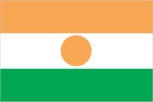
Geography
Area
924,630 km2; 24% arable (13% of total land area under cultivation), 35% forested, 41% desert, waste, urban, or other
Coastline
853 km
Ethnic divisions
main Negroid groups 75% (of which, Hausa 50%, Djerma and Songhai 21%); Caucasian elements include Tuareg, Toubous, and Tamacheks; mixed group includes Fulani
Labor force
26,000 wage earners; bulk of population engaged in subsistence agriculture and animal husbandry
Land boundaries
4,034 km
Language
French official; many African languages; Hausa used for trade
Limits of territorial waters (claimed)
30 nm (fishing 200 nm; exclusive economic zone 200 nm)
Literacy
about 6%
Organized labor
negligible
Religion
80% Muslim, remainder largely animists and a very few Christians
People and Society
Ethnic divisions
of the more than 250 tribal groups, the Hausa and Fulani of the north, the Yoruba of the south, and the Ibos of the east comprise 60% of the population; about 27,000 nonAfricans
Labor force
approx. 28-32 million (1979)
Language
English official; Hausa, Yoruba, and Ibo also widely used
Literacy
est. 25%
Nationality
noun — Nigerian(s); adjective — Nigerian
Organized labor
between 800,000 and 1 million wage earners, approx. 2.4% of total labor force, belong to some 70 unions
Population
82,396,000 (July 1982), average annual growth rate 3.3%
Religion
no exact figures on religious breakdown, but last census (1963) showed Nigeria to be 47% Muslim, 34% Christian, and 18% animist
Government
Branches
- executive authority exercised by Supreme Military Council (SMC) composed of army officers; Cabinet includes some civilian technocrats
- a strong executive president, a bicameral National Assembly with a 95-seat Senate and a 449-seat House, and a separate judiciary
Capital
- Niamey
- Lagos
Communists
- no Communist party; some sympathizers in outlawed Sawaba party
- the pro-Communist underground comprises a fraction of the small Nigerian left; leftist leaders are prominent in the country's central labor organization but have little influence on government
Elections
- political activity banned Political parties and leaders: political parties banned
- national elections held every four years (last held in 1979) to elect a federal president, federal Senate, federal House of Representatives, state governors, and state legislatures Political parties and leaders: National Party of Nigeria (NPN), led by Shehu Shagari; Unity Party of Nigeria (UPN), led by Obafemi Awolowo; Nigerian People's Party (NPP), led by Nnamdi Azikiwe; Great Nigerian People's Party (GNPP), led by Waziri Ibrahim; People's Redemption Party (PRP), led by Aminu Kano
Fiscal year
calendar year restoration of civilian rule in October 1979; accepts compulsory ICJ jurisdiction, with reservations
Government leader
- Lt. Col. Seyni KOUNTCHE, President of Supreme Military Council, Chief of State, Minister of Defense, and Minister of Interior
- President Alhaji Shehu SHAGARI
Legal system
- based on French civil law system and customary law; constitution adopted 1960, suspended 1974; judicial review of legislative acts in Constitutional Chamber of the Supreme Court; has not accepted compulsory ICJ jurisdiction
- based on English common law, tribal law, and Islamic law; new constitution was promulgated for NIGERIA (Continued)
Member of
- AFDB, APC, CEAO, EAMA, EGA, ECOWAS, Entente, FAO, G-77, GATT, IAEA, IBRD, ICAO, IDA, IFAD, IFC, ILO, IMF, IPU, ISCON, ITU, Lake Chad Basin Commission, Niger River Commission, NAM, OAU, OCAM, UN, UNESCO, UPU, WHO, WIPO, WMO
- AFDB, APC, Commonwealth, EGA, ECOWAS, FAO, G-77, GATT, IAEA, IBRD, ICAO, ICO, IDA, IFAD, IFC, ILO, IMCO, IMF, ISO, ITC, ITU, IWC— International Wheat Council, Lake Chad Basin Commission, Niger River Commission, NAM, OAU, OPEC, UN, UNESCO, UPU, WHO, WMO, WTO
National holiday
- Proclamation of the Republic, 18 December
- Independence Day, 1 October
Official name
- Republic of Niger
- Federal Republic of Nigeria
Political subdivisions
- 7 departments, 32 arrondissements
- 19 states, headed by elected governors
Suffrage
- suspended
- universal over age 18
Type
- republic; military regime in power since April 1974
- federal republic since 1979
Economy
Agriculture
- commercial — peanuts, cotton, livestock; main food crops — millet, sorghum, niebe beans, vegetables
- main crops — peanuts, cotton, cocoa, rubber, yams, cassava, sorghum, palm kernels, millet, corn, rice; livestock; almost self-sufficient
Budget
- (1980/81) revenue $458.8 million, current expenditure $255.9 million, development expenditure $344.6 million
- (1980) revenues $22.1 billion, current expenditures $8.6 billion, development expenditures $16.7 billion
Electric power
- 32,800 kW capacity (1980); 78 million kWh produced (1980), 14 kWh per capita
- 1,823,000 kW capacity (1980); 5.2 billion kWh produced (1980), 66 kWh per capita
Exports
- $557.9 million (f.o.b., 1980); about 65% uranium, rest peanuts and related products, livestock, hides, skins; exports understated because much regional trade not recorded
- $23.4 billion (f.o.b., 1980); oil (95%), cocoa, palm products, rubber, timber, tin
Fiscal year
1 October-30 September
Fishing
catch 535,435 metric tons (1979); imports $14.5 million (1974)
GDP
- $2.7 billion (1980), $491 per capita, annual average growth rate 1.3% (1971-81)
- $92.6 billion (1980 est, current prices), $1,087 per capita; 7.8% growth rate (1980 est.)
Imports
- $801.0 million (c.i.f., 1980); fuels, machinery, transport equipment, foodstuffs, consumer goods
- $15.9 billion (f.o.b., 1980); machinery and transport equipment, manufactured goods, chemicals
Major industries
- cement plant, brick factory, rice mill, small cotton gins, oil presses, slaughterhouse, and a few other small light industries; uranium production began in 1971
- mining — crude oil, natural gas, coal, tin, columbite; processing industries — oil palm, peanut, cotton, rubber, petroleum, wood, hides, skins; manufacturing industries — textiles, cement, building materials, food products, footwear, chemical, printing, ceramics
Major trade partners
- France (over 50%), other EC countries, Nigeria, UDEAC countries, US; preferential tariff to EC and franc zone countries
- UK, EC, US
Monetary conversion rate
- about 225.8 Communaute Financiere Africaine=US$l (1980)
- 1 Naira=US$1.8297 (1980)
Communications
Airfields
- 66 total, 62 usable; 6 with permanent-surface runways; 1 with runways 2,440-3,659 m, 18 with runways 1,220-2,439 m
- 79 total, 75 usable; 25 with permanent-surface runways; 10 with runways 2,440-3,659 m, 19 with runways 1,220-2,439 m
Civil air
- 4 major transport aircraft
- 40 major transport aircraft
Highways
- 8,220 km total; 2,674 km paved bituminous, 2,658 km gravel, 2,888 km unimproved earth
- 107,990 km total 30,019 km paved (mostly bituminous surface treatment); 25,411 km laterite, gravel, crushed stone, improved earth; 52,560 km unimproved
Inland waterways
- Niger River navigable 300 km from Niamey to Gaya on the Benin frontier from mid-December through March
- 8,575 km consisting of Niger and Benue rivers and smaller rivers and creeks; additionally, Kainji Lake has several hundred miles of navigable lake routes
Military budget
for fiscal year ending 30 September 1981, $15.4 million; about 3.9% of central government budget
Military manpower
- males 15-49, 1,255,000; 676,000 fit for military service; about 60,000 reach military age (18) annually
- males 15-49, 17,450,000; 10,030,000 fit for military service; 860,000 reach military age (18) annually
Pipelines
1,918 km crude oil; 102 km natural gas; 3,000 km refined products
Ports
5 major (Lagos, Port Harcourt, Calabar, Warri, Sapele), 10 minor
Railroads
- none
- 3,505 km 1.067-meter gauge
Telecommunications
- small system of wire and radiorelay links concentrated in southwestern area; 8,500 telephones (0.2 per 100 popl.); 12 AM stations, no FM, and 2 TV stations; 1 Atlantic Ocean satellite station, 4 domestic antennas under construction DEFENSE FORCES
- above average system with major expansion in progress; radio relay and cable routes; 154,200 telephones (0.2 per 100 popl.); 25 AM, 6 FM, and 26 TV stations; satellite station with Atlantic and Indian Ocean antennas, domestic satellite system with 18 stations; 1 coaxial submarine cable DEFENSE FORCES