1995 Edition
CIA World Factbook 1995 (Project Gutenberg)
Geography
Area
total area: 19,060 sq km land area: 18,760 sq km comparative area: slightly smaller than New Jersey
Climate
tropical; modified by southeast trade winds; hot, humid
Coastline
2,254 km
Environment
current issues: NA natural hazards: typhoons most frequent from November to March international agreements: NA
International disputes
none
Irrigated land
NA sq km
Land boundaries
0 km
Land use
arable land: 0% permanent crops: 0% meadows and pastures: 14% forest and woodland: 51% other: 35%
Location
Oceania, islands in the South Pacific Ocean, east of Australia
Map references
Oceania
Maritime claims
exclusive economic zone: 200 nm territorial sea: 12 nm
Natural resources
nickel, chrome, iron, cobalt, manganese, silver, gold, lead, copper
Terrain
coastal plains with interior mountains
People and Society
Age structure
0-14 years: 31% (female 27,712; male 28,677) 15-64 years: 64% (female 58,462; male 60,169) 65 years and over: 5% (female 4,997; male 4,535) (July 1995 est.)
Birth rate
22.04 births/1,000 population (1995 est.)
Death rate
4.9 deaths/1,000 population (1995 est.)
Ethnic divisions
Melanesian 42.5%, European 37.1%, Wallisian 8.4%, Polynesian 3.8%, Indonesian 3.6%, Vietnamese 1.6%, other 3%
Infant mortality rate
14.4 deaths/1,000 live births (1995 est.)
Labor force
50,469 foreign workers for plantations and mines from Wallis and Futuna, Vanuatu, and French Polynesia (1980 est.) by occupation: NA
Languages
French, 28 Melanesian-Polynesian dialects
Life expectancy at birth
total population: 74.02 years male: 70.73 years female: 77.48 years (1995 est.)
Literacy
age 15 and over can read and write (1976) total population: 91% male: 92% female: 90%
Nationality
noun: New Caledonian(s) adjective: New Caledonian
Net migration rate
0.4 migrant(s)/1,000 population (1995 est.)
Population
184,552 (July 1995 est.)
Population growth rate
1.75% (1995 est.)
Religions
Roman Catholic 60%, Protestant 30%, other 10%
Total fertility rate
2.57 children born/woman (1995 est.)
Government
Administrative divisions
none (overseas territory of France); there are no first-order administrative divisions as defined by the US Government, but there are 3 provinces named Iles Loyaute, Nord, and Sud
Capital
Noumea
Constitution
28 September 1958 (French Constitution)
Digraph
NC
Diplomatic representation in US
none (overseas territory of France)
Executive branch
chief of state: President Francois MITTERRAND (since 21 May 1981) head of government: High Commissioner and President of the Council of Government Didier CULTIAUX (since NA July 1994; appointed by the French Ministry of the Interior); President of the Territorial Congress Simon LOUECKHOTE (since 26 June 1989) cabinet: Consultative Committee
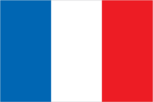
Flag
the flag of France is used
French National Assembly
elections last held 21 March 1993 (next to be held 21 and 28 March 1998); results - percent of vote by party NA; seats - (2 total) RPCR 2
French Senate
elections last held 27 September 1992 (next to be held September 2001); results - percent of vote by party NA; seats - (1 total) RPCR 1
Independence
none (overseas territory of France; a referendum on independence will be held in 1998)
Judicial branch
Court of Appeal
Legal system
the 1988 Matignon Accords grant substantial autonomy to the islands; formerly under French law
Legislative branch
unicameral
Member of
ESCAP (associate), FZ, ICFTU, SPC, WFTU, WMO
Names
conventional long form: Territory of New Caledonia and Dependencies conventional short form: New Caledonia local long form: Territoire des Nouvelle-Caledonie et Dependances local short form: Nouvelle-Caledonie
National holiday
National Day, Taking of the Bastille, 14 July (1789)
Political parties and leaders
white-dominated Rassemblement pour la Caledonie dans la Republique (RPCR), conservative, Jacques LAFLEUR, president - affiliated to France's Rassemblement pour la Republique (RPR; also called South Province Party); Melanesian proindependence Kanaka Socialist National Liberation Front (FLNKS), Paul NEAOUTYINE; Melanesian moderate Kanak Socialist Liberation (LKS), Nidoish NAISSELINE; National Front (FN), extreme right, Guy GEORGE; Caledonie Demain (CD), right-wing, Bernard MARANT; Union Oceanienne (UO), conservative, Michel HEMA; Front Uni de Liberation Kanak (FULK), proindependence, Clarence UREGEI; Union Caledonian (UC), Francois BURCK, president; "1999" (new party calling for an autonomous state), Philippe PENTECOST
Suffrage
18 years of age; universal
Territorial Assembly
elections last held 11 June 1989 (next to be held July 1995); results - RPCR 44.5%, FLNKS 28.5%, FN 7%, CD 5%, UO 4%, other 11%; seats - (54 total) RPCR 27, FLNKS 19, FN 3, other 5; note - election boycotted by FULK
Type
overseas territory of France since 1956
US diplomatic representation
none (overseas territory of France)
Economy
Agriculture
large areas devoted to cattle grazing; coffee, corn, wheat, vegetables; 60% self-sufficient in beef
Budget
revenues: $224 million expenditures: $211 million, including capital expenditures of $NA (1985 est.)
Currency
1 CFP franc (CFPF) = 100 centimes
Economic aid
recipient: Western (non-US) countries, ODA and OOF bilateral commitments (1970-89), $4.185 billion
Electricity
capacity: 250,000 kW production: 1.2 billion kWh consumption per capita: 6,178 kWh (1993)
Exchange rates
Comptoirs Francais du Pacifique francs (CFPF) per US$1 - 96.25 (January 1995), 100.93 (1994), 102.96 (1993), 96.24 (1992), 102.57 (1991), 99.00 (1990); note - linked at the rate of 18.18 to the French franc
Exports
$671 million (f.o.b., 1989) commodities: nickel metal 87%, nickel ore partners: France 32%, Japan 23.5%, US 3.6%
External debt
$NA
Fiscal year
calendar year
Illicit drugs
illicit cannabis cultivation is becoming a principal source of income for some families
Imports
$764 million (c.i.f., 1989) commodities: foods, fuels, minerals, machines, electrical equipment partners: France 44.0%, US 10%, Australia 9%
Industrial production
growth rate NA%
Industries
nickel mining and smelting
Inflation rate (consumer prices)
1.4% (1990)
National product
GDP - purchasing power parity - $1 billion (1991 est.)
National product per capita
$6,000 (1991 est.)
National product real growth rate
2.4% (1988)
Overview
New Caledonia has more than 25% of the world's known nickel resources. In recent years the economy has suffered because of depressed international demand for nickel, the principal source of export earnings. Only a negligible amount of the land is suitable for cultivation, and food accounts for about 25% of imports.
Unemployment rate
16% (1989)
Communications
Radio
broadcast stations: AM 5, FM 3, shortwave 0 radios: NA
Telephone system
32,578 telephones (1987) local: NA intercity: NA international: 1 INTELSAT (Pacific Ocean) satellite link
Television
broadcast stations: 7 televisions: NA
Transportation
Airports
total: 36 with paved runways over 3,047 m: 1 with paved runways 914 to 1,523 m: 3 with paved runways under 914 m: 19 with unpaved runways 914 to 1,523 m: 13
Highways
total: 6,340 km paved: 634 km unpaved: 5,706 km (1987)
Merchant marine
total: 1 roll-on/roll-off ship (1,000 GRT or over) totaling 3,079 GRT/724 DWT
Ports
Mueo, Noumea, Thio
Railroads
0 km
Military and Security
Branches
French Armed Forces (Army, Navy, Air Force, Gendarmerie); Police Force
Defense expenditures
$NA, NA% of GDP
Note
defense is the responsibility of France ________________________________________________________________________ NEW ZEALAND