2001 Edition
CIA World Factbook 2001 (Project Gutenberg)
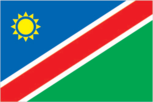
Introduction
Age structure
0-14 years: 42.74% (male 389,028; female 379,229) 15-64 years: 53.54% (male 480,075; female 482,375) 65 years and over: 3.72% (male 29,109; female 37,861) (2001 est.)
Area
total: 825,418 sq km land: 825,418 sq km water: 0 sq km
Area - comparative
slightly more than half the size of Alaska
Background
South Africa occupied the German colony of Sud-West Afrika during World War I and administered it as a mandate until after World War II when it annexed the territory. In 1966 the Marxist South-West Africa People's Organization (SWAPO) guerrilla group launched a war of independence for the area that was soon named Namibia, but it was not until 1988 that South Africa agreed to end its administration in accordance with a UN peace plan for the entire region. Independence came in 1990. Namibia Geography
Birth rate
34.71 births/1,000 population (2001 est.)
Climate
desert; hot, dry; rainfall sparse and erratic
Coastline
1,572 km
Death rate
20.9 deaths/1,000 population (2001 est.)
Elevation extremes
lowest point: Atlantic Ocean 0 m highest point: Konigstein 2,606 m
Environment - current issues
very limited natural fresh water resources; desertification
Environment - international agreements
party to: Antarctic-Marine Living Resources, Biodiversity, Climate Change, Desertification, Endangered Species, Hazardous Wastes, Law of the Sea, Ozone Layer Protection, Wetlands signed, but not ratified: none of the selected agreements Namibia People
Geographic coordinates
22 00 S, 17 00 E
Infant mortality rate
71.66 deaths/1,000 live births (2001 est.) Life expectancy at birt
Irrigated land
60 sq km (1993 est.)
Land boundaries
total: 3,824 km border countries: Angola 1,376 km, Botswana 1,360 km, South Africa 855 km, Zambia 233 km
Land use
arable land: 1% permanent crops: 0% permanent pastures: 46% forests and woodland: 22% other: 31% (1993 est.)
Location
Southern Africa, bordering the South Atlantic Ocean, between Angola and South Africa
Map references
Africa
Maritime claims
contiguous zone: 24 NM exclusive economic zone: 200 NM territorial sea: 12 NM
Natural hazards
prolonged periods of drought
Natural resources
diamonds, copper, uranium, gold, lead, tin, lithium, cadmium, zinc, salt, vanadium, natural gas, hydropower, fish note: suspected deposits of oil, coal, and iron ore
Net migration rate
0 migrant(s)/1,000 population (2001 est.)
Population
1,797,677 note: estimates for this country explicitly take into account the effects of excess mortality due to AIDS; this can result in lower life expectancy, higher infant mortality and death rates, lower population and growth rates, and changes in the distribution of population by age and sex than would otherwise be expected (July 2001 est.)
Population growth rate
1.38% (2001 est.)
Sex ratio
at birth: 1.03 male(s)/female under 15 years: 1.03 male(s)/female 15-64 years: 1 male(s)/female 65 years and over: 0.77 male(s)/female total population: 1 male(s)/female (2001 est.)
Terrain
mostly high plateau; Namib Desert along coast; Kalahari Desert in east