2000 Edition
CIA World Factbook 2000 (Project Gutenberg)
Introduction
Background
Much of this island has been devastated and two-thirds of the population has fled abroad due to the eruption of the Soufriere Hills volcano that began on 18 July 1995.
Geography
Area
- land
- 100 sq km
- total
- 100 sq km
- water
- 0 sq km
Area - comparative
about 0.6 times the size of Washington, DC
Climate
tropical; little daily or seasonal temperature variation
Coastline
40 km
Elevation extremes
- highest point
- Chances Peak (in the Soufriere Hills) 914 m
- lowest point
- Caribbean Sea 0 m
Environment - current issues
land erosion occurs on slopes that have been cleared for cultivation
Geographic coordinates
16 45 N, 62 12 W
Irrigated land
NA sq km
Land boundaries
0 km
Land use
- arable land
- 20%
- forests and woodland
- 40%
- other
- 30% (1993 est.)
- permanent crops
- 0%
- permanent pastures
- 10%
Location
Caribbean, island in the Caribbean Sea, southeast of Puerto Rico
Map references
Central America and the Caribbean
Maritime claims
- exclusive fishing zone
- 200 nm
- territorial sea
- 3 nm
Natural hazards
severe hurricanes (June to November); volcanic eruptions (full-scale eruptions of the Soufriere Hills volcano occurred during 1996-97)
Natural resources
NEGL
Terrain
volcanic islands, mostly mountainous, with small coastal lowland
People and Society
Age structure
0-14 years: 24.23% (male 778; female 775) 15-64 years: 64.25% (male 1,969; female 2,149) 65 years and over: 11.52% (male 395; female 343) (2000 est.)
Birth rate
17.48 births/1,000 population (2000 est.)
Death rate
7.49 deaths/1,000 population (2000 est.)
Ethnic groups
black, white
Infant mortality rate
9.1 deaths/1,000 live births (2000 est.)
Languages
English
Life expectancy at birth
- female
- 80.23 years (2000 est.)
- male
- 75.78 years
- total population
- 77.96 years
Literacy
- definition
- age 15 and over has ever attended school
- female
- 97% (1970 est.)
- male
- 97%
- total population
- 97%
Nationality
- adjective
- Montserratian
- noun
- Montserratian(s)
Net migration rate
195.35 migrant(s)/1,000 population (2000 est.)
Population
- 6,409
- note
- an estimated 8,000 refugees left the island following the resumption of volcanic activity in July 1995; some have returned (July 2000 est.)
Population growth rate
20.53% (2000 est.)
Religions
Anglican, Methodist, Roman Catholic, Pentecostal, Seventh-Day Adventist, other Christian denominations
Sex ratio
- at birth
- 1.04 male(s)/female under 15 years: 1 male(s)/female 15-64 years: 0.92 male(s)/female 65 years and over: 1.15 male(s)/female
- total population
- 0.96 male(s)/female (2000 est.)
Total fertility rate
1.85 children born/woman (2000 est.)
Government
Administrative divisions
3 parishes; Saint Anthony, Saint Georges, Saint Peter's
Capital
Plymouth (abandoned in 1997 due to volcanic activity; interim government buildings have been built at Brades, in the Carr's Bay/Little Bay vicinity at the northwest end of Montserrat)
Constitution
present constitution came into force 19 December 1989
Country name
- conventional long form
- none
- conventional short form
- Montserrat
Data code
MH
Dependency status
overseas territory of the UK
Diplomatic representation from the US
none (overseas territory of the UK)
Diplomatic representation in the US
none (overseas territory of the UK)
Executive branch
- cabinet
- Executive Council consists of the governor, the chief minister, three other ministers, the attorney general, and the finance secretary
- chief of state
- Queen ELIZABETH II (since 6 February 1952), represented by Governor Anthony John ABBOTT (since NA September 1997)
- elections
- the monarch is hereditary; governor appointed by the monarch; following legislative elections, the leader of the majority party usually becomes chief minister; note - as a result of the last election, a coalition party was formed between NPP, NDP, and one of the independent candidates
- head of government
- Chief Minister David BRANDT (since 22 August 1997)
Flag description
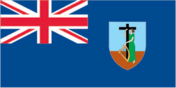
blue, with the flag of the UK in the upper hoist-side quadrant and the Montserratian coat of arms centered in the outer half of the flag; the coat of arms features a woman standing beside a yellow harp with her arm around a black cross
Government type
NA
Independence
none (overseas territory of the UK)
International organization participation
Caricom, CDB, ECLAC (associate), ICFTU, Interpol (subbureau), OECS, WCL
Judicial branch
Eastern Caribbean Supreme Court (based in Saint Lucia), one judge of the Supreme Court is a resident of the islands and presides over the High Court
Legal system
English common law and statutory law
Legislative branch
- unicameral Legislative Council (11 seats, 7 popularly elected; members serve five-year terms)
- election results
- percent of vote by party - NA; seats by party - PPA 2, MNR 2, NPP 1, independent 2
- elections
- last held 11 November 1996 (next to be held by NA 2001)
National holiday
Celebration of the Birthday of the Queen (second Saturday of June)
Political parties and leaders
Movement for National Reconstruction or MNR ; National Development Party or NDP ; National Progressive Party or NPP ; People's Progressive Alliance or PPA
Suffrage
18 years of age; universal
Economy
Agriculture - products
cabbages, carrots, cucumbers, tomatoes, onions, peppers; livestock products
Budget
- expenditures
- $31.6 million, including capital expenditures of $8.4 million (1997 est.)
- revenues
- $31.4 million
Currency
1 East Caribbean dollar (EC$) = 100 cents
Debt - external
$8.9 million (1997)
Economic aid - recipient
$9.8 million (1995); note - about $100 million (1996-98) in reconstruction aid from the UK; Country Policy Plan (1999) is a three-year program for spending $122.8 million in British budgetary assistance
Economy - overview
Severe volcanic activity, which began in July 1995, put a damper on this small, open economy throughout 1996-99. A catastrophic eruption in June 1997 closed the air and sea ports, causing further economic and social dislocation. Two-thirds of the 12,000 inhabitants fled the island. Some began to return in 1998, but lack of housing limited the number. The agriculture sector continued to be affected by the lack of suitable land for farming and the destruction of crops. Construction was the dominant activity in 1997 and 1998. GDP declined again in 1998. Prospects for the economy depend largely on developments in relation to the volcano and on public sector construction activity. The UK committed about $100 million in 1996-98 to help reconstruct the economy and has programmed additional aid for 1999-2001.
Electricity - consumption
9 million kWh (1998)
Electricity - exports
0 kWh (1998)
Electricity - imports
0 kWh (1998)
Electricity - production
10 million kWh (1998)
Electricity - production by source
- fossil fuel
- 100%
- hydro
- 0%
- nuclear
- 0%
- other
- 0% (1998)
Exchange rates
East Caribbean dollars (EC$) per US$1 - 2.7000 (fixed rate since 1976)
Exports
$1.5 million (1998)
Exports - commodities
electronic components, plastic bags, apparel, hot peppers, live plants, cattle
Exports - partners
US, Antigua and Barbuda (1993)
Fiscal year
1 April - 31 March
GDP
purchasing power parity - $31 million (1998 est.)
GDP - composition by sector
- agriculture
- 5.4%
- industry
- 13.6%
- services
- 81% (1996 est.)
GDP - per capita
purchasing power parity - $NA
GDP - real growth rate
-16% (1998 est.)
Household income or consumption by percentage share
lowest 10%: NA% highest 10%: NA%
Imports
$26 million (1998)
Imports - commodities
machinery and transportation equipment, foodstuffs, manufactured goods, fuels, lubricants, and related materials
Imports - partners
US, UK, Trinidad and Tobago, Japan, Canada (1993)
Industrial production growth rate
NA%
Industries
tourism, rum, textiles, electronic appliances
Inflation rate (consumer prices)
5% (1998)
Labor force
4,521 (1992); note - recently lowered by flight of people from volcanic activity
Labor force - by occupation
agriculture NA%, industry NA%, services NA%
Population below poverty line
NA%
Unemployment rate
20% (1996 est.)
Communications
Internet Service Providers (ISPs)
NA
Radio broadcast stations
AM 1, FM 2, shortwave 0 (1998)
Radios
7,000 (1997)
Telephone system
- domestic
- NA
- international
- NA
Telephones - main lines in use
4,000 (1992)
Telephones - mobile cellular
70 (1994)
Television broadcast stations
1 (1997)
Televisions
3,000 (1997)
Transportation
Airports
1 (1999 est.)
Airports - with paved runways
- total
- 1 914 to 1,523 m: 1 (1999 est.)
Highways
- paved
- 203 km
- total
- 269 km
- unpaved
- 66 km (1995)
Merchant marine
none (1999 est.)
Ports and harbors
Plymouth (abandoned), Little Bay (anchorages and ferry landing), Carr's Bay
Railways
0 km
Military and Security
Military - note
defense is the responsibility of the UK
Military branches
Police Force
Transnational Issues
Disputes - international
- none
- MOROCCO