1983 Edition
CIA World Factbook 1983 (Internet Archive)
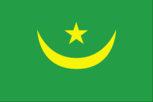
Geography
Agriculture
most Mauritanians are nomads or subsistence farmers; main products — livestock, cereals, vegetables, dates; cash crops — gum arable
Area
1,085,760 km2; almost 90% desert; 10% pasture; less than 1 % suitable for crops
Branches
executive, Military Committee for National Salvation rules by decree; National Assembly and judiciary suspended pending restoration of civilian rule
Budget
$231 million budgeted in 1983; $11 million capital investment, $84 million debt servicing, subsidies, transfers, and miscellaneous expenditures; $195 million revenues (planned 1983)
Capital
Nouakchott
CNP
about $720 million (1982 est.), $460 per capita
Coastline
754 km People
Communists
no Communist Party, but there is a scattering of Maoist sympathizers
Elections
in abeyance; last presidential election August 1976 Political parties and leaders: suspended
Electric power
90,000 kW capacity (1983); 160 million kWh produced (1983), 100 kWh per capita
Ethnic divisions
40% mixed Moor/black; 30% Moor, 30% black
Exports
$240 million (f.o.b., 1982); iron ore, processed fish, and small amounts of gum arabic and gypsum; also unrecorded but numerically significant cattle exports to Senegal
Fiscal year
calendar year Communications
Fishing
artisanal fish catch 20,000 metric tons (1982 est.); commercial fishing exports 143,000 metric tons in 1981
Government leader
Lt. Col. Mohamed Khouna Ould HAIDALLA, President
Imports
$410 million (f.o.b., 1982); foodstuffs and other consumer goods, petroleum products, capital goods
Labor force
total labor force 465,000 (1981 est); about 45,000 wage earners (1980 IMF); 47% agriculture, 29% services, 14% industry and commerce, 10% government; considerable unemployment
Land boundaries
5,118 km Water
Language
Hasanya Arabic (national); French (official); Toucouleur, Fula, Sarakole, Wolof
Legal system
based on Islamic law; military constitution April 1979
Limits of territorial waters (claimed)
70 nm (fishing, 200 nm; exclusive economic zone 200 nm)
Literacy
17%
Major industries
mining of iron ore and gypsum, fish processing
Major trade partners
France and other EC members, Senegal, and US
Member of
AfDB, AIOEC, Arab League, CEAO, CIPEC (associate), EAMA, EIB (associate), FAO, G-77, GATT, IBRD, ICAO, IDA, IDB — Islamic Development Bank, IFAD, IFC, ILO, IMF, IMO, INTELSAT, INTERPOL, IPU, ITU, NAM, OAU, QIC, OM VS (Organization for the Development of the Senegal River Valley), UN, UNESCO, UPU, WHO, WIPO, WMO Economy
Monetary conversion rate
55.76 ouguiyas=US$l (30 October 1983)
National holiday
Independence Day, 28 November
Nationality
noun — Mauritanian(s); adjective — Mauritanian
NOTE
Mauritania acquired administrative control of the southern third of Western (formerly Spanish) Sahara under a 1975 agreement with Morocco and Spain. Following an August 1979 peace agreement with Polisario insurgents fighting for control of Western Sahara, Mauritania withdrew from the territory and renounced all territorial claims.
Official name
Islamic Republic of Mauritania
Organized labor
30,000 members claimed by single union, Mauritanian Workers' Union Government
Political subdivisions
12 regions and a capital district
Population
1,623,000 (July 1984), average annual growth rate 2.0%
Railroads
650 km 1.435-meter standard gauge, single track, privately owned
Religion
nearly 100% Muslim
Suffrage
universal for adults
Type
republic; military seized power in bloodless coup 10 July 1978