2023 Edition
CIA World Factbook 2023 (factbook.json @ 0d4fa4984ecb)
Introduction
Background
With a civilization that dates back thousands of years, Malta boasts some of the oldest megalithic sites in the world. Situated in the center of the Mediterranean, Malta’s islands have long served as a strategic military asset, with the islands at various times having come under control of the Phoenicians, Carthaginians, Greeks, Romans, Byzantines, Moors, Normans, Sicilians, Spanish, Knights of St. John, and the French. Most recently a British colony (since 1814), Malta gained its independence in 1964 and declared itself a republic 10 years later. While under British rule, the island staunchly supported the UK through both world wars. Since about the mid-1980s, the island has transformed itself into a freight transshipment point, a financial center, and a tourist destination while its key industries moved toward more service-oriented activities. Malta became an EU member in May 2004 and began using the euro as currency in 2008.
Geography
Area
- land
- 316 sq km
- total
- 316 sq km
- water
- 0 sq km
Area - comparative
slightly less than twice the size of Washington, DC
Climate
Mediterranean; mild, rainy winters; hot, dry summers
Coastline
196.8 km (excludes 56 km for the island of Gozo)
Elevation
- highest point
- Ta'Dmejrek on Dingli Cliffs 253 m
- lowest point
- Mediterranean Sea 0 m
Geographic coordinates
35 50 N, 14 35 E
Geography - note
the country comprises an archipelago, with only the three largest islands (Malta, Ghawdex or Gozo, and Kemmuna or Comino) inhabited; numerous bays provide good harbors; Malta and Tunisia are discussing oil exploration on the continental shelf between their countries, although no commercially viable reserves have been found as of 2017
Irrigated land
35 sq km (2020)
Land boundaries
- total
- 0 km
Land use
- agricultural land
- 32.3% (2018 est.)
- agricultural land: arable land
- arable land: 28.4% (2018 est.)
- agricultural land: permanent crops
- permanent crops: 3.9% (2018 est.)
- agricultural land: permanent pasture
- permanent pasture: 0% (2018 est.)
- forest
- 0.9% (2018 est.)
- other
- 66.8% (2018 est.)
Location
Southern Europe, islands in the Mediterranean Sea, south of Sicily (Italy)
Map references
Europe
Maritime claims
- contiguous zone
- 24 nm
- continental shelf
- 200-m depth or to the depth of exploitation
- exclusive fishing zone
- 25 nm
- territorial sea
- 12 nm
Natural hazards
occasional droughts
Natural resources
limestone, salt, arable land
Population distribution
most of the population lives on the eastern half of Malta, the largest of the three inhabited islands
Terrain
mostly low, rocky, flat to dissected plains; many coastal cliffs
People and Society
Age structure
- 0-14 years
- 14.53% (male 34,870/female 32,989)
- 15-64 years
- 62.83% (male 151,927/female 141,561)
- 65 years and over
- 22.65% (2023 est.) (male 48,830/female 56,961)
Alcohol consumption per capita
- beer
- 2.8 liters of pure alcohol (2019 est.)
- other alcohols
- 0.42 liters of pure alcohol (2019 est.)
- spirits
- 2.51 liters of pure alcohol (2019 est.)
- total
- 8.07 liters of pure alcohol (2019 est.)
- wine
- 2.34 liters of pure alcohol (2019 est.)
Birth rate
9.6 births/1,000 population (2023 est.)
Children under the age of 5 years underweight
NA
Contraceptive prevalence rate
NA
Current health expenditure
10.8% of GDP (2020)
Currently married women (ages 15-49)
63.2% (2023 est.)
Death rate
8.6 deaths/1,000 population (2023 est.)
Dependency ratios
- elderly dependency ratio
- 27.7
- potential support ratio
- 3.6 (2021 est.)
- total dependency ratio
- 47.1
- youth dependency ratio
- 19.3
Drinking water source
- improved: rural
- rural: 100% of population
- improved: total
- total: 100% of population
- improved: urban
- urban: 100% of population
- unimproved: rural
- rural: 0% of population
- unimproved: total
- total: 0% of population (2020 est.)
- unimproved: urban
- urban: 0% of population
Education expenditures
5.9% of GDP (2020 est.)
Ethnic groups
Maltese (descendants of ancient Carthaginians and Phoenicians with strong elements of Italian and other Mediterranean stock)
Gross reproduction rate
0.74 (2023 est.)
Hospital bed density
4.5 beds/1,000 population (2017)
Infant mortality rate
- female
- 4.5 deaths/1,000 live births
- male
- 4.4 deaths/1,000 live births
- total
- 4.5 deaths/1,000 live births (2023 est.)
Languages
Maltese (official) 90.1%, English (official) 6%, multilingual 3%, other 0.9% (2005 est.)
Life expectancy at birth
- female
- 85.6 years
- male
- 81.3 years
- total population
- 83.4 years (2023 est.)
Literacy
- definition
- age 15 and over can read and write
- female
- 96.4% (2021)
- male
- 93.4%
- total population
- 94.9%
Major urban areas - population
213,000 VALLETTA (capital) (2018)
Maternal mortality ratio
3 deaths/100,000 live births (2020 est.)
Median age
- female
- 44.4 years
- male
- 42.1 years
- total
- 43.2 years (2023 est.)
Mother's mean age at first birth
- 29.3 years (2020 est.)
- note
- note: data refers to the average of the different childbearing ages of first-order births
Nationality
- adjective
- Maltese
- noun
- Maltese (singular and plural)
Net migration rate
5 migrant(s)/1,000 population (2023 est.)
Obesity - adult prevalence rate
28.9% (2016)
Physicians density
2.86 physicians/1,000 population (2015)
Population
467,138 (2023 est.)
Population distribution
most of the population lives on the eastern half of Malta, the largest of the three inhabited islands
Population growth rate
0.59% (2023 est.)
Religions
Roman Catholic (official) more than 90% (2006 est.)
Sanitation facility access
- improved: rural
- rural: 100% of population
- improved: total
- total: 100% of population
- improved: urban
- urban: 100% of population
- unimproved: rural
- rural: 0% of population
- unimproved: total
- total: 0% of population (2020 est.)
- unimproved: urban
- urban: 0% of population
School life expectancy (primary to tertiary education)
- female
- 18 years (2020)
- male
- 17 years
- total
- 17 years
Sex ratio
- 0-14 years
- 1.06 male(s)/female
- 15-64 years
- 1.07 male(s)/female
- 65 years and over
- 0.86 male(s)/female
- at birth
- 1.04 male(s)/female
- total population
- 1.02 male(s)/female (2023 est.)
Tobacco use
- female
- 21.6% (2020 est.)
- male
- 26.4% (2020 est.)
- total
- 24% (2020 est.)
Total fertility rate
1.51 children born/woman (2023 est.)
Urbanization
- rate of urbanization
- 0.28% annual rate of change (2020-25 est.)
- urban population
- 94.9% of total population (2023)
Government
Administrative divisions
68 localities (Il-lokalita); Attard, Balzan, Birgu, Birkirkara, Birzebbuga, Bormla, Dingli, Fgura, Floriana, Fontana, Ghajnsielem, Gharb, Gharghur, Ghasri, Ghaxaq, Gudja, Gzira, Hamrun, Iklin, Imdina, Imgarr, Imqabba, Imsida, Imtarfa, Isla, Kalkara, Kercem, Kirkop, Lija, Luqa, Marsa, Marsaskala, Marsaxlokk, Mellieha, Mosta, Munxar, Nadur, Naxxar, Paola, Pembroke, Pieta, Qala, Qormi, Qrendi, Rabat, Rabat (Ghawdex), Safi, San Giljan/Saint Julian, San Gwann/Saint John, San Lawrenz/Saint Lawrence, Sannat, San Pawl il-Bahar/Saint Paul's Bay, Santa Lucija/Saint Lucia, Santa Venera/Saint Venera, Siggiewi, Sliema, Swieqi, Tarxien, Ta' Xbiex, Valletta, Xaghra, Xewkija, Xghajra, Zabbar, Zebbug, Zebbug (Ghawdex), Zejtun, Zurrieq
Capital
- daylight saving time
- +1hr, begins last Sunday in March; ends last Sunday in October
- etymology
- named in honor of Jean de VALETTE, the Grand Master of the Order of Saint John (crusader knights), who successfully led a defense of the island from an Ottoman invasion in 1565
- geographic coordinates
- 35 53 N, 14 30 E
- name
- Valletta
- time difference
- UTC+1 (6 hours ahead of Washington, DC, during Standard Time)
Citizenship
- citizenship by birth
- no
- citizenship by descent only
- at least one parent must be a citizen of Malta
- dual citizenship recognized
- no
- residency requirement for naturalization
- 5 years
Constitution
- amendments
- proposals (Acts of Parliament) require at least two-thirds majority vote by the House of Representatives; passage of Acts requires majority vote by referendum, followed by final majority vote by the House and assent of the president of the republic; amended many times, last in 2020
- history
- many previous; latest adopted 21 September 1964
Country name
- conventional long form
- Republic of Malta
- conventional short form
- Malta
- etymology
- the ancient Greeks called the island "Melite" meaning "honey-sweet" from the Greek word "meli" meaning "honey" and referring to the island's honey production
- local long form
- Repubblika ta' Malta
- local short form
- Malta
Diplomatic representation from the US
- chief of mission
- Ambassador Constance J. MILSTEIN (since October 27, 2022)
- email address and website
- ACSMalta@state.govhttps://mt.usembassy.gov/
- embassy
- Ta' Qali National Park, Attard, ATD 4000
- mailing address
- 5800 Valletta Place, Washington DC 20521-5800
- telephone
- [356] 2561-4000
Diplomatic representation in the US
- chancery
- 2017 Connecticut Avenue NW, Washington, DC 20008; note - The Embassy of Malta has relocated until further notice to the following address due to ongoing refurbishment:C/O WeWork Flr 21333 New Hampshire Ave NWWashington DC, 20036
- chief of mission
- Ambassador Godfrey C. XUEREB (since 19 April 2023)
- email address and website
- maltaembassy.washington@gov.mthttps://foreignandeu.gov.mt/en/Embassies/ME_United_States/Pages/ME_United_States.aspx
- FAX
- [1] (202) 387-5470; note - The Embassy of Malta has relocated until further notice due to ongoing refurbishment and can be reached by FAX at the following number: [1] (202) 530-9753
- telephone
- [1] (202) 462-3611; note - The Embassy of Malta has relocated until further notice due to ongoing refurbishment and can be reached at the following number: [1] (202) 286-4610
Executive branch
- cabinet
- Cabinet appointed by the president on the advice of the prime minister
- chief of state
- President George VELLA (since 4 April 2019)
- election results
- 2019: George VELLA (PL) elected president; House of Representatives vote - unanimous; 2020: Robert ABELA (PL) appointed prime minister2014: Maria Louise Coleiro PRECO elected president; House of Representatives vote - unanimous
- elections/appointments
- president indirectly elected by the House of Representatives for a single 5-year term; election last held on 2 April 2019 (next to be held by April 2024); following legislative elections, the leader of the majority party or majority coalition usually appointed prime minister by the president for a 5-year term; deputy prime minister appointed by the president on the advice of the prime minister
- head of government
- Prime Minister Robert ABELA (13 January 2020)
Flag description
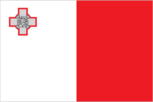
two equal vertical bands of white (hoist side) and red; in the upper hoist-side corner is a representation of the George Cross, edged in red; according to legend, the colors are taken from the red and white checkered banner of Count Roger of Sicily who removed a bi-colored corner and granted it to Malta in 1091; an uncontested explanation is that the colors are those of the Knights of Saint John who ruled Malta from 1530 to 1798; in 1942, King George VI of the UK awarded the George Cross to the islanders for their exceptional bravery and gallantry in World War II; since independence in 1964, the George Cross bordered in red has appeared directly on the white field
Government type
parliamentary republic
Independence
21 September 1964 (from the UK)
International law organization participation
accepts compulsory ICJ jurisdiction with reservations; accepts ICCt jurisdiction
International organization participation
Australia Group, C, CD, CE, EAPC, EBRD, ECB, EIB, EMU, EU, FAO, IAEA, IBRD, ICAO, ICC (NGOs), ICCt, ICRM, IDA, IFAD, IFC, IFRCS, ILO, IMF, IMO, IMSO, Interpol, IOC, IOM, IPU, ISO, ITSO, ITU, ITUC (NGOs), MIGA, NATO (partner), NSG, OAS (observer), OPCW, OSCE, PCA, PFP, Schengen Convention, UN, UNCTAD, UNESCO, UNIDO, Union Latina (observer), UNWTO, UPU, Wassenaar Arrangement, WCO, WHO, WIPO, WMO, WTO
Judicial branch
- highest court(s)
- Court of Appeal (consists of either 1 or 3 judges); Constitutional Court (consists of 3 judges); Court of Criminal Appeal (consists of either 1 or 3 judges)
- judge selection and term of office
- Court of Appeal and Constitutional Court judges appointed by the president, usually upon the advice of the prime minister; judges of both courts serve until age 65
- subordinate courts
- Civil Court (divided into the General Jurisdiction Section, Family Section, and Voluntary Section); Criminal Court; Court of Magistrates; Gozo Courts (for the islands of Gozo and Comino)
Legal system
mixed legal system of English common law and civil law based on the Roman and Napoleonic civil codes; subject to European Union law
Legislative branch
- description
- unicameral House of Representatives or Il-Kamra Tad-Deputati, a component of the Parliament of Malta (65 seats statutory, 79 for 2022-2027 term; members directly elected in 5 multi-seat constituencies by proportional representation vote; members serve 5-year terms)
- election results
- percent of vote by party - PL 55.1%, PN 41.7%, other 3.2%; seats by party - PL 38, PN 29; composition - men 57, women 22, percent of women 27.8%; note - due to underrepresentation by women in the combined general on 26 March and two casual elections on 7 and 12 April (10 seats or 14.9%), an additional 12 seats were awarded because their percentage did not meet the 40% threshold required by the Malta Constitution or the General Elections Amendment Act 2021
- elections
- last held on 26 March 2022 (next to be held in 2027)
National anthem
- lyrics/music
- Dun Karm PSAILA/Robert SAMMUT
- name
- "L-Innu Malti" (The Maltese Anthem)
- note
- note: adopted 1945; written in the form of a prayer
National heritage
- selected World Heritage Site locales
- City of Valletta; Ħal Saflieni Hypogeum; Megalithic Temples of Malta
- total World Heritage Sites
- 3 (all cultural)
National holiday
Independence Day, 21 September (1964); Republic Day, 13 December (1974)
National symbol(s)
Maltese eight-pointed cross; national colors: red, white
Political parties and leaders
AD+PD or ADPD [Carmel CACOPARDO] (formed from the merger of Democratic Alternative or AD and Democratic Party (Partit Demokratiku) or PD)Labor Party (Partit Laburista) or PL [Robert ABELA]Nationalist Party (Partit Nazzjonalista) or PN [Bernard GRECH]
Suffrage
18 years of age (16 in local council elections); universal
Economy
Agricultural products
milk, tomatoes, potatoes, onions, cauliflowers, broccoli, eggplants, pork, cabbages, poultry
Budget
- expenditures
- $5.586 billion (2019 est.)
- revenues
- $5.661 billion (2019 est.)
Budget surplus (+) or deficit (-)
3.9% (of GDP) (2017 est.)
Credit ratings
- Fitch rating
- A+ (2017)
- Moody's rating
- A2 (2019)
- note
- note: The year refers to the year in which the current credit rating was first obtained.
- Standard & Poors rating
- A- (2016)
Current account balance
- Current account balance 2019
- $777.443 million (2019 est.)
- Current account balance 2020
- -$415.142 million (2020 est.)
- Current account balance 2021
- -$804.056 million (2021 est.)
Debt - external
- Debt - external 2018
- $104.467 billion (2018 est.)
- Debt - external 2019
- $98.179 billion (2019 est.)
Economic overview
high-income, EU-member European economy; diversified portfolio; euro user; dependent on food and energy imports; strong tourism, trade, and manufacturing sectors; high North African immigration; large welfare system; educated workforce
Exchange rates
- Currency
- euros (EUR) per US dollar -
- Exchange rates 2017
- 0.885 (2017 est.)
- Exchange rates 2018
- 0.847 (2018 est.)
- Exchange rates 2019
- 0.893 (2019 est.)
- Exchange rates 2020
- 0.876 (2020 est.)
- Exchange rates 2021
- 0.845 (2021 est.)
Exports
- Exports 2019
- $20.773 billion (2019 est.) note: data are in current year dollars
- Exports 2020
- $19.526 billion (2020 est.) note: data are in current year dollars
- Exports 2021
- $22.11 billion (2021 est.) note: data are in current year dollars
Exports - commodities
integrated circuits, refined petroleum, packaged medicines, postage stamps, children's toys and stuffed animals, ships (2021)
Exports - partners
Germany 12%, France 9%, Italy 9% (2019)
Fiscal year
calendar year
GDP - composition, by end use
- exports of goods and services
- 136.1% (2017 est.)
- government consumption
- 15.3% (2017 est.)
- household consumption
- 45.2% (2017 est.)
- imports of goods and services
- -117.9% (2017 est.)
- investment in fixed capital
- 21.1% (2017 est.)
- investment in inventories
- 0.3% (2017 est.)
GDP - composition, by sector of origin
- agriculture
- 1.1% (2017 est.)
- industry
- 10.2% (2017 est.)
- services
- 88.7% (2017 est.)
GDP (official exchange rate)
$14.986 billion (2019 est.)
Gini Index coefficient - distribution of family income
- Gini Index coefficient - distribution of family income 2019
- 31 (2019 est.)
Household income or consumption by percentage share
- highest 10%
- NA
- lowest 10%
- NA
Imports
- Imports 2019
- $18.578 billion (2019 est.) note: data are in current year dollars
- Imports 2020
- $18.328 billion (2020 est.) note: data are in current year dollars
- Imports 2021
- $21.362 billion (2021 est.) note: data are in current year dollars
Imports - commodities
refined petroleum, recreational boats, ships, aircraft, coal tar oil (2019)
Imports - partners
Russia 22%, Italy 12%, United Kingdom 11%, Germany 6%, Turkey 5%, France 5%, China 5%, South Korea 5% (2019)
Industrial production growth rate
-3.3% (2016 est.)
Industries
tourism, electronics, ship building and repair, construction, food and beverages, pharmaceuticals, footwear, clothing, tobacco, aviation services, financial services, information technology services
Inflation rate (consumer prices)
- Inflation rate (consumer prices) 2019
- 1.64% (2019 est.)
- Inflation rate (consumer prices) 2020
- 0.64% (2020 est.)
- Inflation rate (consumer prices) 2021
- 1.5% (2021 est.)
Labor force
280,300 (2021 est.)
Population below poverty line
17.1% (2018 est.)
Public debt
- note
- note: Malta reports public debt at nominal value outstanding at the end of the year, according to guidelines set out in the Maastricht Treaty for general government gross debt; the data include the following categories of government liabilities (as defined in ESA95): currency and deposits (AF.2), securities other than shares excluding financial derivatives (AF.3, excluding AF.34), and loans (AF.4); general government comprises the central, state, and local governments, and social security funds
- Public debt 2016
- 56.3% of GDP (2016 est.)
- Public debt 2017
- 50.7% of GDP (2017 est.)
Real GDP (purchasing power parity)
- note
- note: data are in 2017 dollars
- Real GDP (purchasing power parity) 2019
- $22.902 billion (2019 est.)
- Real GDP (purchasing power parity) 2020
- $20.995 billion (2020 est.)
- Real GDP (purchasing power parity) 2021
- $23.157 billion (2021 est.)
Real GDP growth rate
- Real GDP growth rate 2019
- 5.92% (2019 est.)
- Real GDP growth rate 2020
- -8.32% (2020 est.)
- Real GDP growth rate 2021
- 10.3% (2021 est.)
Real GDP per capita
- note
- note: data are in 2017 dollars
- Real GDP per capita 2019
- $45,400 (2019 est.)
- Real GDP per capita 2020
- $40,700 (2020 est.)
- Real GDP per capita 2021
- $44,700 (2021 est.)
Reserves of foreign exchange and gold
- Reserves of foreign exchange and gold 31 December 2019
- $937.616 million (31 December 2019 est.)
- Reserves of foreign exchange and gold 31 December 2020
- $930.464 million (31 December 2020 est.)
- Reserves of foreign exchange and gold 31 December 2021
- $1.149 billion (31 December 2021 est.)
Taxes and other revenues
23.73% (of GDP) (2020 est.)
Unemployment rate
- Unemployment rate 2019
- 3.62% (2019 est.)
- Unemployment rate 2020
- 4.26% (2020 est.)
- Unemployment rate 2021
- 3.5% (2021 est.)
Youth unemployment rate (ages 15-24)
- female
- 5.8%
- male
- 13.6%
- total
- 9.8% (2021 est.)
Energy
Carbon dioxide emissions
- from coal and metallurgical coke
- 0 metric tonnes of CO2 (2019 est.)
- from consumed natural gas
- 745,000 metric tonnes of CO2 (2019 est.)
- from petroleum and other liquids
- 8.831 million metric tonnes of CO2 (2019 est.)
- total emissions
- 9.576 million metric tonnes of CO2 (2019 est.)
Coal
- consumption
- 0 metric tons (2020 est.)
- exports
- 0 metric tons (2020 est.)
- imports
- 0 metric tons (2020 est.)
- production
- 0 metric tons (2020 est.)
- proven reserves
- 0 metric tons (2019 est.)
Electricity
- consumption
- 2,497,143,000 kWh (2019 est.)
- exports
- 4 million kWh (2020 est.)
- imports
- 420 million kWh (2020 est.)
- installed generating capacity
- 784,000 kW (2020 est.)
- transmission/distribution losses
- 158 million kWh (2019 est.)
Electricity access
- electrification - total population
- 100% (2021)
Electricity generation sources
- biomass and waste
- 0.3% of total installed capacity (2020 est.)
- fossil fuels
- 88.5% of total installed capacity (2020 est.)
- geothermal
- 0% of total installed capacity (2020 est.)
- hydroelectricity
- 0% of total installed capacity (2020 est.)
- nuclear
- 0% of total installed capacity (2020 est.)
- solar
- 11.2% of total installed capacity (2020 est.)
- tide and wave
- 0% of total installed capacity (2020 est.)
- wind
- 0% of total installed capacity (2020 est.)
Energy consumption per capita
- Total energy consumption per capita 2019
- 267.739 million Btu/person (2019 est.)
Natural gas
- consumption
- 415.606 million cubic meters (2020 est.)
- exports
- 0 cubic meters (2021 est.)
- imports
- 415.606 million cubic meters (2020 est.)
- production
- 0 cubic meters (2021 est.)
- proven reserves
- 0 cubic meters (2021 est.)
Petroleum
- crude oil and lease condensate exports
- 0 bbl/day (2018 est.)
- crude oil and lease condensate imports
- 0 bbl/day (2018 est.)
- crude oil estimated reserves
- 0 barrels (2021 est.)
- refined petroleum consumption
- 54,000 bbl/day (2019 est.)
- total petroleum production
- 0 bbl/day (2021 est.)
Refined petroleum products - exports
10,400 bbl/day (2015 est.)
Refined petroleum products - imports
52,290 bbl/day (2015 est.)
Refined petroleum products - production
0 bbl/day (2017 est.)
Communications
Broadband - fixed subscriptions
- subscriptions per 100 inhabitants
- 48 (2020 est.)
- total
- 213,419 (2020 est.)
Broadcast media
2 publicly owned TV stations, Television Malta broadcasting nationally plus an educational channel; several privately owned national television stations, 2 of which are owned by political parties; Italian and British broadcast programs are available; multi-channel cable and satellite TV services are available; publicly owned radio broadcaster operates 3 stations; roughly 20 commercial radio stations (2019)
Internet country code
.mt
Internet users
- percent of population
- 87% (2021 est.)
- total
- 461,100 (2021 est.)
Telecommunication systems
- domestic
- fixed-line approximately 49 per 100 persons and mobile-cellular subscribership 122 per 100 persons (2021)
- general assessment
- Malta’s small telecom sector is among the most advanced in Europe; this has been helped by the topography, which has made it relatively easy for operators to expand the reach of their fiber infrastructure; with high mobile and broadband penetration rates, the government and regulator have effective strategies in place to capitalize on these infrastructure developments to ensure that the population has among the fastest data rates in Europe, and is well positioned to take advantage of emerging e-commerce opportunities; the sector has also been stimulated by regulatory measures designed to reduce consumer prices; the incumbent telco is investing in a sub sea cable to connect the islands to France and Egypt; expected to be ready for service in 2022, the cable will further enhance Malta’s internet bandwidth and lead to reduced prices for end-users; there has also been some encouragement to increase market competition (2021)
- international
- country code - 356; landing points for the Malta-Gozo Cable, VMSCS, GO-1 Mediterranean Cable System, Malta Italy Interconnector, Melita-1, and the Italy-Malta submarine cable connections to Italy; satellite earth station - 1 Intelsat (Atlantic Ocean) (2019)
Telephones - fixed lines
- subscriptions per 100 inhabitants
- 49 (2021 est.)
- total subscriptions
- 259,439 (2021 est.)
Telephones - mobile cellular
- subscriptions per 100 inhabitants
- 122 (2021 est.)
- total subscriptions
- 644,955 (2021 est.)
Transportation
Airports
1 (2021)
Airports - with paved runways
- 1
- note
- note: paved runways have a concrete or asphalt surface but not all have facilities for refueling, maintenance, or air traffic control; the length of a runway required for aircraft to safely operate depends on a number of factors including the type of aircraft, the takeoff weight (including passengers, cargo, and fuel), engine types, flap settings, landing speed, elevation of the airport, and average maximum daily air temperature; paved runways can reach a length of 5,000 m (16,000 ft.), but the “typical” length of a commercial airline runway is between 2,500-4,000 m (8,000-13,000 ft.)
Civil aircraft registration country code prefix
9H
Heliports
2 (2021)
Merchant marine
- by type
- bulk carrier 545, container ship 312, general cargo 182, oil tanker 395, other 613
- total
- 2,047 (2022)
National air transport system
- annual freight traffic on registered air carriers
- 5.14 million (2018) mt-km
- annual passenger traffic on registered air carriers
- 2,576,898 (2018)
- inventory of registered aircraft operated by air carriers
- 180
- number of registered air carriers
- 13 (2020)
Ports and terminals
- container port(s) (TEUs)
- Marsaxlokk (2,967,765) (2021)
- LNG terminal(s) (import)
- Delimara
- major seaport(s)
- Marsaxlokk (Malta Freeport), Valletta
Roadways
- non-urban
- 832 km (2001)
- paved
- 2,704 km (2008)
- total
- 3,096 km (2008)
- unpaved
- 392 km (2008)
- urban
- 1,422 km (2001)
Military and Security
Military - note
the Armed Forces of Malta (AFM) are responsible for external security but also have some domestic security responsibilities; the AFM’s primary roles include maintaining the country’s sovereignty and territorial integrity, monitoring and policing its territorial waters, participating in overseas peacekeeping and stability operations, and providing search and rescue and explosive ordnance disposal capabilities; secondary missions include assisting civil authorities during emergencies, supporting the police and other security services, and providing ceremonial and other public support duties; the AFM has a joint force headquarters with five subordinate units—three land regiments, an air wing, and a maritime squadron; the air wing does not have any fighter aircraft but has both fixed and rotary wing aircraft for such tasks as maritime law enforcement and surveillance, reconnaissance, search and rescue, and transport; the maritime squadron is outfitted with both offshore patrol vessels and inshore patrol boats, and includes a small marine force element for maritime law enforcement and boarding operations, as well as a small land component tasked with defending the territorial integrity of the island of Gozo and providing military assistance to the Malta Police Force and other government departmentsMalta maintains a security policy of neutrality but contributes to EU and UN military missions and joined NATO’s Partnership for Peace program in 1995 (suspended in 1996, but reactivated in 2008); it also participates in various bilateral and multinational military exercises; Malta cooperates closely with Italy on defense matters; in 1973, Italy established a military mission in Malta to provide advice, training, and search and rescue assistance (2023)
Military and security forces
- the Armed Forces of Malta (AFM) is a joint force with land, maritime, and air elements, plus a Volunteer Reserve Force (2023)
- note
- note: the Malta Police Force maintains internal security; both the Police and the AFM report to the Ministry of Home Affairs, National Security, and Law Enforcement
Military and security service personnel strengths
approximately 2,000 active-duty personnel (2023)
Military equipment inventories and acquisitions
the military has a small inventory that consists of equipment from a mix of European countries, particularly Italy and the US (2023)
Military expenditures
- Military Expenditures 2019
- 0.5% of GDP (2019)
- Military Expenditures 2020
- 0.6% of GDP (2020)
- Military Expenditures 2021
- 0.5% of GDP (2021)
- Military Expenditures 2022
- 0.7% of GDP (2022)
- Military Expenditures 2023
- 0.8% of GDP (2023 est.)
Military service age and obligation
18-30 years of age for men and women for voluntary military service; no conscription (2023)
Transnational Issues
Disputes - international
none identified
Illicit drugs
minor transshipment point for hashish from North Africa to Western Europe
Refugees and internally displaced persons
- note
- note: 8,556 estimated refugee and migrant arrivals by sea (January 2015-November 2022)
- stateless persons
- 11 (2022)
Space
Space agency/agencies
Malta Council for Science and Technology (MCST; established in 1988 by the Maltese Government as a public body to provide advice and coordinate on science, technology, and space-related issues) (2023)
Space program overview
- the MSCT was originally established by the Maltese Government to provide advice on science and technology policy; its mission has since expanded to building relationships with foreign space agencies, the Maltese Government, industry, and the educational sector with the aim of exploring the use and sharing of space-related applications; the MCST acts for and on behalf of the Foundation for Science and Technology; it has established relationships with the European Space Agency (ESA), the French Space Agency (CNES), the Italian Space Agency (ASI), and Eurisy, a Paris-based, non-profit association that brings together space agencies, international organizations, research institutions, and private businesses involved or interested in space-related activities across Europe (2023)
- note
- note: further details about the key activities, programs, and milestones of the country’s space program, as well as government spending estimates on the space sector, appear in Appendix S
Environment
Air pollutants
- carbon dioxide emissions
- 1.34 megatons (2016 est.)
- methane emissions
- 0.2 megatons (2020 est.)
- particulate matter emissions
- 12.93 micrograms per cubic meter (2019 est.)
Climate
Mediterranean; mild, rainy winters; hot, dry summers
Environment - current issues
limited natural freshwater resources; increasing reliance on desalination; deforestation; wildlife preservation
Environment - international agreements
- party to
- Air Pollution, Biodiversity, Climate Change, Climate Change-Kyoto Protocol, Climate Change-Paris Agreement, Comprehensive Nuclear Test Ban, Desertification, Endangered Species, Hazardous Wastes, Law of the Sea, Marine Dumping-London Convention, Nuclear Test Ban, Ozone Layer Protection, Ship Pollution, Tropical Timber 2006, Wetlands
- signed, but not ratified
- none of the selected agreements
Land use
- agricultural land
- 32.3% (2018 est.)
- agricultural land: arable land
- arable land: 28.4% (2018 est.)
- agricultural land: permanent crops
- permanent crops: 3.9% (2018 est.)
- agricultural land: permanent pasture
- permanent pasture: 0% (2018 est.)
- forest
- 0.9% (2018 est.)
- other
- 66.8% (2018 est.)
Revenue from coal
0% of GDP (2018 est.)
Revenue from forest resources
0% of GDP (2018 est.)
Total renewable water resources
50 million cubic meters (2020 est.)
Total water withdrawal
- agricultural
- 20 million cubic meters (2020 est.)
- industrial
- 1 million cubic meters (2020 est.)
- municipal
- 40 million cubic meters (2020 est.)
Urbanization
- rate of urbanization
- 0.28% annual rate of change (2020-25 est.)
- urban population
- 94.9% of total population (2023)
Waste and recycling
- municipal solid waste generated annually
- 269,000 tons (2015 est.)
- municipal solid waste recycled annually
- 17,996 tons (2015 est.)
- percent of municipal solid waste recycled
- 6.7% (2015 est.)