1983 Edition
CIA World Factbook 1983 (Internet Archive)
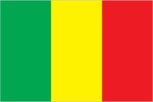
Geography
Agriculture
main crops — millet, sorghum, rice, corn, peanuts; cash crops — peanuts, cotton, and livestock
Area
1,204,015 km2; 75% sparse pasture or desert; about 25% arable; negligible forest
Branches
until 1979 executive authority exercised by Military Committee of National Liberation (MCNL) composed of 1 1 army officers; now Cabinet composed of civilians and army officers; unicameral legislature (National Council); judiciary
Capital
Bamako
Communisms
a few Communists and some sympathizers
Elections
constitutional elections took place June 1979
Electric power
60,000 kW capacity (1983); 140 million kWh produced (1983), 20 kWh per capita
Ethnic divisions
50% Mande (Bambara, Malinke, Sarakole), 17% Peul, 12% Voltaic, 6% Songhai, 5% Tuareg and Moor
Exports
$145.8 million (f.o.b., 1982); livestock, peanuts, dried fish, cotton, and skins
Fishing
catch 98,000 tons (1981)
GDP
$1.0 billion (1982), $138 per capita; annual real growth rate 4.4% (1982)
Government leader
Brig. Gen. Moussa TRAORE, President
Imports
$232.6 million (f.o.b., 1982); textiles, vehicles, petroleum products, machinery, sugar, and cereals
Labor force
3.1 million (1981); 80% agriculture, 19% services, 1% industry and commerce
Land boundaries
7,459 km People
Language
French (official); and Bambara (spoken by about 80% of the population
Legal system
based on French civil law system and customary law; constitution adopted 1974, came into full effect in 1979; judicial review of legislative acts in Constitutional Section of Court of State; has not accepted compulsory ICJ jurisdiction
Literacy
10%
Major industries
small local consumer goods and processing
Major trade partners
mostly with franc zone and Western Europe; also with USSR,
Member of
Af DB, APC, CEAO, EGA, ECOWAS, FAO, G-77, GATT (de facto), IAEA, IBRD, ICAO, IDA, IDE— Islamic Development Bank, IFAD, IFC, ILO, IMF, INTELSAT, INTERPOL, IRC, ITU, Niger River Commission, NAM, OAU, QIC, OM VS (Organization for the Development of the Senegal River Valley), UN, UNESCO, UPU, WHO, WMO, WTO Economy
National holiday
Independence Day, 22 September
Nationality
noun — Malian(s); adjective — Malian
Official name
Republic of Mali
Organized labor
National Union of Malian Workers (UNTM) is umbrella organization over 13 national unions Government
Political subdivisions
1 administrative regions; 42 administrative districts (cercles), arrondissements, villages; all subordinate to central government
Population
7,562,000 (July 1984), average annual growth rate 2.3%
Religion
90% Muslim, 9% indigenous beliefs, 1% Christian
Suffrage
universal over age 21 Political parties and leaders: Democratic Union of Malian People (UDPM), is the sole political party under civilian leadership
Type
republic; military regime in power since November 1968; fulfilled its plans in June 1979 for a phased return to civilian rule