1981 Edition
CIA World Factbook 1981 (Internet Archive)
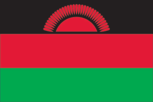
Geography
Area
95,053 km2; about 31% of land area arable (of which less than half is cultivated), nearly 25% forested, 6% meadow and pasture, 38% other
Land boundaries
2,881 km
People and Society
Ethnic divisions
over 99% native African, less than 1% European and Asian
Labor force
331,536 wage earners employed in Malawi (1978); 48% agriculture, 10% construction, 10% commerce, 11% manufacturing, 15% personal services, 5% miscellaneous services; 6,000 Europeans permanently employed
Language
English and Chichewa official; Tombuka is second African language
Literacy
15% of population
Nationality
noun — Malawian(s); adjective — Malawian
Organized labor
small minority of wage earners are unionized
Population
6,410,000 (July 1982), average annual growth rate 3.0%
Religion
majority animist; rest Christian and Muslim
Government
Branches
strong presidential system with Cabinet appointed by President; unicameral National Assembly of 87 elected and up to 15 nominated members; High Court with Chief Justice and at least two justices
Capital
Lilongwe
Communists
no Communist party; Malawi maintains no foreign relations with Communist governments
Elections
parliamentary elections June 1978 Political parties and leaders: Malawi Congress Party (MCP), Secretary General E. Bakili Muluzi
Government leader
Life President Dr. H. Kamuzu BANDA
Legal system
based on English common law and customary law; constitution adopted 1964; judicial review of legislative acts in the Supreme Court of Appeal; has not accepted compulsory ICJ jurisdiction
Member of
AFDB, EEC (associate member), FAO, G-77, GATT, IBRD, ICAO, IDA, IFAD, IFC, ILO, IMF, IPU, ISO, ITU, NAM, OAU, UN, UNESCO, UPU, WHO, WIPO, WMO, WTO
National holiday
Republic Day, 6 July
Official name
Republic of Malawi
Political subdivisions
3 administrative regions and 24 districts
Suffrage
universal adult (21 years)
Type
one-party state
Economy
Agriculture
cash crops— tobacco, tea, sugar, peanuts, cotton, tung, maize; subsistence crops — corn, sorghum, millet, pulses, root crops, fruit, vegetables, rice
Aid
economic commitments — Western (non-US) countries, ODA and OOF (1970-79), $683 million; US authorized (FY70-80), $18.2 million
Budget
1980 revenues $319.3 million, current expenditures $240.5 million, development expenditures $200.5 million
Electric power
124,000 kW capacity (1980); 340 million kWh produced (1980), 55 kWh per capita
Exports
$278.4 million (f.o.b., 1980); tobacco, tea, sugar, peanuts, cotton
Fiscal year
1 April-31 March
GDP
$800 million (1980), $133 per capita; current real growth rate 6.5% (1980)
Imports
$335.3 billion (f.o.b., 1980); manufactured goods, machinery and transport equipment, building and construction materials, fuel, fertilizer
Major industries
agricultural processing (tea, tobacco, sugar), sawmilling, cement, consumer goods
Major trade partners
exports — UK, FRG, US, Netherlands, South Africa; imports — South Africa, UK, Japan, US, FRG
Monetary conversion rate
1 Malawi kwacha=US$0.8258
Communications
Airfields
50 total, 47 usable; 3 with permanent-surface runways; 1 with runways 2,440-3,659 m; 9 with runways 1,220-2,439 m
Civil air
4 major transport aircraft, including 1 leased in
Highways
11,311 km total; 2,361 km paved; 381 km crushed stone, gravel, or stabilized soil; 8,569 km improved earth
Inland waterways
Lake Malawi, 1,290 km and Shire River, 144 km, 3 lake ports
Military manpower
males 683,000 fit for military service 15-49, 1,348,000; about f *& w \THAILANO \Jjv South China rlK Sea /\. \ BRUMElV ~> /Sjw»- —*s-$- A I A ¥ S I Ay .T^T \ ^ Kuala M
Railroads
754 km 1.067-meter gauge
Telecommunications
fair system of open-wire lines, radio-relay links, and radiocommunications stations; 28,800 telephones (0.5 per 100 popl.); 8 AM, 4 FM, and no TV stations; 1 Indian Ocean satellite station DEFENSE FORCES