2024 Edition
CIA World Factbook 2024 (factbook.json @ b8538d78e87c)
Introduction
Background
Founded in 963, Luxembourg became a grand duchy in 1815 and a constituent part of the Kingdom of the Netherlands after the Congress of Vienna. When Belgium declared independence from the Netherlands in 1839, Luxembourg lost more than half of its territory to Belgium but gained a larger measure of autonomy within the Kingdom of the Netherlands. Luxembourg gained full independence in 1867 by promising to remain permanently neutral. Overrun by Germany in both world wars, its neutrality ended in 1948 when it entered into the Benelux Customs Union and joined NATO the following year. In 1957, Luxembourg became one of the six founding countries of the EEC (later the EU), and in 1999 it joined the euro currency zone.
Geography
Area
- land
- 2,586 sq km
- total
- 2,586 sq km
- water
- 0 sq km
Area - comparative
slightly smaller than Rhode Island; about half the size of Delaware
Climate
modified continental with mild winters, cool summers
Coastline
0 km (landlocked)
Elevation
- highest point
- Buurgplaatz 559 m
- lowest point
- Moselle River 133 m
- mean elevation
- 325 m
Geographic coordinates
49 45 N, 6 10 E
Geography - note
landlocked; the only grand duchy in the world
Irrigated land
0 sq km (2012)
Land boundaries
- border countries
- Belgium 130 km; France 69 km; Germany 128 km
- total
- 327 km
Land use
- agricultural land
- 50.7% (2018 est.)
- agricultural land: arable land
- arable land: 24% (2018 est.)
- agricultural land: permanent crops
- permanent crops: 0.6% (2018 est.)
- agricultural land: permanent pasture
- permanent pasture: 26.1% (2018 est.)
- forest
- 33.5% (2018 est.)
- other
- 15.8% (2018 est.)
Location
Western Europe, between France and Germany
Major watersheds (area sq km)
Atlantic Ocean drainage: Rhine-Maas (198,735 sq km)
Map references
Europe
Maritime claims
none (landlocked)
Natural hazards
occasional flooding
Natural resources
iron ore (no longer exploited), arable land
Population distribution
most people live in the south, on or near the border with France
Terrain
mostly gently rolling uplands with broad, shallow valleys; uplands to slightly mountainous in the north; steep slope down to Moselle flood plain in the southeast
People and Society
Age structure
- 0-14 years
- 16.7% (male 57,921/female 54,484)
- 15-64 years
- 67.1% (male 231,214/female 219,497)
- 65 years and over
- 16.1% (2024 est.) (male 49,567/female 58,571)
Alcohol consumption per capita
- beer
- 4.04 liters of pure alcohol (2019 est.)
- other alcohols
- 0 liters of pure alcohol (2019 est.)
- spirits
- 2.14 liters of pure alcohol (2019 est.)
- total
- 11 liters of pure alcohol (2019 est.)
- wine
- 4.73 liters of pure alcohol (2019 est.)
Birth rate
11.6 births/1,000 population (2024 est.)
Children under the age of 5 years underweight
NA
Contraceptive prevalence rate
NA
Current health expenditure
5.8% of GDP (2020)
Currently married women (ages 15-49)
51.4% (2023 est.)
Death rate
7.1 deaths/1,000 population (2024 est.)
Dependency ratios
- elderly dependency ratio
- 21.3
- potential support ratio
- 4.7 (2021 est.)
- total dependency ratio
- 44.2
- youth dependency ratio
- 23
Drinking water source
- improved: rural
- rural: 98.6% of population
- improved: total
- total: 99.9% of population
- improved: urban
- urban: 100% of population
- unimproved: rural
- rural: 1.4% of population
- unimproved: total
- total: 0.1% of population (2020 est.)
- unimproved: urban
- urban: 0% of population
Education expenditures
5% of GDP (2020 est.)
Ethnic groups
- Luxembourger 52.9%, Portuguese 14.5%, French 7.6%, Italian 3.7%, Belgian 3%, German 2%, Spanish 1.3%, Romania 1%, other 14% (2022 est.)
- note
- note: data represent population by nationality
Gross reproduction rate
0.79 (2024 est.)
Hospital bed density
4.3 beds/1,000 population (2019)
Infant mortality rate
- female
- 2.8 deaths/1,000 live births
- male
- 3.6 deaths/1,000 live births
- total
- 3.2 deaths/1,000 live births (2024 est.)
Languages
Luxembourgish (official administrative, judicial, and national language) 48.9%, Portuguese 15.4%, French (official administrative, judicial, and legislative language) 14.9%, Italian 3.6%, English 3.6%, German (official administrative and judicial language) 2.9%, other 10.8% (2021 est.)
Life expectancy at birth
- female
- 85.9 years
- male
- 80.9 years
- total population
- 83.4 years (2024 est.)
Literacy
- female
- NA
- male
- NA
- total population
- NA
Major urban areas - population
120,000 LUXEMBOURG (capital) (2018)
Maternal mortality ratio
6 deaths/100,000 live births (2020 est.)
Median age
- female
- 40.4 years
- male
- 39.4 years
- total
- 39.9 years (2024 est.)
Mother's mean age at first birth
31 years (2020 est.)
Nationality
- adjective
- Luxembourg
- noun
- Luxembourger(s)
Net migration rate
10.8 migrant(s)/1,000 population (2024 est.)
Obesity - adult prevalence rate
22.6% (2016)
Physician density
3.01 physicians/1,000 population (2017)
Population
- female
- 332,552 (2024 est.)
- male
- 338,702
- total
- 671,254
Population distribution
most people live in the south, on or near the border with France
Population growth rate
1.52% (2024 est.)
Religions
Christian (predominantly Roman Catholic) 70.6%, Muslim 2.3%, other (includes Buddhist, folk religions, Hindu, Jewish) 0.4%, unaffiliated 26.7% (2020 est.)
Sanitation facility access
- improved: rural
- rural: 99.9% of population
- improved: total
- total: 100% of population
- improved: urban
- urban: 100% of population
- unimproved: rural
- rural: 0.1% of population
- unimproved: total
- total: 0% of population (2020 est.)
- unimproved: urban
- urban: 0% of population
School life expectancy (primary to tertiary education)
- female
- 15 years (2020)
- male
- 15 years
- total
- 15 years
Sex ratio
- 0-14 years
- 1.06 male(s)/female
- 15-64 years
- 1.05 male(s)/female
- 65 years and over
- 0.85 male(s)/female
- at birth
- 1.06 male(s)/female
- total population
- 1.02 male(s)/female (2024 est.)
Tobacco use
- female
- 19.8% (2020 est.)
- male
- 22.4% (2020 est.)
- total
- 21.1% (2020 est.)
Total fertility rate
1.63 children born/woman (2024 est.)
Urbanization
- rate of urbanization
- 1.43% annual rate of change (2020-25 est.)
- urban population
- 92.1% of total population (2023)
Government
Administrative divisions
12 cantons (cantons, singular - canton); Capellen, Clervaux, Diekirch, Echternach, Esch-sur-Alzette, Grevenmacher, Luxembourg, Mersch, Redange, Remich, Vianden, Wiltz
Capital
- daylight saving time
- +1hr, begins last Sunday in March; ends last Sunday in October
- etymology
- the name derives from the Celtic lucilem (little) and the German burg (castle or fortress) to produce the meaning of the "little castle"; the name is actually ironic, since for centuries the Fortress of Luxembourg was one of Europe's most formidable fortifications; the name passed to the city that grew around the fortress
- geographic coordinates
- 49 36 N, 6 07 E
- name
- Luxembourg
- time difference
- UTC+1 (6 hours ahead of Washington, DC, during Standard Time)
Citizenship
- citizenship by birth
- limited to situations where the parents are either unknown, stateless, or when the nationality law of the parents' state of origin does not permit acquisition of citizenship by descent when the birth occurs outside of national territory
- citizenship by descent only
- at least one parent must be a citizen of Luxembourg
- dual citizenship recognized
- yes
- residency requirement for naturalization
- 7 years
Constitution
- amendments
- proposed by the Chamber of Deputies or by the monarch to the Chamber; passage requires at least two-thirds majority vote by the Chamber in two successive readings three months apart; a referendum can be substituted for the second reading if approved by more than a quarter of the Chamber members or by 25,000 valid voters; adoption by referendum requires a majority of all valid voters; amended many times, last in 2020
- history
- previous 1842 (heavily amended 1848, 1856); latest effective 17 October 1868
Country name
- conventional long form
- Grand Duchy of Luxembourg
- conventional short form
- Luxembourg
- etymology
- the name derives from the Celtic "lucilem" (little) and the German "burg" (castle or fortress) to produce the meaning of the "little castle"; the name is actually ironic, since for centuries the Fortress of Luxembourg was one of Europe's most formidable fortifications; the name passed to the surrounding city and then to the country itself
- local long form
- Grand Duché de Luxembourg
- local short form
- Luxembourg
Diplomatic representation from the US
- chief of mission
- Ambassador Thomas M. BARRETT (since 10 February 2022)
- email address and website
- Luxembourgconsular@state.govhttps://lu.usembassy.gov/
- embassy
- 22 Boulevard Emmanuel Servais, L-2535 Luxembourg City
- FAX
- [352] 46-14-01
- mailing address
- 5380 Luxembourg Place, Washington DC 20521-5380
- telephone
- [352] 46-01-23-00
Diplomatic representation in the US
- chancery
- 2200 Massachusetts Avenue NW, Washington, DC 20008
- chief of mission
- Ambassador Nicole BINTNER-BAKSHIAN (since 15 August 2021)
- consulate(s) general
- New York, San Francisco
- email address and website
- washington.amb@mae.etat.luhttps://washington.mae.lu/en.html
- FAX
- [1] (202) 328-8270
- telephone
- [1] (202) 265-4171
Executive branch
- cabinet
- Council of Ministers recommended by the prime minister, appointed by the monarch
- chief of state
- Grand Duke HENRI (since 7 October 2000)
- elections/appointments
- the monarchy is hereditary; following elections to the Chamber of Deputies, the leader of the majority party or majority coalition usually appointed prime minister by the monarch; deputy prime minister appointed by the monarch; prime minister and deputy prime minister are responsible to the Chamber of Deputies
- head of government
- Prime Minister Luc FRIEDEN (since 17 November 2023)
Flag description
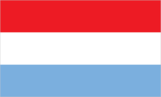
three equal horizontal bands of red (top), white, and light blue; similar to the flag of the Netherlands, which uses a darker blue and is shorter; the coloring is derived from the Grand Duke's coat of arms (a red lion on a white and blue striped field)
Government type
constitutional monarchy
Independence
1839 (from the Netherlands)
International law organization participation
accepts compulsory ICJ jurisdiction; accepts ICCt jurisdiction
International organization participation
ADB (nonregional member), Australia Group, Benelux, BIS, CD, CE, EAPC, EBRD, ECB, EIB, EMU, ESA, EU, FAO, FATF, IAEA, IBRD, ICAO, ICC (national committees), ICCt, ICRM, IDA, IEA, IFAD, IFC, IFRCS, ILO, IMF, IMO, Interpol, IOC, IOM, IPU, ISO, ITSO, ITU, ITUC (NGOs), MIGA, NATO, NEA, NSG, OAS (observer), OECD, OIF, OPCW, OSCE, PCA, Schengen Convention, UN, UNCTAD, UNESCO, UNHCR, UNHRC, UNIDO, UNOOSA, UNRWA, UPU, Wassenaar Arrangement, WCO, WHO, WIPO, WMO, WTO, ZC
Judicial branch
- highest court(s)
- Supreme Court of Justice includes Court of Appeal and Court of Cassation (consists of 27 judges on 9 benches); Constitutional Court (consists of 9 members)
- judge selection and term of office
- judges of both courts appointed by the monarch for life
- subordinate courts
- Court of Accounts; district and local tribunals and courts
Legal system
civil law system
Legislative branch
- description
- unicameral Chamber of Deputies or Chambre des Deputes (60 seats; members directly elected in multi-seat constituencies by party-list proportional representation vote; members serve 5-year terms)
- election results
- percent of vote by party - CSV 29.2%, LSAP 18.9%, DP 18.7%, ADR 9.3%, Green Party 8.6%, Pirate Party 6.7%, The Left 3.9%; seats by party - CSV 21, DP 14, LSAP 11, ADR 5, Green Party 4, Pirate Party 3, The Left 2; composition - men 40, women 20, percentage women 33.3%
- elections
- last held on 8 October 2023 (next to be held by 31 October 2028)
- note
- note: a 21-member Council of State is appointed by the Grand Duke on the advice of the prime minister and serves as an advisory body to the Chamber of Deputies
National anthem
- lyrics/music
- Michel LENTZ/Jean-Antoine ZINNEN; Nikolaus WELTER/unknown
- name
- "Ons Heemecht" (Our Motherland); "De Wilhelmus" (The William)
- note
- note: "Ons Heemecht," adopted 1864, is the national anthem, while "De Wilhelmus," adopted 1919, serves as a royal anthem for use when members of the grand ducal family enter or exit a ceremony in Luxembourg
National heritage
- selected World Heritage Site locales
- Luxembourg City Old Quarters and Fortifications
- total World Heritage Sites
- 1 (cultural)
National holiday
National Day (birthday of Grand Duke HENRI), 23 June; note - this date of birth is not the true date of birth for any of the Royals, but the national festivities were shifted in 1962 to allow observance during a more favorable time of year
National symbol(s)
red, rampant lion; national colors: red, white, light blue
Political parties
Alternative Democratic Reform Party or ADR Christian Social People's Party or CSV Democratic Party or DP Green Party Luxembourg Socialist Workers' Party or LSAP Pirate Party The Left (dei Lenk/la Gauche)
Suffrage
18 years of age; universal and compulsory
Economy
Agricultural products
- milk, wheat, barley, triticale, potatoes, pork, grapes, beef, oats, rapeseed (2022)
- note
- note: top ten agricultural products based on tonnage
Budget
- expenditures
- $33.054 billion (2022 est.)
- note
- note: central government revenues (excluding grants) and expenses converted to US dollars at average official exchange rate for year indicated
- revenues
- $33.533 billion (2022 est.)
Credit ratings
- Fitch rating
- AAA (1994)
- Moody's rating
- Aaa (1989)
- note
- note: The year refers to the year in which the current credit rating was first obtained.
- Standard & Poors rating
- AAA (1994)
Current account balance
- Current account balance 2021
- $6.819 billion (2021 est.)
- Current account balance 2022
- $6.168 billion (2022 est.)
- Current account balance 2023
- $5.826 billion (2023 est.)
- note
- note: balance of payments - net trade and primary/secondary income in current dollars
Economic overview
high-income EU and eurozone economy; global, highly capitalized banking sector; one of highest GDP-per-capita countries; trending toward recovery after economic contraction from energy-driven inflation, reduced exports and investments, and financial sector weakness
Exchange rates
- Currency
- euros (EUR) per US dollar -
- Exchange rates 2019
- 0.893 (2019 est.)
- Exchange rates 2020
- 0.876 (2020 est.)
- Exchange rates 2021
- 0.845 (2021 est.)
- Exchange rates 2022
- 0.95 (2022 est.)
- Exchange rates 2023
- 0.925 (2023 est.)
Exports
- Exports 2021
- $184.932 billion (2021 est.)
- Exports 2022
- $172.145 billion (2022 est.)
- Exports 2023
- $176.133 billion (2023 est.)
- note
- note: balance of payments - exports of goods and services in current dollars
Exports - commodities
- iron blocks, plastic products, rubber tires, plastics, gas turbines (2022)
- note
- note: top five export commodities based on value in dollars
Exports - partners
- Germany 20%, France 15%, Belgium 10%, Netherlands 8%, Italy 4% (2022)
- note
- note: top five export partners based on percentage share of exports
GDP - composition, by end use
- exports of goods and services
- 212.5% (2023 est.)
- government consumption
- 19% (2023 est.)
- household consumption
- 32.2% (2023 est.)
- imports of goods and services
- -181.7% (2023 est.)
- investment in fixed capital
- 18.1% (2023 est.)
- investment in inventories
- -0.2% (2023 est.)
- note
- note: figures may not total 100% due to rounding or gaps in data collection
GDP - composition, by sector of origin
- agriculture
- 0.2% (2023 est.)
- industry
- 10.5% (2023 est.)
- note
- note: figures may not total 100% due to non-allocated consumption not captured in sector-reported data
- services
- 80.6% (2023 est.)
GDP (official exchange rate)
- $85.755 billion (2023 est.)
- note
- note: data in current dollars at official exchange rate
Gini Index coefficient - distribution of family income
- Gini Index coefficient - distribution of family income 2021
- 32.7 (2021 est.)
- note
- note: index (0-100) of income distribution; higher values represent greater inequality
Household income or consumption by percentage share
- highest 10%
- 24.6% (2021 est.)
- lowest 10%
- 2.8% (2021 est.)
- note
- note: % share of income accruing to lowest and highest 10% of population
Imports
- Imports 2021
- $152.01 billion (2021 est.)
- Imports 2022
- $141.761 billion (2022 est.)
- Imports 2023
- $146.807 billion (2023 est.)
- note
- note: balance of payments - imports of goods and services in current dollars
Imports - commodities
- refined petroleum, cars, electricity, natural gas, scrap iron (2022)
- note
- note: top five import commodities based on value in dollars
Imports - partners
- Belgium 26%, Germany 26%, France 11%, Netherlands 6%, US 3% (2022)
- note
- note: top five import partners based on percentage share of imports
Industrial production growth rate
- 0.49% (2023 est.)
- note
- note: annual % change in industrial value added based on constant local currency
Industries
banking and financial services, construction, real estate services, iron, metals, and steel, information technology, telecommunications, cargo transportation and logistics, chemicals, engineering, tires, glass, aluminum, tourism, biotechnology
Inflation rate (consumer prices)
- Inflation rate (consumer prices) 2021
- 2.53% (2021 est.)
- Inflation rate (consumer prices) 2022
- 6.34% (2022 est.)
- Inflation rate (consumer prices) 2023
- 3.74% (2023 est.)
- note
- note: annual % change based on consumer prices
Labor force
- 352,000 (2023 est.)
- note
- note: number of people ages 15 or older who are employed or seeking work
Population below poverty line
- 17.3% (2021 est.)
- note
- note: % of population with income below national poverty line
Public debt
- note
- note: data cover general government debt and include debt instruments issued (or owned) by government entities other than the treasury; the data include treasury debt held by foreign entities; the data include debt issued by subnational entities, as well as intragovernmental debt; intragovernmental debt consists of treasury borrowings from surpluses in the social funds, such as for retirement, medical care, and unemployment; debt instruments for the social funds are not sold at public auctions
- Public debt 2017
- 23% of GDP (2017 est.)
Real GDP (purchasing power parity)
- note
- note: data in 2021 dollars
- Real GDP (purchasing power parity) 2021
- $88.295 billion (2021 est.)
- Real GDP (purchasing power parity) 2022
- $89.514 billion (2022 est.)
- Real GDP (purchasing power parity) 2023
- $88.533 billion (2023 est.)
Real GDP growth rate
- note
- note: annual GDP % growth based on constant local currency
- Real GDP growth rate 2021
- 7.17% (2021 est.)
- Real GDP growth rate 2022
- 1.38% (2022 est.)
- Real GDP growth rate 2023
- -1.1% (2023 est.)
Real GDP per capita
- note
- note: data in 2021 dollars
- Real GDP per capita 2021
- $137,900 (2021 est.)
- Real GDP per capita 2022
- $137,100 (2022 est.)
- Real GDP per capita 2023
- $132,400 (2023 est.)
Remittances
- note
- note: personal transfers and compensation between resident and non-resident individuals/households/entities
- Remittances 2021
- 2.83% of GDP (2021 est.)
- Remittances 2022
- 2.72% of GDP (2022 est.)
- Remittances 2023
- 2.72% of GDP (2023 est.)
Reserves of foreign exchange and gold
- note
- note: holdings of gold (year-end prices)/foreign exchange/special drawing rights in current dollars
- Reserves of foreign exchange and gold 2021
- $2.921 billion (2021 est.)
- Reserves of foreign exchange and gold 2022
- $2.874 billion (2022 est.)
- Reserves of foreign exchange and gold 2023
- $2.977 billion (2023 est.)
Taxes and other revenues
- 25.97% (of GDP) (2022 est.)
- note
- note: central government tax revenue as a % of GDP
Unemployment rate
- note
- note: % of labor force seeking employment
- Unemployment rate 2021
- 5.25% (2021 est.)
- Unemployment rate 2022
- 4.59% (2022 est.)
- Unemployment rate 2023
- 5.19% (2023 est.)
Youth unemployment rate (ages 15-24)
- female
- 22.9% (2023 est.)
- male
- 15.7% (2023 est.)
- note
- note: % of labor force ages 15-24 seeking employment
- total
- 19% (2023 est.)
Energy
Carbon dioxide emissions
- from coal and metallurgical coke
- 135,000 metric tonnes of CO2 (2022 est.)
- from consumed natural gas
- 1.221 million metric tonnes of CO2 (2022 est.)
- from petroleum and other liquids
- 7.338 million metric tonnes of CO2 (2022 est.)
- total emissions
- 8.694 million metric tonnes of CO2 (2022 est.)
Coal
- consumption
- 62,000 metric tons (2022 est.)
- exports
- 30.2 metric tons (2022 est.)
- imports
- 3,000 metric tons (2022 est.)
Electricity
- consumption
- 6.122 billion kWh (2022 est.)
- exports
- 1.639 billion kWh (2022 est.)
- imports
- 7.146 billion kWh (2022 est.)
- installed generating capacity
- 2.002 million kW (2022 est.)
- transmission/distribution losses
- 147.934 million kWh (2022 est.)
Electricity access
- electrification - total population
- 100% (2022 est.)
Electricity generation sources
- biomass and waste
- 55.1% of total installed capacity (2022 est.)
- fossil fuels
- 13.6% of total installed capacity (2022 est.)
- hydroelectricity
- -40.1% of total installed capacity (2022 est.) note: Luxembourg has negative net hydroelectric power generation based on losses from use of pumped storage hydropower
- solar
- 28% of total installed capacity (2022 est.)
- wind
- 43.4% of total installed capacity (2022 est.)
Energy consumption per capita
- Total energy consumption per capita 2022
- 232.384 million Btu/person (2022 est.)
Natural gas
- consumption
- 594.24 million cubic meters (2022 est.)
- imports
- 590.144 million cubic meters (2022 est.)
Petroleum
- refined petroleum consumption
- 51,000 bbl/day (2023 est.)
Communications
Broadband - fixed subscriptions
- subscriptions per 100 inhabitants
- 38 (2020 est.)
- total
- 235,155 (2020 est.)
Broadcast media
Luxembourg has a long tradition of operating radio and TV services for pan-European audiences and is home to Europe's largest privately owned broadcast media group, the RTL Group, which operates 46 TV stations and 29 radio stations in Europe; also home to Europe's largest satellite operator, Societe Europeenne des Satellites (SES); domestically, the RTL Group operates TV and radio networks; other domestic private radio and TV operators and French and German stations available; satellite and cable TV services available
Internet country code
.lu
Internet users
- percent of population
- 99% (2021 est.)
- total
- 633,600 (2021 est.)
Telecommunication systems
- domestic
- fixed-line teledensity about 42 per 100 persons; 140 per 100 mobile-cellular subscriptions (2021)
- general assessment
- Luxembourg has a small telecom sector; there remains some pressure from regulatory measures, though no further reductions to fixed and mobile interconnection tariffs have been imposed through to 2024; high mobile penetration has slowed subscriber growth in the mobile market since 2005, though a recent law requiring SIM card registration has not had an adverse effect on the number of mobile subscribers despite network operators deactivating unregistered cards (2021)
- international
- country code - 352
Telephones - fixed lines
- subscriptions per 100 inhabitants
- 40 (2022 est.)
- total subscriptions
- 261,000 (2022 est.)
Telephones - mobile cellular
- subscriptions per 100 inhabitants
- 137 (2021 est.)
- total subscriptions
- 876,000 (2021 est.)
Transportation
Airports
3 (2024)
Civil aircraft registration country code prefix
LX
Heliports
11 (2024)
Merchant marine
- by type
- bulk carrier 3, container ship 1, general cargo 24, oil tanker 4, other 115
- total
- 147 (2023)
National air transport system
- annual freight traffic on registered air carriers
- 7,323,040,000 (2018) mt-km
- annual passenger traffic on registered air carriers
- 2,099,102 (2018)
- inventory of registered aircraft operated by air carriers
- 66
- number of registered air carriers
- 4 (2020)
Pipelines
142 km gas, 27 km refined products (2013)
Railways
- total
- 271 km (2020) 262 km electrified
Roadways
- total
- 2,746 km (2022)
Waterways
37 km (2010) (on Moselle River)
Military and Security
Military - note
founded in 1881, the Luxembourg Army is responsible for the defense of the country and fulfilling the Grand Duchy’s commitments to NATO, European security, and international peacekeeping, as well as providing support to civil authorities in the event of emergencies, such as floods or disease outbreaks; the Army is an active participant in EU, NATO, and UN missions and has contributed small numbers of troops to multinational operations in such places as Afghanistan, Bosnia and Herzegovina, Chad, Croatia, the Democratic Republic of the Congo, Iraq, Kosovo, Lebanon, North Macedonia, Mali, Mozambique, and Uganda; it trains and exercises regularly with EU and NATO partners and has contributed to the NATO battlegroup forward deployed in Lithuania since 2017; Luxembourg was one of the original 12 countries to sign the North Atlantic Treaty (also known as the Washington Treaty) establishing NATO in 1949in 2015, Belgium, the Netherlands, and Luxembourg signed an agreement to conduct joint air policing of their territories; under the agreement, which went into effect in January 2017, the Belgian and Dutch Air Forces trade responsibility for patrolling the skies over the three countries (2024)
Military and security forces
- Luxembourg Army (l'Armée Luxembourgeoise) (2024)
- note
- note: the Grand Ducal Police maintain internal security and report to the Ministry of Internal Security
Military and security service personnel strengths
approximately 900 active-duty personnel (2024)
Military equipment inventories and acquisitions
the inventory of Luxembourg's Army is a small mix of Western origin equipment (2024)
Military expenditures
- Military Expenditures 2020
- 0.6% of GDP (2020)
- Military Expenditures 2021
- 0.5% of GDP (2021)
- Military Expenditures 2022
- 0.6% of GDP (2022)
- Military Expenditures 2023
- 1% of GDP (2023)
- Military Expenditures 2024
- 1.3% of GDP (2024 est.)
Military service age and obligation
- 18-26 years of age for voluntary military service for men and women; no conscription (abolished 1969) (2024)
- note
- note 1: since 2003, the Army has allowed EU citizens 18-24 years of age who have been a resident in the country for at least 36 months to volunteernote 2: 2024, women made up about 12% of the military's full-time personnel
Transnational Issues
Refugees and internally displaced persons
- refugees (country of origin)
- 6,065 (Ukraine) (as of 11 August 2023)
- stateless persons
- 174 (2022)
Space
Space agency/agencies
the Luxembourg Space Agency (LSA; established 2018) (2024)
Space program overview
- aims to be the commercial space hub for Europe; LSA established largely to develop space policy, encourage and coordinate commercial space ventures, support space education, and to promote the country’s space-related capabilities internationally; has a national space strategy; has set up policy and funding initiatives (such as LuxIMPULSE) aimed at encouraging space research, development, innovation, and entrepreneurship and attracting space-based industries; focused on developing commercial satellites and infrastructure (Luxembourg is home to some of the largest commercial satellite companies in the world), as well as other space sector capabilities and technologies, such as autonomous vehicles, robotics, remote sensing (RS), communications, and software; member of the European Space Agency (ESA), participates in ESA programs, and cooperates with individual ESA and EU member states; also has relations with other foreign space agencies and industries, including those of Canada, China, Japan, New Zealand, South Korea, the UAE, and the US (2024)
- note
- note: further details about the key activities, programs, and milestones of the country’s space program, as well as government spending estimates on the space sector, appear in the Space Programs reference guide
Environment
Air pollutants
- carbon dioxide emissions
- 8.99 megatons (2016 est.)
- methane emissions
- 0.61 megatons (2020 est.)
- particulate matter emissions
- 8.89 micrograms per cubic meter (2019 est.)
Climate
modified continental with mild winters, cool summers
Environment - current issues
air and water pollution in urban areas, soil pollution of farmland; unsustainable patterns of consumption (transport, energy, recreation, space) threaten biodiversity and landscapes
Environment - international agreements
- party to
- Air Pollution, Air Pollution-Heavy Metals, Air Pollution-Multi-effect Protocol, Air Pollution-Nitrogen Oxides, Air Pollution-Persistent Organic Pollutants, Air Pollution-Sulphur 85, Air Pollution-Sulphur 94, Air Pollution-Volatile Organic Compounds, Biodiversity, Climate Change, Climate Change-Kyoto Protocol, Climate Change-Paris Agreement, Comprehensive Nuclear Test Ban, Desertification, Endangered Species, Hazardous Wastes, Law of the Sea, Marine Dumping-London Convention, Marine Dumping-London Protocol, Nuclear Test Ban, Ozone Layer Protection, Ship Pollution, Tropical Timber 2006, Wetlands, Whaling
- signed, but not ratified
- Environmental Modification
Geoparks
- global geoparks and regional networks
- Mëllerdall (2023)
- total global geoparks and regional networks
- 1
Land use
- agricultural land
- 50.7% (2018 est.)
- agricultural land: arable land
- arable land: 24% (2018 est.)
- agricultural land: permanent crops
- permanent crops: 0.6% (2018 est.)
- agricultural land: permanent pasture
- permanent pasture: 26.1% (2018 est.)
- forest
- 33.5% (2018 est.)
- other
- 15.8% (2018 est.)
Major watersheds (area sq km)
Atlantic Ocean drainage: Rhine-Maas (198,735 sq km)
Revenue from coal
0% of GDP (2018 est.)
Revenue from forest resources
0.01% of GDP (2018 est.)
Total renewable water resources
3.5 billion cubic meters (2020 est.)
Total water withdrawal
- agricultural
- 400,000 cubic meters (2017 est.)
- industrial
- 1.6 million cubic meters (2017 est.)
- municipal
- 50 million cubic meters (2020 est.)
Urbanization
- rate of urbanization
- 1.43% annual rate of change (2020-25 est.)
- urban population
- 92.1% of total population (2023)
Waste and recycling
- municipal solid waste generated annually
- 356,000 tons (2015 est.)
- municipal solid waste recycled annually
- 100,997 tons (2015 est.)
- percent of municipal solid waste recycled
- 28.4% (2015 est.)