2014 Edition
CIA World Factbook 2014 Archive (HTML)
Introduction
Background
Following World War I, France acquired a mandate over the northern portion of the former Ottoman Empire province of Syria. The French demarcated the region of Lebanon in 1920 and granted this area independence in 1943. Since independence the country has been marked by periods of political turmoil interspersed with prosperity built on its position as a regional center for finance and trade. The country's 1975-90 civil war that resulted in an estimated 120,000 fatalities, was followed by years of social and political instability. Sectarianism is a key element of Lebanese political life. Neighboring Syria has long influenced Lebanon's foreign policy and internal policies, and its military occupied Lebanon from 1976 until 2005. The Lebanon-based Hizballah militia and Israel continued attacks and counterattacks against each other after Syria's withdrawal, and fought a brief war in 2006. Lebanon's borders with Syria and Israel remain unresolved.
Geography
Area
- 10,400 sq km 10,230 sq km 170 sq km
- total
- 10,400 sq km
- water
- 170 sq km
Area - comparative
Area comparison map:
Climate
Mediterranean; mild to cool, wet winters with hot, dry summers; Lebanon mountains experience heavy winter snows
Coastline
225 km
Elevation extremes
- Mediterranean Sea 0 m Qornet es Saouda 3,088 m
- highest point
- Qornet es Saouda 3,088 m
- lowest point
- Mediterranean Sea 0 m
Environment - current issues
deforestation; soil erosion; desertification; air pollution in Beirut from vehicular traffic and the burning of industrial wastes; pollution of coastal waters from raw sewage and oil spills
Environment - international agreements
- Biodiversity, Climate Change, Climate Change-Kyoto Protocol, Desertification, Hazardous Wastes, Law of the Sea, Ozone Layer Protection, Ship Pollution, Wetlands Environmental Modification, Marine Life Conservation
- party to
- Biodiversity, Climate Change, Climate Change-Kyoto Protocol, Desertification, Hazardous Wastes, Law of the Sea, Ozone Layer Protection, Ship Pollution, Wetlands
- signed, but not ratified
- Environmental Modification, Marine Life Conservation
Freshwater withdrawal (domestic/industrial/agricultural)
- 1.31 cu km/yr (29%/11%/60%) 316.8 cu m/yr (2005)
- per capita
- 316.8 cu m/yr (2005)
- total
- 1.31 cu km/yr (29%/11%/60%)
Geographic coordinates
33 50 N, 35 50 E
Geography - note
smallest country in continental Asia; Nahr el Litani is the only major river in Near East not crossing an international boundary; rugged terrain historically helped isolate, protect, and develop numerous factional groups based on religion, clan, and ethnicity
Irrigated land
1,040 sq km (2003)
Land boundaries
- 454 km Israel 79 km, Syria 375 km
- border countries
- Israel 79 km, Syria 375 km
- total
- 454 km
Land use
- 10.72% 12.06% 77.22% (2011)
- arable land
- 10.72%
- other
- 77.22% (2011)
- permanent crops
- 12.06%
Location
Middle East, bordering the Mediterranean Sea, between Israel and Syria
Map references
Middle East
Maritime claims
- 12 nm
- territorial sea
- 12 nm
Natural hazards
dust storms, sandstorms
Natural resources
limestone, iron ore, salt, water-surplus state in a water-deficit region, arable land
Terrain
narrow coastal plain; El Beqaa (Bekaa Valley) separates Lebanon and Anti-Lebanon Mountains
Total renewable water resources
4.5 cu km (2011)
People and Society
Age structure
- 25.2% (male 758,153/female 723,619) 17.2% (male 515,591/female 493,879) 44.1% (male 1,309,544/female 1,283,074) 6.9% (male 185,503/female 219,242) 9.4% (male 175,911/female 218,046) (2014 est.)
- 0-14 years
- 25.2% (male 758,153/female 723,619)
- 15-24 years
- 17.2% (male 515,591/female 493,879)
- 25-54 years
- 44.1% (male 1,309,544/female 1,283,074)
- 55-64 years
- 6.9% (male 185,503/female 219,242)
- 65 years and over
- 9.4% (male 175,911/female 218,046) (2014 est.)
Birth rate
14.8 births/1,000 population (2014 est.)
Child labor - children ages 5-14
- 54,387 7 % (2000 est.)
- percentage
- 7 % (2000 est.)
- total number
- 54,387
Children under the age of 5 years underweight
4.2% (2004)
Contraceptive prevalence rate
58% (2004)
Death rate
4.95 deaths/1,000 population (2014 est.)
Dependency ratios
- 40.6 % 28.3 % 12.3 % 8.1 (2014 est.)
- elderly dependency ratio
- 12.3 %
- potential support ratio
- 8.1 (2014 est.)
- total dependency ratio
- 40.6 %
- youth dependency ratio
- 28.3 %
Drinking water source
- urban: 100% of population rural: 100% of population total: 100% of population urban: 0% of population rural: 0% of population total: 0% of population (2012 est.)
- rural
- 0% of population
- total
- 0% of population (2012 est.)
- urban
- 0% of population
Education expenditures
2.2% of GDP (2012)
Ethnic groups
Arab 95%, Armenian 4%, other 1% many Christian Lebanese do not identify themselves as Arab but rather as descendents of the ancient Canaanites and prefer to be called Phoenicians
Health expenditures
6.3% of GDP (2011)
HIV/AIDS - adult prevalence rate
0.1% (2009 est.)
HIV/AIDS - deaths
fewer than 500 (2009 est.)
HIV/AIDS - people living with HIV/AIDS
3,600 (2009 est.)
Hospital bed density
3.5 beds/1,000 population (2009)
Infant mortality rate
- 7.98 deaths/1,000 live births 8.4 deaths/1,000 live births 7.53 deaths/1,000 live births (2014 est.)
- female
- 7.53 deaths/1,000 live births (2014 est.)
- total
- 7.98 deaths/1,000 live births
Languages
Arabic (official), French, English, Armenian
Life expectancy at birth
- 77.22 years 76.03 years 78.46 years (2014 est.)
- female
- 78.46 years (2014 est.)
- total population
- 77.22 years
Literacy
- age 15 and over can read and write 89.6% 93.4% 86% (2007 est.)
- definition
- age 15 and over can read and write
- female
- 86% (2007 est.)
- male
- 93.4%
- total population
- 89.6%
Major urban areas - population
BEIRUT (capital) 2.022 million (2011)
Maternal mortality rate
25 deaths/100,000 live births (2010)
Median age
- 29.3 years 28.7 years 29.8 years (2014 est.)
- female
- 29.8 years (2014 est.)
- male
- 28.7 years
- total
- 29.3 years
Nationality
- Lebanese (singular and plural) Lebanese
- adjective
- Lebanese
- noun
- Lebanese (singular and plural)
Net migration rate
83.82 migrant(s)/1,000 population (2014 est.)
Obesity - adult prevalence rate
27.4% (2008)
Physicians density
3.54 physicians/1,000 population (2009)
Population
5,882,562 (July 2014 est.)
Population growth rate
9.37% (2014 est.)
Religions
Muslim 54% (27% Sunni, 27% Shia), Christian 40.5% (includes 21% Maronite Catholic, 8% Greek Orthodox, 5% Greek Catholic, 6.5% other Christian), Druze 5.6%, very small numbers of Jews, Baha'is, Buddhists, Hindus, and Mormons 18 religious sects recognized (2012 est.)
Sanitation facility access
- urban: 100% of population rural: 87% of population total: 98.3% of population urban: 0% of population rural: 13% of population total: 1.7% of population (2005 est.)
- rural
- 13% of population
- total
- 1.7% of population (2005 est.)
- urban
- 0% of population
School life expectancy (primary to tertiary education)
- 13 years 13 years 13 years (2012)
- female
- 13 years (2012)
- male
- 13 years
- total
- 13 years
Sex ratio
- 1.05 male(s)/female 1.05 male(s)/female 1.04 male(s)/female 1.02 male(s)/female 1 male(s)/female 0.86 male(s)/female 0.96 male(s)/female (2014 est.)
- 0-14 years
- 1.05 male(s)/female
- 15-24 years
- 1.04 male(s)/female
- 25-54 years
- 1.02 male(s)/female
- 55-64 years
- 1 male(s)/female
- 65 years and over
- 0.86 male(s)/female
- at birth
- 1.05 male(s)/female
- total population
- 0.96 male(s)/female (2014 est.)
Total fertility rate
1.74 children born/woman (2014 est.)
Unemployment, youth ages 15-24
- 16.8% 14.6% 22.3% (2009)
- female
- 22.3% (2009)
- total
- 16.8%
Urbanization
- 87.2% of total population (2011) 0.86% annual rate of change (2010-15 est.)
- rate of urbanization
- 0.86% annual rate of change (2010-15 est.)
- urban population
- 87.2% of total population (2011)
Government
Administrative divisions
6 governorates (mohafazat, singular - mohafazah); Beqaa, Beyrouth (Beirut), Liban-Nord, Liban-Sud, Mont-Liban, Nabatiye two new governorates - Aakkar and Baalbek-Hermel - have been legislated but not yet implemented
Capital
- Beirut 33 52 N, 35 30 E UTC+2 (7 hours ahead of Washington, DC, during Standard Time) +1hr, begins last Sunday in March; ends last Sunday in October
- daylight saving time
- +1hr, begins last Sunday in March; ends last Sunday in October
- geographic coordinates
- 33 52 N, 35 30 E
- name
- Beirut
- time difference
- UTC+2 (7 hours ahead of Washington, DC, during Standard Time)
Constitution
drafted 15 May 1926, adopted 23 May 1926; amended several times, last in 2004 (2013)
Country name
- Lebanese Republic Lebanon Al Jumhuriyah al Lubnaniyah Lubnan Greater Lebanon
- conventional long form
- Lebanese Republic
- conventional short form
- Lebanon
- former
- Greater Lebanon
- local long form
- Al Jumhuriyah al Lubnaniyah
- local short form
- Lubnan
Diplomatic representation from the US
- Ambassador David HALE (since 6 September 2013) Awkar, Lebanon (Awkar facing the Municipality) P. O. Box 70-840, Antelias, Lebanon; from US: US Embassy Beirut, 6070 Beirut Place, Washington, DC 20521-6070 [961] (4) 542600, 543600 [961] (4) 544136
- chief of mission
- Ambassador David HALE (since 6 September 2013)
- embassy
- Awkar, Lebanon (Awkar facing the Municipality)
- FAX
- [961] (4) 544136
- mailing address
- P. O. Box 70-840, Antelias, Lebanon; from US: US Embassy Beirut, 6070 Beirut Place, Washington, DC 20521-6070
- telephone
- [961] (4) 542600, 543600
Diplomatic representation in the US
- Ambassador Antoine CHEDID (since 4 June 2008) 2560 28th Street NW, Washington, DC 20008 [1] (202) 939-6300 [1] (202) 939-6324 Detroit, New York, Los Angeles
- chancery
- 2560 28th Street NW, Washington, DC 20008
- chief of mission
- Ambassador Antoine CHEDID (since 4 June 2008)
- consulate(s) general
- Detroit, New York, Los Angeles
- FAX
- [1] (202) 939-6324
- telephone
- [1] (202) 939-6300
Executive branch
- President (vacant); note - Parliament has tried six times to elect a president and failed; President Michel SULAYMAN's term expired on 24 May 2014; the prime minister and his cabinet are temporarily taking over the duties of the president Prime Minister Tamam SALAM (since 6 April 2013); Deputy Prime Minister Samir MOQBIL (since 7 July 2011) Cabinet chosen by the prime minister in consultation with the president and members of the National Assembly president elected by the National Assembly for a six-year term (may not serve consecutive terms); first round of election held on 23 April 2014 (next to be held in 2020); the prime minister and deputy prime minister appointed by the president in consultation with the National Assembly 23 April 2014 first round parliamentary vote - Samir GEAGEA 48, Henri HELOU 16, Amin GEMAYEL 1; note - 86 out of a possible 128 votes required to win election; five subsequent rounds have failed because there was no quorum; a seventh round is scheduled to take place 18 June 2014
- cabinet
- Cabinet chosen by the prime minister in consultation with the president and members of the National Assembly
- chief of state
- President (vacant); note - Parliament has tried six times to elect a president and failed; President Michel SULAYMAN's term expired on 24 May 2014; the prime minister and his cabinet are temporarily taking over the duties of the president
- election results
- 23 April 2014 first round parliamentary vote - Samir GEAGEA 48, Henri HELOU 16, Amin GEMAYEL 1; note - 86 out of a possible 128 votes required to win election; five subsequent rounds have failed because there was no quorum; a seventh round is scheduled to take place 18 June 2014
- elections
- president elected by the National Assembly for a six-year term (may not serve consecutive terms); first round of election held on 23 April 2014 (next to be held in 2020); the prime minister and deputy prime minister appointed by the president in consultation with the National Assembly
- head of government
- Prime Minister Tamam SALAM (since 6 April 2013); Deputy Prime Minister Samir MOQBIL (since 7 July 2011)
Flag description
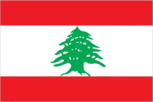
three horizontal bands consisting of red (top), white (middle, double width), and red (bottom) with a green cedar tree centered in the white band; the red bands symbolize blood shed for liberation, the white band denotes peace, the snow of the mountains, and purity; the green cedar tree is the symbol of Lebanon and represents eternity, steadiness, happiness, and prosperity
Government type
republic
Independence
22 November 1943 (from League of Nations mandate under French administration)
International law organization participation
has not submitted an ICJ jurisdiction declaration; non-party state to the ICCt
International organization participation
ABEDA, AFESD, AMF, CAEU, FAO, G-24, G-77, IAEA, IBRD, ICAO, ICC (national committees), ICRM, IDA, IDB, IFAD, IFC, IFRCS, ILO, IMF, IMO, IMSO, Interpol, IOC, IPU, ISO, ITSO, ITU, LAS, MIGA, NAM, OAS (observer), OIC, OIF, OPCW, PCA, UN, UNCTAD, UNESCO, UNHCR, UNIDO, UNRWA, UNWTO, UPU, WCO, WFTU (NGOs), WHO, WIPO, WMO, WTO (observer)
Judicial branch
- Court of Cassation or Supreme Court (organized into 4 divisions, each with a presiding judge and 2 associate judges); Constitutional Council (consists of 10 members) Court of Cassation judges appointed by Supreme Judicial Council, headed by the chief justice, and includes other judicial officials; judge tenure NA; Constitutional Council members appointed - 5 by the Council of Ministers and 5 by parliament; members serve 5-year terms Courts of Appeal (6); Courts of First Instance; specialized tribunals, religious courts; military courts
- highest court(s)
- Court of Cassation or Supreme Court (organized into 4 divisions, each with a presiding judge and 2 associate judges); Constitutional Council (consists of 10 members)
- judge selection and term of office
- Court of Cassation judges appointed by Supreme Judicial Council, headed by the chief justice, and includes other judicial officials; judge tenure NA; Constitutional Council members appointed - 5 by the Council of Ministers and 5 by parliament; members serve 5-year terms
- subordinate courts
- Courts of Appeal (6); Courts of First Instance; specialized tribunals, religious courts; military courts
Legal system
mixed legal system of civil law based on the French civil code, Ottoman legal tradition, and religious laws covering personal status, marriage, divorce, and other family relations of the Jewish, Islamic, and Christian communities
Legislative branch
- unicameral National Assembly or Majlis al-Nuwab (Arabic) or Assemblee Nationale (French) (128 seats; members elected by popular vote on the basis of sectarian proportional representation to serve four-year terms) last held on 7 June 2009 (next to be held in 2013) percent of vote by group - March 8 Coalition 54.7%, March 14 Coalition 45.3%; seats by group - March 14 Coalition 71; March 8 Coalition 57; seats by party following 16 July 2012 byelection held to fill one seat - March 14 Coalition 72, March 8 Coalition 56
- election results
- percent of vote by group - March 8 Coalition 54.7%, March 14 Coalition 45.3%; seats by group - March 14 Coalition 71; March 8 Coalition 57; seats by party following 16 July 2012 byelection held to fill one seat - March 14 Coalition 72, March 8 Coalition 56
- elections
- last held on 7 June 2009 (next to be held in 2013)
National anthem
- "Kulluna lil-watan" (All Of Us, For Our Country!) Rachid NAKHLE/Wadih SABRA adopted 1927; the anthem was chosen following a nationwide competition
- lyrics/music
- Rachid NAKHLE/Wadih SABRA
- name
- "Kulluna lil-watan" (All Of Us, For Our Country!)
National holiday
Independence Day, 22 November (1943)
National symbol(s)
cedar tree
Political parties and leaders
Democratic Left [Ilyas ATALLAH] Democratic Renewal Movement [Nassib LAHUD] Future Movement Bloc [Sa'ad al-HARIRI] Kataeb Party [Amine GEMAYEL] Lebanese Forces [Samir JA'JA] Tripoli Independent Bloc Development and Resistance Bloc [Nabih BERRI, leader of Amal Movement] Free Patriotic Movement [Michel AWN] Loyalty to the Resistance Bloc [Mohammad RA'AD] (includes Hizballah [Hassan NASRALLAH]) Nasserite Popular Movement [Usama SAAD] Popular Bloc [Elias SKAFF] Syrian Ba'th Party [Sayez SHUKR] Syrian Social Nationalist Party [Ali QANSO] Tashnaq [Hovig MEKHITIRIAN] Democratic Gathering Bloc [Walid JUNBLATT, leader of Progressive Socialist Party] Metn Bloc [Michel MURR]
Political pressure groups and leaders
- Maronite Church [Patriarch Bishara al-Ra'i] note - most sects retain militias and a number of militant groups operate in Palestinian refugee camps
- other
- note - most sects retain militias and a number of militant groups operate in Palestinian refugee camps
Suffrage
21 years of age; compulsory for all males; authorized for women at age 21 with elementary education; excludes military personnel
Economy
Agriculture - products
citrus, grapes, tomatoes, apples, vegetables, potatoes, olives, tobacco; sheep, goats
Budget
- $9.487 billion $13.56 billion (2013 est.)
- expenditures
- $13.56 billion (2013 est.)
- revenues
- $9.487 billion
Budget surplus (+) or deficit (-)
-9.4% of GDP (2013 est.)
Central bank discount rate
3.5% (31 December 2010 est.) 10% (31 December 2009 est.)
Commercial bank prime lending rate
7.5% (31 December 2013 est.) 7.25% (31 December 2012 est.)
Current account balance
-$3.224 billion (2013 est.) -$1.663 billion (2012 est.)
Debt - external
$26.74 billion (31 December 2013 est.) $25.16 billion (31 December 2012 est.)
Economy - overview
Lebanon has a free-market economy and a strong laissez-faire commercial tradition. The government does not restrict foreign investment; however, the investment climate suffers from red tape, corruption, arbitrary licensing decisions, complex customs procedures, high taxes, tariffs, and fees, archaic legislation, and weak intellectual property rights. The Lebanese economy is service-oriented; main growth sectors include banking and tourism. The 1975-90 civil war seriously damaged Lebanon's economic infrastructure, cut national output by half, and derailed Lebanon's position as a Middle Eastern entrepot and banking hub. Following the civil war, Lebanon rebuilt much of its war-torn physical and financial infrastructure by borrowing heavily, mostly from domestic banks, which saddled the government with a huge debt burden. Pledges of economic and financial reforms made at separate international donor conferences during the 2000s have mostly gone unfulfilled, including those made during the Paris III Donor Conference in 2007 following the July 2006 war. The collapse of the MIKATI government in early 2011 over its backing of the Special Tribunal for Lebanon and the conflict in neighboring Syria slowed economic growth to the 1-2% range in 2011-13, after four years of 8% average growth. In September 2011 the Cabinet endorsed a bill that would provide $1.2 billion in funding to improve Lebanon's downtrodden electricity sector, but fiscal limitations will test the government's ability to invest in other areas, such as water.
Exchange rates
Lebanese pounds (LBP) per US dollar - 1,507.5 (2013 est.) 1,507.5 (2012 est.) 1,507.5 (2010 est.) 1,507.5 (2009) 1,507.5 (2008)
Exports
$5.826 billion (2013 est.) $5.615 billion (2012 est.)
Exports - commodities
jewelry, base metals, chemicals, miscellaneous consumer goods, fruit and vegetables, tobacco, construction minerals, electric power machinery and switchgear, textile fibers, paper
Exports - partners
South Africa 19.3%, Switzerland 12.2%, Saudi Arabia 8%, UAE 7.9%, Syria 6.6%, Iraq 4.7% (2012)
Fiscal year
calendar year
GDP - composition, by end use
- 82.3% 14.9% 31.2% 18.6% -47% (2013 est.)
- exports of goods and services
- 18.6%
- government consumption
- 14.9%
- household consumption
- 82.3%
- imports of goods and services
- -47%
- investment in fixed capital
- 31.2%
GDP - composition, by sector of origin
- 4.6% 20% 75.4% (2013 est.)
- agriculture
- 4.6%
- industry
- 20%
- services
- 75.4% (2013 est.)
GDP - per capita (PPP)
$15,800 (2013 est.) $15,800 (2012 est.) $15,800 (2011 est.) data are in 2013 US dollars
GDP - real growth rate
1.5% (2013 est.) 1.5% (2012 est.) 1.5% (2011 est.)
GDP (official exchange rate)
$43.49 billion (2013 est.)
GDP (purchasing power parity)
$64.31 billion (2013 est.) $63.36 billion (2012 est.) $62.42 billion (2011 est.) data are in 2013 US dollars
Gross national saving
24.6% of GDP (2013 est.) 29.2% of GDP (2012 est.) 22.3% of GDP (2011 est.)
Household income or consumption by percentage share
- NA% NA%
- highest 10%
- NA%
- lowest 10%
- NA%
Imports
$20.97 billion (2013 est.) $20.33 billion (2012 est.)
Imports - commodities
petroleum products, cars, medicinal products, clothing, meat and live animals, consumer goods, paper, textile fabrics, tobacco, electrical machinery and equipment, chemicals
Imports - partners
US 11.2%, Italy 8.6%, China 8.3%, France 7.2%, Germany 5.6%, Turkey 4.5%, Greece 4.2% (2012)
Industrial production growth rate
3% (2013 est.)
Industries
banking, tourism, food processing, wine, jewelry, cement, textiles, mineral and chemical products, wood and furniture products, oil refining, metal fabricating
Inflation rate (consumer prices)
5% (2013 est.) 6.4% (2012 est.)
Labor force
1.481 million does not include as many as 1 million foreign workers (2007 est.)
Labor force - by occupation
- NA% NA% NA%
- agriculture
- NA%
- industry
- NA%
- services
- NA%
Market value of publicly traded shares
$10.3 billion (31 December 2012 est.) $10.16 billion (31 December 2011) $12.59 billion (31 December 2010 est.)
Population below poverty line
28% (1999 est.)
Public debt
120% of GDP (2013 est.) 119.6% of GDP (2012 est.) data cover central government debt, and exclude debt instruments issued (or owned) by government entities other than the treasury; the data include treasury debt held by foreign entities; the data include debt issued by subnational entities, as well as intra-governmental debt; intra-governmental debt consists of treasury borrowings from surpluses in the social funds, such as for retirement, medical care, and unemployment
Reserves of foreign exchange and gold
$51.95 billion (31 December 2013 est.) $52.5 billion (31 December 2012 est.)
Stock of broad money
$97.04 billion (31 December 2011 est.) $92 billion (31 December 2010 est.)
Stock of direct foreign investment - abroad
$NA
Stock of direct foreign investment - at home
$NA
Stock of domestic credit
$80.3 billion (31 December 2013 est.) $75.76 billion (31 December 2012 est.)
Stock of narrow money
$5.419 billion (31 December 2013 est.) $4.712 billion (31 December 2012 est.)
Taxes and other revenues
21.8% of GDP (2013 est.)
Unemployment rate
NA%
Energy
Carbon dioxide emissions from consumption of energy
19.45 million Mt (2011 est.)
Crude oil - exports
0 bbl/day (2010 est.)
Crude oil - imports
0 bbl/day (2010 est.)
Crude oil - production
0 bbl/day (2012 est.)
Crude oil - proved reserves
0 bbl (1 January 2013 est.)
Electricity - consumption
14.19 billion kWh (2010 est.)
Electricity - exports
0 kWh (2012 est.)
Electricity - from fossil fuels
87.9% of total installed capacity (2010 est.)
Electricity - from hydroelectric plants
12.1% of total installed capacity (2010 est.)
Electricity - from nuclear fuels
0% of total installed capacity (2010 est.)
Electricity - from other renewable sources
0% of total installed capacity (2010 est.)
Electricity - imports
1.245 billion kWh (2010 est.)
Electricity - installed generating capacity
2.314 million kW (2010 est.)
Electricity - production
14.81 billion kWh (2010 est.)
Natural gas - consumption
150 million cu m (2010 est.)
Natural gas - exports
0 cu m (2011 est.)
Natural gas - imports
150 million cu m (2010 est.)
Natural gas - production
0 cu m (2011 est.)
Natural gas - proved reserves
0 cu m (1 January 2013 est.)
Refined petroleum products - consumption
106,700 bbl/day (2011 est.)
Refined petroleum products - exports
0 bbl/day (2010 est.)
Refined petroleum products - imports
120,400 bbl/day (2010 est.)
Refined petroleum products - production
0 bbl/day (2010 est.)
Communications
Broadcast media
7 TV stations, 1 of which is state-owned; more than 30 radio stations, 1 of which is state-owned; satellite and cable TV services available; transmissions of at least 2 international broadcasters are accessible through partner stations (2007)
Internet country code
.lb
Internet hosts
64,926 (2012)
Internet users
1 million (2009)
Telephone system
- repair of the telecommunications system, severely damaged during the civil war, now complete two mobile-cellular networks provide good service; combined fixed-line and mobile-cellular subscribership roughly 100 per 100 persons country code - 961; submarine cable links to Cyprus, Egypt, and Syria; satellite earth stations - 2 Intelsat (1 Indian Ocean and 1 Atlantic Ocean); coaxial cable to Syria (2011)
- domestic
- two mobile-cellular networks provide good service; combined fixed-line and mobile-cellular subscribership roughly 100 per 100 persons
- general assessment
- repair of the telecommunications system, severely damaged during the civil war, now complete
- international
- country code - 961; submarine cable links to Cyprus, Egypt, and Syria; satellite earth stations - 2 Intelsat (1 Indian Ocean and 1 Atlantic Ocean); coaxial cable to Syria (2011)
Telephones - main lines in use
878,000 (2012)
Telephones - mobile cellular
4 million (2012)
Transportation
Airports
8 (2013)
Airports - with paved runways
- 1 (2013)
- 1,524 to 2,437 m
- 1
- 2,438 to 3,047 m
- 2
- over 3,047 m
- 1
- total
- 5
- under 914 m
- 1 (2013)
Airports - with unpaved runways
- 1 (2013)
- 914 to 1,523 m
- 2
- total
- 3
Heliports
1 (2013)
Merchant marine
- bulk carrier 4, cargo 7, carrier 17, vehicle carrier 1 2 (Syria 2) 34 (Barbados 2, Cambodia 5, Comoros 2, Egypt 1, Georgia 1, Honduras 2, Liberia 1, Malta 6, Moldova 1, Panama 2, Saint Vincent and the Grenadines 2, Sierra Leone 2, Togo 6, unknown 1) (2010)
- foreign-owned
- 2 (Syria 2)
- registered in other countries
- 34 (Barbados 2, Cambodia 5, Comoros 2, Egypt 1, Georgia 1, Honduras 2, Liberia 1, Malta 6, Moldova 1, Panama 2, Saint Vincent and the Grenadines 2, Sierra Leone 2, Togo 6, unknown 1) (2010)
- total
- 29
Pipelines
gas 88 km (2013)
Ports and terminals
- Beirut, Tripoli Beirut (1,034,249)
- container port(s) (TEUs)
- Beirut (1,034,249)
- major seaport(s)
- Beirut, Tripoli
Railways
- 401 km 319 km 1.435-m gauge 82 km 1.050-m gauge rail system unusable because of the damage done during fighting in the 1980s and in 2006 (2008)
- narrow gauge
- 82 km 1.050-m gauge
- total
- 401 km
Roadways
- 6,970 km (includes 170 km of expressways) (2005)
- total
- 6,970 km (includes 170 km of expressways) (2005)
Military and Security
Manpower available for military service
- 1,081,016 1,115,349 (2010 est.)
- females age 16-49
- 1,115,349 (2010 est.)
- males age 16-49
- 1,081,016
Manpower fit for military service
- 920,825 941,806 (2010 est.)
- females age 16-49
- 941,806 (2010 est.)
- males age 16-49
- 920,825
Manpower reaching militarily significant age annually
- 36,856 35,121 (2010 est.)
- female
- 35,121 (2010 est.)
- male
- 36,856
Military branches
- Lebanese Armed Forces (LAF): Lebanese Army ((Al Jaysh al Lubnani) includes Lebanese Navy (Al Quwwat al Bahiriyya al Lubnaniya), Lebanese Air Force (Al Quwwat al Jawwiya al Lubnaniya)) (2013)
- Lebanese Armed Forces (LAF)
- Lebanese Army ((Al Jaysh al Lubnani) includes Lebanese Navy (Al Quwwat al Bahiriyya al Lubnaniya), Lebanese Air Force (Al Quwwat al Jawwiya al Lubnaniya)) (2013)
Military expenditures
4.04% of GDP (2012) 4.06% of GDP (2011) 4.04% of GDP (2010)
Military service age and obligation
17-30 years of age for voluntary military service; 18-24 years of age for officer candidates; no conscription (2013)
Transnational Issues
Disputes - international
lacking a treaty or other documentation describing the boundary, portions of the Lebanon-Syria boundary are unclear with several sections in dispute; since 2000, Lebanon has claimed Shab'a Farms area in the Israeli-occupied Golan Heights; the roughly 2,000-strong UN Interim Force in Lebanon has been in place since 1978
Illicit drugs
cannabis cultivation dramatically reduced to 2,500 hectares in 2002 despite continued significant cannabis consumption; opium poppy cultivation minimal; small amounts of Latin American cocaine and Southwest Asian heroin transit country on way to European markets and for Middle Eastern consumption; money laundering of drug proceeds fuels concern that extremists are benefiting from drug trafficking
Refugees and internally displaced persons
- 447,328 (Palestinian refugees (UNRWA)); 1,107,550 (Syria) (2014) at least 20,000 (2007 Lebanese security forces' destruction of Palestinian refugee camp) (2013)
- IDPs
- at least 20,000 (2007 Lebanese security forces' destruction of Palestinian refugee camp) (2013)
- refugees (country of origin)
- 447,328 (Palestinian refugees (UNRWA)); 1,107,550 (Syria) (2014)
Trafficking in persons
- Lebanon is a source, transit, and destination country for women and children subjected to forced labor and sex trafficking; Eastern European women and children are transported through Lebanon for sexual exploitation in other Middle Eastern countries; women from Sri Lanka, the Philippines, Ethiopia, Kenya, Bangladesh, Nepal, Madagascar, Congo, Togo, Cameroon, and Nigeria are recruited by agencies to work in domestic service but are often subject to conditions indicative of forced labor, including the withholding of passports, nonpayment of wages, restricted movement, threats, and abuse; Lebanon's artiste visa program enabling women to work as dancers for three months in the adult entertainment industry sustains a significant sex trade; anecdotal information indicates some Lebanese children are victims of forced labor, such as street begging and commercial sexual exploitation; Syrian refugee women and children in Lebanon are at increased risk of sex trafficking Tier 2 Watch List - Lebanon does not fully comply with the minimum standards for the elimination of trafficking; however, it is making significant efforts to do so; the government conducts investigations of human trafficking and possibly some prosecutions but for another year did not report convicting any trafficking offenders or officials complicit in human trafficking; the government continues to lack a formal system for identifying victims and does not have a policy to protect victims from being punished for crimes committed as a direct result of being trafficked; NGOs, rather than the government, provide victim assistance and protection (2013)
- current situation
- Lebanon is a source, transit, and destination country for women and children subjected to forced labor and sex trafficking; Eastern European women and children are transported through Lebanon for sexual exploitation in other Middle Eastern countries; women from Sri Lanka, the Philippines, Ethiopia, Kenya, Bangladesh, Nepal, Madagascar, Congo, Togo, Cameroon, and Nigeria are recruited by agencies to work in domestic service but are often subject to conditions indicative of forced labor, including the withholding of passports, nonpayment of wages, restricted movement, threats, and abuse; Lebanon's artiste visa program enabling women to work as dancers for three months in the adult entertainment industry sustains a significant sex trade; anecdotal information indicates some Lebanese children are victims of forced labor, such as street begging and commercial sexual exploitation; Syrian refugee women and children in Lebanon are at increased risk of sex trafficking
- tier rating
- Tier 2 Watch List - Lebanon does not fully comply with the minimum standards for the elimination of trafficking; however, it is making significant efforts to do so; the government conducts investigations of human trafficking and possibly some prosecutions but for another year did not report convicting any trafficking offenders or officials complicit in human trafficking; the government continues to lack a formal system for identifying victims and does not have a policy to protect victims from being punished for crimes committed as a direct result of being trafficked; NGOs, rather than the government, provide victim assistance and protection (2013)