Introduction
As a result of its location at the crossroads of three continents, the area that is modern-day Lebanon is rich in cultural and religious diversity. This region was subject to various foreign conquerors for much of its history, including the Romans, Arabs, and Ottomans. Following World War I, France acquired a mandate over the northern portion of the former Ottoman Empire province of Syria. From it the French demarcated the region of Lebanon in 1920, and it gained independence in 1943. Lebanon subsequently experienced periods of political turmoil interspersed with prosperity built on its position as a regional center for finance and trade.<br><br>The country's 1975-90 civil war, which resulted in an estimated 120,000 fatalities, was followed by years of social and political instability, and sectarianism remains a key element of Lebanese political life. The Israeli defense forces, which occupied parts of Lebanon during the civil war, did not completely withdraw until 2000. Neighboring Syria influenced Lebanon's foreign and domestic policies while its military occupied Lebanon from 1976 until 2005, but its influence diminished significantly after 2005. Over 1.5 million Syrian refugees fled to Lebanon after the start of the Syrian conflict in 2011. Hizballah -- a major Lebanese political party, militia, and US-designated foreign terrorist organization -- and Israel continued attacks and counterattacks against each other after Syria's withdrawal and fought a brief war in 2006. After HAMAS attacked Israel on 7 October 2023, the intensity and frequency of these cross-border attacks increased substantially into a cycle of hostilities, mostly limited to the border areas as of January 2024. Lebanon's borders with Syria and Israel remain unresolved.<br><br>Lebanon's prosperity has significantly diminished since the beginning of the country's economic crisis in 2019, which has crippled its economy, shut down its previously lucrative banking sector, reduced the value of its currency, and caused many Lebanese to emigrate in search of better prospects.
Geography
- Land
- 10,230 sq km
- Total
- 10,400 sq km
- Water
- 170 sq km
about one-third the size of Maryland
Mediterranean; mild to cool, wet winters with hot, dry summers; the Lebanon Mountains experience heavy winter snows
225 km
Asia
- Highest point
- Qornet es Saouda 3,088 m
- Lowest point
- Mediterranean Sea 0 m
- Mean elevation
- 1,250 m
33 50 N, 35 50 E
smallest country in continental Asia; Nahr el Litani is the only major river in Near East not crossing an international boundary
1,040 sq km (2012)
- Border countries
- Israel 81 km; Syria 403 km
- number of neighbors
- 2
- Total
- 484 km
- Agricultural land
- 65.9% (2023 est.)
- Agricultural land: arable land
- arable land: 13.1% (2023 est.)
- Agricultural land: permanent crops
- permanent crops: 13.7% (2023 est.)
- Agricultural land: permanent pasture
- permanent pasture: 39.1% (2023 est.)
- arable land
- 13.12%
- Forest
- 13.8% (2023 est.)
- Other
- 20.3% (2023 est.)
- permanent crops
- 13.69%
No
Middle East, bordering the Mediterranean Sea, between Israel and Syria
- Google Maps
- https://goo.gl/maps/Sz5VCU8UFBqMyTdc9
- OpenStreetMap
- https://www.openstreetmap.org/relation/184843
Middle East
- Territorial sea
- 12 nm
earthquakes; dust storms, sandstorms
limestone, iron ore, salt, water-surplus state in a water-deficit region, arable land
the majority of people live on or near the Mediterranean coast, particularly in and around the capital of Beirut
Western Asia
narrow coastal plain; El Beqaa (Bekaa Valley) separates Lebanon and Anti-Lebanon Mountains
- UTC+02:00
- number of time zones
- 1
People and Society
- 0-14 years
- 18.9% (male 519,352/female 495,591)
- 15-64 years
- 71.6% (male 1,939,311/female 1,900,574)
- 65 years and over
- 9.5% (2024 est.) (male 219,880/female 289,774)
- Beer
- 0.38 liters of pure alcohol (2019 est.)
- Other alcohols
- 0.02 liters of pure alcohol (2019 est.)
- Spirits
- 0.53 liters of pure alcohol (2019 est.)
- Total
- 1.14 liters of pure alcohol (2019 est.)
- Wine
- 0.21 liters of pure alcohol (2019 est.)
16.73 births/1,000 population (2025 est.)
- Women married by age 15
- 1.4% (2016)
- Women married by age 18
- 6% (2016)
13.9%
5.1% (2023 est.)
52.4% (2019 est.)
- 6.23 deaths/1,000 population (2025 est.)
- adult female
- 58 per 1,000
- adult male
- 85 per 1,000
- Elderly dependency ratio
- 11.3 (2024 est.)
- Potential support ratio
- 8.8 (2024 est.)
- Total dependency ratio
- 50.3 (2024 est.)
- Youth dependency ratio
- 39 (2024 est.)
- improved total
- 47.7%
- Improved: total
- total: 92.6% of population (2022 est.)
- Unimproved: total
- total: 7.4% of population (2022 est.)
- Education expenditure (% GDP)
- 1.2% of GDP (2024 est.)
- Education expenditure (% national budget)
- 8.6% national budget (2025 est.)
1 % of GDP
- Arab 95%, Armenian 4%, other 1%
- note
- <strong>note:</strong> many Christian Lebanese do not identify as Arab but rather as descendants of the ancient Canaanites and prefer to be called Phoenicians
1.07 (2025 est.)
- 6 % of GDP
- Health expenditure (as % of GDP)
- 10.1% of GDP (2021)
- Health expenditure (as % of national budget)
- 15.5% of national budget (2022 est.)
2.7 beds/1,000 population (2021 est.)
- Female
- 6.2 deaths/1,000 live births
- Male
- 7.3 deaths/1,000 live births
- neonatal
- 11 deaths/1,000 live births
- Total
- 7.3 deaths/1,000 live births (2025 est.)
- Languages
- Arabic (official), French, English, Armenian
- Major-language sample(s)
- <br>كتاب حقائق العالم، المصدر الذي لا يمكن الاستغناء عنه للمعلومات الأساسية (Arabic)<br><br>The World Factbook, une source indispensable d'informations de base. (French)<br><br>The World Factbook, the indispensable source for basic information.
- number of languages
- 2
- Female
- 80.7 years
- Male
- 77.8 years
- Total population
- 79.2 years (2024 est.)
- Female
- 89.5% (2019 est.)
- Male
- 94.8% (2019 est.)
- Total population
- 92% (2019 est.)
2.421 million BEIRUT (capital) (2023)
15 deaths/100,000 live births (2023 est.)
- Female
- 36.9 years
- Male
- 35.6 years
- Total
- 29.4 years (2025 est.)
21 births/1,000 women 15-19
- Adjective
- Lebanese
- Noun
- Lebanese (singular and plural)
-18.23 migrant(s)/1,000 population (2025 est.)
32% (2016)
2.68 physicians/1,000 population (2020)
- Female
- 2,685,939
- Male
- 2,678,543
- Total
- 5,364,482 (2024 est.)
-0.77% (2025 est.)
- Muslim 67.8% (31.9% Sunni, 31.2% Shia, smaller percentages of Alawites and Ismailis), Christian 32.4% (Maronite Catholics are the largest Christian group), Druze 4.5%, very small numbers of Jews, Baha'is, Buddhists, and Hindus (2020 est.)
- note
- <strong>note:</strong> data represent the religious affiliation of the citizen population (data do not include Lebanon's sizable Syrian and Palestinian refugee populations); 18 religious sects recognized
- improved total
- 25.67%
- Improved: total
- total: 100% of population (2022 est.)
- Unimproved: total
- total: 0% of population (2022 est.)
- Female
- 11 years (2014)
- Male
- 12 years
- Total
- 11 years (2023 est.)
- 0-14 years
- 1.05 male(s)/female
- 15-64 years
- 1.02 male(s)/female
- 65 years and over
- 0.76 male(s)/female
- At birth
- 1.05 male(s)/female
- Total population
- 1 male(s)/female (2024 est.)
- Female
- 25.4% (2025 est.)
- Male
- 43.8% (2025 est.)
- Total
- 34.1% (2025 est.)
2.2 children born/woman (2025 est.)
- Rate of urbanization
- -1.23% annual rate of change (2020-25 est.)
- Urban population
- 89.4% of total population (2023)
- measles
- 67%
Government
8 governorates (<em>mohafazat</em>, singular - <em>mohafazah</em>); Aakkar, Baalbek-Hermel, Beqaa (Bekaa), Beyrouth (Beirut), Liban-Nord (North Lebanon), Liban-Sud (South Lebanon), Mont-Liban (Mount Lebanon), Nabatiye
- Daylight saving time
- +1hr, begins last Sunday in March; ends last Sunday in October
- Etymology
- derived from the Phoenician or Hebrew word <em>be'erot</em>, meaning "the wells," which were the only source of water in the region
- Geographic coordinates
- 33 52 N, 35 30 E
- Name
- Beirut
- Time difference
- UTC+2 (7 hours ahead of Washington, DC, during Standard Time)
- Citizenship by birth
- no
- Citizenship by descent only
- the father must be a citizen of Lebanon
- Dual citizenship recognized
- yes
- Residency requirement for naturalization
- unknown
- svg
- https://mainfacts.com/media/images/coats_of_arms/lb.svg
- Amendment process
- proposed by the president of the republic and introduced as a government bill to the National Assembly or proposed by at least 10 members of the Assembly and agreed upon by two thirds of its members; if proposed by the National Assembly, review and approval by two-thirds majority of the Cabinet is required; if approved, the proposal is next submitted to the Cabinet for drafting as an amendment; Cabinet approval requires at least two-thirds majority, followed by submission to the National Assembly for discussion and vote; passage requires at least two-thirds majority vote of a required two-thirds quorum of the Assembly membership and promulgation by the president
- History
- drafted 15 May 1926, adopted 23 May 1926
- alternative spellings
- LB, Lebanese Republic, Al-Jumhūrīyah Al-Libnānīyah
- Conventional long form
- Lebanese Republic
- Conventional short form
- Lebanon
- Etymology
- derives from the Semitic root <em>lbn, </em>meaning "white," and probably refers to the country's snow-capped mountains
- FIFA code
- LBN
- Former
- Greater Lebanon
- Local long form
- Al Jumhuriyah al Lubnaniyah
- local long form (ara)
- الجمهورية اللبنانية
- Local short form
- Lubnan
- Chief of mission
- Ambassador Michel ISSA (since 17 November 2025)
- Email address and website
- <br>BeirutACS@state.gov<br><br>https://lb.usembassy.gov/
- Embassy
- Awkar facing the Municipality<br>P.O. Box 70-840 Antelias, Beirut
- FAX
- [961] (4) 544-019
- Mailing address
- 6070 Beirut Place, Washington DC 20521-6070
- Telephone
- [961] (04) 543-600
- Chancery
- 2560 28th Street NW, Washington, DC 20008
- Chief of mission
- Ambassador Nada HAMADEH (since 5 September 2025)
- Consulate(s) general
- Detroit, New York, Los Angeles
- Email address and website
- <br>info@lebanonembassyus.org<br><br>http://www.lebanonembassyus.org/
- FAX
- [1] (202) 939-6324
- Telephone
- [1] (202) 939-6300
- Cabinet
- Cabinet chosen by the prime minister in consultation with the president and the National Assembly
- Chief of state
- President Joseph AOUN (since 9 January 2025)
- Election results
- <em><br>2025: </em>Joseph AOUN elected president in second round; National Assembly vote - 99 of 128<br><em><br>2016:</em> Michel AWN elected president in second round; National Assembly vote - Michel AWN (FPM) 83; the president elected in its 46th attempt on 31 October 2016
- Election/appointment process
- president indirectly elected by a qualified majority of two-thirds of Parliament members in the first round and, if needed, a two-thirds quorum of members by simple-majority popular vote for a 6-year term (eligible for non-consecutive terms); prime minister appointed by the president in consultation with the National Assembly
- Expected date of next election
- 2031
- Head of government
- Prime Minister Nawaf SALAM (since 8 February 2025)
- Most recent election date
- 9 January 2025
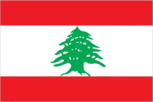
<strong>description:</strong> three horizontal bands consisting of red (top), white (middle, double-width), and red (bottom), with a green cedar tree centered on the white band<br><br><strong>meaning:</strong> red stands for blood shed for liberation, and white for peace, the snow of the mountains, and purity; the green cedar tree is the national symbol and represents eternity, steadiness, happiness, and prosperity
The flag of Lebanon is composed of three horizontal bands of red, white and red. The white band is twice the height of the red bands and bears a green Lebanese Cedar tree at its center.
- svg
- https://flagcdn.com/lb.svg
parliamentary democratic republic
22 November 1943 (from League of Nations mandate under French administration)
has not submitted an ICJ jurisdiction declaration; non-party state to the ICCt
ABEDA, AFESD, AMF, CAEU, FAO, G-24, G-77, IAEA, IBRD, ICAO, ICC (national committees), ICRM, IDA, IDB, IFAD, IFC, IFRCS, ILO, IMF, IMO, IMSO, Interpol, IOC, IPU, ISO, ITSO, ITU, LAS, MIGA, NAM, OAS (observer), OIC, OIF, OPCW, PCA, UN, UNCTAD, UNESCO, UNHCR, UNIDO, UNOOSA, UNRWA, UNWTO, UPU, WCO, WFTU (NGOs), WHO, WIPO, WMO, WTO (observer)
- Highest court(s)
- Court of Cassation or Supreme Court (organized into 8 chambers, each with a presiding judge and 2 associate judges); Constitutional Council (consists of 10 members)
- Judge selection and term of office
- Court of Cassation judges appointed by Supreme Judicial Council, a 10-member body headed by the chief justice, and includes other judicial officials; judge tenure NA; Constitutional Council members appointed - 5 by the Council of Ministers and 5 by parliament; members serve 5-year terms
- Subordinate courts
- Courts of Appeal; Courts of First Instance; specialized tribunals, religious courts; military courts
mixed system of civil law based on the French civil code, Ottoman legal tradition, and religious laws covering personal status, marriage, divorce, and other family relations of the Jewish, Islamic, and Christian communities
- Electoral system
- proportional representation
- Expected date of next election
- May 2026
- Legislative structure
- unicameral
- Legislature name
- National Assembly (Majlis Al-Nuwwab)
- Most recent election date
- 5/15/2022
- Note
- <strong>note 1:</strong> Lebanon’s constitution states that the Parliament cannot conduct regular business until it elects a president when the position is vacant <br><strong><br>note 2:</strong> seats are apportioned evenly between Christians and Muslims
- Number of seats
- 128 (all directly elected)
- Parties elected and seats per party
- Strong Republic (19); Strong Lebanon (18); Development and Liberation (15); Loyalty to the Resistance (15); Independent Deputies (9); Democratic Gathering (8); Independents (20); Other (24)
- Percentage of women in chamber
- 6.3%
- Scope of elections
- full renewal
- Term in office
- 4 years
<p> Lebanon has had many coats of arms since declaring independence in 1943, but none were officially adopted. The current version is a variation of the national flag. Red stands for the blood shed for liberation, and white for peace, purity, and mountain snow. The cedar tree is the national symbol, embodying eternity, steadiness, happiness, and prosperity.</p>
red, white, green
- Selected World Heritage Site locales
- Anjar; Baalbek; Byblos; Tyre; Ouadi Qadisha (the Holy Valley) and the Forest of the Cedars of God (Horsh Arz el-Rab); Rachid Karami International Fair-Tripoli
- Total World Heritage Sites
- 6 (all cultural)
Independence Day, 22 November (1943)
cedar tree
Al-Ahbash (Association of Islamic Charitable Projects) or AICP<br>Amal Movement ("Hope Movement")<br>Azm Movement<br>Ba’th Arab Socialist Party of Lebanon<br>Free Patriotic Movement or FPM<br>Future Movement Bloc or FM<br>Hizballah<br>Islamic Action Front or IAF<br>Kata'ib Party<br>Lebanese Democratic Party<br>Lebanese Forces or LF<br>Marada Movement<br>Progressive Socialist Party or PSP<br>Social Democrat Hunshaqian Party<br>Syrian Social Nationalist Party or SSNP<br>Tashnaq or Armenian Revolutionary Federation
Monday
21 years of age; authorized for all men and women regardless of religion; excludes persons convicted of felonies and other crimes or those imprisoned; excludes all military and security service personnel regardless of rank
Yes
Economy
- potatoes, milk, tomatoes, apples, oranges, olives, cucumbers/gherkins, chicken, lemons/limes, wheat (2023)
- note
- <b>note:</b> top ten agricultural products based on tonnage
- On alcohol and tobacco
- 0.7% of household expenditures (2023 est.)
- On food
- 37.1% of household expenditures (2023 est.)
- Expenditures
- $11.853 billion (2021 est.)
- Note
- <b>note:</b> central government revenues and expenses (excluding grants/extrabudgetary units/social security funds) converted to US dollars at average official exchange rate for year indicated
- Revenues
- $12.73 billion (2021 est.)
- code
- LBP
- name
- Lebanese pound (LBP) [ل.ل]
- $-5,642,829,133
- Current account balance 2021
- -$4.556 billion (2021 est.)
- Current account balance 2022
- -$7.265 billion (2022 est.)
- Current account balance 2023
- -$5.643 billion (2023 est.)
- Note
- <b>note:</b> balance of payments - net trade and primary/secondary income in current dollars
- $67.39 billion
- Debt - external 2023
- $41.936 billion (2023 est.)
- Note
- <b>note:</b> present value of external debt in current US dollars
lower middle-income Middle Eastern economy; hyperinflation and sharp poverty increases; banks have ceased lending; economic contraction, destroyed infrastructure, and reduced consumer demand resulting from Israel-Hezbollah conflict
- Currency
- Lebanese pounds (LBP) per US dollar -
- Exchange rates 2020
- 1,507.5 (2020 est.)
- Exchange rates 2021
- 1,507.5 (2021 est.)
- Exchange rates 2022
- 1,507.5 (2022 est.)
- Exchange rates 2023
- 13,875.625 (2023 est.)
- Exchange rates 2024
- 89,500 (2024 est.)
- $6.13 billion
- Exports 2021
- $9.684 billion (2021 est.)
- Exports 2022
- $12.445 billion (2022 est.)
- Exports 2023
- $11.77 billion (2023 est.)
- Note
- <b>note:</b> balance of payments - exports of goods and services in current dollars
- jewelry, cars, diamonds, scrap iron, gold (2023)
- note
- <b>note:</b> top five export commodities based on value in dollars
- UAE 26%, Egypt 7%, Turkey 5%, Iraq 5%, USA 4% (2023)
- note
- <b>note:</b> top five export partners based on percentage share of exports
- net inflows
- $1.84 billion
- Exports of goods and services
- 30.6% (2023 est.)
- Government consumption
- 5.2% (2023 est.)
- Household consumption
- 136% (2023 est.)
- Imports of goods and services
- -73.7% (2023 est.)
- Investment in fixed capital
- 1.9% (2023 est.)
- Investment in inventories
- 0% (2023 est.)
- Note
- <strong>note:</strong> figures may not total 100% due to rounding or gaps in data collection
- Agriculture
- 1% (2023 est.)
- Industry
- 2.1% (2023 est.)
- Note
- <b>note:</b> figures may not total 100% due to non-allocated consumption not captured in sector-reported data
- Services
- 42.4% (2023 est.)
- $20.079 billion (2023 est.)
- note
- <b>note:</b> data in current dollars at official exchange rate
$3,478
31.8 (2011)
$19.82 billion
$3,700
2 % of GDP
- $14.79 billion
- Imports 2021
- $17.667 billion (2021 est.)
- Imports 2022
- $24.536 billion (2022 est.)
- Imports 2023
- $23.313 billion (2023 est.)
- Note
- <b>note:</b> balance of payments - imports of goods and services in current dollars
- refined petroleum, gold, cars, packaged medicine, garments (2023)
- note
- <b>note:</b> top five import commodities based on value in dollars
- Switzerland 12%, China 11%, Greece 9%, Turkey 8%, Italy 6% (2023)
- note
- <b>note:</b> top five import partners based on percentage share of imports
- 0.1% (2023 est.)
- note
- <b>note:</b> annual % change in industrial value added based on constant local currency
banking, tourism, real estate and construction, food processing, wine, jewelry, cement, textiles, mineral and chemical products, wood and furniture products, oil refining, metal fabricating
- 45.24%
- Inflation rate (consumer prices) 2022
- 171.2% (2022 est.)
- Inflation rate (consumer prices) 2023
- 221.3% (2023 est.)
- Inflation rate (consumer prices) 2024
- 45.2% (2024 est.)
- Note
- <b>note:</b> annual % change based on consumer prices
- 1.939 million (2023 est.)
- note
- <b>note:</b> number of people ages 15 or older who are employed or seeking work
- total
- 1.84 million persons
- agriculture
- 3.51%
- industry
- 20.12%
- services
- 76.36%
- Note
- <strong>note:</strong> data cover central government debt and exclude debt instruments issued (or owned) by government entities other than the treasury; the data include treasury debt held by foreign entities; the data include debt issued by subnational entities, as well as intragovernmental debt; intragovernmental debt consists of treasury borrowings from surpluses in the social funds, such as for retirement, medical care, and unemployment
- Public debt 2017
- 146.8% of GDP (2017 est.)
- $72.6 billion
- Note
- <b>note:</b> data in 2021 dollars
- Real GDP (purchasing power parity) 2021
- $66.329 billion (2021 est.)
- Real GDP (purchasing power parity) 2022
- $65.917 billion (2022 est.)
- Real GDP (purchasing power parity) 2023
- $65.415 billion (2023 est.)
- -0.76%
- Note
- <b>note:</b> annual GDP % growth based on constant local currency
- Real GDP growth rate 2021
- -7% (2021 est.)
- Real GDP growth rate 2022
- -0.6% (2022 est.)
- Real GDP growth rate 2023
- -0.8% (2023 est.)
- $12,575
- Note
- <b>note:</b> data in 2021 dollars
- Real GDP per capita 2021
- $11,600 (2021 est.)
- Real GDP per capita 2022
- $11,500 (2022 est.)
- Real GDP per capita 2023
- $11,300 (2023 est.)
- $5.8 billion
- Note
- <b>note:</b> personal transfers and compensation between resident and non-resident individuals/households/entities
- Remittances 2021
- 27.5% of GDP (2021 est.)
- Remittances 2022
- 30.7% of GDP (2022 est.)
- Remittances 2023
- 33.3% of GDP (2023 est.)
- $33.3 billion
- Note
- <b>note:</b> holdings of gold (year-end prices)/foreign exchange/special drawing rights in current dollars
- Reserves of foreign exchange and gold 2022
- $32.513 billion (2022 est.)
- Reserves of foreign exchange and gold 2023
- $27.49 billion (2023 est.)
- Reserves of foreign exchange and gold 2024
- $33.301 billion (2024 est.)
7 % of GDP
6 % of GDP
- 5.7% (of GDP) (2021 est.)
- note
- <b>note:</b> central government tax revenue as a % of GDP
- 10.99%
- Note
- <b>note:</b> % of labor force seeking employment
- Unemployment rate 2021
- 12.7% (2021 est.)
- Unemployment rate 2022
- 11.6% (2022 est.)
- Unemployment rate 2023
- 11.6% (2023 est.)
- Female
- 21.9% (2023 est.)
- Male
- 24.4% (2023 est.)
- Note
- <b>note:</b> % of labor force ages 15-24 seeking employment
- Total
- 23.6% (2023 est.)
Energy
- Consumption
- 166,000 metric tons (2023 est.)
- Exports
- 47 metric tons (2022 est.)
- Imports
- 164,000 metric tons (2023 est.)
- Consumption
- 4.077 billion kWh (2023 est.)
- consumption per capita
- 681 kWh
- Imports
- 797 million kWh (2021 est.)
- Installed generating capacity
- 5.161 million kW (2023 est.)
- Transmission/distribution losses
- 436.839 million kWh (2023 est.)
- Electrification - total population
- 100% (2022 est.)
- Biomass and waste
- 0.7% of total installed capacity (2023 est.)
- Fossil fuels
- 52.6% of total installed capacity (2023 est.)
- hydroelectric
- 16.02%
- Hydroelectricity
- 15.5% of total installed capacity (2023 est.)
- nuclear
- 0%
- renewable
- 5.07%
- Solar
- 31% of total installed capacity (2023 est.)
- Wind
- 0.1% of total installed capacity (2023 est.)
- 617 kg of oil equivalent
- Total energy consumption per capita 2023
- 43.105 million Btu/person (2023 est.)
- Refined petroleum consumption
- 115,000 bbl/day (2023 est.)
6.8%
Communications
- per 100 inhabitants
- 7 per 100
- Subscriptions per 100 inhabitants
- 7 (2022 est.)
- Total
- 419,000 (2022 est.)
7 TV stations, 1 of which is state-owned; more than 30 radio stations, 1 of which is state-owned; satellite and cable TV services available; transmissions of at least 2 international broadcasters are accessible through partner stations (2019)
.lb
- Percent of population
- 84% (2023 est.)
#### ####|####
+961
- Subscriptions per 100 inhabitants
- 16 (2022 est.)
- Total subscriptions
- 875,000 (2021 est.)
- subscriptions per 100
- 74 per 100
- Subscriptions per 100 inhabitants
- 77 (2021 est.)
- Total subscriptions
- 4.29 million (2021 est.)
Transportation
- passengers carried
- 2.69 million passengers
- registered carrier departures
- 23,751 departures
8 (2025)
OD
Right
27 (2025)
- By type
- bulk carrier 2, container ship 1, general cargo 30, oil tanker 1, other 17
- Total
- 51 (2023)
- Key ports
- Bayrut, Sayda, Selaata, Sidon/zahrani Terminal, Tarabulus
- Large
- 1
- Medium
- 1
- Ports with oil terminals
- 3
- Small
- 0
- Total ports
- 5 (2024)
- Very small
- 3
- Narrow gauge
- 82 km (2017) 1.050-m gauge
- Note
- <strong>note:</strong> rail system is still unusable due to damage sustained from fighting in the 1980s and in 2006
- Standard gauge
- 319 km (2017) 1.435-m gauge
- Total
- 401 km (2017)
RL
Military and Security
- armored vehicles
- tanks
the primary responsibilities of the Lebanese Armed Forces (LAF) are defense against external attack, border security, protecting the country’s territorial waters, and assisting with internal security and development projects<br><br>the LAF’s domestic security responsibilities include countering narcotics trafficking and smuggling, managing protests, conducting search and rescue, and intervening to prevent violence between rival political factions; in recent years, the military has faced a financial crisis as government debt and national economic difficulties have undercut its ability to train and fully pay and supply personnel; the UN, as well as individual countries such as France, Qatar, and the US have provided financial assistance <br><br>the UN Interim Force in Lebanon (UNIFIL) has operated in the southern part of the country since 1978; it has approximately 10,500 personnel assigned and includes a maritime task force; the terrorist group Hizballah maintains thousands of fighters and militia in Lebanon, primarily in the south (see Terrorist Organizations in References) (2025)
- Lebanese Armed Forces (LAF): Army Command (includes Presidential Guard Brigade, Land Border Regiments), Naval Forces, Air Forces<br><br>Ministry of Interior: General Directorate of Internal Security Forces (law enforcement; includes Mobile Gendarmerie), General Directorate for Public Security (border control, some domestic security duties) (2025)
- active duty personnel
- 80,000
- note
- <strong>note:</strong> the commander of the LAF is also the head of the Army; the LAF patrols external borders, while official border checkpoints are under the authority of Directorate for General Security
- percent of total labor force
- 4.10 %
approximately 70,000 active Lebanese Armed Forces (2025)
the LAF's inventory is comprised of mostly older or secondhand equipment from an array of countries, such as France, Germany, Russia, and especially the US (2025)
- 3 % of GDP
- current USD
- $635,471,572
- Military Expenditures 2018
- 5.1% of GDP (2018 est.)
- Military Expenditures 2019
- 4.7% of GDP (2019 est.)
- Military Expenditures 2020
- 3% of GDP (2020 est.)
- Military Expenditures 2021
- 3.2% of GDP (2021 est.)
- Military Expenditures 2022
- 2.9% of GDP (2022 est.)
- percent of central government expenditure
- 8.91 %
- percent of GDP
- 2.59 % of GDP
18-25 years of age for voluntary military service for men and women; no conscription (2026)
- PowerIndex score
- 2.6521
Transnational Issues
- IDPs
- 984,514 (2024 est.)
- Refugees
- 765,390 (2024 est.)
- Stateless persons
- 40,000 (2024 est.)
Terrorism
- Abdallah Azzam Brigades; al-Aqsa Martyrs Brigade; Asbat al-Ansar; HAMAS; Hizballah; Islamic Revolutionary Guard Corps (IRGC)/Qods Force; Islamic State of Iraq and ash-Sham (ISIS); Palestine Liberation Front (PLF); Popular Front for the Liberation of Palestine (PFLP); PFLP-General Command (PFLP-GC)
- note
- <strong>note:</strong> details about the history, aims, leadership, organization, areas of operation, tactics, targets, weapons, size, and sources of support of the group(s) appear(s) in the Terrorism reference guide
Environment
- From coal and metallurgical coke
- 375,000 metric tonnes of CO2 (2023 est.)
- From petroleum and other liquids
- 17.109 million metric tonnes of CO2 (2023 est.)
- Total emissions
- 17.484 million metric tonnes of CO2 (2023 est.)
deforestation; soil deterioration, erosion; desertification; species loss; air pollution in Beirut from vehicular traffic and the burning of industrial wastes; pollution of coastal waters from raw sewage and oil spills; waste-water management
- Party to
- Biodiversity, Climate Change, Climate Change-Kyoto Protocol, Climate Change-Paris Agreement, Comprehensive Nuclear Test Ban, Desertification, Endangered Species, Hazardous Wastes, Law of the Sea, Nuclear Test Ban, Ozone Layer Protection, Ship Pollution, Wetlands
- Signed, but not ratified
- Environmental Modification, Marine Life Conservation
- Agriculture
- 11.8 kt (2019-2021 est.)
- Energy
- 7.9 kt (2022-2024 est.)
- Other
- 0.7 kt (2019-2021 est.)
- Waste
- 105.3 kt (2019-2021 est.)
23.8 micrograms per cubic meter (2019 est.)
3 % of total land area
-1 % of total
4.503 billion cubic meters (2022 est.)
- 38 % of internal resources
- Agricultural
- 700 million cubic meters (2022 est.)
- Industrial
- 900 million cubic meters (2022 est.)
- Municipal
- 240 million cubic meters (2022 est.)
- Municipal solid waste generated annually
- 2.04 million tons (2024 est.)
- Percent of municipal solid waste recycled
- 15% (2022 est.)