2011 Edition
CIA World Factbook 2011 Archive (HTML)
Introduction
Background
Britain oversaw foreign relations and defense for the ruling Kuwaiti AL-SABAH dynasty from 1899 until independence in 1961. Kuwait was attacked and overrun by Iraq on 2 August 1990. Following several weeks of aerial bombardment, a US-led, UN coalition began a ground assault on 23 February 1991 that liberated Kuwait in four days. Kuwait spent more than $5 billion to repair oil infrastructure damaged during 1990-91. The AL-SABAH family has ruled since returning to power in 1991 and reestablished an elected legislature that in recent years has become increasingly assertive. The country witnessed the historic election in May 2009 of four women to its National Assembly. Amid the 2010-11 uprisings and protests across the Arab world, stateless Arabs, known as bidoon, staged small protests in February and March 2011 demanding citizenship, jobs, and other benefits available to Kuwaiti nationals. Youth activist groups - supported by opposition legislators and the prime minister's rivals within the ruling family - rallied in March 2011 for an end to corruption and the ouster of the prime minister and his cabinet. Similar protests continued sporadically throughout April and May. In late September 2011 government inquiries of widespread corruption drew more public anger and renewed calls for the prime minister's removal.
Geography
Area
- 17,818 sq km 17,818 sq km 0 sq km
- total
- 17,818 sq km
- water
- 0 sq km
Area - comparative
slightly smaller than New Jersey
Climate
dry desert; intensely hot summers; short, cool winters
Coastline
499 km
Elevation extremes
- Persian Gulf 0 m unnamed elevation 306 m
- highest point
- unnamed elevation 306 m
- lowest point
- Persian Gulf 0 m
Environment - current issues
limited natural freshwater resources; some of world's largest and most sophisticated desalination facilities provide much of the water; air and water pollution; desertification
Environment - international agreements
- Biodiversity, Climate Change, Climate Change-Kyoto Protocol, Desertification, Endangered Species, Environmental Modification, Hazardous Wastes, Law of the Sea, Ozone Layer Protection Marine Dumping
- party to
- Biodiversity, Climate Change, Climate Change-Kyoto Protocol, Desertification, Endangered Species, Environmental Modification, Hazardous Wastes, Law of the Sea, Ozone Layer Protection
- signed, but not ratified
- Marine Dumping
Freshwater withdrawal (domestic/industrial/agricultural)
- 0.44 cu km/yr (45%/2%/52%) 164 cu m/yr (2000)
- per capita
- 164 cu m/yr (2000)
- total
- 0.44 cu km/yr (45%/2%/52%)
Geographic coordinates
29 30 N, 45 45 E
Geography - note
strategic location at head of Persian Gulf
Irrigated land
100 sq km (2008)
Land boundaries
- 462 km Iraq 240 km, Saudi Arabia 222 km
- border countries
- Iraq 240 km, Saudi Arabia 222 km
- total
- 462 km
Land use
- 0.84% 0.17% 98.99% (2005)
- arable land
- 0.84%
- other
- 98.99% (2005)
- permanent crops
- 0.17%
Location
Middle East, bordering the Persian Gulf, between Iraq and Saudi Arabia
Map references
Middle East
Maritime claims
- 12 nm
- territorial sea
- 12 nm
Natural hazards
sudden cloudbursts are common from October to April and bring heavy rain, which can damage roads and houses; sandstorms and dust storms occur throughout the year but are most common between March and August
Natural resources
petroleum, fish, shrimp, natural gas
Terrain
flat to slightly undulating desert plain
Total renewable water resources
0.02 cu km (1997)
People and Society
Age structure
- 25.8% (male 348,816/female 321,565) 72.2% (male 1,153,433/female 720,392) 2% (male 25,443/female 25,979) (2011 est.)
- 0-14 years
- 25.8% (male 348,816/female 321,565)
- 15-64 years
- 72.2% (male 1,153,433/female 720,392)
- 65 years and over
- 2% (male 25,443/female 25,979) (2011 est.)
Birth rate
21.32 births/1,000 population (2011 est.)
Death rate
2.11 deaths/1,000 population (July 2011 est.)
Drinking water source
- urban: 99% of population rural: 99% of population total: 99% of population urban: 1% of population rural: 1% of population total: 1% of population (2008)
- rural
- 1% of population
- total
- 1% of population (2008)
- urban
- 1% of population
Education expenditures
3.8% of GDP (2006)
Ethnic groups
Kuwaiti 45%, other Arab 35%, South Asian 9%, Iranian 4%, other 7%
Health expenditures
6.8% of GDP (2009)
HIV/AIDS - adult prevalence rate
0.1% (2001 est.)
HIV/AIDS - deaths
NA
HIV/AIDS - people living with HIV/AIDS
NA (2007 est.)
Infant mortality rate
- 8.07 deaths/1,000 live births 7.76 deaths/1,000 live births 8.39 deaths/1,000 live births (2011 est.)
- female
- 8.39 deaths/1,000 live births (2011 est.)
- total
- 8.07 deaths/1,000 live births
Languages
Arabic (official), English widely spoken
Life expectancy at birth
- 77.09 years 75.95 years 78.3 years (2011 est.)
- female
- 78.3 years (2011 est.)
- total population
- 77.09 years
Literacy
- age 15 and over can read and write 93.3% 94.4% 91% (2005 census)
- definition
- age 15 and over can read and write
- female
- 91% (2005 census)
- male
- 94.4%
- total population
- 93.3%
Major cities - population
KUWAIT (capital) 2.23 million (2009)
Median age
- 28.5 years 29.8 years 26.3 years (2011 est.)
- female
- 26.3 years (2011 est.)
- male
- 29.8 years
- total
- 28.5 years
Nationality
- Kuwaiti(s) Kuwaiti
- adjective
- Kuwaiti
- noun
- Kuwaiti(s)
Net migration rate
0.65 migrant(s)/1,000 population (2011 est.)
Obesity - adult prevalence rate
28.8% (2000)
Physicians density
1.793 physicians/1,000 population (2009)
Population
2,595,628 (July 2011 est.) includes 1,291,354 non-nationals
Population growth rate
1.986% this rate reflects a return to pre-Gulf crisis immigration of expatriates (2011 est.)
Religions
Muslim (official) 85% (Sunni 70%, Shia 30%), other (includes Christian, Hindu, Parsi) 15%
Sanitation facility access
- urban: 100% of population rural: 100% of population total: 100% of population (2008)
- rural
- 100% of population
- total
- 100% of population (2008)
- urban
- 100% of population
School life expectancy (primary to tertiary education)
- 12 years 12 years 13 years (2006)
- female
- 13 years (2006)
- male
- 12 years
- total
- 12 years
Sex ratio
- 1.047 male(s)/female 1.04 male(s)/female 1.79 male(s)/female 1.65 male(s)/female 1.54 male(s)/female (2011 est.)
- 15-64 years
- 1.79 male(s)/female
- 65 years and over
- 1.65 male(s)/female
- at birth
- 1.047 male(s)/female
- total population
- 1.54 male(s)/female (2011 est.)
- under 15 years
- 1.04 male(s)/female
Total fertility rate
2.64 children born/woman (2011 est.)
Urbanization
- 98% of total population (2010) 2.1% annual rate of change (2010-15 est.)
- rate of urbanization
- 2.1% annual rate of change (2010-15 est.)
- urban population
- 98% of total population (2010)
Government
Administrative divisions
6 governorates (muhafazat, singular - muhafazah); Al Ahmadi, Al 'Asimah, Al Farwaniyah, Al Jahra', Hawalli, Mubarak al Kabir
Capital
- Kuwait City 29 22 N, 47 58 E UTC+3 (8 hours ahead of Washington, DC during Standard Time)
- geographic coordinates
- 29 22 N, 47 58 E
- name
- Kuwait City
- time difference
- UTC+3 (8 hours ahead of Washington, DC during Standard Time)
Constitution
approved and promulgated 11 November 1962
Country name
- State of Kuwait Kuwait Dawlat al Kuwayt Al Kuwayt
- conventional long form
- State of Kuwait
- conventional short form
- Kuwait
- local long form
- Dawlat al Kuwayt
- local short form
- Al Kuwayt
Diplomatic representation from the US
- Ambassador Matthew H. TUELLER Bayan 36302, Block 13, Al-Masjed Al-Aqsa Street (near the Bayan palace), Kuwait City P. O. Box 77 Safat 13001 Kuwait; or PSC 1280 APO AE 09880-9000 [965] 2259-1001 [965] 2538-0282
- chief of mission
- Ambassador Matthew H. TUELLER
- embassy
- Bayan 36302, Block 13, Al-Masjed Al-Aqsa Street (near the Bayan palace), Kuwait City
- FAX
- [965] 2538-0282
- mailing address
- P. O. Box 77 Safat 13001 Kuwait; or PSC 1280 APO AE 09880-9000
- telephone
- [965] 2259-1001
Diplomatic representation in the US
- Ambassador SALIM al-Abdallah al-Jabir al-Sabah 2940 Tilden Street NW, Washington, DC 20008 [1] (202) 966-0702 [1] (202) 364-2868 Los Angeles
- chancery
- 2940 Tilden Street NW, Washington, DC 20008
- chief of mission
- Ambassador SALIM al-Abdallah al-Jabir al-Sabah
- consulate(s) general
- Los Angeles
- FAX
- [1] (202) 364-2868
- telephone
- [1] (202) 966-0702
Executive branch
- Amir SABAH al-Ahmad al-Jabir al-Sabah (since 29 January 2006); Crown Prince NAWAF al-Ahmad al-Jabir al-Sabah (born 25 June 1937) Prime Minister JABIR AL-MUBARAK al-Hamad al-Sabah (since 4 December 2011); Deputy Prime Ministers MUHAMMAD AL-SABAH al-Salim al-Sabah (since 9 February 2006), Muhammad Muhsin al-AFASI, SABAH AL-KHALID al-Hamad al-Sabah Council of Ministers appointed by the prime minister and approved by the amir; note - the cabinet of Prime Minister NASIR AL-MUHAMMAD al-Ahmad al-Sabah resigned on 28 November 2011, but will continue in a caretaker role none; the amir is hereditary; the amir appoints the prime minister and deputy prime ministers
- cabinet
- Council of Ministers appointed by the prime minister and approved by the amir; note - the cabinet of Prime Minister NASIR AL-MUHAMMAD al-Ahmad al-Sabah resigned on 28 November 2011, but will continue in a caretaker role
- chief of state
- Amir SABAH al-Ahmad al-Jabir al-Sabah (since 29 January 2006); Crown Prince NAWAF al-Ahmad al-Jabir al-Sabah (born 25 June 1937)
- elections
- none; the amir is hereditary; the amir appoints the prime minister and deputy prime ministers
- head of government
- Prime Minister JABIR AL-MUBARAK al-Hamad al-Sabah (since 4 December 2011); Deputy Prime Ministers MUHAMMAD AL-SABAH al-Salim al-Sabah (since 9 February 2006), Muhammad Muhsin al-AFASI, SABAH AL-KHALID al-Hamad al-Sabah
Flag description
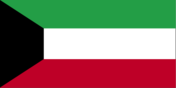
three equal horizontal bands of green (top), white, and red with a black trapezoid based on the hoist side; colors and design are based on the Arab Revolt flag of World War I; green represents fertile fields, white stands for purity, red denotes blood on Kuwaiti swords, black signifies the defeat of the enemy
Government type
constitutional emirate
Independence
19 June 1961 (from the UK)
International law organization participation
has not submitted an ICJ jurisdiction declaration; non-party state to the ICCt
International organization participation
ABEDA, AfDB (nonregional member), AFESD, AMF, BDEAC, CAEU, FAO, G-77, GCC, IAEA, IBRD, ICAO, ICC, ICRM, IDA, IDB, IFAD, IFC, IFRCS, IHO, ILO, IMF, IMO, IMSO, Interpol, IOC, IPU, ISO, ITSO, ITU, ITUC, LAS, MIGA, NAM, OAPEC, OIC, OPCW, OPEC, Paris Club (associate), PCA, UN, UNCTAD, UNESCO, UNIDO, UNRWA, UNWTO, UPU, WCO, WFTU, WHO, WIPO, WMO, WTO
Judicial branch
High Court of Appeal
Legal system
mixed legal system consisting of English common law, French civil law, and Islamic religious law
Legislative branch
- unicameral National Assembly or Majlis al-Umma (50 seats; members elected by popular vote to serve four-year terms; all cabinet ministers are also ex officio voting members of the National Assembly) last held on 16 May 2009 (next election to be held in 2013) percent of vote by bloc - NA; seats by bloc - tribal MPs 25 (all Sunni Muslims, and represented primarily by the Al-Mutairi, Al-Azmi, Al-Ajmi, and Al-Rasheedi tribes), Shia Muslims 9, liberals 7, independents 6, Salafi (Sunni) Islamists 3
- election results
- percent of vote by bloc - NA; seats by bloc - tribal MPs 25 (all Sunni Muslims, and represented primarily by the Al-Mutairi, Al-Azmi, Al-Ajmi, and Al-Rasheedi tribes), Shia Muslims 9, liberals 7, independents 6, Salafi (Sunni) Islamists 3
- elections
- last held on 16 May 2009 (next election to be held in 2013)
National anthem
- "Al-Nasheed Al-Watani" (National Anthem) Ahmad MUSHARI al-Adwani/Ibrahim Nasir al-SOULA adopted 1978; the anthem is only used on formal occasions
- lyrics/music
- Ahmad MUSHARI al-Adwani/Ibrahim Nasir al-SOULA
- name
- "Al-Nasheed Al-Watani" (National Anthem)
National holiday
National Day, 25 February (1950)
National symbol(s)
golden falcon
Political parties and leaders
none; formation of political parties is in practice illegal but is not forbidden by law
Political pressure groups and leaders
- Islamists; merchants; political groups; secular liberals and pro-governmental deputies; Shia activists; tribal groups
- other
- Islamists; merchants; political groups; secular liberals and pro-governmental deputies; Shia activists; tribal groups
Suffrage
21 years of age; universal; note - males in the military or police are not allowed to vote; adult females were allowed to vote as of 16 May 2005; all voters must have been citizens for 20 years
Economy
Agriculture - products
fish
Budget
- $75.01 billion $56.59 billion (2010 est.)
- expenditures
- $56.59 billion (2010 est.)
- revenues
- $75.01 billion
Budget surplus (+) or deficit (-)
14% of GDP (2010 est.)
Central bank discount rate
1.25% (31 December 2010 est.) 3% (31 December 2009 est.)
Commercial bank prime lending rate
2.9% (31 December 2010 est.) 6.2% (31 December 2009 est.)
Current account balance
$43.14 billion (2010 est.) $25.78 billion (2009 est.)
Debt - external
$45.43 billion (31 December 2010 est.) $45.49 billion (31 December 2009 est.)
Economy - overview
Kuwait has a geographically small, but wealthy, relatively open economy with self-reported crude oil reserves of about 102 billion barrels - about 9% of world reserves. Petroleum accounts for nearly half of GDP, 95% of export revenues, and 95% of government income. Kuwaiti officials have committed to increasing oil production to 4 million barrels per day by 2020. The rise in global oil prices throughout 2010 is reviving government consumption and economic growth as Kuwait experiences a 20% increase in government budget revenue. Kuwait has done little to diversify its economy, in part, because of this positive fiscal situation, and, in part, due to the poor business climate and the acrimonious relationship between the National Assembly and the executive branch, which has stymied most movement on economic reforms. Nonetheless, the government in May 2010 passed a privatization bill that allows the government to sell assets to private investors, and in January passed an economic development plan that pledges to spend up to $130 billion in five years to diversify the economy away from oil, attract more investment, and boost private sector participation in the economy. Increasing government expenditures by so large an amount during the planned time frame may be difficult to accomplish.
Electricity - consumption
42.58 billion kWh (2008 est.)
Electricity - exports
0 kWh (2009 est.)
Electricity - imports
0 kWh (2009 est.)
Electricity - production
49.82 billion kWh (2009 est.)
Exchange rates
Kuwaiti dinars (KD) per US dollar - 0.2888 (2010) 0.2877 (2009) 0.2679 (2008) 0.2844 (2007) 0.29 (2006)
Exports
$66.96 billion (2010 est.) $51.69 billion (2009 est.)
Exports - commodities
oil and refined products, fertilizers
Exports - partners
Japan 15.5%, India 15.3%, South Korea 13.5%, China 10.1%, US 8.4% (2010)
GDP - composition by sector
- 0.3% 48% 51.7% (2010 est.)
- agriculture
- 0.3%
- industry
- 48%
- services
- 51.7% (2010 est.)
GDP - per capita (PPP)
$48,900 (2010 est.) $49,700 (2009 est.) $54,300 (2008 est.) data are in 2010 US dollars
GDP - real growth rate
2% (2010 est.) -5.2% (2009 est.) 5% (2008 est.)
GDP (official exchange rate)
$131.3 billion (2010 est.)
GDP (purchasing power parity)
$136.5 billion (2010 est.) $133.9 billion (2009 est.) $141.2 billion (2008 est.) data are in 2010 US dollars
Household income or consumption by percentage share
- NA% NA%
- highest 10%
- NA%
- lowest 10%
- NA%
Imports
$19.06 billion (2010 est.) $17.29 billion (2009 est.)
Imports - commodities
food, construction materials, vehicles and parts, clothing
Imports - partners
US 14.2%, China 9.5%, Saudi Arabia 7.3%, Japan 7.2%, Germany 6.1%, Italy 4.7%, India 4.4% (2010)
Industrial production growth rate
4.8% (2010 est.)
Industries
petroleum, petrochemicals, cement, shipbuilding and repair, water desalination, food processing, construction materials
Inflation rate (consumer prices)
4% (2010 est.) 4% (2009 est.)
Investment (gross fixed)
12.9% of GDP (2010 est.)
Labor force
2.158 million non-Kuwaitis represent about 60% of the labor force (2010 est.)
Labor force - by occupation
- NA% NA% NA%
- agriculture
- NA%
- industry
- NA%
- services
- NA%
Market value of publicly traded shares
$119.6 billion (31 December 2010) $95.94 billion (31 December 2009) $107.2 billion (31 December 2008)
Natural gas - consumption
12.38 billion cu m (2009 est.)
Natural gas - exports
0 cu m (2009 est.)
Natural gas - imports
890 million cu m (2009 est.)
Natural gas - production
11.49 billion cu m (2009 est.)
Natural gas - proved reserves
1.798 trillion cu m (1 January 2011 est.)
Oil - consumption
354,000 bbl/day (2010 est.)
Oil - exports
2.127 million bbl/day (2009 est.)
Oil - imports
0 bbl/day (2009 est.)
Oil - production
2.45 million bbl/day (2010 est.)
Oil - proved reserves
104 billion bbl (1 January 2011 est.)
Population below poverty line
NA%
Public debt
9.6% of GDP (2010 est.) 11% of GDP (2009 est.)
Reserves of foreign exchange and gold
$21.36 billion (31 December 2010 est.) $20.38 billion (31 December 2009 est.)
Stock of broad money
$91.35 billion (31 December 2010 est.) $86.81 billion (31 December 2009 est.)
Stock of direct foreign investment - abroad
$36.73 billion (31 December 2010 est.) $34.66 billion (31 December 2009 est.)
Stock of direct foreign investment - at home
$2.128 billion (31 December 2010 est.) $2.048 billion (31 December 2009 est.)
Stock of domestic credit
$99.52 billion (31 December 2010 est.) $91 billion (31 December 2009 est.)
Stock of narrow money
$20.05 billion (31 December 2010 est.) $16.44 billion (31 December 2009 est.)
Taxes and other revenues
57.1% of GDP (2010 est.)
Unemployment rate
2.2% (2004 est.)
Communications
Broadcast media
state-owned TV broadcaster operates 4 networks and a satellite channel; several private TV broadcasters have emerged since 2003; satellite TV is available with pan-Arab TV stations especially popular; state-owned Radio Kuwait broadcasts on a number of channels in Arabic and English; first private radio station emerged in 2005; transmissions of at least 2 international radio broadcasters are available (2007)
Internet country code
.kw
Internet hosts
2,485 (2010)
Internet users
1.1 million (2009)
Telephone system
- the quality of service is excellent new telephone exchanges provide a large capacity for new subscribers; trunk traffic is carried by microwave radio relay, coaxial cable, and open-wire and fiber-optic cable; a mobile-cellular telephone system operates throughout Kuwait, and the country is well supplied with pay telephones country code - 965; linked to international submarine cable Fiber-Optic Link Around the Globe (FLAG); linked to Bahrain, Qatar, UAE via the Fiber-Optic Gulf (FOG) cable; coaxial cable and microwave radio relay to Saudi Arabia; satellite earth stations - 6 (3 Intelsat - 1 Atlantic Ocean and 2 Indian Ocean, 1 Inmarsat - Atlantic Ocean, and 2 Arabsat)
- domestic
- new telephone exchanges provide a large capacity for new subscribers; trunk traffic is carried by microwave radio relay, coaxial cable, and open-wire and fiber-optic cable; a mobile-cellular telephone system operates throughout Kuwait, and the country is well supplied with pay telephones
- general assessment
- the quality of service is excellent
- international
- country code - 965; linked to international submarine cable Fiber-Optic Link Around the Globe (FLAG); linked to Bahrain, Qatar, UAE via the Fiber-Optic Gulf (FOG) cable; coaxial cable and microwave radio relay to Saudi Arabia; satellite earth stations - 6 (3 Intelsat - 1 Atlantic Ocean and 2 Indian Ocean, 1 Inmarsat - Atlantic Ocean, and 2 Arabsat)
Telephones - main lines in use
566,300 (2010)
Telephones - mobile cellular
4.4 million (2010)
Transportation
Airports
7 (2010)
Airports - with paved runways
- 1 (2010)
- 1,524 to 2,437 m
- 1 (2010)
- 2,438 to 3,047 m
- 2
- over 3,047 m
- 1
- total
- 4
Airports - with unpaved runways
- 2 (2010)
- 1,524 to 2,437 m
- 1
- total
- 3
- under 914 m
- 2 (2010)
Heliports
4 (2010)
Merchant marine
- bulk carrier 1, carrier 3, container 6, liquefied gas 4, petroleum tanker 16 47 (Bahamas 2, Bahrain 5, Comoros 1, Libya 1, Malta 2, Panama 12, Qatar 7, Saint Kitts and Nevis 3, Saudi Arabia 4, UAE 10) (2010)
- registered in other countries
- 47 (Bahamas 2, Bahrain 5, Comoros 1, Libya 1, Malta 2, Panama 12, Qatar 7, Saint Kitts and Nevis 3, Saudi Arabia 4, UAE 10) (2010)
- total
- 30
Pipelines
gas 269 km; oil 540 km; refined products 57 km (2010)
Ports and terminals
Ash Shu'aybah, Ash Shuwaykh, Az Zawr (Mina' Sa'ud), Mina' 'Abd Allah, Mina' al Ahmadi
Roadways
- 5,749 km 4,887 km 862 km (2004)
- total
- 5,749 km
- unpaved
- 862 km (2004)
Military and Security
Manpower available for military service
- 1,002,480 616,958 (2010 est.)
- females age 16-49
- 616,958 (2010 est.)
- males age 16-49
- 1,002,480
Manpower fit for military service
- 840,912 523,206 (2010 est.)
- females age 16-49
- 523,206 (2010 est.)
- males age 16-49
- 840,912
Manpower reaching militarily significant age annually
- 17,653 16,232 (2010 est.)
- female
- 16,232 (2010 est.)
- male
- 17,653
Military branches
Kuwaiti Land Forces (KLF), Kuwaiti Navy, Kuwaiti Air Force (Al-Quwwat al-Jawwiya al-Kuwaitiya), Kuwaiti National Guard (KNG) (2011)
Military expenditures
5.3% of GDP (2006)
Military service age and obligation
18-30 years of age for compulsory and 18-25 years of age for voluntary military service; women age 18-30 may be subject to compulsory military service; conscription suspended in 2001 (2009)
Transnational Issues
Disputes - international
Kuwait and Saudi Arabia continue negotiating a joint maritime boundary with Iran; no maritime boundary exists with Iraq in the Persian Gulf
Trafficking in persons
- Kuwait is a destination country for men and women who are subjected to forced labor and, to a lesser degree, forced prostitution; men and women migrate from India, Egypt, Bangladesh, Syria, Pakistan, the Philippines, Sri Lanka, Indonesia, Nepal, Iran, Jordan, Ethiopia, and Iraq to work in Kuwait, most of them in the domestic service, construction, and sanitation sectors; although most of these migrants enter Kuwait voluntarily, upon arrival some are subjected to conditions of forced labor by their sponsors and labor agents, including nonpayment of wages, long working hours without rest, deprivation of food, threats, physical or sexual abuse, and restrictions on movement, such as the withholding of passports or confinement to the workplace Tier 3 - Kuwait does not fully comply with the minimum standards for the elimination of trafficking and is not making sufficient efforts to do so; the government did not enact its draft comprehensive anti-trafficking law; Kuwait's victim-protection measures remain weak, particularly due to its lack of proactive victim-identification procedures and continued reliance on the sponsorship system, which causes victims of trafficking to be punished for immigration violations rather than protected (2011)
- current situation
- Kuwait is a destination country for men and women who are subjected to forced labor and, to a lesser degree, forced prostitution; men and women migrate from India, Egypt, Bangladesh, Syria, Pakistan, the Philippines, Sri Lanka, Indonesia, Nepal, Iran, Jordan, Ethiopia, and Iraq to work in Kuwait, most of them in the domestic service, construction, and sanitation sectors; although most of these migrants enter Kuwait voluntarily, upon arrival some are subjected to conditions of forced labor by their sponsors and labor agents, including nonpayment of wages, long working hours without rest, deprivation of food, threats, physical or sexual abuse, and restrictions on movement, such as the withholding of passports or confinement to the workplace
- tier rating
- Tier 3 - Kuwait does not fully comply with the minimum standards for the elimination of trafficking and is not making sufficient efforts to do so; the government did not enact its draft comprehensive anti-trafficking law; Kuwait's victim-protection measures remain weak, particularly due to its lack of proactive victim-identification procedures and continued reliance on the sponsorship system, which causes victims of trafficking to be punished for immigration violations rather than protected (2011)