2024 Edition
CIA World Factbook 2024 (factbook.json @ b8538d78e87c)
Introduction
Background
In 1603, after decades of civil warfare, the Tokugawa shogunate (a military-led, dynastic government) ushered in a long period of relative political stability and isolation from foreign influence. For more than two centuries, this policy enabled Japan to enjoy a flowering of its indigenous culture. Japan opened its ports after signing the Treaty of Kanagawa with the US in 1854 and began to intensively modernize and industrialize. During the late 19th and early 20th centuries, Japan became a regional power that was able to defeat the forces of both China and Russia. It occupied Korea, Formosa (Taiwan), and southern Sakhalin Island. In 1931-32, Japan occupied Manchuria, and in 1937, it launched a full-scale invasion of China. Japan attacked US forces at Pearl Harbor, Hawaii, in 1941, triggering America's entry into World War II, and Japan soon occupied much of East and Southeast Asia. After its defeat in World War II, the country recovered to become an economic power and a US ally. While the emperor retains his throne as a symbol of national unity, elected politicians hold the decision-making power. After three decades of unprecedented growth, Japan's economy experienced a major slowdown starting in the 1990s, but the country remains an economic power. In 2011, Japan's strongest-ever earthquake and an accompanying tsunami devastated the northeast part of Honshu, killed thousands, and damaged several nuclear power plants. ABE Shinzo was reelected as prime minister in 2012, and he embarked on ambitious economic and security reforms to improve Japan's economy and bolster the country's international standing. In 2019, ABE became Japan's longest-serving post-war prime minister; he resigned in 2020 and was succeeded by SUGA Yoshihide. KISHIDA Fumio became prime minister in 2021.
Geography
Area
- land
- 364,485 sq km
- note
- note: includes Bonin Islands (Ogasawara-gunto), Daito-shoto, Minami-jima, Okino-tori-shima, Ryukyu Islands (Nansei-shoto), and Volcano Islands (Kazan-retto)
- total
- 377,915 sq km
- water
- 13,430 sq km
Area - comparative
slightly smaller than California
Climate
varies from tropical in south to cool temperate in north
Coastline
29,751 km
Elevation
- highest point
- Mount Fuji 3,776 m
- lowest point
- Hachiro-gata -4 m
- mean elevation
- 438 m
Geographic coordinates
36 00 N, 138 00 E
Geography - note
note 1: strategic location in northeast Asia; composed of four main islands (the "Home Islands") -- Hokkaido, Honshu (the largest, most populous, and site of Tokyo, the capital), Shikoku, and Kyushu note 2: a 2023 Geospatial Information Authority of Japan survey technically detected 100,000 islands and islets, but only the 14,125 islands with a circumference of at least 100 m (330 ft) were officially counted; only about 260 of the islands are inhabited note 3: Japan annually records the most earthquakes in the world; it is one of the countries along the Ring of Fire, a belt of active volcanoes and earthquake epicenters bordering the Pacific Ocean; up to 90% of the world's earthquakes and some 75% of the world's volcanoes occur within the Ring of Fire
Irrigated land
15,730 sq km (2014)
Land boundaries
- total
- 0 km
Land use
- agricultural land
- 12.5% (2018 est.)
- agricultural land: arable land
- arable land: 11.7% (2018 est.)
- agricultural land: permanent crops
- permanent crops: 0.8% (2018 est.)
- agricultural land: permanent pasture
- permanent pasture: 0% (2018 est.)
- forest
- 68.5% (2018 est.)
- other
- 19% (2018 est.)
Location
Eastern Asia, island chain between the North Pacific Ocean and the Sea of Japan, east of the Korean Peninsula
Major lakes (area sq km)
- fresh water lake(s)
- Biwa-ko 688 sq km
Map references
Asia
Maritime claims
- contiguous zone
- 24 nm
- exclusive economic zone
- 200 nm
- territorial sea
- 12 nm; between 3 nm and 12 nm in the international straits - La Perouse or Soya, Tsugaru, Osumi, and the Korea and Tsushima Straits
Natural hazards
many dormant and some active volcanoes; about 1,500 seismic occurrences (mostly tremors but occasional severe earthquakes) every year; tsunamis; typhoonsvolcanism: both Unzen (1,500 m) and Sakura-jima (1,117 m), which lies near the densely populated city of Kagoshima, have been deemed Decade Volcanoes by the International Association of Volcanology and Chemistry of the Earth's Interior, worthy of study due to their explosive history and close proximity to human populations; other notable historically active volcanoes include Asama, Honshu Island's most active volcano, Aso, Bandai, Fuji, Iwo-Jima, Kikai, Kirishima, Komaga-take, Oshima, Suwanosejima, Tokachi, Yake-dake, and Usu; see note 2 under "Geography - note"
Natural resources
- negligible mineral resources, fish
- note
- note: with virtually no natural energy resources, Japan is almost totally dependent on imported sources of energy
Population distribution
all primary and secondary regions of high population density lie on the coast; one-third of the population resides in and around Tokyo on the central plain (Kanto Plain)
Terrain
mostly rugged and mountainous
People and Society
Age structure
- 0-14 years
- 12.1% (male 7,701,196/female 7,239,389)
- 15-64 years
- 58.4% (male 36,197,840/female 35,777,966)
- 65 years and over
- 29.5% (2024 est.) (male 15,976,233/female 20,309,321)
Alcohol consumption per capita
- beer
- 1.35 liters of pure alcohol (2019 est.)
- other alcohols
- 5.09 liters of pure alcohol (2019 est.)
- spirits
- 1.63 liters of pure alcohol (2019 est.)
- total
- 8.36 liters of pure alcohol (2019 est.)
- wine
- 0.29 liters of pure alcohol (2019 est.)
Birth rate
6.9 births/1,000 population (2024 est.)
Children under the age of 5 years underweight
NA
Contraceptive prevalence rate
- 39.8% (2015)
- note
- note: percent of women aged 20-49
Current health expenditure
10.9% of GDP (2020)
Currently married women (ages 15-49)
46.8% (2023 est.)
Death rate
11.9 deaths/1,000 population (2024 est.)
Dependency ratios
- elderly dependency ratio
- 51
- potential support ratio
- 2 (2021 est.)
- total dependency ratio
- 71.1
- youth dependency ratio
- 20.1
Drinking water source
- improved: rural
- rural: NA
- improved: total
- total: 99.1% of population
- improved: urban
- urban: NA
- unimproved: rural
- rural: NA
- unimproved: total
- total: 0.1% of population (2020 est.)
- unimproved: urban
- urban: NA
Education expenditures
3.4% of GDP (2020 est.)
Ethnic groups
- Japanese 97.5%, Chinese 0.6%, Vietnam 0.4%, South Korean 0.3%, other 1.2% (includes Filipino, Brazilian, Nepalese, Indonesian, American, and Taiwanese) (2022 est.)
- note
- note: data represent population by nationality; up to 230,000 Brazilians of Japanese origin migrated to Japan in the 1990s to work in industries; some have returned to Brazil
Gross reproduction rate
0.68 (2024 est.)
Hospital bed density
13 beds/1,000 population (2018)
Infant mortality rate
- female
- 1.7 deaths/1,000 live births
- male
- 2 deaths/1,000 live births
- total
- 1.9 deaths/1,000 live births (2024 est.)
Languages
- Languages
- Japanese
- major-language sample(s)
- 必要不可欠な基本情報の源、ワールド・ファクトブック(Japanese)The World Factbook, the indispensable source for basic information.
Life expectancy at birth
- female
- 88.2 years
- male
- 82.3 years
- total population
- 85.2 years (2024 est.)
Literacy
- female
- NA
- male
- NA
- total population
- NA
Major urban areas - population
37.194 million TOKYO (capital), 19.013 million Osaka, 9.569 million Nagoya, 5.490 million Kitakyushu-Fukuoka, 2.937 million Shizuoka-Hamamatsu, 2.666 million Sapporo (2023)
Maternal mortality ratio
4 deaths/100,000 live births (2020 est.)
Median age
- female
- 51.3 years
- male
- 48.3 years
- total
- 49.9 years (2024 est.)
Mother's mean age at first birth
30.7 years (2018 est.)
Nationality
- adjective
- Japanese
- noun
- Japanese (singular and plural)
Net migration rate
0.7 migrant(s)/1,000 population (2024 est.)
Obesity - adult prevalence rate
4.3% (2016)
Physician density
2.48 physicians/1,000 population (2018)
Population
- female
- 63,326,676 (2024 est.)
- male
- 59,875,269
- total
- 123,201,945
Population distribution
all primary and secondary regions of high population density lie on the coast; one-third of the population resides in and around Tokyo on the central plain (Kanto Plain)
Population growth rate
-0.43% (2024 est.)
Religions
- Shintoism 48.6%, Buddhism 46.4%, Christianity 1.1%, other 4% (2021 est.)
- note
- note: total adherents among persons claiming a religious affiliation
Sanitation facility access
- improved: rural
- rural: NA
- improved: total
- total: 99.9% of population
- improved: urban
- urban: NA
- unimproved: rural
- rural: NA
- unimproved: total
- total: 0.1% of population (2020 est.)
- unimproved: urban
- urban: NA
School life expectancy (primary to tertiary education)
- female
- 15 years (2019)
- male
- 15 years
- total
- 15 years
Sex ratio
- 0-14 years
- 1.06 male(s)/female
- 15-64 years
- 1.01 male(s)/female
- 65 years and over
- 0.79 male(s)/female
- at birth
- 1.06 male(s)/female
- total population
- 0.95 male(s)/female (2024 est.)
Tobacco use
- female
- 10% (2020 est.)
- male
- 30.1% (2020 est.)
- total
- 20.1% (2020 est.)
Total fertility rate
1.4 children born/woman (2024 est.)
Urbanization
- rate of urbanization
- -0.25% annual rate of change (2020-25 est.)
- urban population
- 92% of total population (2023)
Government
Administrative divisions
47 prefectures; Aichi, Akita, Aomori, Chiba, Ehime, Fukui, Fukuoka, Fukushima, Gifu, Gunma, Hiroshima, Hokkaido, Hyogo, Ibaraki, Ishikawa, Iwate, Kagawa, Kagoshima, Kanagawa, Kochi, Kumamoto, Kyoto, Mie, Miyagi, Miyazaki, Nagano, Nagasaki, Nara, Niigata, Oita, Okayama, Okinawa, Osaka, Saga, Saitama, Shiga, Shimane, Shizuoka, Tochigi, Tokushima, Tokyo, Tottori, Toyama, Wakayama, Yamagata, Yamaguchi, Yamanashi
Capital
- etymology
- originally known as Edo, meaning "estuary" in Japanese, the name was changed to Tokyo, meaning "eastern capital," in 1868
- geographic coordinates
- 35 41 N, 139 45 E
- name
- Tokyo
- time difference
- UTC+9 (14 hours ahead of Washington, DC, during Standard Time)
Citizenship
- citizenship by birth
- no
- citizenship by descent only
- at least one parent must be a citizen of Japan
- dual citizenship recognized
- no
- residency requirement for naturalization
- 5 years
Constitution
- amendments
- proposed by the Diet; passage requires approval by at least two-thirds majority of both houses of the Diet and approval by majority in a referendum; note - the constitution has not been amended since its enactment in 1947
- history
- previous 1890; latest approved 6 October 1946, adopted 3 November 1946, effective 3 May 1947
Country name
- conventional long form
- none
- conventional short form
- Japan
- etymology
- the English word for Japan comes via the Chinese name for the country "Cipangu"; both Nihon and Nippon mean "where the sun originates" and are frequently translated as "Land of the Rising Sun"
- local long form
- Nihon-koku/Nippon-koku
- local short form
- Nihon/Nippon
Diplomatic representation from the US
- chief of mission
- Ambassador Rahm EMANUEL (since 25 March 2022)
- consulate(s)
- Fukuoka, Nagoya
- consulate(s) general
- Naha (Okinawa), Osaka-Kobe, Sapporo
- email address and website
- TokyoACS@state.govhttps://jp.usembassy.gov/
- embassy
- 1-10-5 Akasaka, Minato-ku, Tokyo 107-8420
- FAX
- [81] (03) 3224-5856
- mailing address
- 9800 Tokyo Place, Washington DC 20521-9800
- telephone
- [81] (03) 3224-5000
Diplomatic representation in the US
- chancery
- 2520 Massachusetts Avenue NW, Washington, DC 20008
- chief of mission
- Ambassador YAMADA Shigeo (since 27 February 2024)
- consulate(s)
- Anchorage (AK), Atlanta, Boston, Denver (CO), Detroit (MI), Hagatna (Guam), Honolulu, Houston, Los Angeles, Miami, Nashville (TN), New York, Portland (OR), San Francisco, Saipan (Northern Mariana Islands), Seattle (WA)
- consulate(s) general
- Chicago
- email address and website
- emb-consulate.dc@ws.mofa.go.jphttps://www.us.emb-japan.go.jp/itprtop_en/index.html
- FAX
- [1] (202) 328-2187
- telephone
- [1] (202) 238-6700
Executive branch
- cabinet
- Cabinet appointed by the prime minister
- chief of state
- Emperor NARUHITO (since 1 May 2019)
- election results
- 2024: Shigeru ISHIBA (LDP) elected prime minister on 27 September 2024; upper house vote - 143 of 242 votes; lower house vote - 291 of 461 votes (note - ISHIBA resigned as prime minister on 11 November 2024 following parliamentary elections but was re-elected over Yoshihiko NODA (CDP) in the second round of voting in the lower house, 221-160)2021: Fumio KISHIDA reelected prime minister on 10 November 2021; upper house vote - Fumio KISHIDA (LDP) 141, Yukio EDANO (CDP) 60; lower house vote - Fumio KISHIDA 297, Yukio EDANO 108
- elections/appointments
- the monarchy is hereditary; the leader of the majority party or majority coalition in the House of Representatives usually becomes prime minister
- head of government
- Prime Minister Shigeru ISHIBA (since 1 October 2024)
Flag description
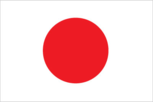
white with a large red disk (representing the sun without rays) in the center
Government type
parliamentary constitutional monarchy
Independence
3 May 1947 (current constitution adopted as amendment to Meiji Constitution); notable earlier dates: 11 February 660 B.C. (mythological date of the founding of the nation by Emperor JIMMU); 29 November 1890 (Meiji Constitution provides for constitutional monarchy)
International law organization participation
accepts compulsory ICJ jurisdiction with reservations; accepts ICCt jurisdiction
International organization participation
ADB, AfDB (nonregional member), APEC, Arctic Council (observer), ARF, ASEAN (dialogue partner), Australia Group, BIS, CD, CE (observer), CERN (observer), CICA (observer), CP, CPLP (associate), EAS, EBRD, EITI (implementing country), FAO, FATF, G-5, G-7, G-8, G-10, G-20, IADB, IAEA, IBRD, ICAO, ICC (national committees), ICCt, ICRM, IDA, IEA, IFAD, IFC, IFRCS, IGAD (partners), IHO, ILO, IMF, IMO, IMSO, Interpol, IOC, IOM, IPU, ISO, ITSO, ITU, ITUC (NGOs), LAIA (observer), MIGA, NEA, NSG, OAS (observer), OECD, OPCW, OSCE (partner), Pacific Alliance (observer), Paris Club, PCA, PIF (partner), Quad, SAARC (observer), SELEC (observer), SICA (observer), UN, UNCTAD, UNESCO, UNHCR, UNHRC, UNIDO, UNMISS, UNOOSA, UNRWA, UNWTO, UPU, Wassenaar Arrangement, WCO, WFTU (NGOs), WHO, WIPO, WMO, WTO, ZC
Judicial branch
- highest court(s)
- Supreme Court or Saiko saibansho (consists of the chief justice and 14 associate justices); note - the Supreme Court has jurisdiction in constitutional issues
- judge selection and term of office
- Supreme Court chief justice designated by the Cabinet and appointed by the monarch; associate justices appointed by the Cabinet and confirmed by the monarch; all justices are reviewed in a popular referendum at the first general election of the House of Representatives following each judge's appointment and every 10 years afterward
- subordinate courts
- 8 High Courts (Koto-saiban-sho), each with a Family Court (Katei-saiban-sho); 50 District Courts (Chiho saibansho), with 203 additional branches; 438 Summary Courts (Kani saibansho)
Legal system
civil law system based on German model; system also reflects Anglo-American influence and Japanese traditions; judicial review of legislative acts in the Supreme Court
Legislative branch
- description
- bicameral National Diet or Kokkai consists of:House of Councilors or Sangi-in (248 seats; 148 members directly elected in multi-seat districts by simple majority vote and 100 directly elected in a single national constituency by proportional representation vote; members serve 6-year terms with half the membership renewed every 3 years)House of Representatives or Shuugi-in (465 seats; 289 members directly elected in single-seat districts by simple majority vote and 176 directly elected in multi-seat districts by party-list proportional representation vote; members serve up to 4-year terms)
- election results
- House of Councillors - percent of vote by party - NA; seats by party/grouping as of January 2024 - LDP 116, CDP-SDP 40, Komeito 27, JCP 11, Ishin 21, DPP 11, Reiwa 5, OW 2, NHK 2, independent 12; composition - men 182, women 66; percentage women 26.6%House of Representatives - percent of vote by party - LDP 26.7%, CDP 21.2%, Ishin 9.4%, DPP 11.3%, Komeito 10.9%, Reiwa 7%, JCP 6.2%, Sanseito Party 3.4%, CPJ 2.1%; seats by party as of October 2024 - LDP 191, CDP 148, Ishin 38, DPP 28, Komeito 24, Reiwa 9, JCP 8, Sanseito Party 3, CPJ 3, SDP 1, Independents 12 ; composition - men 392 men, women 73; percentage women 15.7%
- elections
- House of Councillors - last held on 10 July 2022 (next to be held in July 2025)House of Representatives - last held on 27 October 2024 (next to be held by October 2025)
National anthem
- lyrics/music
- unknown/Hiromori HAYASHI
- name
- "Kimigayo" (The Emperor's Reign)
- note
- note: adopted 1999; unofficial national anthem since 1883; oldest anthem lyrics in the world, dating to the 10th century or earlier; there is some opposition to the anthem because of its association with militarism and worship of the emperor
National heritage
- selected World Heritage Site locales
- Buddhist Monuments in the Horyu-ji Area (c); Historic Monuments of Ancient Nara (c); Himeji-jo (c); Shiretoko (n); Mozu-Furuichi Kofun Group: Mounded Tombs of Ancient Japan (c); Iwami Ginzan Silver Mine and its Cultural Landscape (c); Jomon Prehistoric Sites in Northern Japan (c); Yakushima (n); Historic Monuments of Ancient Kyoto (Kyoto, Uji and Otsu Cities)(c); Hiroshima Peace Memorial (Genbaku Dome) (c); Shirakami-Sanchi (n); Historic Villages of Shirakawa-go and Gokayama (c); Itsukushima Shinto Shrine (c); Historic Monuments of Ancient Nara (c); Shrines and Temples of Nikko (c); Gusuku Sites and Related Properties of the Kingdom of Ryukyu (c); Sacred Sites and Pilgrimage Routes in the Kii Mountain Range (c); Hiraizumi – Temples, Gardens and Archaeological Sites Representing the Buddhist Pure Land (c); Ogasawara Islands (n); Fujisan, sacred place and source of artistic inspiration (c); Tomioka Silk Mill and Related Sites (c); Sites of Japan’s Meiji Industrial Revolution: Iron and Steel, Shipbuilding and Coal Mining (c); The Architectural Work of Le Corbusier, an Outstanding Contribution to the Modern Movement (c); Sacred Island of Okinoshima and Associated Sites in the Munakata Region (c); Hidden Christian Sites in the Nagasaki Region (c); Amami-Oshima Island, Tokunoshima Island, Northern part of Okinawa Island, and Iriomote Island (n); Jomon Prehistoric Sites in Northern Japan (c); Sado Island Gold Mines (c)
- total World Heritage Sites
- 26 (21 cultural, 5 natural)
National holiday
Birthday of Emperor NARUHITO, 23 February (1960); note - celebrates the birthday of the current emperor
National symbol(s)
red sun disc, chrysanthemum; national colors: red, white
Political parties
Conservative Party of Japan or CPJConstitutional Democratic Party of Japan or CDP Democratic Party for the People or DPFP or DPP Japan Communist Party or JCP Japan Innovation Party or Nippon Ishin no kai or Ishin Komeito or KomeiLiberal Democratic Party or LDP Okinawa Social Mass Party or Okinawa Whirlwind or OWParty to Protect the People from NHK or NHKReiwa Shinsengumi Sanseito PartySocial Democratic Party or SDP
Suffrage
18 years of age; universal
Economy
Agricultural products
- rice, milk, sugar beets, vegetables, eggs, chicken, potatoes, cabbages, sugarcane, pork (2022)
- note
- note: top ten agricultural products based on tonnage
Average household expenditures
- on alcohol and tobacco
- 2.7% of household expenditures (2022 est.)
- on food
- 16.3% of household expenditures (2022 est.)
Budget
- expenditures
- $892.184 billion (2022 est.)
- note
- note: central government revenues and expenses (excluding grants and social security funds) converted to US dollars at average official exchange rate for year indicated
- revenues
- $661.986 billion (2022 est.)
Credit ratings
- Fitch rating
- A (2015)
- Moody's rating
- A1 (2014)
- note
- note: The year refers to the year in which the current credit rating was first obtained.
- Standard & Poors rating
- A+ (2015)
Current account balance
- Current account balance 2021
- $196.525 billion (2021 est.)
- Current account balance 2022
- $90.277 billion (2022 est.)
- Current account balance 2023
- $150.691 billion (2023 est.)
- note
- note: balance of payments - net trade and primary/secondary income in current dollars
Economic overview
fourth-largest economy; trade-oriented and highly diversified; high public debt levels; real wage declines in inflationary environment; sustained near-zero central bank rates coupled with depreciation of yen; strong rebound in tourism
Exchange rates
- Currency
- yen (JPY) per US dollar -
- Exchange rates 2019
- 109.01 (2019 est.)
- Exchange rates 2020
- 106.775 (2020 est.)
- Exchange rates 2021
- 109.754 (2021 est.)
- Exchange rates 2022
- 131.498 (2022 est.)
- Exchange rates 2023
- 140.491 (2023 est.)
Exports
- Exports 2021
- $920.639 billion (2021 est.)
- Exports 2022
- $922.813 billion (2022 est.)
- Exports 2023
- $920.737 billion (2023 est.)
- note
- note: balance of payments - exports of goods and services in current dollars
Exports - commodities
- cars, machinery, integrated circuits, vehicle parts/accessories, refined petroleum (2022)
- note
- note: top five export commodities based on value in dollars
Exports - partners
- US 19%, China 19%, South Korea 7%, Taiwan 7%, Thailand 4% (2022)
- note
- note: top five export partners based on percentage share of exports
GDP - composition, by end use
- exports of goods and services
- 21.5% (2022 est.)
- government consumption
- 21.6% (2022 est.)
- household consumption
- 55.6% (2022 est.)
- imports of goods and services
- -25.3% (2022 est.)
- investment in fixed capital
- 26% (2022 est.)
- investment in inventories
- 0.6% (2022 est.)
- note
- note: figures may not total 100% due to rounding or gaps in data collection
GDP - composition, by sector of origin
- agriculture
- 1% (2022 est.)
- industry
- 26.9% (2022 est.)
- note
- note: figures may not total 100% due to non-allocated consumption not captured in sector-reported data
- services
- 71.4% (2022 est.)
GDP (official exchange rate)
- $4.213 trillion (2023 est.)
- note
- note: data in current dollars at official exchange rate
Imports
- Imports 2021
- $942.45 billion (2021 est.)
- Imports 2022
- $1.081 trillion (2022 est.)
- Imports 2023
- $989.843 billion (2023 est.)
- note
- note: balance of payments - imports of goods and services in current dollars
Imports - commodities
- crude petroleum, natural gas, coal, integrated circuits, garments (2022)
- note
- note: top five import commodities based on value in dollars
Imports - partners
- China 22%, Australia 10%, US 10%, UAE 5%, Saudi Arabia 4% (2022)
- note
- note: top five import partners based on percentage share of imports
Industrial production growth rate
- -1.25% (2022 est.)
- note
- note: annual % change in industrial value added based on constant local currency
Industries
motor vehicles, electronic equipment, machine tools, steel and nonferrous metals, ships, chemicals, textiles, processed foods
Inflation rate (consumer prices)
- Inflation rate (consumer prices) 2021
- -0.23% (2021 est.)
- Inflation rate (consumer prices) 2022
- 2.5% (2022 est.)
- Inflation rate (consumer prices) 2023
- 3.27% (2023 est.)
- note
- note: annual % change based on consumer prices
Labor force
- 69.349 million (2023 est.)
- note
- note: number of people ages 15 or older who are employed or seeking work
Public debt
- note
- note: central government debt as a % of GDP
- Public debt 2022
- 216.21% of GDP (2022 est.)
Real GDP (purchasing power parity)
- note
- note: data in 2021 dollars
- Real GDP (purchasing power parity) 2021
- $5.599 trillion (2021 est.)
- Real GDP (purchasing power parity) 2022
- $5.652 trillion (2022 est.)
- Real GDP (purchasing power parity) 2023
- $5.761 trillion (2023 est.)
Real GDP growth rate
- note
- note: annual GDP % growth based on constant local currency
- Real GDP growth rate 2021
- 2.56% (2021 est.)
- Real GDP growth rate 2022
- 0.95% (2022 est.)
- Real GDP growth rate 2023
- 1.92% (2023 est.)
Real GDP per capita
- note
- note: data in 2021 dollars
- Real GDP per capita 2021
- $44,500 (2021 est.)
- Real GDP per capita 2022
- $45,200 (2022 est.)
- Real GDP per capita 2023
- $46,300 (2023 est.)
Remittances
- note
- note: personal transfers and compensation between resident and non-resident individuals/households/entities
- Remittances 2021
- 0.11% of GDP (2021 est.)
- Remittances 2022
- 0.13% of GDP (2022 est.)
- Remittances 2023
- 0.13% of GDP (2023 est.)
Reserves of foreign exchange and gold
- note
- note: holdings of gold (year-end prices)/foreign exchange/special drawing rights in current dollars
- Reserves of foreign exchange and gold 2021
- $1.406 trillion (2021 est.)
- Reserves of foreign exchange and gold 2022
- $1.228 trillion (2022 est.)
- Reserves of foreign exchange and gold 2023
- $1.295 trillion (2023 est.)
Taxes and other revenues
35.2% (of GDP) (2017 est.)
Unemployment rate
- note
- note: % of labor force seeking employment
- Unemployment rate 2021
- 2.83% (2021 est.)
- Unemployment rate 2022
- 2.6% (2022 est.)
- Unemployment rate 2023
- 2.58% (2023 est.)
Youth unemployment rate (ages 15-24)
- female
- 3.7% (2023 est.)
- male
- 4.5% (2023 est.)
- note
- note: % of labor force ages 15-24 seeking employment
- total
- 4.1% (2023 est.)
Energy
Carbon dioxide emissions
- from coal and metallurgical coke
- 442.647 million metric tonnes of CO2 (2022 est.)
- from consumed natural gas
- 199.783 million metric tonnes of CO2 (2022 est.)
- from petroleum and other liquids
- 406.998 million metric tonnes of CO2 (2022 est.)
- total emissions
- 1.049 billion metric tonnes of CO2 (2022 est.)
Coal
- consumption
- 216.332 million metric tons (2022 est.)
- exports
- 917,000 metric tons (2022 est.)
- imports
- 191.092 million metric tons (2022 est.)
- production
- 29.141 million metric tons (2022 est.)
- proven reserves
- 350 million metric tons (2022 est.)
Electricity
- consumption
- 939.314 billion kWh (2022 est.)
- installed generating capacity
- 349.94 million kW (2022 est.)
- transmission/distribution losses
- 52.053 billion kWh (2022 est.)
Electricity access
- electrification - total population
- 100% (2022 est.)
Electricity generation sources
- biomass and waste
- 5.6% of total installed capacity (2022 est.)
- fossil fuels
- 71.7% of total installed capacity (2022 est.)
- geothermal
- 0.3% of total installed capacity (2022 est.)
- hydroelectricity
- 6.8% of total installed capacity (2022 est.)
- nuclear
- 5.2% of total installed capacity (2022 est.)
- solar
- 9.4% of total installed capacity (2022 est.)
- wind
- 1% of total installed capacity (2022 est.)
Energy consumption per capita
- Total energy consumption per capita 2022
- 136.122 million Btu/person (2022 est.)
Natural gas
- consumption
- 92.843 billion cubic meters (2022 est.)
- exports
- 271.607 million cubic meters (2022 est.)
- imports
- 92.567 billion cubic meters (2022 est.)
- production
- 2.22 billion cubic meters (2022 est.)
- proven reserves
- 20.898 billion cubic meters (2021 est.)
Nuclear energy
- Net capacity of operational nuclear reactors
- 11.05GW (2023 est.)
- Number of nuclear reactors permanently shut down
- 27 (2023)
- Number of nuclear reactors under construction
- 2 (2023)
- Number of operational nuclear reactors
- 12 (2023)
- Percent of total electricity production
- 5.5% (2023 est.)
Petroleum
- crude oil estimated reserves
- 44.115 million barrels (2021 est.)
- refined petroleum consumption
- 3.289 million bbl/day (2023 est.)
- total petroleum production
- 8,000 bbl/day (2023 est.)
Communications
Broadband - fixed subscriptions
- subscriptions per 100 inhabitants
- 35 (2020 est.)
- total
- 44,000,791 (2020 est.)
Broadcast media
a mixture of public and commercial broadcast TV and radio stations; 5 national terrestrial TV networks including 1 public broadcaster; the large number of radio and TV stations available provide a wide range of choices; satellite and cable services provide access to international channels (2023)
Internet country code
.jp
Internet users
- percent of population
- 83% (2021 est.)
- total
- 99.6 million (2021 est.)
Telecommunication systems
- domestic
- 49 per 100 for fixed-line and 161 per 100 for mobile-cellular subscriptions (2021)
- general assessment
- Japan has one of the best developed telecom markets globally, the fixed-line segment remains stagnant and the focus for growth is in the mobile sector; the MNOs have shifted their investment from LTE to 5G, and growth in 5G showed early promise although there have been recent setbacks; these have partly been attributed to the economic difficulties, the impact of restrictions imposed during the pandemic, and unfavorable investment climate (not helped by the delay of the Tokyo Olympics from 2020 to 2021), and to restrictions in the supply of 5G-enabled devices; the fixed broadband market is dominated by fiber, with a strong cable platform also evident; fiber will continue to increase its share of the fixed broadband market, largely at the expense of DSL; the mobile market is dominated by three MNOs, mobile broadband subscriber growth is expected to be relatively low over the next five years, partly due to the high existing subscriptions though growth has been stimulated by measures which have encouraged people to school and work from home; there has also been a boost in accessing entertainment via mobile devices since 2020 (2021)
- international
- country code - 81; numerous submarine cables with landing points for HSCS, JIH, RJCN, APCN-2, JUS, EAC-C2C, PC-1, Tata TGN-Pacific, FLAG North Asia Loop/REACH North Asia Loop, APCN-2, FASTER, SJC, SJC2, Unity/EAC-Pacific, JGA-N, APG, ASE, AJC, JUPITER, MOC, Okinawa Cellular Cable, KJCN, GOKI, KJCN, and SeaMeWE-3, submarine cables provide links throughout Asia, Australia, the Middle East, Europe, Southeast Asia, Africa and US; satellite earth stations - 7 Intelsat (Pacific and Indian Oceans), 1 Intersputnik (Indian Ocean region), 2 Inmarsat (Pacific and Indian Ocean regions), and 8 SkyPerfect JSAT (2019)
Telephones - fixed lines
- subscriptions per 100 inhabitants
- 49 (2022 est.)
- total subscriptions
- 60.721 million (2022 est.)
Telephones - mobile cellular
- subscriptions per 100 inhabitants
- 168 (2022 est.)
- total subscriptions
- 207.648 million (2022 est.)
Transportation
Airports
279 (2024)
Civil aircraft registration country code prefix
JA
Heliports
2,839 (2024)
Merchant marine
- by type
- bulk carrier 166, container ship 49, general cargo 1,893, oil tanker 666, other 2,455
- total
- 5,229 (2023)
National air transport system
- annual freight traffic on registered air carriers
- 9,420,660,000 (2018) mt-km
- annual passenger traffic on registered air carriers
- 126,387,527 (2018)
- inventory of registered aircraft operated by air carriers
- 673
- number of registered air carriers
- 22 (2020)
Pipelines
4,456 km gas, 174 km oil, 104 km oil/gas/water (2013)
Ports
- key ports
- Kawasaki Ko, Kobe, Mikawa, Nagasaki, Nagoya Ko, Onomichi-Itozaki, Osaka, Tokyo Ko, Wakamatsu Ko, Wakayama-Shimotsu Ko, Yokohama Ko
- large
- 11
- medium
- 26
- ports with oil terminals
- 99
- size unknown
- 1
- small
- 54
- total ports
- 163 (2024)
- very small
- 71
Railways
- dual gauge
- 132 km (2015) 1.435-1.067-m gauge (132 km electrified)
- narrow gauge
- 124 km (2015) 1.372-m gauge (124 km electrified)
- note
- 22,207 km 1.067-mm gauge (15,430 km electrified)48 km 0.762-m gauge (48 km electrified)
- standard gauge
- 4,800 km (2015) 1.435-m gauge (4,800 km electrified)
- total
- 27,311 km (2015)
Roadways
- paved
- 992,835 km (includes 8,428 km of expressways)
- total
- 1,218,772 km
- unpaved
- 225,937 km (2015)
Waterways
1,770 km (2010) (seagoing vessels use inland seas)
Military and Security
Military - note
the Japan Self-Defense Force's (JSDF) primary concerns are perceived threats posed by China and North Korea; it has a range of missions, including territorial defense, monitoring the country’s air and maritime spaces, countering piracy and terrorism, and conducting humanitarian operations; it exercises regularly with the US military and increasingly with other regional countries, such as AustraliaJapan’s alliance with the US (signed in 1951) is one of the cornerstones of the country’s security, as well as a large component of the US security role in Asia; approximately 55,000 US troops and other military assets, including aircraft and naval ships, are stationed in Japan and have exclusive use of more than 80 bases and facilities; in exchange for their use, the US guarantees Japan’s security; the Japanese Government provides about $2 billion per year to offset the cost of stationing US forces in Japan; in addition, it pays compensation to localities hosting US troops, rent for bases, and costs for new facilities to support the US presence; Japan also has Major Non-NATO Ally (MNNA) status with the US, a designation under US law that provides foreign partners with certain benefits in the areas of defense trade and security cooperationJapan was disarmed after its defeat in World War II; shortly after the Korean War began in 1950, US occupation forces in Japan created a 75,000-member lightly armed force called the National Police Reserve; the JSDF was founded in 1954; Article 9 of Japan’s 1947 constitution renounced the use of force as a means of settling international disputes; however, Japan has interpreted Article 9 to mean that it can maintain a military for national defense purposes and, since 1991, has allowed the JSDF to participate in noncombat roles overseas in a number of UN peacekeeping missions and in the US-led coalition in Iraq; in 2014-2015, the Japanese Government reinterpreted the constitution as allowing for "collective self-defense," described as the use of force on others’ behalf if Japan’s security was threatened; in 2022, the government released three security policy documents that labeled China as an “unprecedented strategic challenge,” declared Japan’s intention to develop "counterstrike” capabilities, including cruise missiles and armed drones, and outlined plans to increase Japan’s security-related expenditures to 2% of its national gross domestic product (GDP), in line with NATO standards (post-war Japan generally has limited defense spending to 1% of its GDP) (2024)
Military and security forces
- Japan Self-Defense Force (JSDF): Ground Self-Defense Force (Rikujou Jieitai, GSDF; includes aviation), Maritime Self-Defense Force (Kaijou Jieitai, MSDF; includes naval aviation), Air Self-Defense Force (Koukuu Jieitai, ASDF) (2024)
- note
- note: the Coast Guard is under the Ministry of Land, Infrastructure, Transport and Tourism; it is barred by law from operating as a military force, but in times of conflict Article 80 of the 1954 Self-Defense Forces Act permits the transfer of control of the coast guard to the Ministry of Defense with Cabinet approval
Military and security service personnel strengths
approximately 230-240,000 active personnel (145-150,000 Ground; 40-45,000 Maritime; 40-45,000 Air); 14,000 Coast Guard (2023)
Military deployments
approximately 200 Djibouti (2024)
Military equipment inventories and acquisitions
the JSDF is equipped with a mix of imported and domestically produced equipment; Japan has a robust defense industry and is capable of producing a wide range of air, ground, and naval weapons systems; the majority of its weapons imports are from the US and some domestically produced weapons are US-origin and manufactured under license (2024)
Military expenditures
- Military Expenditures 2020
- 1% of GDP (2020)
- Military Expenditures 2021
- 1% of GDP (2021)
- Military Expenditures 2022
- 1.1% of GDP (2022)
- Military Expenditures 2023
- 1.2% of GDP (2023)
- Military Expenditures 2024
- 1.4% of GDP (2024 est.)
- note
- note: the Japanese Government in 2022 pledged to increase defense expenditures to 2% of GDP in line with NATO standards by March 2028; if the planned increase occurs, Japan would have the world's third largest defense budget
Military service age and obligation
- 18-32 years of age for voluntary military service for men and women; no conscription (2024)
- note
- note: as of 2023, women made up about 9% of the military's full-time personnel
Transnational Issues
Refugees and internally displaced persons
- stateless persons
- 531 (2022)
Space
Space agency/agencies
Japan Aerospace Exploration Agency (JAXA; established in 2003) (2024)
Space launch site(s)
Tanegashima Space Center/Yoshinobu Launch Complex (Kagoshima), Uchinoura Space Center (Kagoshima), Noshiro Testing Center (Akita) (2024)
Space program overview
- has one of the world’s largest and most advanced space programs with independent capabilities in all areas of space categories except for autonomous manned space flight; designs, builds, launches, and operates the full spectrum of satellites, including communications, remote sensing (RS), astronomical observation, scientific, and navigational/positional; designs, builds, and independently launches satellite/space launch vehicles (SLVs) and other spacecraft, including interplanetary and Lunar probes, space station modules and space labs, and space transportation systems; has a wide range of research and development programs, including reusable SLVs, space-based astronomy, spacecraft components, robotics, solar sails, radio waves, and space plasma; has an astronaut training program; participates in international space programs, including the International Space Station (ISS), leading the Asia-Pacific Regional Space Agency Forum, and co-leading the Global Earth Observation System of Systems; cooperates with a variety of foreign space agencies and industries, including those of Canada, the European Space Agency (ESA) and its individual member states, India, Russia, the UAE, the US, and a range of other countries and space agencies throughout Africa, Europe, and the Asia-Pacific regions; has a substantial commercial space industry that develops an array of space-related capabilities and technologies, including satellites, satellite payloads and subcomponents, and SLVs; in recent years, the Japanese Government has encouraged and supported the development of space startup companies (2024)
- note
- note: further details about the key activities, programs, and milestones of the country’s space program, as well as government spending estimates on the space sector, appear in the Space Programs reference guide
Environment
Air pollutants
- carbon dioxide emissions
- 1,135.89 megatons (2016 est.)
- methane emissions
- 29.99 megatons (2020 est.)
- particulate matter emissions
- 10.84 micrograms per cubic meter (2019 est.)
Climate
varies from tropical in south to cool temperate in north
Environment - current issues
air pollution from power plant emissions results in acid rain; acidification of lakes and reservoirs degrading water quality and threatening aquatic life; Japan is one of the largest consumers of fish and tropical timber, contributing to the depletion of these resources in Asia and elsewhere; following the 2011 Fukushima nuclear disaster, Japan originally planned to phase out nuclear power, but it has now implemented a new policy of seeking to restart nuclear power plants that meet strict new safety standards; waste management is an ongoing issue; Japanese municipal facilities used to burn high volumes of trash, but air pollution issues forced the government to adopt an aggressive recycling policy
Environment - international agreements
- party to
- Antarctic-Environmental Protection, Antarctic-Marine Living Resources, Antarctic Seals, Antarctic Treaty, Biodiversity, Climate Change, Climate Change-Kyoto Protocol, Climate Change-Paris Agreement, Comprehensive Nuclear Test Ban, Desertification, Endangered Species, Environmental Modification, Hazardous Wastes, Law of the Sea, Marine Dumping-London Convention, Marine Dumping-London Protocol, Nuclear Test Ban, Ozone Layer Protection, Ship Pollution, Tropical Timber 2006, Wetlands
- signed, but not ratified
- none of the selected agreements
Geoparks
- global geoparks and regional networks
- Aso UNESCO; Hakusan Tedorigawa; Itoigawa; Izu Peninsula; Mt. Apoi; Muroto; Oki Islands; San'in Kaigan; Toya - Usu; Unzen (2023)
- total global geoparks and regional networks
- 10
Land use
- agricultural land
- 12.5% (2018 est.)
- agricultural land: arable land
- arable land: 11.7% (2018 est.)
- agricultural land: permanent crops
- permanent crops: 0.8% (2018 est.)
- agricultural land: permanent pasture
- permanent pasture: 0% (2018 est.)
- forest
- 68.5% (2018 est.)
- other
- 19% (2018 est.)
Major lakes (area sq km)
- fresh water lake(s)
- Biwa-ko 688 sq km
Revenue from coal
0% of GDP (2018 est.)
Revenue from forest resources
0.02% of GDP (2018 est.)
Total renewable water resources
430 billion cubic meters (2020 est.)
Total water withdrawal
- agricultural
- 53.3 billion cubic meters (2020 est.)
- industrial
- 10.3 billion cubic meters (2020 est.)
- municipal
- 14.8 billion cubic meters (2020 est.)
Urbanization
- rate of urbanization
- -0.25% annual rate of change (2020-25 est.)
- urban population
- 92% of total population (2023)
Waste and recycling
- municipal solid waste generated annually
- 43.981 million tons (2015 est.)
- municipal solid waste recycled annually
- 2,155,069 tons (2015 est.)
- percent of municipal solid waste recycled
- 4.9% (2015 est.)