2012 Edition
CIA World Factbook 2012 Archive (HTML)
Introduction
Background
The island - discovered by Christopher COLUMBUS in 1494 - was settled by the Spanish early in the 16th century. The native Taino Indians, who had inhabited Jamaica for centuries, were gradually exterminated and replaced by African slaves. England seized the island in 1655 and established a plantation economy based on sugar, cocoa, and coffee. The abolition of slavery in 1834 freed a quarter million slaves, many of whom became small farmers. Jamaica gradually increased its independence from Britain. In 1958 it joined other British Caribbean colonies in forming the Federation of the West Indies. Jamaica gained full independence when it withdrew from the Federation in 1962. Deteriorating economic conditions during the 1970s led to recurrent violence as rival gangs affiliated with the major political parties evolved into powerful organized crime networks involved in international drug smuggling and money laundering. Violent crime, drug trafficking, and poverty pose significant challenges to the government today. Nonetheless, many rural and resort areas remain relatively safe and contribute substantially to the economy.
Geography
Area
- 10,991 sq km 10,831 sq km 160 sq km
- total
- 10,991 sq km
- water
- 160 sq km
Area - comparative
slightly smaller than Connecticut
Climate
tropical; hot, humid; temperate interior
Coastline
1,022 km
Elevation extremes
- Caribbean Sea 0 m Blue Mountain Peak 2,256 m
- highest point
- Blue Mountain Peak 2,256 m
- lowest point
- Caribbean Sea 0 m
Environment - current issues
heavy rates of deforestation; coastal waters polluted by industrial waste, sewage, and oil spills; damage to coral reefs; air pollution in Kingston from vehicle emissions
Environment - international agreements
- Biodiversity, Climate Change, Climate Change-Kyoto Protocol, Desertification, Endangered Species, Hazardous Wastes, Law of the Sea, Marine Dumping, Marine Life Conservation, Ozone Layer Protection, Ship Pollution, Wetlands none of the selected agreements
- party to
- Biodiversity, Climate Change, Climate Change-Kyoto Protocol, Desertification, Endangered Species, Hazardous Wastes, Law of the Sea, Marine Dumping, Marine Life Conservation, Ozone Layer Protection, Ship Pollution, Wetlands
- signed, but not ratified
- none of the selected agreements
Freshwater withdrawal (domestic/industrial/agricultural)
- 0.41 cu km/yr (34%/17%/49%) 155 cu m/yr (2000)
- per capita
- 155 cu m/yr (2000)
- total
- 0.41 cu km/yr (34%/17%/49%)
Geographic coordinates
18 15 N, 77 30 W
Geography - note
strategic location between Cayman Trench and Jamaica Channel, the main sea lanes for the Panama Canal
Irrigated land
250 sq km (2002)
Land boundaries
0 km
Land use
- 15.83% 10.01% 74.16% (2005)
- arable land
- 15.83%
- other
- 74.16% (2005)
- permanent crops
- 10.01%
Location
Caribbean, island in the Caribbean Sea, south of Cuba
Map references
Central America and the Caribbean
Maritime claims
- measured from claimed archipelagic straight baselines 12 nm 24 nm 200 nm 200 nm or to edge of the continental margin
- contiguous zone
- 24 nm
- continental shelf
- 200 nm or to edge of the continental margin
- exclusive economic zone
- 200 nm
- territorial sea
- 12 nm
Natural hazards
hurricanes (especially July to November)
Natural resources
bauxite, gypsum, limestone
Terrain
mostly mountains, with narrow, discontinuous coastal plain
Total renewable water resources
9.4 cu km (2000)
People and Society
Age structure
- 29.5% (male 433,686/ female 419,296) 62.8% (male 896,832/ female 917,543) 7.7% (male 99,259/ female 122,571) (2012 est.)
- 0-14 years
- 29.5% (male 433,686/ female 419,296)
- 15-64 years
- 62.8% (male 896,832/ female 917,543)
- 65 years and over
- 7.7% (male 99,259/ female 122,571) (2012 est.)
Birth rate
18.89 births/1,000 population (2012 est.)
Children under the age of 5 years underweight
2.2% (2007)
Death rate
6.59 deaths/1,000 population (July 2012 est.)
Education expenditures
5.8% of GDP (2009)
Ethnic groups
black 91.2%, mixed 6.2%, other or unknown 2.6% (2001 census)
Health expenditures
8.3% of GDP (2009)
HIV/AIDS - adult prevalence rate
1.7% (2009 est.)
HIV/AIDS - deaths
1,200 (2009 est.)
HIV/AIDS - people living with HIV/AIDS
32,000 (2009 est.)
Hospital bed density
1.7 beds/1,000 population (2009)
Infant mortality rate
- 14.3 deaths/1,000 live births 14.87 deaths/1,000 live births 13.69 deaths/1,000 live births (2012 est.)
- female
- 13.69 deaths/1,000 live births (2012 est.)
- total
- 14.3 deaths/1,000 live births
Languages
English, English patois
Life expectancy at birth
- 73.43 years 71.78 years 75.15 years (2012 est.)
- female
- 75.15 years (2012 est.)
- total population
- 73.43 years
Literacy
- age 15 and over has ever attended school 87.9% 84.1% 91.6% (2003 est.)
- definition
- age 15 and over has ever attended school
- female
- 91.6% (2003 est.)
- male
- 84.1%
- total population
- 87.9%
Major cities - population
KINGSTON (capital) 580,000 (2009)
Maternal mortality rate
110 deaths/100,000 live births (2010)
Median age
- 24.4 years 23.9 years 24.9 years (2012 est.)
- female
- 24.9 years (2012 est.)
- male
- 23.9 years
- total
- 24.4 years
Nationality
- Jamaican(s) Jamaican
- adjective
- Jamaican
- noun
- Jamaican(s)
Net migration rate
-5.17 migrant(s)/1,000 population (2012 est.)
Physicians density
0.85 physicians/1,000 population (2003)
Population
2,889,187 (July 2012 est.)
Population growth rate
0.714% (2012 est.)
Religions
Protestant 62.5% (Seventh-Day Adventist 10.8%, Pentecostal 9.5%, Other Church of God 8.3%, Baptist 7.2%, New Testament Church of God 6.3%, Church of God in Jamaica 4.8%, Church of God of Prophecy 4.3%, Anglican 3.6%, other Christian 7.7%), Roman Catholic 2.6%, other or unspecified 14.2%, none 20.9%, (2001 census)
Sanitation facility access
- urban: 82% of population rural: 84% of population total: 83% of population urban: 18% of population rural: 16% of population total: 17% of population
- rural
- 16% of population
- total
- 17% of population
- urban
- 18% of population
School life expectancy (primary to tertiary education)
- 14 years 13 years 15 years (2008)
- female
- 15 years (2008)
- male
- 13 years
- total
- 14 years
Sex ratio
- 1.05 male(s)/female 1.03 male(s)/female 0.98 male(s)/female 0.81 male(s)/female 0.98 male(s)/female (2011 est.)
- 15-64 years
- 0.98 male(s)/female
- 65 years and over
- 0.81 male(s)/female
- at birth
- 1.05 male(s)/female
- total population
- 0.98 male(s)/female (2011 est.)
- under 15 years
- 1.03 male(s)/female
Total fertility rate
2.12 children born/woman (2012 est.)
Unemployment, youth ages 15-24
- 27.1% 22.5% 33.1% (2009)
- female
- 33.1% (2009)
- total
- 27.1%
Urbanization
- 52% of total population (2010) 0.6% annual rate of change (2010-15 est.)
- rate of urbanization
- 0.6% annual rate of change (2010-15 est.)
- urban population
- 52% of total population (2010)
Government
Administrative divisions
14 parishes; Clarendon, Hanover, Kingston, Manchester, Portland, Saint Andrew, Saint Ann, Saint Catherine, Saint Elizabeth, Saint James, Saint Mary, Saint Thomas, Trelawny, Westmoreland for local government purposes, Kingston and Saint Andrew were amalgamated in 1923 into the present single corporate body known as the Kingston and Saint Andrew Corporation
Capital
- Kingston 18 00 N, 76 48 W UTC-5 (same time as Washington, DC during Standard Time)
- geographic coordinates
- 18 00 N, 76 48 W
- name
- Kingston
- time difference
- UTC-5 (same time as Washington, DC during Standard Time)
Constitution
6 August 1962
Country name
- none Jamaica
- conventional long form
- none
- conventional short form
- Jamaica
Diplomatic representation from the US
- Ambassador Pamela BRIDGEWATER 142 Old Hope Road, Kingston 6 P.O. Box 541, Kingston 5 [1] (876) 702-6000 [1] (876) 702-6001
- chief of mission
- Ambassador Pamela BRIDGEWATER
- embassy
- 142 Old Hope Road, Kingston 6
- FAX
- [1] (876) 702-6001
- mailing address
- P.O. Box 541, Kingston 5
- telephone
- [1] (876) 702-6000
Diplomatic representation in the US
- Ambassador Stephen VASCIANNIE 1520 New Hampshire Avenue NW, Washington, DC 20036 [1] (202) 452-0660 [1] (202) 452-0081 Miami, New York
- chancery
- 1520 New Hampshire Avenue NW, Washington, DC 20036
- chief of mission
- Ambassador Stephen VASCIANNIE
- consulate(s) general
- Miami, New York
- FAX
- [1] (202) 452-0081
- telephone
- [1] (202) 452-0660
Executive branch
- Queen ELIZABETH II (since 6 February 1952); represented by Governor General Dr. Patrick L. ALLEN (since 26 February 2009) Prime Minister Portia SIMPSON-MILLER (since 5 January 2012) Cabinet is appointed by the governor general on the advice of the prime minister the monarchy is hereditary; governor general appointed by the monarch on the recommendation of the prime minister; following legislative elections, the leader of the majority party or the leader of the majority coalition in the House of Representatives is appointed prime minister by the governor general
- cabinet
- Cabinet is appointed by the governor general on the advice of the prime minister
- chief of state
- Queen ELIZABETH II (since 6 February 1952); represented by Governor General Dr. Patrick L. ALLEN (since 26 February 2009)
- elections
- the monarchy is hereditary; governor general appointed by the monarch on the recommendation of the prime minister; following legislative elections, the leader of the majority party or the leader of the majority coalition in the House of Representatives is appointed prime minister by the governor general
- head of government
- Prime Minister Portia SIMPSON-MILLER (since 5 January 2012)
Flag description
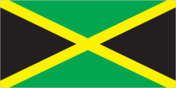
diagonal yellow cross divides the flag into four triangles - green (top and bottom) and black (hoist side and outer side); green represents hope, vegetation, and agriculture, black reflects hardships overcome and to be faced, and yellow recalls golden sunshine and the island's natural resources
Government type
constitutional parliamentary democracy and a Commonwealth realm
Independence
6 August 1962 (from the UK)
International law organization participation
has not submitted an ICJ jurisdiction declaration; non-party state to the ICCt
International organization participation
ACP, AOSIS, C, Caricom, CDB, CELAC, FAO, G-15, G-77, IADB, IAEA, IBRD, ICAO, ICRM, IDA, IFAD, IFC, IFRCS, IHO, ILO, IMF, IMO, Interpol, IOC, IOM, ISO, ITSO, ITU, LAES, MIGA, NAM, OAS, OPANAL, OPCW, Petrocaribe, UN, UNCTAD, UNESCO, UNIDO, UNITAR, UNWTO, UPU, WCO, WFTU (NGOs), WHO, WIPO, WMO, WTO
Judicial branch
Supreme Court (judges appointed by the governor general on the advice of the prime minister); Court of Appeal; Privy Council in UK; member of the Caribbean Court of Justice (CCJ)
Legal system
common law system based on the English model
Legislative branch
- bicameral Parliament consists of the Senate (a 21-member body appointed by the governor general on the recommendations of the prime minister and the leader of the opposition; ruling party is allocated 13 seats, and the opposition is allocated 8 seats) and the House of Representatives (63 seats; members elected by popular vote to serve five-year terms) last held on 29 December 2011 (next to be held no later than December 2016) percent of vote by party - PNP 53.3%, JLP 46.6%; seats by party - PNP 41, JLP 22
- election results
- percent of vote by party - PNP 53.3%, JLP 46.6%; seats by party - PNP 41, JLP 22
- elections
- last held on 29 December 2011 (next to be held no later than December 2016)
National anthem
- "Jamaica, Land We Love" Hugh Braham SHERLOCK/Robert Charles LIGHTBOURNE adopted 1962
- lyrics/music
- Hugh Braham SHERLOCK/Robert Charles LIGHTBOURNE
- name
- "Jamaica, Land We Love"
National holiday
Independence Day, 6 August (1962)
National symbol(s)
green-and-black streamertail (bird)
Political parties and leaders
Jamaica Labor Party or JLP [Andrew HOLNESS]; People's National Party or PNP [Portia SIMPSON-MILLER]; National Democratic Movement or NDM [Michael WILLIAMS]
Political pressure groups and leaders
New Beginnings Movement or NBM; Rastafarians (black religious/racial cultists, pan-Africanists)
Suffrage
18 years of age; universal
Economy
Agriculture - products
sugarcane, bananas, coffee, citrus, yams, ackees, vegetables; poultry, goats, milk; shellfish
Budget
- $3.83 billion $4.764 billion (2012 est.)
- expenditures
- $4.764 billion (2012 est.)
- revenues
- $3.83 billion
Budget surplus (+) or deficit (-)
-6.1% of GDP (2012 est.)
Central bank discount rate
2% (31 December 2010 est.) NA% (31 December 2009 est.)
Commercial bank prime lending rate
13.1% (31 December 2012 est.) 19.51% (31 December 2011 est.)
Current account balance
-$1.523 billion (2012 est.) -$1.723 billion (2011 est.)
Debt - external
$14.6 billion (31 December 2012 est.) $14.62 billion (31 December 2011 est.)
Distribution of family income - Gini index
45.5 (2004) 37.9 (2000)
Economy - overview
- The Jamaican economy is heavily dependent on services, which now account for nearly 65% of GDP. The country continues to derive most of its foreign exchange from tourism, remittances, and bauxite/alumina. Remittances account for nearly 15% of GDP and exports of bauxite and alumina make up about 10%. The bauxite/alumina sector was most affected by the global downturn while the tourism industry was resilient, experiencing an increase of 4% in tourist arrivals. Tourism revenues account for roughly 10% of GDP, and both arrivals and revenues grew in 2010, up 4% and 6% respectively. Jamaica's economy faces many challenges to growth: high crime and corruption, large-scale unemployment and underemployment, and a debt-to-GDP ratio of more than 120%. Jamaica's onerous public debt burden is the result of government bailouts to ailing sectors of the economy, most notably to the financial sector. In early 2010, the Jamaican government created the Jamaica Debt Exchange in order to retire high-priced domestic bonds and significantly reduce annual debt servicing. Despite the improvement, debt servicing costs still hinder the government's ability to spend on infrastructure and social programs, particularly as job losses rise in a shrinking economy. Jamaica was hard hit by the effects of the global economic crisis, experiencing economic contractions from 2008-10 and growth remains low. The SIMPSON-MILLER administration faces the difficult prospect of having to achieve fiscal discipline in order to maintain debt payments, while simultaneously attacking a serious crime problem that is hampering economic growth. High unemployment exacerbates the crime problem, including gang violence that is fueled by the drug trade. As of late 2012, the SIMPSON-MILLER government was working to negotiate a new IMF Stand-by agreement to gain access to additional funds.
- The Jamaican economy is heavily dependent on services, which now account for nearly 65% of GDP. The country continues to derive most of its foreign exchange from tourism, remittances, and bauxite/alumina. Remittances account for nearly 15% of GDP and expo
- high crime and corruption, large-scale unemployment and underemployment, and a debt-to-GDP ratio of more than 120%. Jamaica's onerous public debt burden is the result of government bailouts to ailing sectors of the economy, most notably to the financial sector. In early 2010, the Jamaican government created the Jamaica Debt Exchange in order to retire high-priced domestic bonds and significantly reduce annual debt servicing. Despite the improvement, debt servicing costs still hinder the government's ability to spend on infrastructure and social programs, particularly as job losses rise in a shrinking economy. Jamaica was hard hit by the effects of the global economic crisis, experiencing economic contractions from 2008-10 and growth remains low. The SIMPSON-MILLER administration faces the difficult prospect of having to achieve fiscal discipline in order to maintain debt payments, while simultaneously attacking a serious crime problem that is hampering economic growth. High unemployment exacerbates the crime problem, including gang violence that is fueled by the drug trade. As of late 2012, the SIMPSON-MILLER government was working to negotiate a new IMF Stand-by agreement to gain access to additional funds.
Exchange rates
Jamaican dollars (JMD) per US dollar - 88.59 (2012 est.) 85.893 (2011 est.) 87.196 (2010 est.) 87.89 (2009) 72.236 (2008)
Exports
$1.718 billion (2012 est.) $1.665 billion (2011 est.)
Exports - commodities
alumina, bauxite, sugar, rum, coffee, yams, beverages, chemicals, wearing apparel, mineral fuels
Exports - partners
US 36.8%, Canada 18.1%, Netherlands 7.3%, UK 5.4%, Norway 4.3% (2011)
Fiscal year
1 April - 31 March
GDP - composition by sector
- 6.5% 29.9% 63.5% (2012 est.)
- agriculture
- 6.5%
- industry
- 29.9%
- services
- 63.5% (2012 est.)
GDP - per capita (PPP)
$9,100 (2012 est.) $9,100 (2011 est.) $9,000 (2010 est.) data are in 2012 US dollars
GDP - real growth rate
0.9% (2012 est.) 1.3% (2011 est.) -1.5% (2010 est.)
GDP (official exchange rate)
$15.26 billion (2012 est.)
GDP (purchasing power parity)
$25.18 billion (2012 est.) $24.96 billion (2011 est.) $24.65 billion (2010 est.) data are in 2012 US dollars
Household income or consumption by percentage share
- 2.1% 35.8% (2004)
- highest 10%
- 35.8% (2004)
- lowest 10%
- 2.1%
Imports
$6.019 billion (2012 est.) $5.859 billion (2011 est.)
Imports - commodities
food and other consumer goods, industrial supplies, fuel, parts and accessories of capital goods, machinery and transport equipment, construction materials
Imports - partners
US 32.8%, Venezuela 15%, Trinidad and Tobago 14.2%, China 6.3%, Mexico 4.1% (2011)
Industrial production growth rate
-2% (2010 est.)
Inflation rate (consumer prices)
6.8% (2012 est.) 7.5% (2011 est.)
Investment (gross fixed)
19.5% of GDP (2012 est.)
Labor force
1.325 million (2012 est.)
Labor force - by occupation
- 17% 19% 64% (2006)
- agriculture
- 17%
- industry
- 19%
- services
- 64% (2006)
Market value of publicly traded shares
$7.223 billion (31 December 2011) $6.626 billion (31 December 2010) $6.201 billion (31 December 2009)
Population below poverty line
16.5% (2009 est.)
Public debt
127.3% of GDP (2012 est.) 127.6% of GDP (2011 est.)
Reserves of foreign exchange and gold
$1.9 billion (31 December 2012 est.) $2.282 billion (31 December 2011 est.)
Stock of broad money
$7.309 billion (31 December 2011 est.) $7.012 billion (31 December 2010 est.)
Stock of domestic credit
$7.229 billion (31 December 2012 est.) $7.131 billion (31 December 2011 est.)
Stock of narrow money
$2.028 billion (31 December 2012 est.) $1.962 billion (31 December 2011 est.)
Taxes and other revenues
25.1% of GDP (2012 est.)
Unemployment rate
14.2% (2012 est.) 14.1% (2011 est.)
Energy
Carbon dioxide emissions from consumption of energy
9.217 million Mt (2010 est.)
Crude oil - exports
0 bbl/day (2009 est.)
Crude oil - imports
23,780 bbl/day (2009 est.)
Crude oil - production
0 bbl/day (2011 est.)
Crude oil - proved reserves
0 bbl (1 January 2012 est.)
Electricity - consumption
4.801 billion kWh (2009 est.)
Electricity - exports
0 kWh (2010 est.)
Electricity - from fossil fuels
93.5% of total installed capacity (2009 est.)
Electricity - from hydroelectric plants
1.8% of total installed capacity (2009 est.)
Electricity - from nuclear fuels
0% of total installed capacity (2009 est.)
Electricity - from other renewable sources
4.7% of total installed capacity (2009 est.)
Electricity - imports
0 kWh (2010 est.)
Electricity - installed generating capacity
1.198 million kW (2009 est.)
Electricity - production
5.208 billion kWh (2009 est.)
Natural gas - consumption
0 cu m (2010 est.)
Natural gas - exports
0 cu m (2010 est.)
Natural gas - imports
0 cu m (2010 est.)
Natural gas - production
0 cu m (2010 est.)
Natural gas - proved reserves
0 cu m (1 January 2012 est.)
Refined petroleum products - consumption
78,520 bbl/day (2011 est.)
Refined petroleum products - exports
9,145 bbl/day (2008 est.)
Refined petroleum products - imports
68,410 bbl/day (2008 est.)
Refined petroleum products - production
22,790 bbl/day (2008 est.)
Communications
Broadcast media
privately-owned Radio Jamaica Limited and its subsidiaries operate multiple TV stations, subscription cable services, and radio stations; 2 other privately-owned television stations; roughly 70 radio stations (2007)
Internet country code
.jm
Internet hosts
3,906 (2012)
Internet users
1.581 million (2009)
Telephone system
- fully automatic domestic telephone network the 1999 agreement to open the market for telecommunications services resulted in rapid growth in mobile-cellular telephone usage while the number of fixed-lines in use has declined; combined mobile-cellular teledensity exceeded 110 per 100 persons in 2011 country code - 1-876; the Fibralink submarine cable network provides enhanced delivery of business and broadband traffic and is linked to the Americas Region Caribbean Ring System (ARCOS-1) submarine cable in the Dominican Republic; the link to ARCOS-1 provides seamless connectivity to US, parts of the Caribbean, Central America, and South America; satellite earth stations - 2 Intelsat (Atlantic Ocean)
- domestic
- the 1999 agreement to open the market for telecommunications services resulted in rapid growth in mobile-cellular telephone usage while the number of fixed-lines in use has declined; combined mobile-cellular teledensity exceeded 110 per 100 persons in 2011
- general assessment
- fully automatic domestic telephone network
- international
- country code - 1-876; the Fibralink submarine cable network provides enhanced delivery of business and broadband traffic and is linked to the Americas Region Caribbean Ring System (ARCOS-1) submarine cable in the Dominican Republic; the link to ARCOS-1 provides seamless connectivity to US, parts of the Caribbean, Central America, and South America; satellite earth stations - 2 Intelsat (Atlantic Ocean)
Telephones - main lines in use
272,100 (2011)
Telephones - mobile cellular
2.975 million (2011)
Transportation
Airports
27 (2012)
Airports - with paved runways
- 6 (2012)
- 2,438 to 3,047 m
- 2
- 914 to 1,523 m
- 4
- total
- 12
- under 914 m
- 6 (2012)
Airports - with unpaved runways
- (2012)
- total
- 15
- under 914 m
- (2012)
Merchant marine
- bulk carrier 4, cargo 5, container 4, roll on/roll off 1 14 (Denmark 1, Germany 10, Greece 3) (2010)
- foreign-owned
- 14 (Denmark 1, Germany 10, Greece 3) (2010)
- total
- 14
Ports and terminals
Discovery Bay (Port Rhoades), Kingston, Montego Bay, Port Antonio, Port Esquivel, Port Kaiser, Rocky Point
Roadways
- 22,121 km (includes 44 km of expressways) (2005)
- total
- 22,121 km (includes 44 km of expressways) (2005)
Military and Security
Manpower available for military service
- 726,263 742,958 (2010 est.)
- females age 16-49
- 742,958 (2010 est.)
- males age 16-49
- 726,263
Manpower fit for military service
- 590,673 596,414 (2010 est.)
- females age 16-49
- 596,414 (2010 est.)
- males age 16-49
- 590,673
Manpower reaching militarily significant age annually
- 33,369 32,702 (2010 est.)
- female
- 32,702 (2010 est.)
- male
- 33,369
Military branches
- Jamaica Defense Force: Ground Forces, Coast Guard, Air Wing (2010)
- Jamaica Defense Force
- Ground Forces, Coast Guard, Air Wing (2010)
Military expenditures
0.6% of GDP (2006 est.)
Military service age and obligation
18 years of age for voluntary military service; younger recruits may be conscripted with parental consent (2001)
Transnational Issues
Disputes - international
none
Illicit drugs
transshipment point for cocaine from South America to North America and Europe; illicit cultivation and consumption of cannabis; government has an active manual cannabis eradication program; corruption is a major concern; substantial money-laundering activity; Colombian narcotics traffickers favor Jamaica for illicit financial transactions