Introduction
Europeans first saw Jamaica when Christopher COLUMBUS arrived in 1494, and the Spanish settled the island early in the 16th century. The Native Taino, who had inhabited Jamaica for centuries, were gradually exterminated and replaced with African slaves. England seized the island in 1655 and established a plantation economy based on sugar, cocoa, and coffee. The abolition of slavery in 1834 freed a quarter-million slaves, many of whom became small farmers. Jamaica gradually increased its independence from Britain. In 1958, it joined other British Caribbean colonies in forming the Federation of the West Indies. Jamaica withdrew from the Federation in 1961 and gained full independence in 1962. Deteriorating economic conditions during the 1970s led to recurring violence as rival gangs affiliated with the major political parties evolved into powerful organized crime networks involved in international drug smuggling and money laundering. Violent crime, drug trafficking, corruption, and poverty pose significant challenges to the government today. Nonetheless, many rural and resort areas remain relatively safe and contribute substantially to the economy.
Geography
- Land
- 10,831 sq km
- Total
- 10,991 sq km
- Water
- 160 sq km
about half the size of New Jersey; slightly smaller than Connecticut
tropical; hot, humid; temperate interior
1,022 km
North America
- Highest point
- Blue Mountain Peak 2,256 m
- Lowest point
- Caribbean Sea 0 m
- Mean elevation
- 18 m
18 15 N, 77 30 W
third largest island in the Caribbean (after Cuba and Hispaniola); strategic location between Cayman Trench and Jamaica Channel, the main sea lanes for the Panama Canal
250 sq km (2012)
- Total
- 0 km
- Agricultural land
- 38.5% (2023 est.)
- Agricultural land: arable land
- arable land: 11.1% (2023 est.)
- Agricultural land: permanent crops
- permanent crops: 6.3% (2023 est.)
- Agricultural land: permanent pasture
- permanent pasture: 21.1% (2023 est.)
- arable land
- 11.08%
- Forest
- 56.2% (2023 est.)
- Other
- 5.3% (2023 est.)
- permanent crops
- 6.28%
No
Caribbean, island in the Caribbean Sea, south of Cuba
- Google Maps
- https://goo.gl/maps/Z8mQ6jxnRQKFwJy9A
- OpenStreetMap
- https://www.openstreetmap.org/relation/555017
Central America and the Caribbean
- Contiguous zone
- 24 nm
- Continental shelf
- 200 nm or to edge of the continental margin
- Exclusive economic zone
- 200 nm
- Note
- <strong>note: </strong>measured from claimed archipelagic straight baselines
- Territorial sea
- 12 nm
hurricanes (especially July to November)
bauxite, alumina, gypsum, limestone
population density is high throughout, but increases in and around Kingston, Montego Bay, and Port Esquivel
Caribbean
mostly mountains, with narrow, discontinuous coastal plain
- UTC-05:00
- number of time zones
- 1
People and Society
- 0-14 years
- 23.8% (male 342,691/female 329,773)
- 15-64 years
- 65.7% (male 914,364/female 941,816)
- 65 years and over
- 10.4% (2024 est.) (male 140,440/female 154,629)
- Beer
- 1.19 liters of pure alcohol (2019 est.)
- Other alcohols
- 0.35 liters of pure alcohol (2019 est.)
- Spirits
- 1.66 liters of pure alcohol (2019 est.)
- Total
- 3.46 liters of pure alcohol (2019 est.)
- Wine
- 0.25 liters of pure alcohol (2019 est.)
16.08 births/1,000 population (2025 est.)
2.5% (2018 est.)
35.2% (2022 est.)
- 7.37 deaths/1,000 population (2025 est.)
- adult female
- 123 per 1,000
- adult male
- 201 per 1,000
- Elderly dependency ratio
- 14.6 (2025 est.)
- Potential support ratio
- 6.9 (2025 est.)
- Total dependency ratio
- 50.6 (2025 est.)
- Youth dependency ratio
- 36 (2025 est.)
- Improved: rural
- rural: 85.4% of population (2022 est.)
- Improved: total
- total: 91.1% of population (2022 est.)
- Improved: urban
- urban: 95.4% of population (2022 est.)
- Unimproved: rural
- rural: 14.6% of population (2022 est.)
- Unimproved: total
- total: 8.9% of population (2022 est.)
- Unimproved: urban
- urban: 4.6% of population (2022 est.)
- Education expenditure (% GDP)
- 5.5% of GDP (2024 est.)
- Education expenditure (% national budget)
- 17.9% national budget (2024 est.)
6 % of GDP
Black 92.1%, mixed 6.1%, East Indian 0.8%, other 0.4%, unspecified 0.7% (2011 est.)
0.91 (2025 est.)
- 8 % of GDP
- Health expenditure (as % of GDP)
- 7.2% of GDP (2021)
- Health expenditure (as % of national budget)
- 19% of national budget (2022 est.)
0.57%
1.7 beds/1,000 population (2021 est.)
- Female
- 9.4 deaths/1,000 live births
- Male
- 11.9 deaths/1,000 live births
- neonatal
- 15 deaths/1,000 live births
- Total
- 14.5 deaths/1,000 live births (2025 est.)
- English, Jamaican patois
- languages
- English, Jamaican Patois
- number of languages
- 2
- Female
- 78.1 years
- Male
- 74.5 years
- Total population
- 76.3 years (2024 est.)
- Female
- 90.8% (2022 est.)
597,000 KINGSTON (capital) (2023)
130 deaths/100,000 live births (2023 est.)
- Female
- 31.7 years
- Male
- 30.1 years
- Total
- 28.8 years (2025 est.)
- 21.2 years (2008 est.)
- note
- <strong>note:</strong> data represents median age at first birth among women 25-29
- Adjective
- Jamaican
- Noun
- Jamaican(s)
-6.2 migrant(s)/1,000 population (2025 est.)
24.7% (2016)
0.46 physicians/1,000 population (2023)
- Female
- 1,484,744
- Male
- 1,453,759
- Total
- 2,938,503 (2025 est.)
0.25% (2025 est.)
Protestant 64.8% (includes Seventh Day Adventist 12.0%, Pentecostal 11.0%, Other Church of God 9.2%, New Testament Church of God 7.2%, Baptist 6.7%, Church of God in Jamaica 4.8%, Church of God of Prophecy 4.5%, Anglican 2.8%, United Church 2.1%, Methodist 1.6%, Revived 1.4%, Brethren 0.9%, and Moravian 0.7%), Roman Catholic 2.2%, Jehovah's Witness 1.9%, Rastafarian 1.1%, other 6.5%, none 21.3%, unspecified 2.3% (2011 est.)
- improved total
- 73.61%
- Improved: rural
- rural: 99.4% of population (2022 est.)
- Improved: total
- total: 98.9% of population (2022 est.)
- Improved: urban
- urban: 98.6% of population (2022 est.)
- Unimproved: rural
- rural: 0.6% of population (2022 est.)
- Unimproved: total
- total: 1.1% of population (2022 est.)
- Unimproved: urban
- urban: 1.4% of population (2022 est.)
- Female
- 14 years (2015 est.)
- Male
- 12 years (2015 est.)
- Total
- 13 years (2015 est.)
- 0-14 years
- 1.04 male(s)/female
- 15-64 years
- 0.97 male(s)/female
- 65 years and over
- 0.91 male(s)/female
- At birth
- 1.05 male(s)/female
- Total population
- 0.98 male(s)/female (2024 est.)
- Female
- 3.1% (2025 est.)
- Male
- 15.1% (2025 est.)
- Total
- 9% (2025 est.)
1.86 children born/woman (2025 est.)
- Rate of urbanization
- 0.79% annual rate of change (2020-25 est.)
- Urban population
- 57.4% of total population (2023)
- measles
- 94%
Government
- 14 parishes; Clarendon, Hanover, Kingston, Manchester, Portland, Saint Andrew, Saint Ann, Saint Catherine, Saint Elizabeth, Saint James, Saint Mary, Saint Thomas, Trelawny, Westmoreland
- note
- <strong>note:</strong> for local government purposes, Kingston and Saint Andrew were amalgamated in 1923 into the present single corporate body known as the Kingston and Saint Andrew Corporation
- Etymology
- the name is a blend of the words "king's" and "town;" named after the English king at the time of the city's founding in 1692, WILLIAM III
- Geographic coordinates
- 18 00 N, 76 48 W
- Name
- Kingston
- Time difference
- UTC-5 (same time as Washington, DC, during Standard Time)
- Citizenship by birth
- yes
- Citizenship by descent only
- yes
- Dual citizenship recognized
- yes
- Residency requirement for naturalization
- 4 out of the previous 5 years
- svg
- https://mainfacts.com/media/images/coats_of_arms/jm.svg
- Amendment process
- proposed by Parliament; passage of amendments to "non-entrenched" constitutional sections, such as lowering the voting age, requires majority vote by the Parliament membership; passage of amendments to "entrenched" sections, such as fundamental rights and freedoms, requires two-thirds majority vote of Parliament; passage of amendments to "specially entrenched" sections such as the dissolution of Parliament or the executive authority of the monarch requires two-thirds approval by Parliament and approval in a referendum
- History
- several previous (pre-independence); latest drafted 1961-62, submitted to British Parliament 24 July 1962, entered into force 6 August 1962 (at independence)
- alternative spellings
- JM
- Conventional long form
- none
- Conventional short form
- Jamaica
- Etymology
- from the Arawak word <em>xaymaca</em>, meaning "Land of Wood and Water" or possibly "Land of Springs"
- FIFA code
- JAM
- local long form (eng)
- Jamaica
- Chief of mission
- Ambassador (vacant); Chargé d’Affaires Scott RENNER (since 13 August 2025)
- Email address and website
- <br>KingstonACS@state.gov<br><br>https://jm.usembassy.gov/
- Embassy
- 142 Old Hope Road, Kingston 6
- FAX
- (876) 702-6348
- Mailing address
- 3210 Kingston Place, Washington DC 20521-3210
- Telephone
- (876) 702-6000
- Chancery
- 1520 New Hampshire Avenue NW, Washington, DC 20036
- Chief of mission
- Ambassador Antony B. ANDERSON (since 24 July 2025)
- Consulate(s) general
- Miami, New York
- Email address and website
- <br>contactus@jamaicaembassy.org<br><br>Jamaican Embassy (embassyofjamaica.org)
- FAX
- [1] (202) 452-0036
- Telephone
- [1] (202) 452-0660
- Cabinet
- Cabinet appointed by the governor general on the advice of the prime minister
- Chief of state
- King CHARLES III (since 8 September 2022); represented by Governor General Sir Patrick L. ALLEN (since 26 February 2009)
- Election/appointment process
- the monarchy is hereditary; governor general appointed by the monarch on the recommendation of the prime minister; following legislative elections, the governor general appoints the leader of the majority party or majority coalition in the House of Representatives as prime minister
- Head of government
- Prime Minister Andrew HOLNESS (since 3 March 2016)
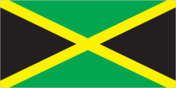
<strong>description: </strong>diagonal yellow cross divides the flag into four triangles, two green (top and bottom) and two black (left and right)<br><br><strong>meaning: </strong>green stands for hope, vegetation, and agriculture; black for hardships overcome and to be faced; and yellow for sunshine and natural resources
The flag of Jamaica is divided by a gold diagonal cross into four alternating triangular areas of green at the top and bottom, and black on the hoist and fly sides.
- svg
- https://flagcdn.com/jm.svg
parliamentary democracy (Parliament) under a constitutional monarchy; a Commonwealth realm
6 August 1962 (from the UK)
has not submitted an ICJ jurisdiction declaration; non-party state to the ICCt
ACP, ACS, AOSIS, C, Caricom, CDB, CELAC, FAO, G-15, G-77, IADB, IAEA, IBRD, ICAO, ICC (NGOs), ICRM, IDA, IFAD, IFC, IFRCS, IHO, ILO, IMF, IMO, Interpol, IOC, IOM, ISO, ITSO, ITU, LAES, MIGA, NAM, OAS, OPANAL, OPCW, Petrocaribe, UN, UNCTAD, UNESCO, UNIDO, UNITAR, UNWTO, UPU, WCO, WFTU (NGOs), WHO, WIPO, WMO, WTO
- Highest court(s)
- Court of Appeal (consists of president of the court and a minimum of 4 judges); Supreme Court (40 judges organized in specialized divisions)
- Judge selection and term of office
- chief justice of the Supreme Court and president of the Court of Appeal appointed by the governor-general on the advice of the prime minister; other judges of both courts appointed by the governor-general on the advice of the Judicial Service Commission; judges of both courts serve till age 70
- Note
- <strong>note:</strong> appeals beyond Jamaica's highest courts are referred to the Judicial Committee of the Privy Council (in London) rather than to the Caribbean Court of Justice (the appellate court for member states of the Caribbean Community)
- Subordinate courts
- resident magistrate courts, district courts, and petty sessions courts
common law system based on the English model
- Legislative structure
- bicameral
- Legislature name
- Parliament
- Chamber name
- House of Representatives
- Electoral system
- plurality/majority
- Expected date of next election
- August 2030
- Most recent election date
- 9/3/2025
- Number of seats
- 63 (all directly elected)
- Parties elected and seats per party
- Jamaica Labour Party (JLP) (35); People's National Party (PNP) (28)
- Percentage of women in chamber
- 30.2%
- Scope of elections
- full renewal
- Term in office
- 5 years
- Chamber name
- Senate
- Expected date of next election
- September 2030
- Most recent election date
- 9/18/2025
- Number of seats
- 21 (all appointed)
- Percentage of women in chamber
- 33.3%
- Scope of elections
- full renewal
- Term in office
- 5 years
green, yellow, black
- Selected World Heritage Site locales
- Blue and John Crow Mountains (m); The Archaeological Ensemble of 17th Century Port Royal (c)
- Total World Heritage Sites
- 2 ( 1mixed,1 cultural)
Independence Day, 6 August (1962)
green-and-black streamertail (bird), guaiacwood (<em>Guiacum officinale</em>)
Jamaica Labor Party or JLP<br>Jamaica Progressive Party or JPP<br>People's National Party or PNP<br>United Independents' Congress or UIC
Monday
18 years of age; universal
Yes
Economy
- sugarcane, goat milk, yams, chicken, oranges, coconuts, bananas, plantains, pumpkins/squash, pineapples (2023)
- note
- <b>note:</b> top ten agricultural products based on tonnage
- Expenditures
- $4.466 billion (2020 est.)
- Note
- <b>note:</b> central government revenues and expenses (excluding grants/extrabudgetary units/social security funds) converted to US dollars at average official exchange rate for year indicated
- Revenues
- $4.041 billion (2020 est.)
- code
- JMD
- name
- Jamaican dollar (JMD) [$]
- $678.81 million
- Current account balance 2022
- -$136.401 million (2022 est.)
- Current account balance 2023
- $568.932 million (2023 est.)
- Current account balance 2024
- $678.808 million (2024 est.)
- Note
- <b>note:</b> balance of payments - net trade and primary/secondary income in current dollars
- $14.84 billion
- Debt - external 2023
- $9.636 billion (2023 est.)
- Note
- <b>note:</b> present value of external debt in current US dollars
<p>upper-middle-income Caribbean island economy; key agriculture and tourism sectors; high crime, youth unemployment, and poverty; susceptible to natural disasters and global commodity price shocks; progress in reducing public debt and moderating inflation within target range</p>
- Currency
- Jamaican dollars (JMD) per US dollar -
- Exchange rates 2020
- 142.403 (2020 est.)
- Exchange rates 2021
- 150.79 (2021 est.)
- Exchange rates 2022
- 153.427 (2022 est.)
- Exchange rates 2023
- 154.159 (2023 est.)
- Exchange rates 2024
- 156.44 (2024 est.)
- Exports 2022
- $6.424 billion (2022 est.)
- Exports 2023
- $7.275 billion (2023 est.)
- Exports 2024
- $7.124 billion (2024 est.)
- Note
- <b>note:</b> balance of payments - exports of goods and services in current dollars
- aluminum oxide, refined petroleum, natural gas, liquor, processed fruits and nuts (2023)
- note
- <b>note:</b> top five export commodities based on value in dollars
- USA 37%, Russia 7%, Latvia 7%, Iceland 7%, UK 5% (2023)
- note
- <b>note:</b> top five export partners based on percentage share of exports
- net inflows
- $305.08 million
- Exports of goods and services
- 38% (2019 est.)
- Government consumption
- 13.6% (2019 est.)
- Household consumption
- 76.2% (2019 est.)
- Imports of goods and services
- -52.1% (2019 est.)
- Investment in fixed capital
- 24.1% (2019 est.)
- Investment in inventories
- 0.2% (2019 est.)
- Note
- <b>note:</b> figures may not total 100% due to rounding or gaps in data collection
- Agriculture
- 9.8% (2024 est.)
- Industry
- 18.3% (2024 est.)
- Note
- <b>note:</b> figures may not total 100% due to non-allocated consumption not captured in sector-reported data
- Services
- 60.3% (2024 est.)
- $19.93 billion (2024 est.)
- note
- <b>note:</b> data in current dollars at official exchange rate
$7,754
- 45.5 (2004)
- Gini Index coefficient - distribution of family income 2021
- 39.9 (2021 est.)
- Note
- <strong>note:</strong> index (0-100) of income distribution; higher values represent greater inequality
$21.66 billion
$7,210
- Highest 10%
- 29.6% (2021 est.)
- Lowest 10%
- 2.2% (2021 est.)
- Note
- <strong>note:</strong> % share of income accruing to lowest and highest 10% of population
- Imports 2022
- $9.726 billion (2022 est.)
- Imports 2023
- $9.866 billion (2023 est.)
- Imports 2024
- $9.524 billion (2024 est.)
- Note
- <b>note:</b> balance of payments - imports of goods and services in current dollars
- refined petroleum, natural gas, cars, crude petroleum, plastic products (2023)
- note
- <b>note:</b> top five import commodities based on value in dollars
- USA 39%, China 11%, Brazil 4%, Colombia 4%, Japan 4% (2023)
- note
- <b>note:</b> top five import partners based on percentage share of imports
- -1.5% (2024 est.)
- note
- <b>note:</b> annual % change in industrial value added based on constant local currency
agriculture, mining, manufacture, construction, financial and insurance services, tourism, telecommunications
- 5.41%
- Inflation rate (consumer prices) 2022
- 10.3% (2022 est.)
- Inflation rate (consumer prices) 2023
- 6.5% (2023 est.)
- Inflation rate (consumer prices) 2024
- 5.4% (2024 est.)
- Note
- <b>note:</b> annual % change based on consumer prices
- 1.57 million (2024 est.)
- note
- <b>note:</b> number of people ages 15 or older who are employed or seeking work
- total
- 1.61 million persons
- agriculture
- 13.94%
- industry
- 17.13%
- services
- 68.93%
- 16.7% (2021 est.)
- note
- <strong>note:</strong> % of population with income below national poverty line
- Note
- <b>note:</b> central government debt as a % of GDP
- Public debt 2020
- 106.3% of GDP (2020 est.)
- $36.6 billion
- Note
- <b>note:</b> data in 2021 dollars
- Real GDP (purchasing power parity) 2022
- $28.596 billion (2022 est.)
- Real GDP (purchasing power parity) 2023
- $29.341 billion (2023 est.)
- Real GDP (purchasing power parity) 2024
- $29.13 billion (2024 est.)
- -0.54%
- Note
- <b>note:</b> annual GDP % growth based on constant local currency
- Real GDP growth rate 2022
- 5.2% (2022 est.)
- Real GDP growth rate 2023
- 2.6% (2023 est.)
- Real GDP growth rate 2024
- -0.7% (2024 est.)
- $12,890
- Note
- <b>note:</b> data in 2021 dollars
- Real GDP per capita 2022
- $10,100 (2022 est.)
- Real GDP per capita 2023
- $10,300 (2023 est.)
- Real GDP per capita 2024
- $10,300 (2024 est.)
- $3.56 billion
- Note
- <b>note:</b> personal transfers and compensation between resident and non-resident individuals/households/entities
- Remittances 2022
- 21.6% of GDP (2022 est.)
- Remittances 2023
- 18.5% of GDP (2023 est.)
- Remittances 2024
- 17.9% of GDP (2024 est.)
- $4.87 billion
- Note
- <b>note:</b> holdings of gold (year-end prices)/foreign exchange/special drawing rights in current dollars
- Reserves of foreign exchange and gold 2021
- $4.838 billion (2021 est.)
- Reserves of foreign exchange and gold 2022
- $4.52 billion (2022 est.)
- Reserves of foreign exchange and gold 2023
- $4.869 billion (2023 est.)
- 25.7% (of GDP) (2020 est.)
- note
- <b>note:</b> central government tax revenue as a % of GDP
- 3.29%
- Note
- <b>note:</b> % of labor force seeking employment
- Unemployment rate 2022
- 4.1% (2022 est.)
- Unemployment rate 2023
- 4.4% (2023 est.)
- Unemployment rate 2024
- 4.9% (2024 est.)
- Female
- 16.4% (2024 est.)
- Male
- 12.9% (2024 est.)
- Note
- <b>note:</b> % of labor force ages 15-24 seeking employment
- Total
- 14.5% (2024 est.)
Energy
- Consumption
- 106,000 metric tons (2023 est.)
- Exports
- 100 metric tons (2022 est.)
- Imports
- 105,000 metric tons (2023 est.)
- Consumption
- 3.301 billion kWh (2023 est.)
- consumption per capita
- 1,148 kWh
- Installed generating capacity
- 1.242 million kW (2023 est.)
- Transmission/distribution losses
- 1.181 billion kWh (2023 est.)
- Electrification - total population
- 100% (2022 est.)
- Biomass and waste
- 1.3% of total installed capacity (2023 est.)
- Fossil fuels
- 87.1% of total installed capacity (2023 est.)
- hydroelectric
- 2.68%
- Hydroelectricity
- 2.7% of total installed capacity (2023 est.)
- nuclear
- 0%
- renewable
- 12.75%
- Solar
- 2.9% of total installed capacity (2023 est.)
- Wind
- 6.1% of total installed capacity (2023 est.)
- 969 kg of oil equivalent
- Total energy consumption per capita 2023
- 42.095 million Btu/person (2023 est.)
- Consumption
- 822.549 million cubic meters (2023 est.)
- Imports
- 822.549 million cubic meters (2023 est.)
- Refined petroleum consumption
- 41,000 bbl/day (2023 est.)
- Total petroleum production
- 3,000 bbl/day (2023 est.)
10.5%
Communications
- per 100 inhabitants
- 16 per 100
- Subscriptions per 100 inhabitants
- 16 (2023 est.)
- Total
- 448,000 (2023 est.)
3 free-to-air TV stations, subscription cable services, and roughly 30 radio stations (2019)
.jm
- Percent of population
- 83% (2023 est.)
+1
- Subscriptions per 100 inhabitants
- 16 (2023 est.)
- Total subscriptions
- 459,000 (2023 est.)
- subscriptions per 100
- 115 per 100
- Subscriptions per 100 inhabitants
- 118 (2024 est.)
- Total subscriptions
- 3.34 million (2024 est.)
Transportation
20 (2025)
6Y
Left
2 (2025)
- By type
- bulk carrier 1, general cargo 11, oil tanker 1, other 27
- Total
- 40 (2023)
- Key ports
- Falmouth, Kingston, Lucea, Montego Bay, Ocho Rios, Port Antonio, Port Esquivel, Port Kaiser, Rio Bueno, Rocky Point, Savannah la Mar
- Large
- 0
- Medium
- 1
- Ports with oil terminals
- 5
- Small
- 2
- Total ports
- 11 (2024)
- Very small
- 8
JA
Military and Security
in addition to its responsibility of defending against external aggression, the Jamaican Defense Force's (JDF) primary missions are border, cyber, internal, and maritime security; other missions include search and rescue, disaster response, humanitarian assistance, and peacekeeping; it has arrest authority and partners with the Jamaica Constabulary Force (JCF), particularly in support of combating crime and violence; both the JDF and JCF are under the Ministry of National Security, which directs policy for the security forces; the JDF participates in bilateral and multinational training exercises, including with the armed forces of Canada, the UK, the US, and other Caribbean nations<br><br>while Jamaica had a militia force as early as the 1660s, the JDF was constituted in 1962 from the West India Regiment (WIR), a British colonial regiment which dates back to 1795 (2025)
- Jamaica Defense Force (JDF): Jamaica Regiment (Land Force), Maritime, Air, and Cyber Command (MACC), Support Brigade, Caribbean Military Academy, Jamaica National Reserve (2025)
- active duty personnel
- 6,000
- note
- <strong>note:</strong> the Jamaica Constabulary Force (JCF) is the country’s police force; it has primary responsibility for internal security and has units for community policing, special response, intelligence gathering, and internal affairs; both it and the JDF are under the Ministry of National Security
- percent of total labor force
- 0.41 %
approximately 4,000 active Jamaica Defense Forces (2025)
the JDF's inventory features equipment mostly from Australia, the Netherlands, and the US (2025)
- 1 % of GDP
- current USD
- $262,511,270
- Military Expenditures 2020
- 1.7% of GDP (2020 est.)
- Military Expenditures 2021
- 1.4% of GDP (2021 est.)
- Military Expenditures 2022
- 1.3% of GDP (2022 est.)
- Military Expenditures 2023
- 1.2% of GDP (2023 est.)
- Military Expenditures 2024
- 1.4% of GDP (2024 est.)
- percent of central government expenditure
- 4.07 %
- percent of GDP
- 1.27 % of GDP
- 18-23 for voluntary military service (17 with parental consent) for men and women; 18-28 for the reserves; no conscription; since 2017, the JDF's standard mode of recruitment is to enroll recruits ages 18-23 through the Jamaica National Service Corps (JNSC), which has a service requirement of 12 months (2025)
- note
- <strong>note 1: </strong>the Jamaica Combined Cadet Force (JCCF), a youth organization under the Ministry of Security, also provides a recruitment pool for the JDF, as well as other government agencies <br><br><strong>note 2: </strong>as of 2022, women made up about 20% of the JDF's uniformed personnel
Transnational Issues
- USG identification
- <br>major illicit drug-producing and/or drug-transit country (2025)
Environment
- From coal and metallurgical coke
- 239,000 metric tonnes of CO2 (2023 est.)
- From consumed natural gas
- 1.611 million metric tonnes of CO2 (2023 est.)
- From petroleum and other liquids
- 6.04 million metric tonnes of CO2 (2023 est.)
- Total emissions
- 7.89 million metric tonnes of CO2 (2023 est.)
heavy rates of deforestation; coastal waters polluted by industrial waste, sewage, and oil spills; damage to coral reefs; air pollution in Kingston from vehicle emissions; land erosion
- Party to
- Biodiversity, Climate Change, Climate Change-Kyoto Protocol, Climate Change-Paris Agreement, Comprehensive Nuclear Test Ban, Desertification, Endangered Species, Hazardous Wastes, Law of the Sea, Marine Dumping-London Convention, Marine Life Conservation, Nuclear Test Ban, Ozone Layer Protection, Ship Pollution, Wetlands
- Signed, but not ratified
- none of the selected agreements
14.8 micrograms per cubic meter (2019 est.)
2 % of total land area
10 % of total
10.823 billion cubic meters (2022 est.)
- 12 % of internal resources
- Agricultural
- 78.972 million cubic meters (2022 est.)
- Industrial
- 43.989 million cubic meters (2022 est.)
- Municipal
- 339.867 million cubic meters (2022 est.)
- Municipal solid waste generated annually
- 1.052 million tons (2024 est.)
- Percent of municipal solid waste recycled
- 15% (2022 est.)