1988 Edition
CIA World Factbook 1988 (Internet Archive)
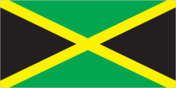
Geography
Boundary disputes
none; Habomai Islands, Etorofu, Kunashiri, and Shikotan islands occupied by Soviet Union since 1945, claimed by Japan; Kuril Islands administered by Soviet Union; Liancourt Rocks disputed with South Korea
Climate
- tropical; hot, humid; temperate interior
- varies from tropical in south to cool temperate in north
Coastline
- 1,022 km
- 13,685 km
Comparative area
- slightly smaller than Connecticut
- slightly smaller than California
Environment
- subject to hurricanes, especially (May to December); deforestation; water pollution
- many dormant and some active volcanoes; about 1,500 seismic occurrences (mostly tremors) every year
Ethnic divisions
- 76.3% African, 15.1% Afro-European, 3.4% East Indian and AfroEast Indian, 3.2% white, 1.2% Chinese and Afro-Chinese, 0.8% other
- 99.4% Japanese, 0.6% other (mostly Korean)
Exclusive fishing zone
200 nm
Infant mortality rate
- 16.8/1,000 (1984)
- 6/1,000 (1984)
Labor force
- 728,700 (1984); 32% agriculture, 28% industry and commerce, 27% services, 13% government; shortage of technical and managerial personnel; 30% unemployment
- (1985) 59.3 million; 53% trade and services; 33% manufacturing, mining, and construction; 9% agriculture, forestry, and fishing; 3% government; 2.68% unemployed (1985 average)
Land use
- 19% arable land; 6% permanent crops; 18% meadows and pastures; 28% forest and woodland; 29% other; includes 3% irrigated
- 11% arable land; 2% permanent crops; 2% meadows and pastures; 68% forest and woodland; 17% other; includes 9% irrigated
Language
- English, Creole
- Japanese
Life expectancy
- 65
- men 74.54, women 80.18
Literacy
- 76%
- 99%
Nationality
- noun — Jamaican(s); adjective— Jamaican
- noun — Japanese (sing., pi.); adjective — Japanese
Organized labor
- about 33% of labor force (1980)
- about 30% of labor force
Population
- 2,455,536 (July 1987), average annual growth rate 1.17%
- 122,124,293 (July 1987), average annual growth rate 0.55%
Religion
- predominantly Protestant (including Anglican and Baptist), some Roman Catholic, some spiritualist cults
- most Japanese observe both Shinto and Buddhist rites; about 16% belong to other faiths, including 0.8% Christian
Special notes
- strategic location between Cayman Trench and Jamaica Channel, the main sea lanes for Panama Canal
- strategic location in northeast Asia
Terrain
- mostly mountains with narrow, discontinuous coastal plain
- mostly rugged and mountainous
Territorial sea
- 12 nm
- 12 nm (3 nm in international straits — La Perouse or Soya, Tsugaru, Osumi, and Eastern and Western channels of Tsushima or Korea Strait)
Total area
- 10,990 km2; land area: 10,830 km2
- 372,310 km2; land area: 371,030 km2
Government
Administrative divisions
- 14 parishes and the Kingston-St. Andrew corporate area
- 47 prefectures
Branches
- Cabinet headed by Prime Minister; bicameral legislature — 21-member Senate (13 nominated by the Prime Minister, eight by opposition leader, if any; currently no official opposition because of People's National Party boycott of December 1983 election; eight nonJamaica Labor Party members appointed to current Senate by Prime Minister Seaga), 60-member elected House of Representatives; judiciary follows British tradition under a Chief Justice
- Emperor is symbol of state; executive power is vested in Cabinet appointed by the Prime Minister, chosen by the lower house of the bicameral, elective legislature — Diet (House of Councilors, House of Representatives); judiciary is independent
Capital
- Kingston
- Tokyo
Communists
- Workers' Party of Jamaica (Marxist-Leninist)
- about 470,000 registered Communist Party members
Elections
- at discretion of Governor General upon advice of Prime Minister but within five years; last held 15 December Jamaica (continued) Japan Political parties and leaders: Jamaica Labor Party (JLP), Edward Seaga; People's National Party (PNP), Michael Manley; Workers' Party of Jamaica (WPJ), Trevor Munroe
- general elections held every four years or upon dissolution of lower house, triennially for half of upper house Political parties and leaders: Liberal Democratic Party (LDP), Y. Nakasone, president; Japan Socialist Party (JSP), T. Doi, chairman; Democratic Socialist Party (DSP), S. Tsukamoto, chairman; Japan Communist Party (JCP), T. Fuwa, Presidium chairman; Komeito (Clean Government Party), J. Yano, chairman; Social Democratic Federation (SDF), S. Eda
Government leaders
- Edward Philip George SEAGA, Prime Minister (since November 1980); Sir Florizel A. GLASSPOLE, Governor General (since 1973)
- HIROHITO, Emperor (since December 1926); Yasuhiro NAKASONE, Prime Minister (since November 1982)
Legal system
- based on English common law; has not accepted compulsory ICJ jurisdiction
- civil law system with English-American influence; constitution promulgated in 1946; judicial review of legislative acts in the Supreme Court; accepts compulsory ICJ jurisdiction, with reservations
Member of
- CARICOM, Commonwealth, FAO, G-77, GATT, IADB, IAEA, IBA, IBRD, ICAO, ICO, IDE— Inter-American Development Bank, IFAD, IFC, ILO, IMF, IMO, INTERPOL, ISO, ITU, NAM, OAS, PAHO, SELA, UN, UNESCO, UPU, WFTU, WHO, WIPO, WMO, WTO
- ADB, ASPAC, Colombo Plan, DAC, ESCAP, FAO, GATT, IAEA, IBRD, ICAC, ICAO, ICO, IDA, IDE— InterAmerican Development Bank, IEA, IFAD, IFC, IHO, ILO, International Lead and Zinc Study Group, IMF, IMO, INTELSAT, INTERPOL, IPU, IRC, ISO, ITC, ITU, IWC— International Whaling Commission, IWC — International Wheat Council, OECD, UN, UNESCO, UPU, WFTU, WHO, WIPO, WMO, WSG
National holiday
- Independence Day, first Monday in August
- Foundation Day, 11 February
Official name
- Jamaica
- Japan
Other political or pressure groups
New World Group (Caribbean regionalists, nationalists, and leftist intellectual fraternity); Rastafarians (black religious/racial cultists, pan-Africanists); New Creation International Peacemakers Tabernacle (leftist group); Workers Liberation League (a Marxist coalition of students/labor)
Suffrage
- universal adult at age 18
- universal over age 20
Type
- independent state within Commonwealth, recognizing Elizabeth II as head of state
- constitutional monarchy
Voting strength
- in the 1983 general elections 54 seats were uncontested; in six contested seats the JLP won overwhelmingly against several small fringe parties; the PNP and WPJ boycotted the election; in 1980 general elections about 58.8% JLP (51 seats in House), 41.2% PNP (9 seats)
- (1986 election) Lower House— 49.5% LDP (307 seats), 17.2% JSP (88 seats), 9.4% Komeito (57 seats), 8.8% JCP (27 seats), 6.4% DSP (29 seats), 0.8% SDF (4 seats), 6.1% independents and minor parties; Upper House — LDP 143 seats, JSP 40, Komeito 25 seats, JCP 16 seats, DSP 12 seats, SDF 1 seat, Niin Club 3 seats, Salaryman 3 seats, Zeikinto 2 seats, independents 3 seats
Economy
Agriculture
- sugarcane, citrus fruits, bananas, pimento, coconuts, coffee, cocoa, tobacco; an illegal producer of cannabis for the international drug trade
- land intensively cultivated; rice, sugar, vegetables, fruits; 64% selfsufficient in food (1984); food shortages — wheat, corn, beans
Aid
donor — ODA and OOF economic commitments (1970-84), $36.6 billion
Budget
- revenues, $545.0 million; expenditures, $818.0 million (1985)
- revenues, $243 billion; expenditures, $332 billion; deficit, $89 billion (general account for fiscal year ending March 1987 converted at 162.0 yen=US$l)
Crude steel
105.3 million metric tons produced (1985), 870 kg per capita
Electric power
- 1,119,000 kW capacity; 1,520 million kWh produced, 660 kWh per capita (1986)
- 181,000,000 kW capacity; 665,000 billion kWh produced, 5,500 kWh per capita (1986)
Exports
- $568.6 million (f.o.b., 1985); alumina, bauxite, sugar, bananas, citrus fruits and fruit products, rum, cocoa
- $175.6 billion (f.o.b., 1985); 97% manufactures (including 30% machinery, 25% motor vehicles, 8% consumer electronics
Fiscal year
- 1 April-31 March
- 1 April-31 March
Fishing
catch 12.2 million metric tons (1985)
GDP
$2.0 billion, $820 per capita; real growth rate 5.0% (1986 est.)
GNP
$1,979 billion (at 167.1 yen=US$l); $16,290 per capita; 58% personal consumption, 28% investment, 10% government current expenditure, negligible stocks, and 4% foreign balance; real growth rate 2.1% (1986); average annual growth rate 3.6% (1981-86)
Imports
- $998.8 million (f.o.b., 1985); fuels, machinery, transportation and electrical equipment, food, fertilizer
- $129.5 billion (c.i.f., 1985); 44% fossil fuels, 25% manufactures, 14% foodstuffs, 16% non-fuel raw materials
Major industries
- tourism, bauxite mining, textiles, food processing, light manufactures
- metallurgical and engineering industries, electrical and electronic industries, textiles, chemicals
Major trade partners
- exports — US 48%, Canada 14%, UK 13%, Norway 3%, imports—US 46%, Netherlands Antilles 13%, Venezuela 8%, UK 5% (1984)
- exports — 37% US, 19% Southeast Asia, 14% Western Europe, 7% Middle East, 9% Communist countries; imports— 23% Middle East, 23% Southeast Asia, 20% US, 10% Western Europe, 7% Communist countries
Monetary conversion rate
- 5.48 Jamaican dollars=US$l (November 1986)
- 162.0 yen=US$l (17 December 1986)
Natural resources
- bauxite, gypsum, limestone
- negligible mineral resources, fish
Shortages
fossil fuels, most industrial raw materials
Communications
Airfields
- 50 total, 45 usable; 3 with permanent-surface runways; 3 with runways 2,440-3,659 m; 15 with runways 1,220-2,439 m
- 42 total, 27 usable; 14 with permanent-surface runways; 2 with runways 2,440-3,659 m, 2 with runways 1,220-2,439 m
Branches
- Army, Navy, Air Force, paramilitary Gendarmerie
- Jamaica Defense Force (includes Coast Guard and Air Wing)
Civil air
- 19 major transport aircraft, including multinationally owned Air Afrique fleet
- 6 major transport aircraft
Highways
- 46,600 km total; 3,600 km bituminous and bituminous-treated surface; 32,000 km gravel, crushed stone, laterite, and improved earth; 11,000 km unimproved
- 18,200 km total; 12,600 km paved, 3,200 km gravel, 2,400 km improved earth
- 1,113,388 km total (1980); 510,904 km paved, 602,484 km gravel, crushed stone, or unpaved; 2,579 km national expressways, 40,212 km national highways, 43,907 km principal local roads, 86,930 km prefectural roads, 939,760 km municipal roads
Inland waterways
- 740 km navigable rivers and numerous coastal lagoons
- about 1,770 km; sea going craft ply all coastal inland seas
Military manpower
- males 15-49, 2,528,000; 1,305,000 fit for military service; 98,000 males reach military age (18) annually Caribbean Sea cho Riot Port Antonio Caribbean Sea Set region*) map III
- males 15-49, 590,000; 420,000 fit for military service; no conscription; 28,000 reach minimum volunteer age (18) annually North Pacific Ocean Philippine Sea ? Okinawa Stt rtfionalinip VIII
Pipelines
refined products, 10 km
Ports
- 2 major (Abidjan, San-Pedro), 2 minor
- 2 major (Kingston, Montego Bay), 10 minor
Railroads
- 657 km of the 1,175 km Abidjan to Ouagadougou, Burkina Faso, line, all single track 1.000-meter gauge; only diesel locomotives in use
- 370 km, all 1.435-meter standard gauge, single track
- 21,387 km total (1982); 1,835 km 1.435-meter standard gauge, 19,552 km predominantly 1.067-meter narrow gauge, 5,690 km doubleand multitrack sections, 8,830 km 1.067-meter narrowgauge electrified, 1,804 km 1. 435-meter standard gauge electrified
Telecommunications
- system above African average; consists of open-wire lines and radio-relay links; 87,700 telephones (1.0 per 100 popl.); 3 AM, 17 FM, 11 TV stations; 2 Atlantic Ocean satellite stations; 2 coaxial submarine cables Defense Forces
- fully automatic domestic telephone network with 127,000 telephones (6.0 per 100 popl.); 2 Atlantic Ocean INTELSAT stations; 9 AM, 16 FM, 8 TV stations; 3 coaxial submarine cables Defense Forces