1984 Edition
CIA World Factbook 1984 (Internet Archive)
Countries
143
Data Records
8,267
Categories
1
Source
CIA World Factbook 1984 (Internet Archive)
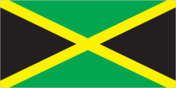
Geography
Agriculture
- main crops — sugarcane, coffee, cocoa, tobacco, rice, corn
- main crops — sugarcane, citrus fruits, bananas, pimento, coconuts, coffee, cocoa, tobacco
Area
- 48,464 km2; 45% forest; 20% built on or waste; 17% meadow and pasture; 14% cultivated; 4% fallow
- UR4^ Caribbean Sea ^NICARAGUA CSee reference map III) Land 10,991 km2; 23% meadow and pasture; 21% arable; 19% forest; 37% waste, urban, or other Water
Branches
- President popularly elected for a four-year term; bicameral legislature (National Congress — 27-seat Senate and 91-seat Chamber of Deputies elected for four-year terms); Supreme Court
- Cabinet headed by Prime Minister; bicameral legislature — 21-member Senate (13 nominated by the Prime Minister, eight by opposition leader, if any; currently no official opposition because of People's National Party boycott of December 1983 election; eight non-Jamaica Labor Party members appointed to current Senate by Prime Minister Seaga), 60-member elected House of Representatives; judiciary follows British tradition under a Chief Justice
Budget
revenue $1.0 billion, expenditure $1.6 billion (1982)
Capital
- Santo Domingo
- Kingston
Coastline
- 1,288 km People
- 1,022 km People
Communists
an estimated 7,000 to 9,000 members in several legal and illegal factions; effectiveness limited by ideological differences and organizational inadequacies
Elections
- last national election May 1982; next election May 1986 Political parties and leaders: Dominican Revolutionary Party (PRD), Jose Francisco Pefta Gomez; Reformist Party (PR), Joaquin Balaguer; Dominican Liberation Party (PLD), Juan Bosch; Democratic Q uisqueyan Party (PQD), Elias Wessin y Wessin; Revolutionary Social Christian Party (PRSC), Rogelio Delgado Bogaert; Movement of National Conciliation (MCN), Jaime Manuel Fernandez Gonzalez; Antireelection Movement of Democratic Integration (MIDA), Francisco Augusto Lora; National Civic Union (UCN), Guillermo Delmonte Urraca; National Salvation Movement (MSN), Luis Julian Perez; Popular Democratic Party (PDF), Luis Homero Lajara Burgos; Fourteenth of June Revolutionary Movement (MR-1J4), Hector Aristy Pereyra; Dominican Communist Party (PCD), Narciso Isa Conde, central committee, legalized in 1978; Dominican Popular Movement (MPD), illegal; 12th of January National Liberation Movement (ML-12E), Plinio Matos Moquete, illegal; Communist Party of the Dominican Republic (PACOREDO), Luis Montas Gonzalez, illegal; Popular Socialist Party (PSP), illegal; Anti-Imperialist Patriotic Union (UPA), Ivan Rodriguez; Democratic Union (UD), Ramon Antonio Flores; Revolutionary League of Workers (LRT), Claudio Tavarez; several additional small leftist parties
- at discretion of Governor General upon advice of Prime Minister but within five years; last held 15 December 1983 Political parties and leaders: Jamaica Labor Party (JLP), Edward Seaga; People's National Party (PNP), Michael Manley
Electric power
- 1,144,000 kW capacity (1983); 3.0 billion kWh produced (1983), 480 kWh per capita
- 1,300,000 kW capacity (1982); 2.0 billion kWh produced (1982), 871 kWh per capita
Ethnic divisions
- 73% mixed, 16% white, 11% black
- 76.3% African, 15.1% Afro-European, 3 4% East Indian and Afro-East Indian, 3.2% white, 1.2% Chinese and Afro-Chinese, 0.9% other
Exports
- $768 million (f.o.b., 1982); sugar, nickel, coffee, tobacco, cocoa
- $767 million (f.o.b., 1982); alumina, bauxite, sugar, bananas, citrus fruits and fruit products, rum, cocoa
GNP
- $7.6 billion (1981), $1,400 per capita; no real growth in 1982
- $3.0 billion (1982), $1,360 per capita; real growth rate 1982, 0.5% est.
Government leader
- Salvador JORGE Blanco, President
- Edward Philip George SEAGA, Prime Minister; Sir Florizel A. GLASSPOLE, Governor General
Imports
- $1.3 billion (f.o.b., 1982); foodstuffs, petroleum, industrial raw materials, capital equipment
- $1.2 billion (f.o.b., 1982); fuels, machinery, transportation and electrical equipment, food, fertilizer
Labor force
- 1.3 million; 47% agriculture, 23% industry and commerce, 16% government, 14% services
- 703,000(1980); 36.4% agriculture, 32.7% services, 16% government, 14.9% industry and commerce; shortage of technical and managerial personnel; 269,000 unemployed (1980)
Land boundaries
361 km Water
Language
- Spanish
- English, Creole
Legal system
- based on French civil codes; 1966 constitution
- based on English common law; has not accepted compulsory ICJ jurisdiction
Limits of territorial waters (claimed)
- 6 nm (fishing 200 nm; 200 nm exclusive economic zone)
- 12 nm
Literacy
- 68%
- 76%
Major industries
- tourism, sugar processing, nickel mining, gold mining, textiles, cement
- bauxite mining, textiles, food processing, light manufactures, tourism
Major trade partners
- exports — 46% US, including Puerto Rico (1980); imports— 45% US, including Puerto Rico (1980) Dominican Republic (continued)
- exports — US 45%, UK 19%, Canada 6%, Norway 5%; imports— US 32%, Venezuela 18%, Netherlands Antilles 12%,UK 10% (1979)
Member of
- FAO, G-77, GATT, IADB, IAEA, IBA, IBRD, ICAO, ICO, IDA, IDB— Inter-American Development Bank, IFAD, IFC, IHO, ILO, IMF, IMO, INTELSAT, INTERPOL, IOOC, IRC, ISO, ITU, OAS, PAHO, SELA, UN, UNESCO, UPU, WFTU, WHO, WMO, WTO Economy
- CARICOM, Commonwealth, FAO, G-77, GATT, IADB, IAEA, IBA, IBRD, ICAO, ICO, IDE— Inter-American Development Bank, IFAD, IFC, ILO, IMF, IMO, INTERPOL, ISO, ITU, NAM, OAS, PAHO, SELA, UN, UNESCO, UPU, WFTU, WHO, WIPO, WMO, WTO Economy
Monetary conversion rate
3. 17 Jamaican dollars=US$l (February 1984)
National holiday
- Independence Day, 27 February
- Independence Day, first Monday in August
Nationality
- noun — Dominican(s); adjective — Dominican
- noun — Jamaican(s); adjective — Jamaican
Official name
- Dominican Republic
- Jamaica
Organized labor
- 12% of labor force Government
- about 33% of labor force (1980) Government
Other political or pressure groups
Communist Party of Jamaica; New World Group (Caribbean regionalists, nationalists, and leftist intellectual fraternity); Rastafarians (Negro religious/racial cultists, panAfricanists); New Creation International Peacemakers Tabernacle (leftist group); Workers Liberation League (a Marxist coalition of students/labor)
Political subdivisions
- 26 provinces and the National District
- 12 parishes and the Kingston-St. Andrew corporate area
Population
- 6,416,000 (July 1984), average annual growth rate 2.7%
- 2,388,000 (July 1984), average annual growth rate 1.7%
Religion
- 95% Roman Catholic
- predominantly Protestant (including Anglican and Baptist), some Roman Catholic, some spiritualist cults
Suffrage
- universal and compulsory, over age 18 or married, except members of the armed forces and police, who cannot vote
- universal adult at age 18
Type
- republic
- independent state within Commonwealth, recognizing Elizabeth II as head of state
Voting strength
- (1982 election) 74% voter turnout; 46.76% PRD, 39.14% PR, 9.69% PLD; 4.41% minor parties
- in the 1983 general elections 54 seats were uncontested; in 6 contested seats the JLP won overwhelmingly against several fringe parties; the PNP and WPJ boycotted the election; (1980 general elections) approx. 58.8% JLP (51 seats in House), 41.2% PNP (9 seats) Communist*.- Worker's Party of Jamaica (Marxist-Leninist), Trevor Munroe