1982 Edition
CIA World Factbook 1982 (Wikisource)
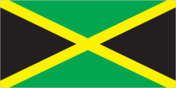
Geography
Area
11,422 km2; 21% arable, 23% meadows and pastures, 19% forested, 37% waste, urban, or other WATER
Coastline
1,022 km
Limits of territorial waters (claimed)
12 nm
People and Society
Ethnic divisions
African 76.3%, Afro-European 15.1%, East Indian and Afro-East Indian 3.4%, white 3.2%, Chinese and Afro-Chinese 1.2%, other 0.9%
Labor force
1,006,900, including 269,000 unemployed (1980); 30% in agriculture, forestry, fishing and mining, 10% manufacturing/mining, 14% public administration, 4% construction, 11% commerce, 4% transportation and utilities, 16% services; 26% unemployed; shortage of technical and managerial personnel
Language
English
Literacy
government claims 82%, but probably only about one-half of that number are functionally literate
Nationality
noun—Jamaican(s); adjective—Jamaican
Organized labor
about 33% of labor force (1980)
Population
2,295,000 (July 1982), average annual growth rate 1.2%
Religion
predominantly Protestant, some Roman Catholic, some spiritualist cults
Government
Branches
Cabinet headed by Prime Minister; 60-member elected House of Representatives; 21-member Senate (13 nominated by the Prime Minister, eight by opposition leader); judiciary follows British tradition under a Chief Justice
Capital
Kingston
Communists
Communist Party of Jamaica; Worker's Party of Jamaica; Worker's Party of Jamaica, Trevor Munroe
Elections
at discretion of Governor General upon advice of Prime Minister but within five years; latest held 30 October 1980 Political parties and leaders: Jamaica Labor Party (JLP), Edward Seaga; People's National Party (PNP), Michael Manley
Government leader
Prime Minister Edward P. G. SEAGA; Governor General Florizel GLASSPOLE
Legal system
based on English common law; has not accepted compulsory ICJ jurisdiction
Member of
CARICOM, FAO, G-77, GATT, IADB, IAEA, IBA, IBRD, ICAO, ICO, IDB, IFAD, IPC, ILO, IMCO, IMF, ISO, ITU, NAM, OAS, Pan American Health Organization, SELA, UN, UNESCO, UPU, WHO, WIPO, WMO, WTO
National holiday
7 August
Official name
Jamaica
Other political or pressure groups
New World Group (Caribbean regionalists, nationalists, and leftist intellectual fraternity); Rastafarians (Negro religious/racial cultists, pan-Africanists); New Creation International Peacemakers Tabernacle (leftist group); Workers Liberation League (a Marxist coalition of students/labor)
Political subdivisions
12 parishes and the Kingston-St. Andrew corporate area
Suffrage
universal, age 18 and over
Type
independent state within Commonwealth since August 1962, recognizing Elizabeth II as head of state
Voting strength
(1980 general elections) approx. 58.8% JLP (51 seats in House), 41.2% PNP (9 seats)
Economy
Agriculture
main crops—sugarcane, citrus fruits, bananas, pimento, coconuts, coffee, cocoa, tobacco
Budget
revenue $0.8 billion, expenditure $1.3 billion (1981)
Electric power
1,400,000 kW capacity (1981); 2.2 billion kWh produced (1981), 974 kWh per capita
Exports
$1 billion (f.o.b., 1981 est.); alumina, bauxite, sugar, bananas, citrus fruits and fruit products, rum, cocoa
Fiscal year
1 April-31 March
GNP
$2.4 billion (1980), $1,089 per capita; real growth rate 1981, 1% est.
Imports
$1.5 billion (c.i.f., 1981 prov.); fuels, machinery, transportation and electrical equipment, food, fertilizer
Major industries
bauxite mining, textiles, food processing, light manufactures, tourism
Major trade partners
exports—US 37%, UK 25%, Canada 8%; imports—US 37%, UK 10%, Canada 6% (1978)
Monetary conversion rate
1 Jamaican dollar=US$0.5613
Communications
Airfields
42 total, 22 usable; 13 with permanent-surface runways; 2 with runways 2,440-3,659 m, 1 with runways 1,220-2,439 m
Civil air
12 major transport aircraft, including 1 leased in and 1 leased out
Highways
18,200 km total; 12,600 km paved, 3,200 km gravel, 2,400 km improved earth
Pipelines
refined products, 10 km
Ports
2 major (Kingston, Montego Bay), 10 minor
Railroads
370 km, all standard gauge (1.435 m), single track
Telecommunications
fully automatic domestic telephone network with 111,000 telephones (5.0 per 100 popl.); 1 Atlantic Ocean INTELSAT station; 8 AM, 11 FM, and 9 TV stations; 3 coaxial submarine cables
Military and Security
Military budget
for fiscal year ending 31 March 1982, $33.2 million; about 2.3% of central government budget
Military manpower
males 15-49, 511,000; 378,000 fit for military service; no conscription; 31,000 reach minimum volunteer age (18) annually
Supply
dependent on UK and US