2016 Edition
CIA World Factbook 2016 Archive (HTML)
Introduction
Background
Italy became a nation-state in 1861 when the regional states of the peninsula, along with Sardinia and Sicily, were united under King Victor EMMANUEL II. An era of parliamentary government came to a close in the early 1920s when Benito MUSSOLINI established a Fascist dictatorship. His alliance with Nazi Germany led to Italy's defeat in World War II. A democratic republic replaced the monarchy in 1946 and economic revival followed. Italy is a charter member of NATO and the European Economic Community (EEC). It has been at the forefront of European economic and political unification, joining the Economic and Monetary Union in 1999. Persistent problems include sluggish economic growth, high youth and female unemployment, organized crime, corruption, and economic disparities between southern Italy and the more prosperous north.
Geography
Area
- 301,340 sq km 294,140 sq km 7,200 sq km includes Sardinia and Sicily
- land
- 294,140 sq km
- note
- includes Sardinia and Sicily
- total
- 301,340 sq km
- water
- 7,200 sq km
Area - comparative
almost twice the size of Georgia; slightly larger than Arizona
Climate
predominantly Mediterranean; alpine in far north; hot, dry in south
Coastline
7,600 km
Elevation
- 538 m lowest point: Mediterranean Sea 0 m highest point: Mont Blanc (Monte Bianco) de Courmayeur 4,748 m (a secondary peak of Mont Blanc)
- elevation extremes
- lowest point: Mediterranean Sea 0 m
- highest point
- Mont Blanc (Monte Bianco) de Courmayeur 4,748 m (a secondary peak of Mont Blanc)
- mean elevation
- 538 m
Environment - current issues
air pollution from industrial emissions such as sulfur dioxide; coastal and inland rivers polluted from industrial and agricultural effluents; acid rain damaging lakes; inadequate industrial waste treatment and disposal facilities
Environment - international agreements
- Air Pollution, Air Pollution-Nitrogen Oxides, Air Pollution-Persistent Organic Pollutants, Air Pollution-Sulfur 85, Air Pollution-Sulfur 94, Air Pollution-Volatile Organic Compounds, Antarctic-Environmental Protocol, Antarctic-Marine Living Resources, Antarctic Seals, Antarctic Treaty, Biodiversity, Climate Change, Climate Change-Kyoto Protocol, Desertification, Endangered Species, Environmental Modification, Hazardous Wastes, Law of the Sea, Marine Dumping, Ozone Layer Protection, Ship Pollution, Tropical Timber 83, Tropical Timber 94, Wetlands, Whaling none of the selected agreements
- party to
- Air Pollution, Air Pollution-Nitrogen Oxides, Air Pollution-Persistent Organic Pollutants, Air Pollution-Sulfur 85, Air Pollution-Sulfur 94, Air Pollution-Volatile Organic Compounds, Antarctic-Environmental Protocol, Antarctic-Marine Living Resources, Antarctic Seals, Antarctic Treaty, Biodiversity, Climate Change, Climate Change-Kyoto Protocol, Desertification, Endangered Species, Environmental Modification, Hazardous Wastes, Law of the Sea, Marine Dumping, Ozone Layer Protection, Ship Pollution, Tropical Timber 83, Tropical Timber 94, Wetlands, Whaling
- signed, but not ratified
- none of the selected agreements
Geographic coordinates
42 50 N, 12 50 E
Geography - note
strategic location dominating central Mediterranean as well as southern sea and air approaches to Western Europe
Irrigated land
39,500 sq km (2012)
Land boundaries
- 1,836.4 km Austria 404 km, France 476 km, Holy See (Vatican City) 3.4 km, San Marino 37 km, Slovenia 218 km, Switzerland 698 km
- border countries (6)
- Austria 404 km, France 476 km, Holy See (Vatican City) 3.4 km, San Marino 37 km, Slovenia 218 km, Switzerland 698 km
- total
- 1,836.4 km
Land use
- 47.1% arable land 22.8%; permanent crops 8.6%; permanent pasture 15.7% 31.4% 21.5% (2011 est.)
- agricultural land
- 47.1%
- forest
- 31.4%
- other
- 21.5% (2011 est.)
Location
Southern Europe, a peninsula extending into the central Mediterranean Sea, northeast of Tunisia
Map references
Europe
Maritime claims
- 12 nm 200-m depth or to the depth of exploitation
- continental shelf
- 200-m depth or to the depth of exploitation
- territorial sea
- 12 nm
Natural hazards
- regional risks include landslides, mudflows, avalanches, earthquakes, volcanic eruptions, flooding; land subsidence in Venice significant volcanic activity; Etna (elev. 3,330 m), which is in eruption as of 2010, is Europe's most active volcano; flank eruptions pose a threat to nearby Sicilian villages; Etna, along with the famous Vesuvius, which remains a threat to the millions of nearby residents in the Bay of Naples area, have both been deemed Decade Volcanoes by the International Association of Volcanology and Chemistry of the Earth's Interior, worthy of study due to their explosive history and close proximity to human populations; Stromboli, on its namesake island, has also been continuously active with moderate volcanic activity; other historically active volcanoes include Campi Flegrei, Ischia, Larderello, Pantelleria, Vulcano, and Vulsini
- volcanism
- significant volcanic activity; Etna (elev. 3,330 m), which is in eruption as of 2010, is Europe's most active volcano; flank eruptions pose a threat to nearby Sicilian villages; Etna, along with the famous Vesuvius, which remains a threat to the millions of nearby residents in the Bay of Naples area, have both been deemed Decade Volcanoes by the International Association of Volcanology and Chemistry of the Earth's Interior, worthy of study due to their explosive history and close proximity to human populations; Stromboli, on its namesake island, has also been continuously active with moderate volcanic activity; other historically active volcanoes include Campi Flegrei, Ischia, Larderello, Pantelleria, Vulcano, and Vulsini
Natural resources
coal, mercury, zinc, potash, marble, barite, asbestos, pumice, fluorspar, feldspar, pyrite (sulfur), natural gas and crude oil reserves, fish, arable land
Population - distribution
despite a distinctive pattern with an industrial north and an agrarian south, a fairly even population distribution exists throughout most of the country, with coastal areas, the Po River Valley, and urban centers (particularly Milan, Rome, and Naples), attracting larger and denser populations
Terrain
mostly rugged and mountainous; some plains, coastal lowlands
People and Society
Age structure
- 13.69% (male 4,337,792/female 4,151,901) 9.74% (male 3,026,359/female 3,012,882) 42.46% (male 13,003,171/female 13,326,901) 12.73% (male 3,826,630/female 4,069,855) 21.37% (male 5,696,612/female 7,555,437) (2016 est.)
- 0-14 years
- 13.69% (male 4,337,792/female 4,151,901)
- 15-24 years
- 9.74% (male 3,026,359/female 3,012,882)
- 25-54 years
- 42.46% (male 13,003,171/female 13,326,901)
- 55-64 years
- 12.73% (male 3,826,630/female 4,069,855)
- 65 years and over
- 21.37% (male 5,696,612/female 7,555,437) (2016 est.)
Birth rate
8.7 births/1,000 population (2016 est.)
Death rate
10.3 deaths/1,000 population (2016 est.)
Dependency ratios
- 56.5% 21.5% 35.1% 2.9% (2015 est.)
- elderly dependency ratio
- 35.1%
- potential support ratio
- 2.9% (2015 est.)
- total dependency ratio
- 56.5%
- youth dependency ratio
- 21.5%
Drinking water source
- urban: 100% of population rural: 100% of population total: 100% of population urban: 0% of population rural: 0% of population total: 0% of population (2015 est.)
- rural
- 0% of population
- total
- 0% of population (2015 est.)
- urban
- 0% of population
Education expenditures
4.1% of GDP (2011)
Ethnic groups
Italian (includes small clusters of German-, French-, and Slovene-Italians in the north and Albanian-Italians and Greek-Italians in the south)
Health expenditures
9.2% of GDP (2014)
HIV/AIDS - adult prevalence rate
0.37% (2015 est.)
HIV/AIDS - deaths
700 (2015 est.)
HIV/AIDS - people living with HIV/AIDS
136,800 (2015 est.)
Hospital bed density
3.4 beds/1,000 population (2011)
Infant mortality rate
- 3.3 deaths/1,000 live births 3.5 deaths/1,000 live births 3.1 deaths/1,000 live births (2016 est.)
- female
- 3.1 deaths/1,000 live births (2016 est.)
- male
- 3.5 deaths/1,000 live births
- total
- 3.3 deaths/1,000 live births
Languages
Italian (official), German (parts of Trentino-Alto Adige region are predominantly German speaking), French (small French-speaking minority in Valle d'Aosta region), Slovene (Slovene-speaking minority in the Trieste-Gorizia area)
Life expectancy at birth
- 82.2 years 79.6 years 85 years (2016 est.)
- female
- 85 years (2016 est.)
- male
- 79.6 years
- total population
- 82.2 years
Literacy
- age 15 and over can read and write 99.2% 99.4% 99% (2015 est.)
- definition
- age 15 and over can read and write
- female
- 99% (2015 est.)
- male
- 99.4%
- total population
- 99.2%
Major urban areas - population
ROME (capital) 3.718 million; Milan 3.099 million; Naples 2.202 million; Turin 1.765 million; Palermo 853,000; Bergamo 840,000 (2015)
Maternal mortality rate
4 deaths/100,000 live births (2015 est.)
Median age
- 45.1 years 44 years 46.2 years (2016 est.)
- female
- 46.2 years (2016 est.)
- male
- 44 years
- total
- 45.1 years
Mother's mean age at first birth
30.3 (2011 est.)
Nationality
- Italian(s) Italian
- adjective
- Italian
- noun
- Italian(s)
Net migration rate
3.9 migrant(s)/1,000 population (2016 est.)
Obesity - adult prevalence rate
23.7% (2014)
Physicians density
3.76 physicians/1,000 population (2012)
Population
62,007,540 (July 2016 est.)
Population distribution
despite a distinctive pattern with an industrial north and an agrarian south, a fairly even population distribution exists throughout most of the country, with coastal areas, the Po River Valley, and urban centers (particularly Milan, Rome, and Naples), attracting larger and denser populations
Population growth rate
0.23% (2016 est.)
Religions
Christian 80% (overwhelmingly Roman Catholic with very small groups of Jehovah's Witnesses and Protestants), Muslim (about 800,000 to 1 million), atheist and agnostic 20%
Sanitation facility access
- urban: 99.5% of population rural: 99.6% of population total: 99.5% of population urban: 0.5% of population rural: 0.4% of population total: 0.5% of population (2015 est.)
- rural
- 0.4% of population
- total
- 0.5% of population (2015 est.)
- unimproved
- :
- urban
- 0.5% of population
School life expectancy (primary to tertiary education)
- 16 years 16 years 17 years (2013)
- female
- 17 years (2013)
- male
- 16 years
- total
- 16 years
Sex ratio
- 1.06 male(s)/female 1.04 male(s)/female 1 male(s)/female 0.98 male(s)/female 0.94 male(s)/female 0.75 male(s)/female 0.93 male(s)/female (2016 est.)
- 0-14 years
- 1.04 male(s)/female
- 15-24 years
- 1 male(s)/female
- 25-54 years
- 0.98 male(s)/female
- 55-64 years
- 0.94 male(s)/female
- 65 years and over
- 0.75 male(s)/female
- at birth
- 1.06 male(s)/female
- total population
- 0.93 male(s)/female (2016 est.)
Total fertility rate
1.43 children born/woman (2016 est.)
Unemployment, youth ages 15-24
- 42.7% 41.3% 44.7% (2014 est.)
- female
- 44.7% (2014 est.)
- male
- 41.3%
- total
- 42.7%
Urbanization
- 69% of total population (2015) 0.39% annual rate of change (2010-15 est.)
- rate of urbanization
- 0.39% annual rate of change (2010-15 est.)
- urban population
- 69% of total population (2015)
Government
Administrative divisions
- 15 regions (regioni, singular - regione) and 5 autonomous regions (regioni autonome, singular - regione autonoma) Abruzzo, Basilicata, Calabria, Campania, Emilia-Romagna, Lazio (Latium), Liguria, Lombardia, Marche, Molise, Piemonte (Piedmont), Puglia (Apulia), Toscana (Tuscany), Umbria, Veneto (Venetia) Friuli-Venezia Giulia; Sardegna (Sardinia); Sicilia (Sicily); Trentino-Alto Adige (Trentino-South Tyrol) or Trentino-Suedtirol (German); Valle d'Aosta (Aosta Valley) or Vallee d'Aoste (French)
- autonomous regions
- Friuli-Venezia Giulia; Sardegna (Sardinia); Sicilia (Sicily); Trentino-Alto Adige (Trentino-South Tyrol) or Trentino-Suedtirol (German); Valle d'Aosta (Aosta Valley) or Vallee d'Aoste (French)
- regions
- Abruzzo, Basilicata, Calabria, Campania, Emilia-Romagna, Lazio (Latium), Liguria, Lombardia, Marche, Molise, Piemonte (Piedmont), Puglia (Apulia), Toscana (Tuscany), Umbria, Veneto (Venetia)
Capital
- Rome 41 54 N, 12 29 E UTC+1 (6 hours ahead of Washington, DC, during Standard Time) +1hr, begins last Sunday in March; ends last Sunday in October
- daylight saving time
- +1hr, begins last Sunday in March; ends last Sunday in October
- geographic coordinates
- 41 54 N, 12 29 E
- name
- Rome
- time difference
- UTC+1 (6 hours ahead of Washington, DC, during Standard Time)
Citizenship
- no at least one parent must be a citizen of Italy yes 4 years for EU nationals, 5 years for refugees and specified exceptions, 10 years for all others
- citizenship by birth
- no
- citizenship by descent only
- at least one parent must be a citizen of Italy
- dual citizenship recognized
- yes
- residency requirement for naturalization
- 4 years for EU nationals, 5 years for refugees and specified exceptions, 10 years for all others
Constitution
previous 1848 (originally for Kingdom of Sardinia and adopted by Kingdom of Italy in 1861); latest enacted 22 December 1947, adopted 27 December 1947, entered into force 1 January 1948; amended many times, last in 2012; note - a proposed amendment that would significantly alter the parliament is slated for a referendum in October 2016 (2016)
Country name
- Italian Republic Italy Repubblica Italiana Italia Kingdom of Italy derivation is unclear, but the Latin "Italia" may come from the Oscan "Viteliu" meaning "[land] of young cattle" (the bull was a symbol of southern Italic tribes)
- conventional long form
- Italian Republic
- conventional short form
- Italy
- etymology
- derivation is unclear, but the Latin "Italia" may come from the Oscan "Viteliu" meaning "[land] of young cattle" (the bull was a symbol of southern Italic tribes)
- former
- Kingdom of Italy
- local long form
- Repubblica Italiana
- local short form
- Italia
Diplomatic representation from the US
- Ambassador John R. PHILLIPS (since 3 October 2013); note - also accredited to San Marino Via Vittorio Veneto 121, 00187-Rome PSC 59, Box 100, APO AE 09624 [39] (06) 46741 [39] (06) 4674-2244 Florence, Milan, Naples Anchorage (AK), Charleston (SC), Worcester (MA)
- chief of mission
- Ambassador John R. PHILLIPS (since 3 October 2013); note - also accredited to San Marino
- consular agency(ies)
- Anchorage (AK), Charleston (SC), Worcester (MA)
- consulate(s) general
- Florence, Milan, Naples
- embassy
- Via Vittorio Veneto 121, 00187-Rome
- FAX
- [39] (06) 4674-2244
- mailing address
- PSC 59, Box 100, APO AE 09624
- telephone
- [39] (06) 46741
Diplomatic representation in the US
- Ambassador Armando VARRICCHIO (since 2 March 2016) 3000 Whitehaven Street NW, Washington, DC 20008 [1] (202) 612-4400 [1] (202) 518-2151 Boston, Chicago, Detroit, Houston, Miami, New York, Los Angeles, Philadelphia, San Francisco Charlotte (NC), Cleveland (OH), Detroit (MI), Hattiesburg (MS), Honolulu (HI), New Orleans, Newark (NJ), Norfolk (VA), Pittsburgh (PA), Portland (OR), Seattle Anchorage (AL), Charleston (SC), Worcester (MA)
- chancery
- 3000 Whitehaven Street NW, Washington, DC 20008
- chief of mission
- Ambassador Armando VARRICCHIO (since 2 March 2016)
- consular agency(ies)
- Anchorage (AL), Charleston (SC), Worcester (MA)
- consulate(s)
- Charlotte (NC), Cleveland (OH), Detroit (MI), Hattiesburg (MS), Honolulu (HI), New Orleans, Newark (NJ), Norfolk (VA), Pittsburgh (PA), Portland (OR), Seattle
- consulate(s) general
- Boston, Chicago, Detroit, Houston, Miami, New York, Los Angeles, Philadelphia, San Francisco
- FAX
- [1] (202) 518-2151
- telephone
- [1] (202) 612-4400
Executive branch
- President Sergio MATTARELLA (since 3 February 2015); Giorgio NAPOLITANO resigned 14 January 2015 Prime Minister Matteo RENZI (since 22 February 2014); note - the prime minister title is President of the Council of Ministers Council of Ministers proposed by the prime minister and nominated by the president president indirectly elected by an electoral college consisting of both houses of Parliament and 58 regional representatives for a 7-year term (no term limits); election last held on 31 January 2015 (next scheduled for 2020); prime minister appointed by the president, confirmed by parliament Sergio MATTARELLA (independent) elected president; electoral college vote count in fourth round - 665 out of 1,009 (505-vote threshold); Matteo RENZI (PD) sworn in as prime minister on 22 February 2014
- cabinet
- Council of Ministers proposed by the prime minister and nominated by the president
- chief of state
- President Sergio MATTARELLA (since 3 February 2015); Giorgio NAPOLITANO resigned 14 January 2015
- election results
- Sergio MATTARELLA (independent) elected president; electoral college vote count in fourth round - 665 out of 1,009 (505-vote threshold); Matteo RENZI (PD) sworn in as prime minister on 22 February 2014
- elections/appointments
- president indirectly elected by an electoral college consisting of both houses of Parliament and 58 regional representatives for a 7-year term (no term limits); election last held on 31 January 2015 (next scheduled for 2020); prime minister appointed by the president, confirmed by parliament
- head of government
- Prime Minister Matteo RENZI (since 22 February 2014); note - the prime minister title is President of the Council of Ministers
Flag description
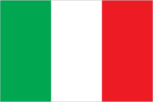
- three equal vertical bands of green (hoist side), white, and red; design inspired by the French flag brought to Italy by Napoleon in 1797; colors are those of Milan (red and white) combined with the green uniform color of the Milanese civic guard similar to the flag of Mexico, which is longer, uses darker shades of red and green, and has its coat of arms centered on the white band; Ireland, which is longer and is green (hoist side), white, and orange; also similar to the flag of the Cote d'Ivoire, which has the colors reversed - orange (hoist side), white, and green
- note
- similar to the flag of Mexico, which is longer, uses darker shades of red and green, and has its coat of arms centered on the white band; Ireland, which is longer and is green (hoist side), white, and orange; also similar to the flag of the Cote d'Ivoire, which has the colors reversed - orange (hoist side), white, and green
Government type
parliamentary republic
Independence
17 March 1861 (Kingdom of Italy proclaimed; Italy was not finally unified until 1871)
International law organization participation
accepts compulsory ICJ jurisdiction with reservations; accepts ICCt jurisdiction
International organization participation
ADB (nonregional member), AfDB (nonregional member), Arctic Council (observer), Australia Group, BIS, BSEC (observer), CBSS (observer), CD, CDB, CE, CEI, CERN, EAPC, EBRD, ECB, EIB, EITI (implementing country), EMU, ESA, EU, FAO, FATF, G-7, G-8, G-10, G-20, IADB, IAEA, IBRD, ICAO, ICC (national committees), ICCt, ICRM, IDA, IEA, IFAD, IFC, IFRCS, IGAD (partners), IHO, ILO, IMF, IMO, IMSO, Interpol, IOC, IOM, IPU, ISO, ITSO, ITU, ITUC (NGOs), LAIA (observer), MIGA, MINURSO, MINUSMA, NATO, NEA, NSG, OAS (observer), OECD, OPCW, OSCE, Pacific Alliance (observer), Paris Club, PCA, PIF (partner), Schengen Convention, SELEC (observer), SICA (observer), UN, UNCTAD, UNESCO, UNHCR, UNIDO, UNIFIL, Union Latina, UNMOGIP, UNRWA, UNTSO, UNWTO, UPU, WCO, WHO, WIPO, WMO, WTO, ZC
Judicial branch
- Supreme Court of Cassation or Corte Suprema di Cassazione consists of the first president (chief justice), deputy president, 54 justices presiding over 6 civil and 7 criminal divisions, and 288 judges; an additional 30 judges of lower courts serve as supporting judges; cases normally heard by 5-judge panels; more complex cases heard by 9-judge panels; Constitutional Court or Corte Costituzionale (consists of the court president and 14 judges) Supreme Court judges appointed by the High Council of the Judiciary, headed by the president of the republic; judges may serve for life; Constitutional Court judges - 5 appointed by the president, 5 elected by parliament, 5 elected by select higher courts; judges serve up to 9 years various lower civil and criminal courts (primary and secondary tribunals, courts, and courts of appeal)
- highest court(s)
- Supreme Court of Cassation or Corte Suprema di Cassazione consists of the first president (chief justice), deputy president, 54 justices presiding over 6 civil and 7 criminal divisions, and 288 judges; an additional 30 judges of lower courts serve as supporting judges; cases normally heard by 5-judge panels; more complex cases heard by 9-judge panels; Constitutional Court or Corte Costituzionale (consists of the court president and 14 judges)
- judge selection and term of office
- Supreme Court judges appointed by the High Council of the Judiciary, headed by the president of the republic; judges may serve for life; Constitutional Court judges - 5 appointed by the president, 5 elected by parliament, 5 elected by select higher courts; judges serve up to 9 years
- subordinate courts
- various lower civil and criminal courts (primary and secondary tribunals, courts, and courts of appeal)
Legal system
civil law system; judicial review of legislation under certain conditions in Constitutional Court
Legislative branch
- bicameral Parliament or Parlamento consists of the Senate or Senato della Repubblica (322 seats; 315 members directly elected in single- and multi-seat constituencies by proportional representation vote to serve 5-year terms and 7 ex-officio members appointed by the president of the Republic to serve for life) and the Chamber of Deputies or Camera dei Deputati (630 seats; 629 members directly elected in single- and multi-seat constituencies by proportional representation vote and 1 member from Valle d'Aosta elected by simple majority vote; members serve 5-year terms) Senate - last held on 24-25 February 2013 (next to be held in 2018); Chamber of Deputies - last held on 24-25 February 2013 (next to be held in 2018) Senate - percent of vote by party - NA; seats by party - center-left coalition 123 (PD 111, SEL 7, SVP 2, other 3), center-right coalition 117 (PdL 98, LN 18, other 1), M5S 54, centrist coalition 19, other 2; Chamber of Deputies - percent of vote by party - NA; seats by party - center-left coalition 345 (PD 297, SEL 37, CD 6 SVP 5), center-right coalition 125 (PdL 98, LN 18, FdI 9), M5S 109, centrist coalition 47, other 3
- description
- bicameral Parliament or Parlamento consists of the Senate or Senato della Repubblica (322 seats; 315 members directly elected in single- and multi-seat constituencies by proportional representation vote to serve 5-year terms and 7 ex-officio members appointed by the president of the Republic to serve for life) and the Chamber of Deputies or Camera dei Deputati (630 seats; 629 members directly elected in single- and multi-seat constituencies by proportional representation vote and 1 member from Valle d'Aosta elected by simple majority vote; members serve 5-year terms)
- election results
- Senate - percent of vote by party - NA; seats by party - center-left coalition 123 (PD 111, SEL 7, SVP 2, other 3), center-right coalition 117 (PdL 98, LN 18, other 1), M5S 54, centrist coalition 19, other 2; Chamber of Deputies - percent of vote by party - NA; seats by party - center-left coalition 345 (PD 297, SEL 37, CD 6 SVP 5), center-right coalition 125 (PdL 98, LN 18, FdI 9), M5S 109, centrist coalition 47, other 3
- elections
- Senate - last held on 24-25 February 2013 (next to be held in 2018); Chamber of Deputies - last held on 24-25 February 2013 (next to be held in 2018)
National anthem
- "Il Canto degli Italiani" (The Song of the Italians) Goffredo MAMELI/Michele NOVARO adopted 1946; the anthem, originally written in 1847, is also known as "L'Inno di Mameli" (Mameli's Hymn), and "Fratelli D'Italia" (Brothers of Italy)
- lyrics/music
- Goffredo MAMELI/Michele NOVARO
- name
- "Il Canto degli Italiani" (The Song of the Italians)
- note
- adopted 1946; the anthem, originally written in 1847, is also known as "L'Inno di Mameli" (Mameli's Hymn), and "Fratelli D'Italia" (Brothers of Italy)
National holiday
Republic Day, 2 June (1946)
National symbol(s)
- white, five-pointed star (Stella d'Italia); national colors: red, white, green
- white, five-pointed star (Stella d'Italia); national colors
- red, white, green
Political parties and leaders
Civic Choice or SC [Enrico ZANETTI] Democratic Centre or CD [Bruno TABACCI] Democratic Party or PD [Matteo RENZI] The New Center-Right or NCD [Angelino ALFANO] Union of the Center or UdC [Pier Fernando CASINI] Brothers of Italy-National Alliance or FdI-AN [Giorgia MELONI, Ignazio LA RUSSA, and Guido CROSETTO] Forza Italia [Silvio BERLUSCONI] (formerly PdL) Northern League or LN [Matteo SALVINI] other minor parties Civil Revolution or RC [Antonio INGROIA] Five Star Movment or M5S [Beppe GRILLO] South Tyrolean People's Party or SVP [Philipp ACHAMMER]
Political pressure groups and leaders
- Confcommercio Confindustria Confcoltivatori Confagricoltura Confederazione Generale Italiana del Lavoro or CGIL [Susanna CAMUSSO] (left wing) Confederazione Italiana dei Sindacati Lavoratori or CISL [Raffaele BONANNI] (Roman Catholic centrist) Unione Italiana del Lavoro or UIL [Luigi ANGELETTI] (lay centrist) Roman Catholic Church
- major trade union confederations
- Confederazione Generale Italiana del Lavoro or CGIL [Susanna CAMUSSO] (left wing)
- manufacturers and merchants associations
- Confcommercio
- organized farm groups
- Confcoltivatori
- other
- Roman Catholic Church
Suffrage
18 years of age; universal except in senatorial elections, where minimum age is 25
Economy
Agriculture - products
fruits, vegetables, grapes, potatoes, sugar beets, soybeans, grain, olives; beef, dairy products; fish
Budget
- $870 billion $917 billion (2015 est.)
- expenditures
- $917 billion (2015 est.)
- revenues
- $870 billion
Budget surplus (+) or deficit (-)
-2.6% of GDP (2015 est.)
Central bank discount rate
- 0.25% (31 December 2013) 0.75% (31 December 2012) this is the European Central Bank's rate on the marginal lending facility, which offers overnight credit to banks in the euro area
- note
- this is the European Central Bank's rate on the marginal lending facility, which offers overnight credit to banks in the euro area
Commercial bank prime lending rate
4.13% (31 December 2015 est.) 4.87% (31 December 2014 est.)
Current account balance
$38.74 billion (2015 est.) $40.9 billion (2014 est.)
Debt - external
$2.459 trillion (31 December 2014 est.) $2.635 trillion (31 December 2013 est.)
Distribution of family income - Gini index
31.9 (2012 est.) 27.3 (1995)
Economy - overview
Italy has a diversified economy, which is divided into a developed industrial north, dominated by private companies, and a less-developed, highly subsidized, agricultural south, where unemployment is higher. The Italian economy is driven in large part by the manufacture of high-quality consumer goods produced by small and medium-sized enterprises, many of them family-owned. Italy also has a sizable underground economy, which by some estimates accounts for as much as 17% of GDP. These activities are most common within the agriculture, construction, and service sectors. Italy is the third-largest economy in the euro zone, but its exceptionally high public debt and structural impediments to growth have rendered it vulnerable to scrutiny by financial markets. Public debt has increased steadily since 2007, topping 135% of GDP in 2015, but investor concerns about Italy and the broader euro-zone crisis eased in 2013, bringing down Italy's borrowing costs on sovereign government debt from euro-era records. The government still faces pressure from investors and European partners to sustain its efforts to address Italy's longstanding structural impediments to growth, such as labor market inefficiencies and tax evasion. In 2014, economic growth and labor market conditions continued to deteriorate, with overall unemployment rising to 12.7% and youth unemployment around 40%, but Italy began to recover in 2015, with marginal growth and a slight reduction in unemployment.
Exchange rates
euros (EUR) per US dollar - 0.885 (2015 est.) 0.7525 (2014 est.) 0.7634 (2013 est.) 0.78 (2012 est.) 0.7185 (2011 est.)
Exports
$450.1 billion (2015 est.) $518.3 billion (2014 est.)
Exports - commodities
engineering products, textiles and clothing, production machinery, motor vehicles, transport equipment, chemicals; foodstuffs, beverages, and tobacco; minerals, nonferrous metals
Exports - partners
Germany 12.3%, France 10.3%, US 8.7%, UK 5.4%, Spain 4.8%, Switzerland 4.7% (2015)
Fiscal year
calendar year
GDP - composition, by end use
- 61.1% 19% 16.5% 0.2% 30.2% -27% (2015 est.)
- exports of goods and services
- 30.2%
- government consumption
- 19%
- household consumption
- 61.1%
- imports of goods and services
- -27% (2015 est.)
- investment in fixed capital
- 16.5%
- investment in inventories
- 0.2%
GDP - composition, by sector of origin
- 2.3% 23.7% 74% (2015 est.)
- agriculture
- 2.3%
- industry
- 23.7%
- services
- 74% (2015 est.)
GDP - per capita (PPP)
- $35,700 (2015 est.) $35,400 (2014 est.) $36,200 (2013 est.) data are in 2015 US dollars
- note
- data are in 2015 US dollars
GDP - real growth rate
0.8% (2015 est.) -0.3% (2014 est.) -1.7% (2013 est.)
GDP (official exchange rate)
$1.816 trillion (2015 est.)
GDP (purchasing power parity)
- $2.171 trillion (2015 est.) $2.155 trillion (2014 est.) $2.162 trillion (2013 est.) data are in 2015 US dollars
- note
- data are in 2015 US dollars
Gross national saving
18.9% of GDP (2015 est.) 18.2% of GDP (2014 est.) 17.8% of GDP (2013 est.)
Household income or consumption by percentage share
- 2.3% 26.8% (2000)
- highest 10%
- 26.8% (2000)
- lowest 10%
- 2.3%
Imports
$391.2 billion (2015 est.) $455.2 billion (2014 est.)
Imports - commodities
engineering products, chemicals, transport equipment, energy products, minerals and nonferrous metals, textiles and clothing; food, beverages, tobacco
Imports - partners
Germany 15.4%, France 8.7%, China 7.7%, Netherlands 5.6%, Spain 5%, Belgium 4.7% (2015)
Industrial production growth rate
0.4% (2015 est.)
Industries
tourism, machinery, iron and steel, chemicals, food processing, textiles, motor vehicles, clothing, footwear, ceramics
Inflation rate (consumer prices)
0.1% (2015 est.) 0.2% (2014 est.)
Labor force
25.5 million (2015 est.)
Labor force - by occupation
- 3.9% 28.3% 67.8% (2011)
- agriculture
- 3.9%
- industry
- 28.3%
- services
- 67.8% (2011)
Market value of publicly traded shares
$480.5 billion (31 December 2012 est.) $431.5 billion (31 December 2014 est.) $318.1 billion (31 December 2013 est.)
Population below poverty line
29.9% (2012 est.)
Public debt
- 132.8% of GDP (2015 est.) 132.4% of GDP (2014 est.) Italy reports its data on public debt according to guidelines set out in the Maastricht Treaty; general government gross debt is defined in the Maastricht Treaty as consolidated general government gross debt at nominal value, outstanding at the end of the year, in the following categories of government liabilities (as defined in ESA95): currency and deposits (AF.2), securities other than shares excluding financial derivatives (AF.3, excluding AF.34), and loans (AF.4); the general government sector comprises the central government, state government, local government and social security funds
- note
- Italy reports its data on public debt according to guidelines set out in the Maastricht Treaty; general government gross debt is defined in the Maastricht Treaty as consolidated general government gross debt at nominal value, outstanding at the end of the year, in the following categories of government liabilities (as defined in ESA95): currency and deposits (AF.2), securities other than shares excluding financial derivatives (AF.3, excluding AF.34), and loans (AF.4); the general government sector comprises the central government, state government, local government and social security funds
Reserves of foreign exchange and gold
$130.6 billion (31 December 2015 est.) $142.2 billion (31 December 2014 est.)
Stock of broad money
$2.134 trillion (31 December 2014 est.) $2.284 trillion (31 December 2013 est.)
Stock of direct foreign investment - abroad
$594.4 billion (31 December 2015 est.) $632.3 billion (31 December 2014 est.)
Stock of direct foreign investment - at home
$463.2 billion (31 December 2015 est.) $493.8 billion (31 December 2014 est.)
Stock of domestic credit
$3.053 trillion (31 December 2015 est.) $3.39 trillion (31 December 2014 est.)
Stock of narrow money
- $1.026 trillion (31 December 2015 est.) $1.054 trillion (31 December 2014 est.) see entry for the European Union for money supply for the entire euro area; the European Central Bank (ECB) controls monetary policy for the 18 members of the Economic and Monetary Union (EMU); individual members of the EMU do not control the quantity of money circulating within their own borders
- note
- see entry for the European Union for money supply for the entire euro area; the European Central Bank (ECB) controls monetary policy for the 18 members of the Economic and Monetary Union (EMU); individual members of the EMU do not control the quantity of money circulating within their own borders
Taxes and other revenues
47.9% of GDP (2015 est.)
Unemployment rate
11.9% (2015 est.) 12.6% (2014 est.)
Energy
Carbon dioxide emissions from consumption of energy
362 million Mt (2013 est.)
Crude oil - exports
24,640 bbl/day (2015 est.)
Crude oil - imports
1.395 million bbl/day (2015 est.)
Crude oil - production
100,200 bbl/day (2015 est.)
Crude oil - proved reserves
544.5 million bbl (1 January 2016 es)
Electricity - consumption
291 billion kWh (2014 est.)
Electricity - exports
3 billion kWh (2014 est.)
Electricity - from fossil fuels
58.9% of total installed capacity (2012 est.)
Electricity - from hydroelectric plants
11.5% of total installed capacity (2012 est.)
Electricity - from nuclear fuels
0% of total installed capacity (2012 est.)
Electricity - from other renewable sources
23.4% of total installed capacity (2012 est.)
Electricity - imports
47 billion kWh (2014 est.)
Electricity - installed generating capacity
122 million kW (2014 est.)
Electricity - production
267 billion kWh (2014 est.)
Electricity access
- 100% (2016)
- electrification - total population
- 100% (2016)
Natural gas - consumption
61.91 billion cu m (2014 est.)
Natural gas - exports
237 million cu m (2014 est.)
Natural gas - imports
55.76 billion cu m (2014 est.)
Natural gas - production
7.149 billion cu m (2014 est.)
Natural gas - proved reserves
53.72 billion cu m (1 January 2016 es)
Refined petroleum products - consumption
1.266 million bbl/day (2015 est.)
Refined petroleum products - exports
533,900 bbl/day (2015 est.)
Refined petroleum products - imports
261,900 bbl/day (2015 est.)
Refined petroleum products - production
1.578 million bbl/day (2015 est.)
Communications
Broadcast media
two Italian media giants dominate - the publicly owned Radiotelevisione Italiana (RAI) with 3 national terrestrial stations and privately owned Mediaset with 3 national terrestrial stations; a large number of private stations and Sky Italia - a satellite TV network; RAI operates 3 AM/FM nationwide radio stations; about 1,300 commercial radio stations (2007)
Internet country code
.it
Internet users
- 40.559 million 65.6% (July 2015 est.)
- percent of population
- 65.6% (July 2015 est.)
- total
- 40.559 million
Telephone system
- modern, well-developed, fast; fully automated telephone, telex, and data services high-capacity cable and microwave radio relay trunks country code - 39; a series of submarine cables provide links to Asia, Middle East, Europe, North Africa, and US; satellite earth stations - 3 Intelsat (with a total of 5 antennas - 3 for Atlantic Ocean and 2 for Indian Ocean), 1 Inmarsat (Atlantic Ocean region), and NA Eutelsat (2015)
- domestic
- high-capacity cable and microwave radio relay trunks
- general assessment
- modern, well-developed, fast; fully automated telephone, telex, and data services
- international
- country code - 39; a series of submarine cables provide links to Asia, Middle East, Europe, North Africa, and US; satellite earth stations - 3 Intelsat (with a total of 5 antennas - 3 for Atlantic Ocean and 2 for Indian Ocean), 1 Inmarsat (Atlantic Ocean region), and NA Eutelsat (2015)
Telephones - fixed lines
- 20,236,305 33 (July 2015 est.)
- subscriptions per 100 inhabitants
- 33 (July 2015 est.)
- total subscriptions
- 20,236,305
Telephones - mobile cellular
- 92.52 million 150 (July 2015 est.)
- subscriptions per 100 inhabitants
- 150 (July 2015 est.)
- total
- 92.52 million
Transportation
Airports
129 (2013)
Airports - with paved runways
- 11 (2013)
- 1,524 to 2,437 m
- 18
- 2,438 to 3,047 m
- 31
- 914 to 1,523 m
- 29
- over 3,047 m
- 9
- total
- 98
- under 914 m
- 11 (2013)
Airports - with unpaved runways
- 20 (2013)
- 1,524 to 2,437 m
- 1
- 914 to 1,523 m
- 10
- total
- 31
- under 914 m
- 20 (2013)
Civil aircraft registration country code prefix
I (2016)
Heliports
5 (2013)
Merchant marine
- bulk carrier 105, cargo 42, carrier 1, chemical tanker 164, container 21, liquefied gas 28, passenger 25, passenger/cargo 154, petroleum tanker 59, refrigerated cargo 4, roll on/roll off 39, specialized tanker 9, vehicle carrier 30 90 (Denmark 4, France 2, Greece 7, Luxembourg 14, Netherlands 2, Nigeria 1, Norway 6, Singapore 1, Sweden 1, Switzerland 13, Taiwan 10, Turkey 4, UK 2, US 23) 201 (Bahamas 1, Belize 3, Cayman Islands 7, Cyprus 6, Georgia 2, Gibraltar 4, Greece 5, Liberia 47, Malta 45, Marshall Islands 1, Morocco 1, Netherlands 6, Panama 25, Portugal 12, Russia 14, Saint Vincent and the Grenadines 4, Singapore 5, Slovakia 2, Spain 1, Sweden 5, Turkey 1, UK 3, unknown 1) (2010)
- by type
- bulk carrier 105, cargo 42, carrier 1, chemical tanker 164, container 21, liquefied gas 28, passenger 25, passenger/cargo 154, petroleum tanker 59, refrigerated cargo 4, roll on/roll off 39, specialized tanker 9, vehicle carrier 30
- foreign-owned
- 90 (Denmark 4, France 2, Greece 7, Luxembourg 14, Netherlands 2, Nigeria 1, Norway 6, Singapore 1, Sweden 1, Switzerland 13, Taiwan 10, Turkey 4, UK 2, US 23)
- registered in other countries
- 201 (Bahamas 1, Belize 3, Cayman Islands 7, Cyprus 6, Georgia 2, Gibraltar 4, Greece 5, Liberia 47, Malta 45, Marshall Islands 1, Morocco 1, Netherlands 6, Panama 25, Portugal 12, Russia 14, Saint Vincent and the Grenadines 4, Singapore 5, Slovakia 2, Spain 1, Sweden 5, Turkey 1, UK 3, unknown 1) (2010)
- total
- 681
National air transport system
- 26,036,010 945,433,732 mt-km (2015)
- annual freight traffic on registered air carriers
- 945,433,732 mt-km (2015)
- annual passenger traffic on registered air carriers
- 26,036,010
- inventory of registered aircraft operated by air carriers
- 382
- number of registered air carriers
- 9
Pipelines
gas 20,223 km; oil 1,393 km; refined products 1,574 km (2013)
Ports and terminals
- Augusta, Cagliari, Genoa, Livorno, Taranto, Trieste, Venice Melilli (Santa Panagia) oil terminal, Sarroch oil terminal Genoa (1,847,648), Gioia Tauro (2,264,798), La Spezia (1,307,274) La Spezia, Panigaglia, Porto Levante
- container port(s) (TEUs)
- Genoa (1,847,648), Gioia Tauro (2,264,798), La Spezia (1,307,274)
- LNG terminal(s) (import)
- La Spezia, Panigaglia, Porto Levante
- major seaport(s)
- Augusta, Cagliari, Genoa, Livorno, Taranto, Trieste, Venice
- oil terminals
- Melilli (Santa Panagia) oil terminal, Sarroch oil terminal
Railways
- 20,181.7 km 18,770.1 km 1.435-m gauge (12,893.6 km electrified) 122.3 km 1.000-m gauge (122.3 km electrified); 1,289.3 km 0.950-m gauge (151.3 km electrified) (2014)
- narrow gauge
- 122.3 km 1.000-m gauge (122.3 km electrified); 1,289.3 km 0.950-m gauge (151.3 km electrified) (2014)
- standard gauge
- 18,770.1 km 1.435-m gauge (12,893.6 km electrified)
- total
- 20,181.7 km
Roadways
- 487,700 km 487,700 km (includes 6,700 km of expressways) (2007)
- paved
- 487,700 km (includes 6,700 km of expressways) (2007)
- total
- 487,700 km
Waterways
2,400 km (used for commercial traffic; of limited overall value compared to road and rail) (2012)
Military and Security
Military branches
- Italian Armed Forces: Army (Esercito Italiano, EI), Navy (Marina Militare Italiana, MMI), Italian Air Force (Aeronautica Militare Italiana, AMI), Carabinieri Corps (Arma dei Carabinieri, CC), Financial Guard (Guardia di Finanza) (2015)
- Italian Armed Forces
- Army (Esercito Italiano, EI), Navy (Marina Militare Italiana, MMI), Italian Air Force (Aeronautica Militare Italiana, AMI), Carabinieri Corps (Arma dei Carabinieri, CC), Financial Guard (Guardia di Finanza) (2015)
Military expenditures
1.1% of GDP (2014) 1.2% of GDP (2013) 1.3% of GDP (2012)
Military service age and obligation
18-25 years of age for voluntary military service; women may serve in any military branch; Italian citizenship required; 1-year service obligation (2013)
Transnational Issues
Disputes - international
Italy's long coastline and developed economy entices tens of thousands of illegal immigrants from southeastern Europe and northern Africa
Illicit drugs
important gateway for and consumer of Latin American cocaine and Southwest Asian heroin entering the European market; money laundering by organized crime and from smuggling
Refugees and internally displaced persons
- 13,068 (Somalia); 12,203 (Afghanistan); 11,962 (Eritrea); 9,931 (Nigeria); 9,202 (Pakistan); 8,334 (Mali); 5,079 (Cote d'Ivoire) (2015) 747 (2015) 321,118 estimated refugee and migrant arrivals by sea (2015 - November 2016)
- note
- 321,118 estimated refugee and migrant arrivals by sea (2015 - November 2016)
- refugees (country of origin)
- 13,068 (Somalia); 12,203 (Afghanistan); 11,962 (Eritrea); 9,931 (Nigeria); 9,202 (Pakistan); 8,334 (Mali); 5,079 (Cote d'Ivoire) (2015)
- stateless persons
- 747 (2015)