1994 Edition
CIA World Factbook 1994 (Project Gutenberg)
Introduction
Administrative divisions
20 regions (regioni, singular - regione); Abruzzi, Basilicata, Calabria, Campania, Emilia-Romagna, Friuli-Venezia Giulia, Lazio, Liguria, Lombardia, Marche, Molise, Piemonte, Puglia, Sardegna, Sicilia, Toscana, Trentino-Alto Adige, Umbria, Valle d'Aosta, Veneto
Agriculture
accounts for about 4% of GDP and about 9.8% of the work force; self-sufficient in foods other than meat, dairy products, and cereals; principal crops - fruits, vegetables, grapes, potatoes, sugar beets, soybeans, grain, olives; fish catch of 525,000 metric tons in 1990
Airports
total: 137 usable: 132 with permanent-surface runways: 92 with runways over 3,659 m: 2 with runways 2,440-3,659 m: 36 with runways 1,220-2,439 m: 39
Area
total area: 301,230 sq km land area: 294,020 sq km comparative area: slightly larger than Arizona note: includes Sardinia and Sicily
Birth rate
10.79 births/1,000 population (1994 est.)
Branches
Army, Navy, Air Force, Carabinieri
Budget
revenues: $302 billion expenditures: $391 billion, including capital expenditures of $48 billion (1993 est.)
Capital
Rome
Centrists
Pact for Italy, Mario SEGNI; Popular Party, Rosa JERVOLINO; Christian Democratic Center, Pier Ferdinando CASINI
Chamber of Deputies (Camera dei Deputati)
elections last held 27-28 March 1994 (next expected to be held by spring 2001); results - percent of vote by party NA; seats - (630 total) Northern League 117, PDS 114, Forza Italia 113, National Alliance 109, Communist Refounding 39, Christian Democratic Center 33, Popular Party 33, Greens and The Network 20, Democratic Alliance 18, Socialist Party 16, Pact for Italy 13, Christian Socialists 5
Climate
predominantly Mediterranean; Alpine in far north; hot, dry in south
Coastline
4,996 km
Constitution
1 January 1948
Currency
1 Italian lira (Lit) = 100 centesimi
Death rate
9.71 deaths/1,000 population (1994 est.)
Defense expenditures
exchange rate conversion - $16.1 billion, 1.3% of GDP (1992)
Digraph
IT
Diplomatic representation in US
chief of mission: Ambassador Boris BIANCHERI-CHIAPPORI chancery: 1601 Fuller Street NW, Washington, DC 20009 telephone: (202) 328-5500 consulate(s) general: Boston, Chicago, Houston, Miami, New York, Los Angeles, Philadelphia, San Francisco consulate(s): Detroit, New Orleans, and Newark (New Jersey)
Economic aid
donor: ODA and OOF commitments (1970-89), $25.9 billion
Electricity
capacity: 58,000,000 kW production: 235 billion kWh consumption per capita: 4,060 kWh (1992)
Environment
current issues: air pollution from industrial emissions such as sulfur dioxide; coastal and inland rivers polluted from industrial and agricultural effluents; acid rain damaging lakes natural hazards: regional risks include landslides, mudflows, avalanches, earthquakes, volcanic eruptions, flooding; land subsidence in Venice international agreements: party to - Air Pollution, Air Pollution-Nitrogen Oxides, Air Pollution-Sulphur, Antarctic Treaty, Endangered Species, Environmental Modification, Hazardous Wastes, Marine Dumping, Nuclear Test Ban, Ozone Layer Protection, Ship Pollution, Tropical Timber, Wetlands; signed, but not ratified - Air Pollution-Volatile Organic Compounds, Antarctic-Environmental Protocol, Biodiversity, Climate Change, Law of the Sea
Ethnic divisions
Italian (includes small clusters of German-, French-, and Slovene-Italians in the north and Albanian-Italians and Greek-Italians in the south), Sicilians, Sardinians
Exchange rates
Italian lire (Lit) per US$1 - 1,700.2 (January 1994), 1,573.7 (1993), 1,232.4 (1992), 1,240.6 (1991), 1,198.1 (1990), 1,372.1 (1989)
Executive branch
chief of state: President Oscar Luigi SCALFARO (since 28 May 1992) head of government: Prime Minister Silvio BERLUSCONI (since 11 May 1994) cabinet: Council of Ministers; appointed by the president
Exports
$178.2 billion (f.o.b., 1992) commodities: metals, textiles and clothing, production machinery, motor vehicles, transportation equipment, chemicals, other partners: EC 58.3%, US 6.8%, OPEC 5.1% (1992)
External debt
$67 billion (1993 est.)
FAX
[39] (6) 488-2672 consulate(s) general: Florence, Milan, Naples
Fiscal year
calendar year
Flag
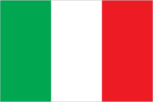
three equal vertical bands of green (hoist side), white, and red; similar to the flag of Ireland, which is longer and is green (hoist side), white, and orange; also similar to the flag of the Cote d'Ivoire, which has the colors reversed - orange (hoist side), white, and green
Highways
total: 298,000 km paved: 270,000 km (including nearly 7,000 km of expressways) unpaved: gravel, crushed stone 23,000 km; earth 5,000 km
Illicit drugs
important gateway country for Latin American cocaine and Southwest Asian heroin entering the European market
Imports
$188.5 billion (f.o.b., 1992) commodities: industrial machinery, chemicals, transport equipment, petroleum, metals, food, agricultural products partners: EC 58.8%, OPEC 6.1%, US 5.5% (1992)
Independence
17 March 1861 (Kingdom of Italy proclaimed)
Industrial production
growth rate -2.8% (1993 est.); accounts for almost 35% of GDP
Industries
machinery, iron and steel, chemicals, food processing, textiles, motor vehicles, clothing, footwear, ceramics
Infant mortality rate
7.6 deaths/1,000 live births (1994 est.)
Inflation rate (consumer prices)
4.2% (1993)
Inland waterways
2,400 km for various types of commercial traffic, although of limited overall value
International disputes
none
Irrigated land
31,000 sq km (1989 est.)
Judicial branch
Constitutional Court (Corte Costituzionale)
Labor force
23.988 million by occupation: services 58%, industry 32.2%, agriculture 9.8% (1988)
Land boundaries
total 1,899.2 km, Austria 430 km, France 488 km, Holy See (Vatican City) 3.2 km, San Marino 39 km, Slovenia 199 km, Switzerland 740 km
Land use
arable land: 32% permanent crops: 10% meadows and pastures: 17% forest and woodland: 22% other: 19%
Languages
Italian, German (parts of Trentino-Alto Adige region are predominantly German speaking), French (small French-speaking minority in Valle d'Aosta region), Slovene (Slovene-speaking minority in the Trieste-Gorizia area)
Leftists
Democratic Party of the Left (PDS - was Communist Party, or PCI, until January 1991), Achille OCCHETTO, secretary; Communist Refounding, Fausto BERTINOTTI; Greens, Carlo RIPA di MEARA; Radical Party, Marco PANNELLA; Italian Socialist Party, Ottaviano DELTURCO; The Network, Leoluca ORLANDO; Christian Socialists, Ermanno GORRIERI
Legal system
based on civil law system, with ecclesiastical law influence; appeals treated as trials de novo; judicial review under certain conditions in Constitutional Court; has not accepted compulsory ICJ jurisdiction
Legislative branch
bicameral Parliament (Parlamento)
Life expectancy at birth
total population: 77.64 years male: 74.44 years female: 81.04 years (1994 est.)
Literacy
age 15 and over can read and write (1990 est.) total population: 97% male: 98% female: 96%
Location
Southern Europe, a peninsula extending into the central Mediterranean Sea
Manpower availability
males age 15-49 14,921,411; fit for military service 12,982,445; reach military age (18) annually 403,017 (1994 est.)
Map references
Africa, Europe, Standard Time Zones of the World
Maritime claims
continental shelf: 200-m depth or to depth of exploitation territorial sea: 12 nm
Member of
AfDB, AG (observer), Australia Group, AsDB, BIS, CCC, CDB (non-regional), CE, CEI, CERN, COCOM, CSCE, EBRD, EC, ECE, ECLAC, EIB, ESA, FAO, G-7, G-10, GATT, IADB, IAEA, IBRD, ICAO, ICC, ICFTU, IDA, IFAD, IEA, IFC, ILO, IMF, IMO, INMARSAT, INTELSAT, INTERPOL, IOC, IOM, ISO, ITU, LAIA (observer), LORCS, MINURSO, MTCR, NACC, NATO, NEA, NSG, OAS (observer), OECD, ONUSAL, PCA, UN, UNCTAD, UNESCO, UNHCR, UNIDO, UNIFIL, UNIKOM, UNMOGIP, UNOSOM, UNTAC, UNTSO, UPU, WCL, WEU, WHO, WIPO, WMO, WTO, ZC
Merchant marine
474 ships (1,000 GRT or over) totaling 6,055,779 GRT/8,924,779 DWT, bulk 50, cargo 72, chemical tanker 34, combination bulk 1, combination ore/oil 5, container 20, liquefied gas 39, multifunction large-load carrier 1, oil tanker 129, passenger 8, refrigerated cargo 2, roll-on/roll-off cargo 62, short-sea passenger 34, specialized tanker 10, vehicle carrier 7
Names
conventional long form: Italian Republic conventional short form: Italy local long form: Repubblica Italiana local short form: Italia former: Kingdom of Italy
National holiday
Anniversary of the Republic, 2 June (1946)
National product
GDP - purchasing power equivalent - $967.6 billion (1993)
National product per capita
$16,700 (1993)
National product real growth rate
-0.7% (1993)
Nationality
noun: Italian(s) adjective: Italian
Natural resources
mercury, potash, marble, sulfur, dwindling natural gas and crude oil reserves, fish, coal
Net migration rate
1.03 migrant(s)/1,000 population (1994 est.)
Note
strategic location dominating central Mediterranean as well as southern sea and air approaches to Western Europe
Other political or pressure groups
the Roman Catholic Church; three major trade union confederations (CGIL - formerly Communist dominated, CISL - Christian Democratic, and UIL - Social Democratic, Socialist, and Republican); Italian manufacturers and merchants associations (Confindustria, Confcommercio); organized farm groups (Confcoltivatori, Confagricoltura)
Overview
Since World War II the Italian economy has changed from one based on agriculture into a ranking industrial economy, with approximately the same total and per capita output as France and the UK. The country is still divided into a developed industrial north, dominated by private companies, and an undeveloped agricultural south, dominated by large public enterprises. Services account for 48% of GDP, industry 35%, agriculture 4%, and public administration 13%. Most raw materials needed by industry and over 75% of energy requirements must be imported. After growing at an annual average rate of 3% in 1983-90, growth slowed to about 1% in 1991 and 1992 and fell by 0.7% in 1993. In the second half of 1992, Rome became unsettled by the prospect of not qualifying to participate in EC plans for economic and monetary union later in the decade; thus it finally began to address its huge fiscal imbalances. Thanks to the determination of Prime Ministers AMATO and CIAMPI, the government adopted a fairly stringent budget for 1993 and 1994, abandoned its highly inflationary wage indexation system, and started to scale back its extremely generous social welfare programs, including pension and health care benefits. Monetary officials were forced to withdraw the lira from the European monetary system in September 1992 when it came under extreme pressure in currency markets. For the 1990s, Italy faces the problems of refurbishing a tottering communications system, curbing pollution in major industrial centers, and adjusting to the new competitive forces accompanying the ongoing economic integration of the European Union.
Pipelines
crude oil 1,703 km; petroleum products 2,148 km; natural gas 19,400 km
Population
58,138,394 (July 1994 est.)
Population growth rate
0.21% (1994 est.)
Ports
Cagliari (Sardinia), Genoa, La Spezia, Livorno, Naples, Palermo (Sicily), Taranto, Trieste, Venice
Railroads
20,011 km total; 16,066 km 1.435-meter government-owned standard gauge (8,999 km electrified); 3,945 km privately owned - 2,100 km 1.435-meter standard gauge (1,155 km electrified) and 1,845 km 0.950-meter narrow gauge (380 km electrified)
Religions
Roman Catholic 98%, other 2%
Rightists
Forza Italia, Silvio BERLUSCONI; National Alliance (was Italian Social Movement - MSI - until January 1994), Gianfranco FINI, party secretary; Lega Nord (Northern League), Umberto BOSSI, president
Senate (Senato della Repubblica)
elections last held 27-28 March 1994 (next expected to be held by spring 2001); results - percent of vote by party NA; seats - (326 total; 315 elected, 11 appointed senators-for-life) PDS 61, Northern League 60, National Alliance 48, Forza Italia 36, Popular Party 31, Communist Refounding 18, Greens and The Network 13, Socialist Party 13, Christian Democratic Center 12, Democratic Alliance 8, Christian Socialists 5, Pact for Italy 4, Radical Party 1, others 5
Suffrage
18 years of age, universal (except in senatorial elections, where minimum age is 25)
Telecommunications
modern, well-developed, fast; 25,600,000 telephones; fully automated telephone, telex, and data services; high-capacity cable and microwave radio relay trunks; broadcast stations - 135 AM, 28 (1,840 repeaters) FM, 83 (1,000 repeaters) TV; international service by 21 submarine cables, 3 satellite earth stations operating in INTELSAT with 3 Atlantic Ocean antennas and 2 Indian Ocean antennas; also participates in INMARSAT and EUTELSAT systems
Terrain
mostly rugged and mountainous; some plains, coastal lowlands
Total fertility rate
1.39 children born/woman (1994 est.)
Type
republic
Unemployment rate
11.3% (January 1994)
US diplomatic representation
chief of mission: Ambassador Reginald BARTHOLOMEW embassy: Via Veneto 119/A, 00187-Rome mailing address: PSC 59, Box 100, Rome; APO AE 09624 telephone: [39] (6) 46741